

The cut of the diamond in earrings: how shape changes brilliance
Two stones of the same weight and clarity in earrings can look completely different. The cut determines everything—the geometry of the facets that controls the light within the diamond. One shape gives sharp flashes, while another provides a smooth "mirror" shine. Let's explore how the outline and proportions affect the stone's play in the ears and what to consider when choosing.
Why cut is more important than it seems
A diamond is evaluated by the "four Cs" rule: carat (weight), color, clarity, and cut. The first three parameters describe the nature of the stone itself, while cut is the work of the master. It is the precision of angles and proportions that determines whether light will return to the observer or escape through the pavilion, extinguishing the sparkle.
The classic round cut, Round Brilliant, has 57 or 58 facets and remains the benchmark for light return. It gives the stone maximum "life"—a combination of white flashes (brilliance) and colored sparks (fire). However, the round is not the only option. Fancy shapes are divided into two groups: step cuts (emerald, "asscher") and brilliant cuts, where the facets spread out like wedges.
Step cuts work differently. The emerald shape has long parallel facets that create the effect of a "mirror corridor": instead of small sparks, you see large flashes and a calm glow. Such a stone requires high clarity—any inclusion will be noticeable through the open table.
A separate category includes square and rectangular shapes with sharp corners. This is where the famous princess cut belongs: 57−76 facets in a square outline provide a bright, "daring" play of light, close to the round but with a modern silhouette. For earrings, this is convenient: a square stone reads well from a distance and visually "holds" the line.
There are also intermediate options: oval, pear, marquise, "cushion." Oval and pear shapes elongate the form and visually lengthen the face. The marquise, with its two sharp ends, maximizes every millimeter of the stone—at the same weight, it appears larger than a round. The "cushion" with rounded corners gives a soft, warm glow, favored in vintage models.
How the shape of the stone changes the perception of earrings
In earrings, the cut works not only for sparkle but also for the placement of light at different angles. A round diamond "burns" equally when turning the head—it is symmetrical and allows for movement. Step cuts are more capricious: they open up frontally, so in stud earrings, the emerald cut is set strictly perpendicular to the lobe. Square stones visually enlarge the piece without an increase in carats, which is appreciated when choosing everyday earrings.
Once you have decided on the shape, it's worth looking at how it is realized in finished products with different settings and metal grades. It is easier to examine the assortment and buy diamond earrings in Moscow at DAF when the princess cut, weight in carats, and color of the stone are indicated for each model along with a certificate for the piece. This makes it easier to compare white and yellow gold of 585 or 750 purity and understand which setting will hold the stone.
Evaluate separately how the shape combines with the setting: prong settings open the diamond from all sides and add light, while a closed frame protects the sharp corners of the princess from chipping during active wear.
Criteria for choosing earrings by cut
To ensure the shape of the stone does not disappoint after purchase, check the piece against several points. They help filter out weak cuts even at the fitting stage.
1. Correspondence of shape to the task. For daily studs, choose round or princess cuts from 0.15 to 0.30 carats—they are durable and do not snag. For evening pendants, pear and marquise shapes larger than 0.5 carats are suitable.
2. Quality of the cut (cut grade). In the GIA or IGI certificate, look for an Excellent or Very Good rating. For round diamonds, this guarantees light return; for fancy shapes, the cut is evaluated more strictly.
3. Symmetry of the pair. Two stones in earrings should match in outline, weight, and color—discrepancies even of 0.02 carats are noticeable up close.
4. Color and clarity according to the shape. Step cuts need color from D to G and clarity from VS1: an open table reveals any defects. Round and princess cuts forgive inclusions at the SI1 level.
5. Protection of sharp corners. The corners of princess and marquise cuts are vulnerable. Ensure that prongs or the frame cover them.
6. Purity and color of the metal. White gold of 585 or 750 purity emphasizes the colorlessness of the stone, while yellow masks the slight warm tint of diamonds in the J-K group.
The price guide depends on the total carat weight. A pair of studs with two diamonds of 0.10−0.15 carats in 585 gold costs approximately from 40,000 to 90,000 rubles. Earrings with stones of 0.3 carats on each side start from 150,000 rubles and above, while fancy shapes with high clarity go for over 300,000. When purchasing from a specialized store, always request a certificate—without it, assessing the cut by eye is nearly impossible.
What to remember before buying
The cut is not about shape for the sake of shape, but about how the stone reflects light. The round provides maximum sparkle, the princess offers a modern silhouette and bright play, and step cuts give a calm glow for those who value clean lines. Determine the purpose of the earrings, check the cut grade in the certificate, and verify the symmetry of the pair. Then the diamonds will perform at their best with any turn of the head.
Другие Новости Нижнего (Н-Н-152)
 House No. 5 on Shevchenko Street was sold for 16.3 million rubles.
House No. 5 on Shevchenko Street in Nizhny Novgorod has found a new owner. This was reported by the ANO "ASIRIS" on July 13, 2026. 14.07.2026. IA Nizhny Now. Nizhny Novgorod Region. Nizhny Novgorod.
House No. 5 on Shevchenko Street was sold for 16.3 million rubles.
House No. 5 on Shevchenko Street in Nizhny Novgorod has found a new owner. This was reported by the ANO "ASIRIS" on July 13, 2026. 14.07.2026. IA Nizhny Now. Nizhny Novgorod Region. Nizhny Novgorod.
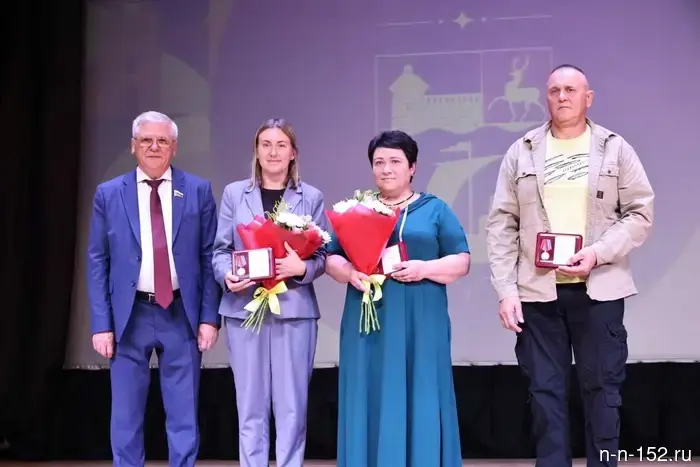 The ex-official Bortnikov was acquitted in Nizhny Novgorod.
The former acting head of the government affairs department of the Nizhny Novgorod region, Yuri Bortnikov, has been acquitted under part 1 of article 17.07.2026. vGorodeN.Ru. Nizhny Novgorod region. Nizhny Novgorod.
The ex-official Bortnikov was acquitted in Nizhny Novgorod.
The former acting head of the government affairs department of the Nizhny Novgorod region, Yuri Bortnikov, has been acquitted under part 1 of article 17.07.2026. vGorodeN.Ru. Nizhny Novgorod region. Nizhny Novgorod.
 In the Lukoyanovsky district, the repair of the section of the R-158 road has been completed as part of the national project.
News of Nizhny Novgorod
The ex-official Bortnikov was acquitted in Nizhny Novgorod.
The former acting head of the government affairs department of the Nizhny Novgorod region, Yuri Bortnikov, has been acquitted under part 1 of article 17.07.2026. vGorodeN.Ru. Nizhny Novgorod region. Nizhny Novgorod.
In the Lukoyanovsky district, the repair of the section of the R-158 road has been completed as part of the national project.
News of Nizhny Novgorod
The ex-official Bortnikov was acquitted in Nizhny Novgorod.
The former acting head of the government affairs department of the Nizhny Novgorod region, Yuri Bortnikov, has been acquitted under part 1 of article 17.07.2026. vGorodeN.Ru. Nizhny Novgorod region. Nizhny Novgorod.
 Preventive work on Nizhny Novgorod TV has been postponed due to the 2026 World Cup.
News of Nizhny Novgorod
Preventive work on Nizhny Novgorod TV has been postponed due to the 2026 World Cup.
News of Nizhny Novgorod
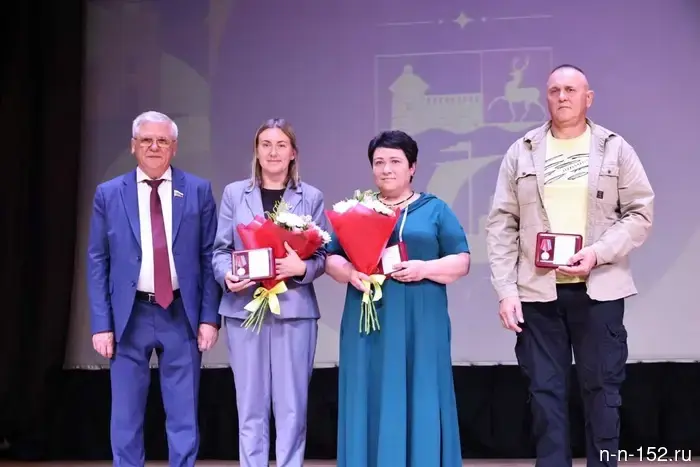 Evgeny Lyulin: "The main wealth of Lyskov is its people."
News of Nizhny Novgorod
Evgeny Lyulin: "The main wealth of Lyskov is its people."
News of Nizhny Novgorod
The cut of the diamond in earrings: how shape changes brilliance
News of Nizhny Novgorod