
New Metro in Nizhny Novgorod: interim results of 4 years of active construction
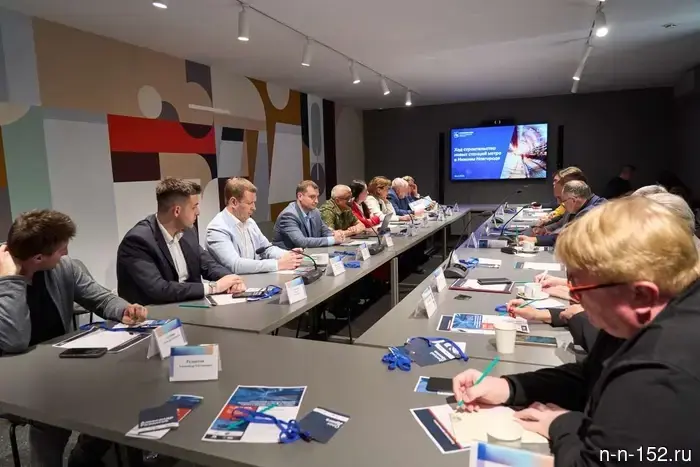
On June 3, 2026, at 13:12, the Society "Russian Newspaper" continues a series of round tables on the topic of metro development in Nizhny Novgorod, organized with the participation of the Russian Ecological Movement and the general contractor for construction, GC "Mosproject-3."
Recall that over the past four years, dozens of experts and public figures have joined the discussion on the construction of new stations, expressing their opinions on the past, present, and future of underground transport in the capital of the Volga region.
The main thing now is that the metro construction has not become and will not become a long-term project due to financial problems, as it was in the "nineties." Moreover, we have almost reached the "equator" in terms of the volume of work completed. It is already clearly visible that the funds are being utilized in "physical" volumes: all the main project documentation has been developed, which received positive approvals from the Main State Expert Review, amounting to hundreds of volumes, numerous city communications that hindered construction have been relocated, 3 km of reinforced concrete tunnels have been built, and monolithic work on the main structures of the stations has begun. A colossal volume of work has been completed, and not much remains—at the end of May, tunneling started from the dead ends of the metro on Gorky Street towards Freedom Square. All tunneling work will be completed by the end of the year. Additionally, there has been no collapse in the historical center: all necessary conditions for passengers, pedestrians, cars, and public transport have been created. There is still a lot of work ahead, but it is already time to think about new transport solutions, replenishing the rolling stock, and plans for development.
Thus, experts and public figures expressed their views on the problems, stages, and technologies of construction in constrained conditions in the historical center. This time, speakers particularly noted that in the near future, the metro will "get along" with all eco-transport, and much has already been done for this. The transport interchange hub at Sennaya will be proof of that.
Acting General Director of MKU "GUMMID," Sergey Gorbunov, spoke about the work done on the construction of new stations. He emphasized that at the beginning of the construction, the relocation of communications became a very challenging task.
"The Sennaya and Svobody squares were critically saturated with communications. But despite all the difficulties, metro builders have already 'crossed the equator' in terms of the volume of work completed, and the pace will now accelerate. The project is at the stage of active implementation, and soon residents will be able to see the results of the efforts," he stated.
Chairman of the City Duma's Transport Committee, Stanislav Prokopovich, drew a parallel with the experience of the capital, where there were no such difficulties.
"Imagine that in Moscow, not a single metro station has been built in the city center in recent decades, while we are working precisely in the historical part. Of course, there are always challenges—when road repairs are underway, pipes are being changed—while we are laying entire tunnels for the metro. The main question now is to bring the work to completion, avoid long-term construction, and then build further plans," he noted.
Alexander Serikov, Chairman of the Board of the Nizhny Novgorod Regional Charitable Foundation "Land of Nizhny Novgorod," shared his views on how the city managed to avoid long-term construction and transport collapse in a city with a million residents. He noted that active cooperation between government agencies, construction companies, and local residents was an important factor.
Svetlana Dosaeva, a deputy of the Nizhny Novgorod City Duma, also emphasized that builders actively take into account the wishes of residents regarding the improvement of areas after the work, and this interaction will create a more harmonious urban space after the construction is completed.
A key point of the discussion was the integration of the metro with other types of public transport, which will create a more sustainable transport system.
Head of the Ecological Monitoring Group of the Public Council of the Ministry of Natural Resources, Elmurod Rasulmukhamedov, once again emphasized the importance of developing eco-transport in large cities like Nizhny Novgorod. He stressed that creating environmentally friendly transport systems not only improves air quality but also contributes to raising the standard of living for residents. In this context, connecting the metro with other types of transport, such as electric buses, trams, and cable cars, becomes a necessity.
In turn, the Director of Public Relations of JSC "UrbanTech Cable Cars," Arthur Sukyazyan, spoke about how cable crossings and other types of public transport effectively complement the existing infrastructure, providing more convenient and faster movement around the city.
Overall, the participants of the round table agreed that over four years of constructing new metro stations, the city has avoided transport collapse and the fate of long-term construction, confidently overcoming the most challenging stages of work. Today, the underground system is becoming a framework for integration with eco-friendly transport, creating comfort for pedestrians, motorists, and passengers.
NIA "Nizhny Novgorod" has channels on Telegram and MAX. Subscribe to stay updated on major events, exclusive materials, and timely information. Copyright © 1999—2025 NIA "Nizhny Novgorod." When reprinting, a hyperlink to NIA "Nizhny Novgorod" is mandatory. This resource may contain materials 18+.
Другие Новости Нижнего (Н-Н-152)
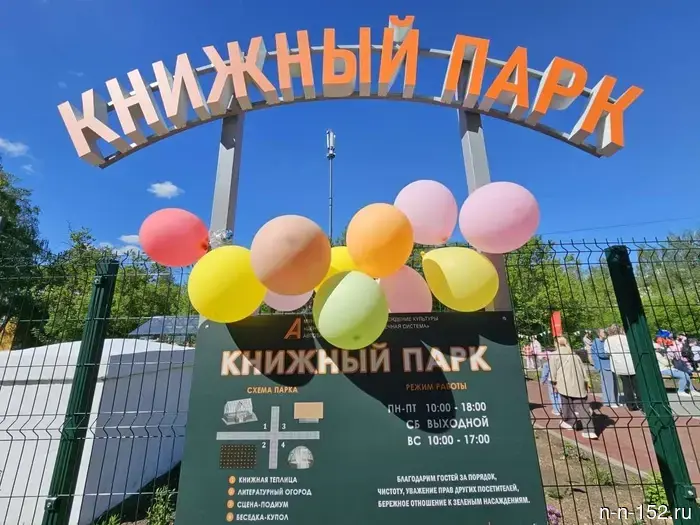 The "Book Park" in the Avtozavodsky District summed up the results of its first year of operation.
News of Nizhny Novgorod
The "Book Park" in the Avtozavodsky District summed up the results of its first year of operation.
News of Nizhny Novgorod
 The attack of dogs on children in Vyksa and Shakhunya has resulted in criminal cases.
News of Nizhny Novgorod
The attack of dogs on children in Vyksa and Shakhunya has resulted in criminal cases.
News of Nizhny Novgorod
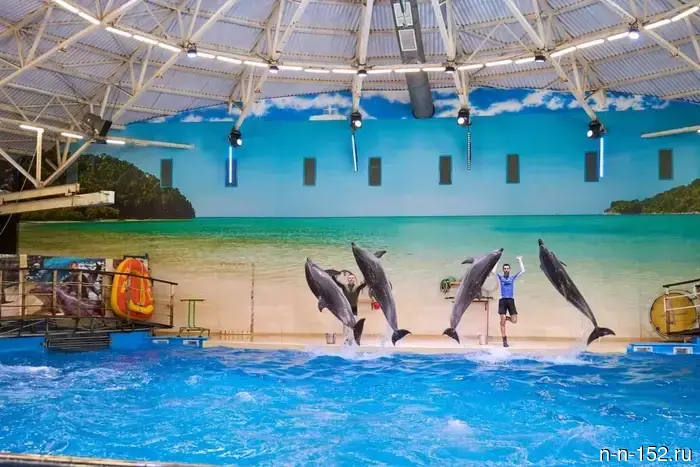 Nizhny Novgorod families of participants in the Special Military Operation visited the dolphinarium.
News of Nizhny Novgorod
Nizhny Novgorod families of participants in the Special Military Operation visited the dolphinarium.
News of Nizhny Novgorod
 The creation of the country's first museum street was discussed in Nizhny Novgorod.
News of Nizhny Novgorod
The creation of the country's first museum street was discussed in Nizhny Novgorod.
News of Nizhny Novgorod
 The facade of the house on Tsiolkovsky Street will be renovated for 70.8 million rubles.
News of Nizhny Novgorod
The facade of the house on Tsiolkovsky Street will be renovated for 70.8 million rubles.
News of Nizhny Novgorod
.jpg) "You're allowed to go to the bathroom!": Minister Puchkov responded to parents' complaints about the Unified State Exam (USE)
News of Nizhny Novgorod
"You're allowed to go to the bathroom!": Minister Puchkov responded to parents' complaints about the Unified State Exam (USE)
News of Nizhny Novgorod
New Metro in Nizhny Novgorod: interim results of 4 years of active construction
News of Nizhny Novgorod