
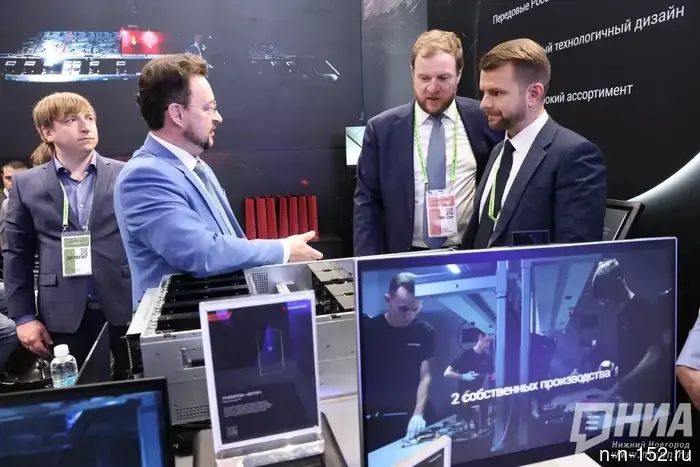
How a Russian company can build a modern IT infrastructure in 2026
For Russian businesses, IT technologies have long been the foundation of development. Companies quickly respond to current trends and innovations, try new things, and invest in their IT infrastructure. However, it is not enough to simply gather the latest technologies and products: it is important to select them wisely and integrate them into a cohesive system. Dmitry Melnikov, CEO of Inventive DLM (part of Inventive Retail Group), explained what is essential for business development today, what requirements are placed on infrastructure, and how to properly form it.
What IT solutions are necessary for Russian businesses today
Information technology plays a key role in the development of a company. Without a proper choice of hardware and software, it is impossible to successfully tackle the tasks of increasing productivity, reducing costs, and meeting customer needs. Let’s take a closer look at what IT solutions are currently necessary, for example, for a retailer. At the hardware level:
- Server equipment and storage systems for storing and processing large volumes of data.
- Networking equipment that ensures stable data transmission between cash registers, internal systems, and the central office.
- Mobile devices that allow retail employees to perform various tasks outside of stationary locations (tablets), or additional mobile kiosks and information stands.
- Cash register equipment and POS systems for processing transactions, managing inventory, and ensuring interaction with other systems.
At the software level, the list of products is even longer, allowing for the automation of various business processes:
Additionally, there are:
- Inventory and warehouse management (WMS systems);
- Customer relationship management (CRM);
- Data security and protection;
- Resource planning systems (ERP);
- Solutions for analytics, forecasting, and personalizing customer experience.
Hardware and software must be integrated to create a unified, transparent, and manageable business environment. This ensures high operational speed, data accuracy, resource savings, and the company's competitiveness in the market. Furthermore, software solutions must comply with regulatory requirements—specifically, integrating with the "Honest Sign" labeling system.
For example, at the upcoming CIPR 2026 conference, we, together with the Russian developer "Ringo MDM," will present the capabilities of using LLM models on Apple Mac Mini and Apple Mac Studio running their Ringo MDM software. This will help companies conduct centralized deployment of local models and use them without transferring corporate documents and sensitive data to external clouds.
What requirements are placed on modern IT infrastructure
One of the key demands of businesses today is the transition from disparate systems to a unified and secure environment that, firstly, can support omnichannel operations to account for inventory across all channels in real time. Secondly, the established IT system must be capable of processing large volumes of data, have a high power reserve, and be fault-tolerant: so that a failure at one point does not lead to a failure across the entire network.
A significant part of modern IT infrastructure is becoming artificial intelligence: machine learning, computer vision, generative AI. These technologies are implemented both in internal tasks—automating parts of processes, predictive analytics—and in customer service—an AI assistant on an interactive monitor at the retail point.
For example, FixPrice uses generative AI in video and audio analytics projects: AI analyzes audio recorded at cash registers to assess service quality, highlight potential customer requests—demand for certain products, comfort of stay in the store, and much more.
What mistakes do companies make
Building an IT infrastructure is not the simplest process, and sometimes businesses complicate it further with several mistakes.
They rely on current needs. Ideally, any business should still grow, and acquiring or developing a product for two to three years is not very reasonable due to the long payback period of investments. It is important to look at the long-term perspective.
They try to replace or build everything from scratch at once. The desire to change both the hardware and update all the software in one go to save time often leads to the opposite effect: the process is significantly delayed. And during this time, the business does not develop because it cannot fully utilize anything.
They underestimate the importance of integration when working with software. A modern quality infrastructure consists of interconnected elements. If a new system for processing online orders is implemented, for example, without linking it to logistics systems, problems in delivery can arise.
They want to solve everything on their own. For example, they conduct integration independently without having experience—or experience regarding specific systems. As a result, the business loses a lot of time and money.
The desire to develop a product independently instead of selecting a solution available on the market also sometimes becomes a mistake. Any such development carries the risks of dependence on the development team and detachment from the market and trends in the long term. Whereas with a market product, there is the opportunity to seek the right supplier, developers, receive updates, and develop this product based on feedback from the market and consumers.
When purchasing hardware, it is also better not to just "buy and forget," but to enter into a long-term contract for DaaS services. That is, the product supplier helps select equipment according to the business needs, is responsible for its connection and configuration, provides technical support, and updates it when necessary.
How companies can build IT infrastructure
The first rule is not to immediately go for the most popular or the most expensive solution when choosing: it does not matter whether it is hardware or software. Price and mass demand do not determine how effective technologies will be for a specific company.
The second rule is to consider the needs of the business based on its size. For example, when choosing server equipment, small businesses need to minimize costs, make implementation and maintenance as simple as possible, so often cloud solutions or entry-level stations are sufficient. For medium and large businesses, fault-tolerant clusters and data backup systems are important.
The third rule is to build IT infrastructure according to business tasks to avoid chaos and fragmentation of systems and to make it easier to assess the real effect. First, conduct an audit of the current architecture, identify "bottlenecks" where failures, delays, or scaling limitations occur. Then focus on one business scenario: for example, processing online orders.
It is important to ensure convenience in working with IT infrastructure: whenever possible, use microservice solutions instead of monoliths. In the first case, if some element "fails," it can be relatively painlessly replaced. In the second case, everything will have to be changed: this is more expensive, longer, and more complicated.
Critical systems are better placed within the company’s perimeter, while front-end and high-load services, such as an online store, can be moved to the cloud. This protects against situations where suddenly a vendor disconnects clients from servers, and the company cannot operate.
And most importantly, pay more attention to cybersecurity and compliance with its current requirements. The use of firewalls and data encryption, incident detection and prevention mechanisms, regular software updates, vulnerability audits, and data backups are necessary. For large companies—centralized monitoring of security events and establishing incident response processes.
A quality IT infrastructure is a basic condition for effective operation in any niche and with any turnover. It must be reliable, fault-tolerant, compliant with cybersecurity requirements, and holistic: when all elements work interrelatedly with each other. We will also discuss this at the CIPR 2026 conference together with the developer "Ringo MDM." And we will show participants how to use LLM models with Apple hardware running domestic software. NIA "Nizhny Novgorod" has channels on Telegram and MAX. Subscribe to stay updated on major events, exclusive materials, and timely information. Copyright © 1999—2025 NIA "Nizhny Novgorod." When reprinting, a hyperlink to NIA "Nizhny Novgorod" is mandatory. This resource may contain materials 18+.
Другие Новости Нижнего (Н-Н-152)
 How a Russian company can build a modern IT infrastructure in 2026
News of Nizhny Novgorod
How a Russian company can build a modern IT infrastructure in 2026
News of Nizhny Novgorod
 Experts have identified the leader in user experience among operators in the Nizhny Novgorod region.
Specialists from the Russian company Vigo, a developer of software for assessing and optimizing data network quality, have identified the best operators in terms of user experience in the Nizhny Novgorod region, reports the operator's press service. 14.05.2026. Nizhny Novgorod Region. Nizhny Novgorod.
Experts have identified the leader in user experience among operators in the Nizhny Novgorod region.
Specialists from the Russian company Vigo, a developer of software for assessing and optimizing data network quality, have identified the best operators in terms of user experience in the Nizhny Novgorod region, reports the operator's press service. 14.05.2026. Nizhny Novgorod Region. Nizhny Novgorod.
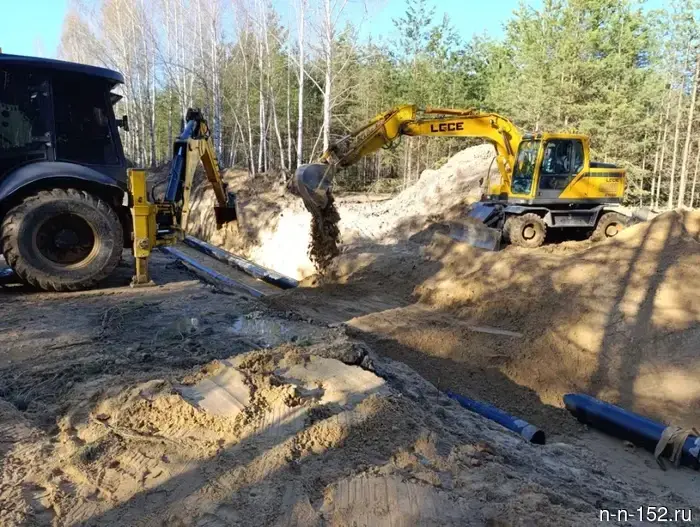 In Vyksa, work continues on the reconstruction of the biological wastewater treatment system.
The project involves the construction of wastewater treatment facilities with elements of mechanical purification from BOC by May 14, 2026. City of Vyksa. Nizhny Novgorod Region. Vyksa.
In Vyksa, work continues on the reconstruction of the biological wastewater treatment system.
The project involves the construction of wastewater treatment facilities with elements of mechanical purification from BOC by May 14, 2026. City of Vyksa. Nizhny Novgorod Region. Vyksa.
 Experts have identified the leader in user experience among operators in the Nizhny Novgorod region.
Specialists from the Russian company Vigo, a developer of software for assessing and optimizing data network quality, have identified the best operators in terms of user experience in the Nizhny Novgorod region, reports the operator's press service. 14.05.2026. Nizhny Novgorod Time. Nizhny Novgorod Region. Nizhny Novgorod.
Experts have identified the leader in user experience among operators in the Nizhny Novgorod region.
Specialists from the Russian company Vigo, a developer of software for assessing and optimizing data network quality, have identified the best operators in terms of user experience in the Nizhny Novgorod region, reports the operator's press service. 14.05.2026. Nizhny Novgorod Time. Nizhny Novgorod Region. Nizhny Novgorod.
 Nizhny Novgorod residents are invited to join the all-Russian competition "Family Capital of Russia."
News of Nizhny Novgorod
Nizhny Novgorod residents are invited to join the all-Russian competition "Family Capital of Russia."
News of Nizhny Novgorod
 The union has achieved a review of the working conditions for oncologists at the Kstovo Central District Hospital.
News of Nizhny Novgorod
The union has achieved a review of the working conditions for oncologists at the Kstovo Central District Hospital.
News of Nizhny Novgorod
How a Russian company can build a modern IT infrastructure in 2026
News of Nizhny Novgorod