

How to file for bankruptcy as an individual entrepreneur
When an individual entrepreneur faces debts, they often think that they should first close their business and then deal with the debts. In practice, it is quite the opposite: the status of an individual entrepreneur does not prevent them from filing for bankruptcy, and it is better to resolve debts before completely exiting the business.
For the law, an individual entrepreneur remains an ordinary citizen who has entrepreneurial status. Therefore, in the bankruptcy procedure, not only business debts are included, but also personal obligations: loans, microloans, taxes, insurance contributions, utility debts, debts under contracts and receipts. Even if the individual entrepreneur has already been removed from the register, the former entrepreneur can file a claim as a natural person, indicating that part of the debts is related to entrepreneurial activity.
When an individual entrepreneur can or must file for bankruptcy
The basis for bankruptcy is simple: a person can no longer fulfill obligations to creditors and mandatory payments. The court assesses the amount of debts, the duration of the delay, income, property, and the real possibility of settling accounts.
A guideline remains a debt of 500,000 rubles and a delay of more than 3 months. At the same time, the court can accept the application with a smaller amount if it is obvious that it is impossible to pay off the debts. If the entrepreneur understands that paying one creditor will lead to an inability to settle with others, they are obliged to apply to the arbitration court within 30 working days.
What debts are taken into account
In the bankruptcy of an individual entrepreneur, almost all obligations are considered: bank loans, microloans, debts to suppliers, taxes, fees, insurance contributions, fines, penalties, and debts confirmed by court acts. Alimony, compensation for harm to life and health, as well as certain types of obligations that the law explicitly excludes from cancellation, are not written off.
Preparation for bankruptcy
Before filing an application, a financial audit must be conducted. First, a complete list of creditors and debts is compiled: loan agreements, bank statements, loan documents, court decisions, enforcement orders, tax demands.
Then, income and expenses are assessed. The court needs to see why independent debt repayment is impossible. For this, income statements, tax reports of the individual entrepreneur, information about regular expenses, rent, medical treatment, and child support are collected.
Property is recorded separately: real estate, vehicles, equipment, inventory, accounts, deposits, shares in the business. It is important to honestly indicate assets that can be realized and property protected from collection, such as the only housing if it is not mortgaged.
How the procedure proceeds
The bankruptcy of an individual entrepreneur is considered by the arbitration court at the place of registration of the citizen. Formally, the application can be submitted independently, but in practice, errors in the documents often lead to the return of the application and loss of time.
The application includes information about the debtor, the status of the individual entrepreneur, all known creditors, the amount of debt, signs of insolvency, the chosen self-regulatory organization, and data for appointing a financial manager. The application is accompanied by a passport, TIN, OGRNIP, an extract from the EGRIP, information about marriage and children, income documents, tax reports, a list of creditors, a list of property, and information about large transactions in recent years.
It is also necessary to pay the state duty and deposit 25,000 rubles in the court's deposit for the financial manager's reward. After checking the documents, the court accepts the application, initiates the case, and appoints the first hearing.
The court may introduce debt restructuring or immediately proceed to the realization of property if repayment according to the schedule is impossible. The financial manager analyzes the debtor's situation, forms a register of creditors, checks transactions, identifies property, controls receipts, and prepares reports for the court.
What will happen to the status of the individual entrepreneur and property
After the citizen is declared bankrupt, the status of the individual entrepreneur ceases. It is not allowed to open new settlement accounts for entrepreneurial activities, and existing contracts are executed or terminated within the framework of the procedure.
At the same time, bankruptcy does not mean that the debtor will lose absolutely everything. Usually, the only housing is retained if it is not mortgaged, personal belongings, necessary household appliances, and minimal funds for current expenses. Other property may enter the bankruptcy estate and be sold to settle with creditors.
Mistakes to avoid
The main risks are not related to the procedure itself, but to the debtor's behavior. It is not allowed to hide property, underestimate the amount of debts, forget creditors, transfer assets to relatives before bankruptcy, or ignore the demands of the tax authorities and bailiffs. Such actions can lead to the annulment of transactions and even refusal to write off debts.
Conclusion
Bankruptcy for individual entrepreneurs is a legal way to exit a situation where debts have become unmanageable. The correct order of actions is as follows: gather data on debts, income, and property, assess the possibility of restructuring, prepare documents, choose a self-regulatory organization and financial manager, pay expenses, and file an application with the arbitration court.
With an honest and competent approach, the procedure helps to write off most debts and stop the debt spiral. The main thing is not to try to hide assets or solve the problem "quietly," because courts and managers see such tricks more often than people check the weather forecast.
Advertisement. LLC "NSSD". TIN 9723135415 nssd.su The NIA "Nizhny Novgorod" has channels on Telegram and MAX. Subscribe to stay updated on major events, exclusive materials, and timely information. Copyright © 1999—2025 NIA "Nizhny Novgorod". When reprinting, a hyperlink to NIA "Nizhny Novgorod" is mandatory. This resource may contain materials 18+
Другие Новости Нижнего (Н-Н-152)
 More than 4,000 Nizhny Novgorod families have received maternity capital since the beginning of 2026.
News of Nizhny Novgorod
More than 4,000 Nizhny Novgorod families have received maternity capital since the beginning of 2026.
News of Nizhny Novgorod
 Gleb Nikitin proposed three directions for the People's Program of "United Russia."
News of Nizhny Novgorod
Gleb Nikitin proposed three directions for the People's Program of "United Russia."
News of Nizhny Novgorod
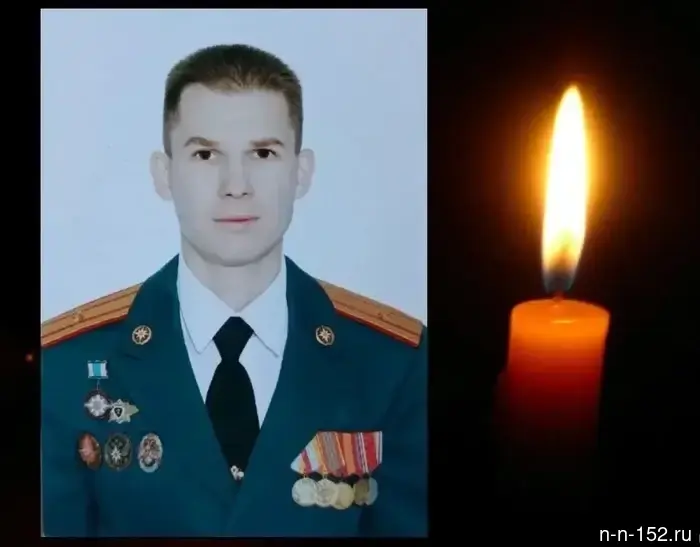 Major of the Ministry of Emergency Situations Andrey Kopytov passed away suddenly in the Nizhny Novgorod region.
News of Nizhny Novgorod
Major of the Ministry of Emergency Situations Andrey Kopytov passed away suddenly in the Nizhny Novgorod region.
News of Nizhny Novgorod
 Defender Ivan Chesnokov remains in the Torpedo system for another season.
News of Nizhny Novgorod
Defender Ivan Chesnokov remains in the Torpedo system for another season.
News of Nizhny Novgorod
 The spring hunting for feathered game has ended in the Nizhny Novgorod region.
News of Nizhny Novgorod
The spring hunting for feathered game has ended in the Nizhny Novgorod region.
News of Nizhny Novgorod
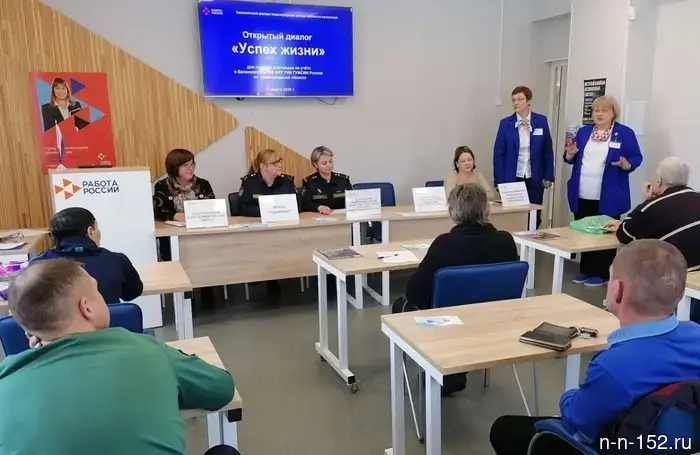 It became known where one can find employment with a criminal record in the Nizhny Novgorod region.
News of Nizhny Novgorod
It became known where one can find employment with a criminal record in the Nizhny Novgorod region.
News of Nizhny Novgorod
How to file for bankruptcy as an individual entrepreneur
News of Nizhny Novgorod