
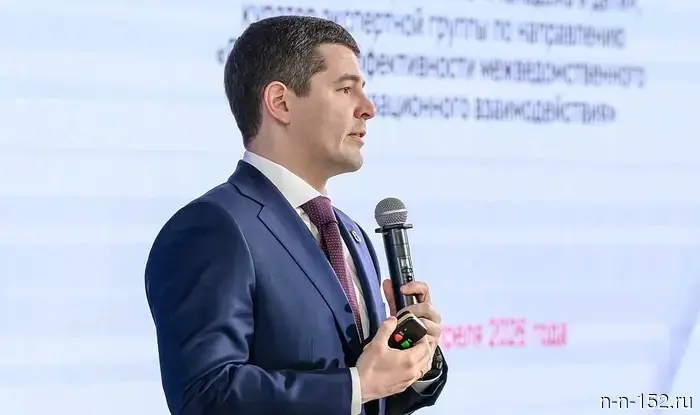
A unified system for youth education has been proposed in Russia.
A joint meeting of the State Council's commission on "Youth and Children" and the expert group on interagency cooperation took place in Moscow. The main topic was the organization of joint work in the field of education. The relevance of the issue is linked to the increase in the number of crimes among youth in several regions.
Opening the meeting, the head of the commission, Yamal Governor Dmitry Artyukhov, emphasized the need to unite the efforts of all structures working with children and youth. In 2025, for the first time in 10 years, the number of crimes among minors increased by 5.5%. The number of terrorist crimes committed by children increased by 2.5 times. Since the beginning of the school year, 18 attacks on educational organizations have been recorded, and another 21 have been prevented. At the same time, according to Rosstat, the number of adolescents aged 15-17 with mental disorders (mainly depressive and anxiety disorders) has increased by 53%.
"We understand what the statistics are related to: today, a lot of influence comes through the internet, through fake calls, when kids are inclined to very serious offenses. Unfortunately, some of them succumb to this, and as a result, we have very resonant events that often break the lives of children. A large systemic effort by law enforcement agencies, education, and upbringing sectors counteracts this. There is still a lot to be done here," said Artyukhov.
He also outlined systemic problems in interagency work: different interpretations of education in 14 federal laws, decentralization of management (in the regions, 3-4 coordinating bodies with similar powers operate), duplication of agency functions, lack of unified methodological materials for educators, fragmentation of data about children across different platforms, and incomplete use of the infrastructure of youth centers and cultural institutions.
The main burden falls on schools, while only 23% of youth are involved in the activities of youth centers, and 39% are unaware of the existence of such centers. At the same time, youth centers exist in only a third of municipalities. The system of cultural institutions includes more than 88,000 organizations—this infrastructure should work to engage youth across the country.
"We note that a huge number of workers in the large social sphere come into contact with children on a daily basis. These are educators, coaches, teachers in extracurricular education, music schools, and engineering clubs. But it is important that everyone also understands: their task is not only to teach their specialized subject but also to educate, immerse in the heroic history of our country, help distinguish between good and evil, instill family values—the entire set of our traditional moral guidelines that must be conveyed to youth daily through various points of interaction. Building this system is our most important task and the subject of today's discussion," noted Artyukhov.
The head of Rosmolodezh Grigory Gurov spoke about plans to centralize the coordination of youth policy and education in the regions into a single "education headquarters." First Deputy Minister of Education Alexander Bugayev and Deputy Minister of Science and Higher Education Olga Petrova also presented reports.
The responsible secretary of the commission, director of the youth policy department of Yamal-Nenets Autonomous Okrug Nail Khairullin shared the experience of creating the first unified model of education in Russia. He explained that previously, the fields of education, youth policy, and culture worked with the same target audience, but each according to its own plans. Parents were offered more than 4,300 programs with different names and content. In the fall, "Yamolod School" was launched in Yamal—a systematic four-year model of professional training with unified scenarios and a value component. The number of duplicating programs was reduced from several thousand to 77, the network of institutions expanded from 21 to 57, and nearly 7,000 children were involved. The project is planned to be replicated in ten more regions.
Deputy Head of Rosmolodezh Yuri Leskin reported that in 2025, 58.4% of young people in Russia were involved in programs for professional and personal development, as well as patriotic education. A new comprehensive program has been developed for working with previously unengaged audiences and adolescents with destructive behavior. Its foundation is a value-oriented approach, combining general and special projects on career guidance, mentoring, and informal education. Key indicators include gaining useful experience, temporary employment, and removal from preventive registration. The program is set to start before the beginning of the summer seasonal employment.
Experts also discussed creating conditions for active leisure. Deputy Governor of Vologda Region Vitaly Kobylnikov spoke about the "Ushu in Schools" project, which engages schoolchildren in sports and strengthens Russian-Chinese cooperation. The first deputy chairman of the State Duma committee on youth policy Mikhail Kiselev emphasized the involvement of adolescents in student brigades. General Director of the NGO "More than a Journey" Olesya Teterina spoke about interagency cooperation in the field of youth tourism.
As a result of the session, participants developed proposals: to create unified approaches to preventing destructive behavior, to establish a single coordinating body in each region, to combine the resources of education, culture, and youth policy into a single educational space, to expand practices for involving minors in socially significant activities, to implement a system of effectiveness indicators for interagency cooperation, and to replicate successful regional models of education. The NIA "Nizhny Novgorod" has a Telegram channel. Subscribe to stay updated on major events, exclusive materials, and timely information.
Другие Новости Нижнего (Н-Н-152)
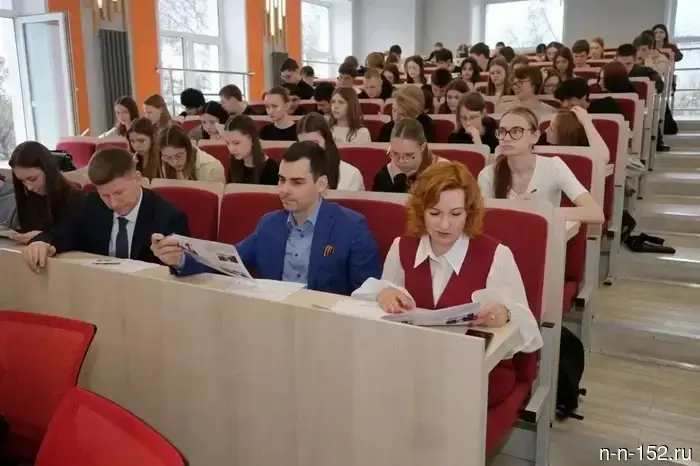 The Victory Dictation was written at the National Research University Higher School of Economics.
News of Nizhny Novgorod
The Victory Dictation was written at the National Research University Higher School of Economics.
News of Nizhny Novgorod
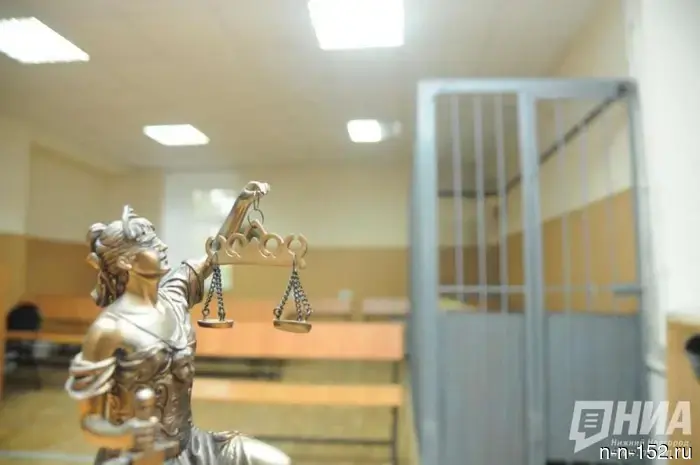 Four people were convicted for the death of a 5-year-old child in the Kstovo sports complex.
News of Nizhny Novgorod
Four people were convicted for the death of a 5-year-old child in the Kstovo sports complex.
News of Nizhny Novgorod
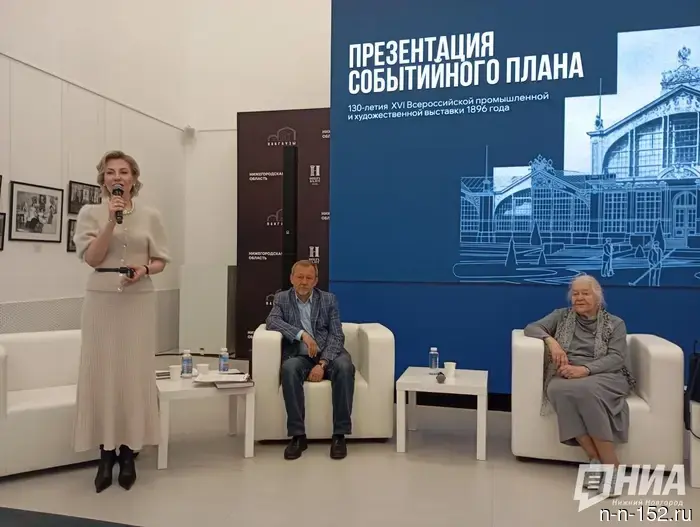 A tactile model of the All-Russian Exhibition of 1896 will be created in Nizhny Novgorod.
News of Nizhny Novgorod
A tactile model of the All-Russian Exhibition of 1896 will be created in Nizhny Novgorod.
News of Nizhny Novgorod
 A squally wind will hit the Nizhny Novgorod region on April 27.
News of Nizhny Novgorod
A squally wind will hit the Nizhny Novgorod region on April 27.
News of Nizhny Novgorod
 Four people were convicted for the death of a 5-year-old child at the Kstovo sports complex.
News of Nizhny Novgorod
Four people were convicted for the death of a 5-year-old child at the Kstovo sports complex.
News of Nizhny Novgorod
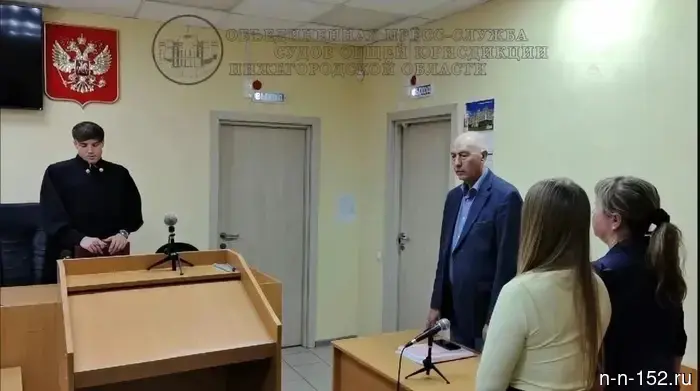 A bureaucrat from Balakhna was fined 100,000 rubles for the death of a man.
News of Nizhny Novgorod
A bureaucrat from Balakhna was fined 100,000 rubles for the death of a man.
News of Nizhny Novgorod
A unified system for youth education has been proposed in Russia.
News of Nizhny Novgorod