
From the First Case to 18,900: How HIV Took Hold of the Nizhny Novgorod Region
08:34 January 8 Nina Serebryakova
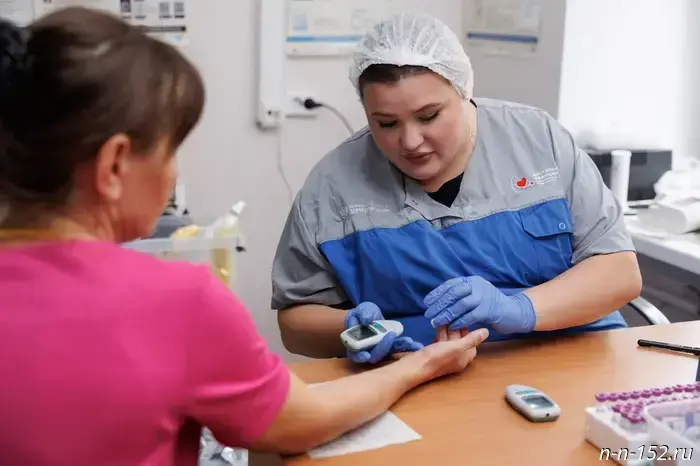
Natalya Burukhina / NN.RU from the site n1s1.hsmedia.ru
Acquired immunodeficiency syndrome (AIDS) was first described in 1981. A few years later scientists discovered the virus that causes this serious disease, and AIDS is its final stage. In the Soviet Union the first case of HIV infection was recorded in 1987, after which the virus actively spread in Elista. In the 1990s the infection began to spread across the country. In the Nizhny Novgorod region the first patients with this diagnosis appeared in 1991. Almost 35 years have passed since then, and today the number of infected people in the region is counted in the thousands. This is reported by "NN.RU Nizhny Novgorod Online", citing data from the Nizhny Novgorod AIDS Center.
HIV, or the human immunodeficiency virus, is a slowly progressing chronic disease that is transmitted through contact and affects the immune system. AIDS is its final, terminal stage. In people suffering from acquired immunodeficiency syndrome, the body loses the ability to fight infections, which leads to the development of so-called opportunistic diseases that are usually not dangerous for people with a strong immune system, as well as to the appearance of certain types of oncological conditions.
The spread of HIV in the Nizhny Novgorod region began in 1991, when the first patients were registered. They were men, most of whom did not have steady employment, their average age was 34.3 years. All of them became infected as a result of unprotected sexual contacts. None of these six first infected persons survived to the present day. At the beginning of the epidemic there were no effective treatment methods. The average life expectancy of people with HIV infection at that time was about seven years. Only with the advent of antiretroviral therapy did patients with a positive HIV status get the opportunity to lead full lives, form families, and give birth to healthy children. In Russia these medications are provided to all patients free of charge.
Until 1996 cases of infection were recorded sporadically, but then their number began to rise sharply. About 200 new HIV patients were identified annually in the region, and by the early 2000s this figure had increased to 500 per year. The infection reached its peak in 2016, when 2,858 new cases were registered in the Nizhny Novgorod region. After 2016 the number of new patients began to decline. Thus, in 2024 it fell by more than half to 1,323 people. In 2025, 845 residents of Nizhny Novgorod and the region were placed on dispensary records with the diagnosis of HIV. As of the end of November 2025, almost 18,900 people living in the region were living with the human immunodeficiency virus. Antiretroviral therapy is received by 17,700 infected people. Since the beginning of the epidemic, 37,600 HIV-infected patients have been registered in the Nizhny Novgorod region, according to the AIDS center’s report for the nine months of 2025. Of these, nearly 12,800 patients have died for various reasons, including 3,500 women, which is 27.9% of the total number of deaths. At the terminal stages of the infection 2,139 people died. Since the beginning of 2025, according to the same report, 570 infected patients have died, of whom only 133 died from causes directly related to HIV. The average age of the deceased is 45 years.
HIV can be transmitted from person to person in only three ways. The first is through unprotected sexual contacts of any kind. The second is parenteral, or in other words "blood-to-blood", when infected blood enters the bloodstream of a healthy person. The third mode of transmission is vertical, that is, from an infected mother to a child. The risk of infecting the baby exists during pregnancy, childbirth, or breastfeeding. In the period from 1996 to 2016 the main route of HIV transmission was parenteral. Most carriers of the virus at that time were drug users who became infected as a result of intravenous use of psychoactive substances. Among them the majority were young people aged 16 to 35, mainly men (60%), without education or employment. However, since 2016 the situation has changed. The predominant route of infection became sexual — that year it accounted for more than 80% of cases.
HIV is detected among Nizhny Novgorod residents of all age groups, but the majority of them (95%) are of working age. Residents over 30 are at the highest risk, as this category accounts for a significant portion of all cases. The average age of those infected is 42.1 years. There are fewer women with a positive HIV status in the region than men: 44.8% versus 55.2%, respectively.
Despite the annual increase in public awareness about the human immunodeficiency virus, myths about this disease can still be encountered. The Nizhny Novgorod AIDS Center listed and debunked the main ones:
"One can catch HIV in everyday life." In fact, the virus dies quickly outside the body. You cannot get it through hugs, handshakes, shared dishes, towels, coughing or sneezing. - AIDS Center
"Mosquitoes transmit HIV." Blood can enter a mosquito's proboscis in only one direction — into the mosquito — so a person is not threatened with infection from someone else's blood via a bite. In addition, HIV cannot survive in the bodies of insects. - AIDS Center
"Needles in public places." This myth has been circulating on the internet for many years. There have been no recorded cases of infection from "needle pricks" in transport, clubs, cinemas, or other public places. - AIDS Center
"HIV and AIDS are the same thing." HIV and AIDS are different concepts that should be distinguished. HIV is the human immunodeficiency virus that attacks immune system cells and causes HIV infection — a chronic disease with a controllable course. AIDS is acquired immunodeficiency syndrome and the final stage of HIV infection that occurs in the absence of treatment. Antiretroviral therapy prevents the virus from replicating and does not allow AIDS to develop. - AIDS Center
"HIV-positive people look different." The virus may not manifest externally for years. Status can only be known by testing for HIV antibodies. - AIDS Center
"No symptoms — no HIV." The virus can be asymptomatic for decades. Testing for HIV antibodies is the only way to know your status. - AIDS Center
"There is a medicine or vaccine." There is no cure for HIV yet, but there is effective antiretroviral therapy that suppresses the virus and allows the disease to be controlled. - AIDS Center
"If a pregnant woman has HIV, the child will definitely have the virus too." Thanks to modern antiretroviral therapy, infected women can carry and give birth to an HIV-free baby. Medications are approved for prevention of infection even in newborns. - AIDS Center
"HIV is a disease of drug users/homosexuals." Anyone can become infected with HIV. In recent years infections have occurred more often through unprotected sexual contacts, and most of these are heterosexual. - AIDS Center
Since 2023 more than a million people in the region have been tested for HIV infection. Thus, over 11 months in 2025, 1.3 million residents learned their HIV status. This can be done at any medical organization that has the appropriate license. State medical institutions, as well as the Nizhny Novgorod Center for AIDS Control, provide testing for free. It is recommended to be tested at least once a year or more often if situations with a risk of HIV infection occurred. Anonymous testing at the AIDS Center can be done on weekdays from 8:00 to 19:00 in room No. 10. With a Russian passport they are also accepted at the MedScreen branch Monday through Friday from 8:00 to 19:00, and on Saturdays from 10:00 to 13:00.
As reported, by the end of 2025 demand in pharmacies in Nizhny Novgorod grew for antiviral agents for flu and ARVI. Analysts noted that in the Nizhny Novgorod region increased consumer activity in this category of drugs appears 7–10 days later than the national average. Since the beginning of 2025 about one and a half million packages of such medicines were sold in the region for a total amount approaching one billion rubles.
More news about the event:
In the Nizhny Novgorod region nearly 38 thousand cases of HIV infection have been identified in 35 years
08:41 January 8
News Service
Natalya Burukhina / NN.RU from the site n1s1.hsmedia.ru
The path to health in the world of HIV and AIDS
Acquired immunodeficiency syndrome (AIDS) was first described in 1981. 09:33 08.01.2026 ProDzer.Ru - Dzerzhinsk
From the first case to 18.9 thousand: how HIV captured the Nizhny Novgorod region
08:34 January 8
Nina Serebryakova
Natalya Burukhina / NN.RU from the site n1s1.hsmedia.ru
Acquired immunodeficiency syndrome (AIDS) was first described in 1981. 09:06 08.01.2026 ProGorodNN.Ru - Nizhny Novgorod
Другие Новости Нижнего (Н-Н-152)
 Health trains helped nearly 43,000 Nizhny Novgorod residents over the course of a year.
Mobile clinics visited hundreds of villages and conducted tens of thousands of medical examinations
Health trains helped nearly 43,000 Nizhny Novgorod residents in a year. 07.01.2026. Komsomolskaya Pravda. Nizhny Novgorod Oblast. Nizhny Novgorod.
Health trains helped nearly 43,000 Nizhny Novgorod residents over the course of a year.
Mobile clinics visited hundreds of villages and conducted tens of thousands of medical examinations
Health trains helped nearly 43,000 Nizhny Novgorod residents in a year. 07.01.2026. Komsomolskaya Pravda. Nizhny Novgorod Oblast. Nizhny Novgorod.
 The Feinstra family spoke about their two years living in the Nizhny Novgorod region.
 BC "Pari NN" lost narrowly to "Zenit-2" in the Russian Cup.
 More than 7,000 cubic meters of snow were removed from the streets of Nizhny Novgorod.
 Three cars burned in Nizhny Novgorod after being set on fire.
 Nearly 43,000 Nizhny Novgorod residents took part in the "Health Trains" in 2025.
From the First Case to 18,900: How HIV Took Hold of the Nizhny Novgorod Region
08:34 January 8 Nina Serebryakova Natalya Burukhina / NN.RU from the website n1s1.hsmedia.ru Acquired immunodeficiency syndrome (AIDS) was first described in 1981. January 8, 2026. ProGorodNN.Ru. Nizhny Novgorod Oblast. Nizhny Novgorod.