
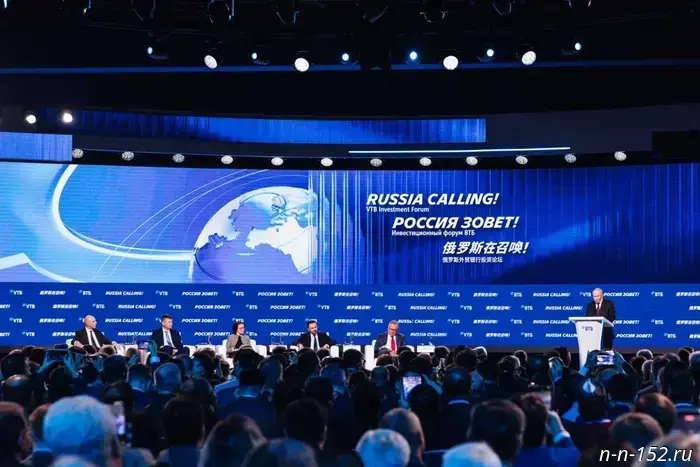
Investments and new approaches to capital management were discussed at the VTB "Russia Is Calling!" forum.
December 3, 2025 11:32 Economy
Deep structural changes in the economy, balance on the foreign exchange market and the search for drivers of long-term growth became the key topics of the macroeconomic session at the 16th VTB Investment Forum "RUSSIA CALLS!". Participants in the discussion — representatives of the authorities, business and the financial sector — agreed that new approaches to regulation, investment stimulation and capital management are needed to accelerate development.
Key interest rate
The discussion began with the key interest rate. Dmitry Pyanov, First Deputy President–Chairman of the Management Board of VTB, noted that private business sees a link: the higher the key rate, the lower the investment, the lower the economy's potential. "What's wrong with that logic?" he asked the regulator. Chair of the Central Bank Elvira Nabiullina said that such logic works only if there is spare labor; then cheap financing leads to growth in the economy's potential. "But if physical resources are already almost fully employed, it will just result in poaching from one enterprise to another. Prices will rise, but not production," said the head of the Bank of Russia.
At the same time she urged not to reduce business interests solely to the key rate and interest payments: "They are indeed significant, but we must not downplay the role of low inflation," Elvira Nabiullina noted. VTB chief Andrey Kostin added that the key rate in the current situation is one of the tools for fighting inflation. "So for now we are surviving at this rate," he concluded.
Increasing public debt or raising VAT
Speaking about public debt, Russian Finance Minister Anton Siluanov noted that in the medium-term forecast it should not exceed 20% of GDP, and the Finance Ministry is against increasing it from the current 15%. "If we increase public debt, the economy will grow at lower rates than if we withdraw money through taxes. VAT is the least painful tax. It is included in the price, and under the monetary policy conditions we will not notice a change in this tax," Siluanov explained.
The ruble exchange rate
Deputy Head of the Presidential Administration of the Russian Federation Maxim Oreshkin stated that the ruble's dynamics are the result of changes in the Russian economy and on the foreign exchange market. In particular, the fiscal rule is at work; non-resource exports have grown; new sources of foreign currency inflows have appeared — such as cryptocurrency mining; imports have decreased. At the same time a policy of formalizing the economy is being implemented: by reducing shadow demand for foreign currency this also helps strengthen the exchange rate. Oreshkin expressed the view that for balanced growth it is necessary to identify areas for increasing imports, especially high-tech ones, which will require a weaker, more competitive ruble exchange rate.
The international investor's perspective was presented by Fan Yu Xin, Chair of the Board of New New Shipping. She noted that for Chinese partners Russia remains a market of opportunities, but high financial costs affect their decisions on localization. Participants in the session see one potential source of such investments as long-term pension savings. "For example, more than 560 billion rubles have already been attracted to the PDS program," Anton Siluanov reminded.
Limiting access to external credit
Russian Minister of Economic Development Maxim Reshetnikov said that Russia has overcome the challenges associated with the economy's loss of access to external credit, and over the past three years no large capital-intensive project in the country has been stopped due to a lack of financing. According to him, the overwhelming majority of such projects are implemented with direct state support and, as a rule, these programs are tied to VEB.RF. "They are carried out either at subsidized interest rates, or we actively use Vnesheconombank guarantees to support the economy with capital," he explained.
Basel should be destroyed
A heated debate unfolded around countercyclical buffers for banks. The head of the Central Bank reminded that, from the regulator's point of view, these buffers are needed to protect the rights of depositors and creditors. "This is not a Basel invention. This is millennia-old wisdom — to set aside in fat years so as not to starve in lean years," she noted. The head of VTB pointed out that this system no longer delivers the expected result in either Europe or the USA. "I used to think that Basel should be destroyed — now I see that it is dying on its own worldwide," he said. "We have so much national specificity that Basel no longer fits... Instead of Basel we'll create our own — Voronezh," proposed VTB president and chairman of the management board Andrey Kostin.
NIA "Nizhny Novgorod" has a Telegram channel. Subscribe to stay informed about major events, exclusive materials and timely information. Copyright © 1999—2025 NIA "Nizhny Novgorod". When reprinting, a hyperlink to NIA "Nizhny Novgorod" is mandatory. This resource may contain 18+ materials.
Другие Новости Нижнего (Н-Н-152)
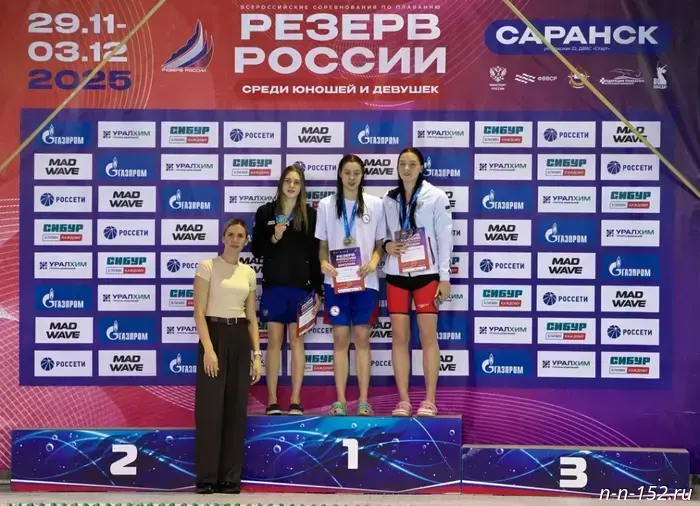 Diana Konnova — silver medalist at the All‑Russian swimming competition "Reserve of Russia" among boys and girls in the 50 m backstroke — 28.24
Congratulations!
🫧News from the Telegram channel
t.me/FP_NO/1048
Swim faster and achieve success with us! 03.12.2025. Swimming Federation. Nizhny Novgorod Region. Nizhny Novgorod.
Diana Konnova — silver medalist at the All‑Russian swimming competition "Reserve of Russia" among boys and girls in the 50 m backstroke — 28.24
Congratulations!
🫧News from the Telegram channel
t.me/FP_NO/1048
Swim faster and achieve success with us! 03.12.2025. Swimming Federation. Nizhny Novgorod Region. Nizhny Novgorod.
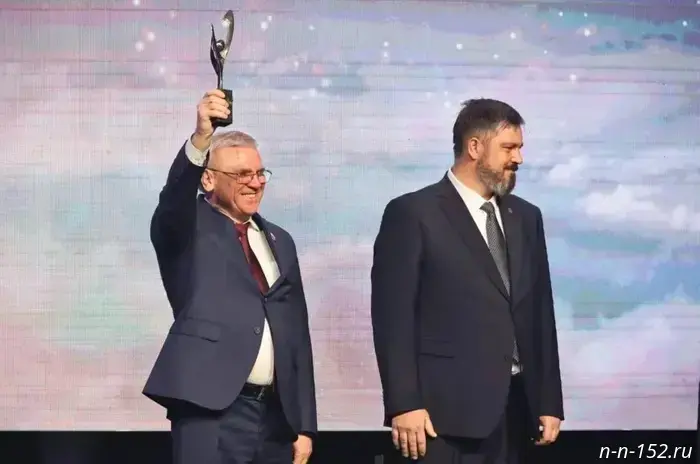 The award ceremony for Paralympic athletes took place in Dzerzhinsk.
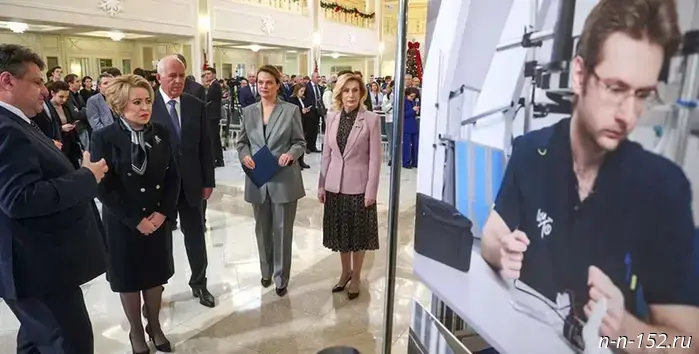 A prosthetics center will open in Nizhny Novgorod.
The "Defenders of the Fatherland" Foundation, the state corporation Rostec and seven federal subjects of the Russian Federation are joining forces to create a network of rehabilitation centers that will increase the availability of high-tech prosthetics in the regions. 03.12.2025. Lukoyanovskaya Pravda newspaper. Nizhny Novgorod Oblast. Lukoyanov.
A prosthetics center will open in Nizhny Novgorod.
The "Defenders of the Fatherland" Foundation, the state corporation Rostec and seven federal subjects of the Russian Federation are joining forces to create a network of rehabilitation centers that will increase the availability of high-tech prosthetics in the regions. 03.12.2025. Lukoyanovskaya Pravda newspaper. Nizhny Novgorod Oblast. Lukoyanov.
 Drug turnover increased by 24.4% in the Nizhny Novgorod region.
 Andrey Kostin: a cut in the Central Bank's key rate will be a positive signal for the stock market
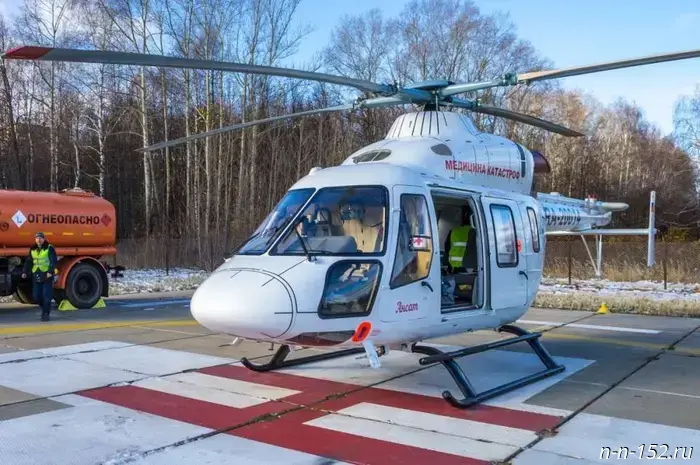 Nearly 168 million rubles will be allocated for the operation of Nizhny Novgorod's air ambulance service.