

Event monitoring expert from August 31 to September 4, 2026, by the Autonomous Non-Profit Organization "Minin Center"
Experts from the "Minin Center" analyze the events of the past week that influence the socio-political situation in the world, Russia, and the Nizhny Novgorod region, where long-term trends are manifesting. The topics of this week are "Vladimir Putin spoke at the EEF in Vladivostok on a wide range of issues," "The new school year has begun in the Nizhny Novgorod region," and "Nizhny Novgorod took second place in the implementation of the national project 'Infrastructure for Life'."
The federal topic is "Vladimir Putin spoke at the EEF in Vladivostok on a wide range of issues."
Expert from the "Minin Center," Associate Professor at the IMOMI of NNGU named after N.I. Lobachevsky, Ph.D. in History Sergey Krivov:
From September 1 to 4, the XI Eastern Economic Forum took place on Russky Island in Vladivostok. The event has been held since 2015, which was relevant at that time due to the introduction of anti-Russian sanctions because of Crimea and Donbass and the search for a new vector of economic cooperation, which was termed "turn to the East." During the plenary session, Vladimir Putin summarized the 11-year period and proclaimed some guidelines for the future development strategy of the macroregion. The main essence lies in the transition from territorial preferences to sectoral ones. Thus, if earlier the emphasis was placed on so-called TORs (territories of advanced development) and free economic zones, such as the free port of Vladivostok, now it is proposed to shift the focus and provide preferential attention to strategic sectors regardless of geographical localization.
The main guest at the EEF was the President of Indonesia (from 2024) Prabowo Subianto. His visit program included negotiations on concluding a free trade agreement with the EAEU. In fact, considering the confrontation in the Asia-Pacific region between the USA and China, Russia continues to increase its presence here as a kind of third force. Indonesia, thus, is becoming a third key state, after North Korea and Vietnam, that has moved closer to Moscow due to the complex geopolitical situation.
However, it is clear that such an event could not pass without addressing global political issues, including Russia's relations with the West and events in Ukraine. Putin's statement that ultimately the question of the current conflict is a question that only Russia and Ukraine should resolve is interesting. What does this statement mean? At first glance, it contradicts the previous rhetoric that the special military operation is part of the confrontation between Russia and the West. On the other hand, the sharp anti-Western rhetoric of recent times is characteristic of the Russian Foreign Ministry and Deputy Chairman of the Security Council of the Russian Federation Dmitry Medvedev, as well as a number of influential experts, including Sergey Karaganov. Of course, it is difficult to assume that this is done without coordination with the top leadership, however, Putin himself has not yet resorted to openly harsh statements. At the same time, there is nothing contradictory about this. Such tactics are often used in diplomacy, where individual officials play the role of "hawks," while the top leadership maintains a more moderate position. Ultimately, Russia is unlikely to need an escalation of the conflict. The strategy chosen in 2022 implies a slow increase in strategic pressure on Ukraine, both along the line of combat contact and through strikes on rear infrastructure. In this regard, maintaining even a purely formal negotiation track with the West is quite acceptable for the Russian leadership. Even against the backdrop of the current escalation, information has emerged about a possible visit by Kushner and Whitcoff to Kyiv and Moscow, who have not been in the Russian capital since December 2025.
In this regard, the fact of the visit of CIA Director John Ratcliffe to Moscow is quite interesting. It is obvious that information about the content of the negotiations will not be known soon, but one can assume the approximate circumstances that prompted them. Recent versions that include a "ultimatum for Putin" or a proposal for a deal are unlikely to fully correspond to reality. After all, meetings can be organized on neutral territory, and other communication channels can also be used. In our opinion (this is just a suggestion), the Americans, who have a good understanding of the situation on the battlefield and in the Ukrainian rear, realize that the "question of Donbass" may take on a different sound in the near future. As is known, one of the official goals of the special military operation was proclaimed as "defending Donbass." Although this primarily implies the protection of the territories of the DPR and LPR from attack, restoring their territorial integrity, especially as subjects of the Russian Federation, is a quite obvious goal.
It is difficult to talk about time forecasts, but the onset of the autumn mud season will complicate logistics, primarily for the Armed Forces of Ukraine. This means that Ukrainian troops will not be able to hold the Slavyansk-Kramatorsk agglomeration for long. Then the question will arise about the status of the special military operation, which is important, including for the military leadership of Russia, considering that hostilities increasingly affect territories that are formally not part of the Russian Federation (Dnipropetrovsk, Sumy, Kharkiv regions). Here, considering Putin's statement about "state terrorism in Ukraine" after Zelensky's threats against civilian airports, one can assume that in a certain perspective, the special military operation will be transformed into a Counter-Terrorist Operation (CTO). This at least changes its legal status, and most importantly, it means a transition of leadership to the FSB or, at least, an increase in its involvement at the level of strategic leadership. A similar scenario developed in the Chechen campaign, which began as an operation of the United Group under the command of the Armed Forces of the Russian Federation and ended as a counter-terrorist operation under the leadership of the FSB. It should be reminded that the CTO regime has already been introduced in a number of regions, including Belgorod, Kursk, and Bryansk regions.
It is obvious that comparing the special military operation and the Chechen campaign is difficult due to the scale and political status, however, American intelligence agencies have rightly decided that now is the time for more active consultations specifically along the lines of intelligence services. Finally, it should be noted that now three operational groups (Center, South, and West) out of six are involved in completing the defeat of the Armed Forces of Ukraine on the territory of the DPR, that is, almost half of all forces. At the same time, establishing full control over Donbass will free up part of the Russian army's forces for possible redeployment, both within the framework of the Ukrainian conflict and hypothetically for reinforcing the Leningrad Military District or for deployment on the territory of Belarus. At least, the increase in anti-Russian rhetoric from European elites does not make such a scenario fantastic. Apparently, this is the circle of issues that were discussed during the rather "strange visit" of Ratcliffe to Moscow. Does this indicate an imminent end to the conflict? At the very least, it speaks of an imminent end to the current stage, when the main direction was the liberation of Donbass. Now our opponents are trying to understand the further logic of actions of the Russian leadership. It is from this understanding that the timing of the continuation of the active phase of hostilities will depend.
The regional topic is "The new school year has begun in the Nizhny Novgorod region."
Expert from the "Minin Center," leading researcher at the IMOMI of NNGU named after N.I. Lobachevsky, Ph.D. in History Alexander Sorokin:
On September 1, over 300,000 schoolchildren (including about 30,000 first-graders) began their studies in the Nizhny Novgorod region. By the beginning of the school year, about 800 schools, as well as kindergartens and additional education institutions, were prepared in the region (in total, more than 2.2 billion rubles from the budget were spent on preparation).
It should be noted that four new schools for 3,800 students were opened in the Nizhny Novgorod region. In Vorsma, School No. 2 for 600 children was built, in Dzerzhinsk, the school named after A.O. Molev for 1,100 places was solemnly opened, in the Avtozavodsky district of Nizhny Novgorod, a new building of School No. 170 for 1,100 places opened its doors, and in Bor, an educational building of School No. 2 for 1,000 places was opened. In addition, in Vyksa, after major repairs, the Motmoskaya Secondary School was opened. The region is successfully implementing public-private partnerships in this direction: thus, the mentioned Dzerzhinsk school was built with financial support from Sberbank as part of a concession agreement.
At the same time, it should be noted a number of potentially negative drivers. In particular, with the ongoing active construction in the city, even within the framework of projects for comprehensive development of territories approved by the regional government, the construction of schools is not provided everywhere. As an example, we can point to the KRT plan in the Kanavinsky district (within the boundaries of Chkalov, October Revolution, July Days streets and a number of others), which only provides for the creation of a kindergarten for 120 places (with a total capacity of the residential complex of approximately one thousand apartments).
Another problem in the region is the shortage of teaching staff, which amounts to


Другие Новости Нижнего (Н-Н-152)
 Velvet season of premieres: Wink presents the main releases of September
News of Nizhny Novgorod
Velvet season of premieres: Wink presents the main releases of September
News of Nizhny Novgorod
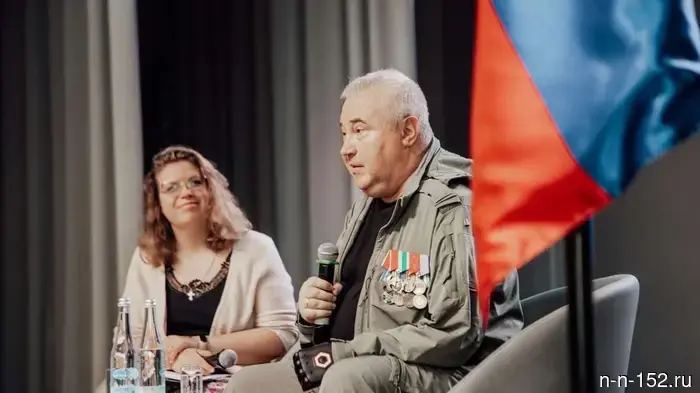 A famous war correspondent met with Nizhny Novgorod residents on the Day of Solidarity in the Fight Against Terrorism.
News of Nizhny Novgorod
A famous war correspondent met with Nizhny Novgorod residents on the Day of Solidarity in the Fight Against Terrorism.
News of Nizhny Novgorod
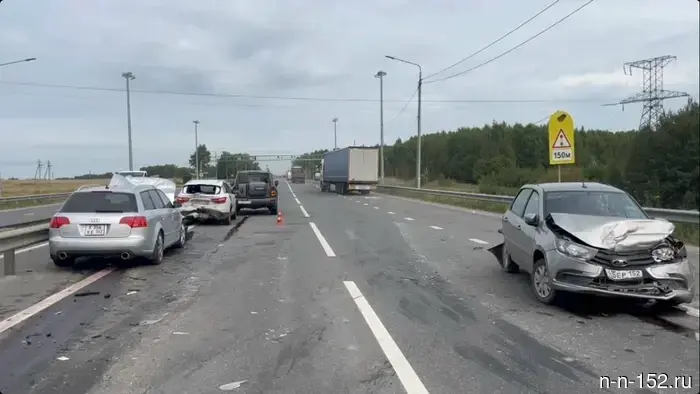 Four cars collided in the Dalnekonstantinovsky district.
A mass traffic accident occurred in the Dalenekonstantinovsky district. Four cars collided, and there are casualties. 04.09.2026. Nizhny Novgorod Truth. Nizhny Novgorod region. Nizhny Novgorod.
The shortage of electric bus drivers has almost been resolved in Nizhny Novgorod.
News of Nizhny Novgorod
Four cars collided in the Dalnekonstantinovsky district.
A mass traffic accident occurred in the Dalenekonstantinovsky district. Four cars collided, and there are casualties. 04.09.2026. Nizhny Novgorod Truth. Nizhny Novgorod region. Nizhny Novgorod.
The shortage of electric bus drivers has almost been resolved in Nizhny Novgorod.
News of Nizhny Novgorod
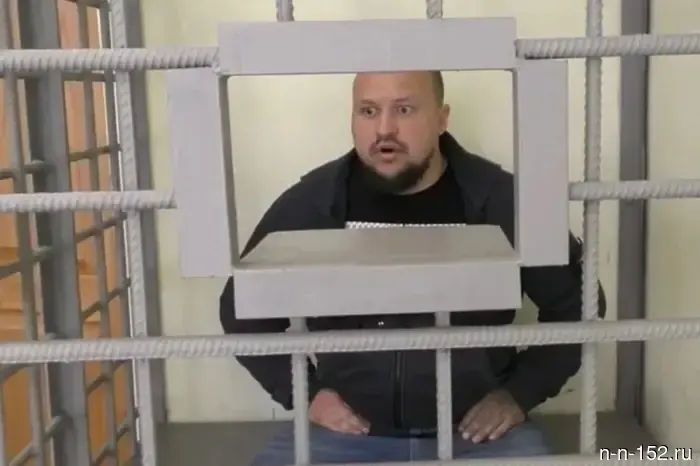 The Nizhny Novgorod authorities approved an agreement on cooperation with the Mogilev region.
News of Nizhny Novgorod
The Nizhny Novgorod authorities approved an agreement on cooperation with the Mogilev region.
News of Nizhny Novgorod
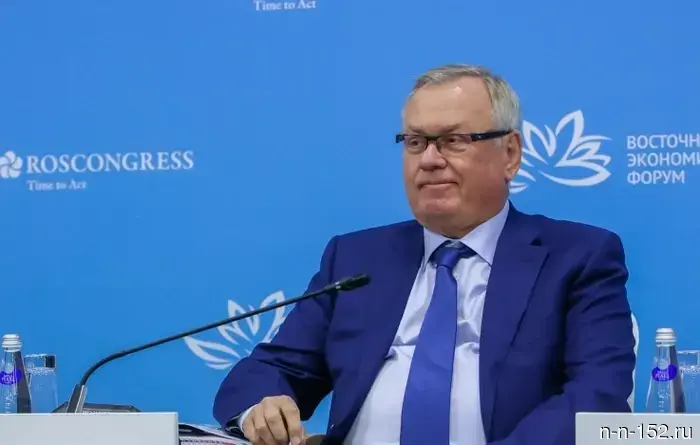 Russian banks have increased settlements in national currencies with Asian countries.
Photo: provided by VTB
Russian banks have significantly increased the volume of transactions in national currencies with Asian countries after 03.09.2026. NIA Nizhny Novgorod. Nizhny Novgorod region. Nizhny Novgorod.
Russian banks have increased settlements in national currencies with Asian countries.
Photo: provided by VTB
Russian banks have significantly increased the volume of transactions in national currencies with Asian countries after 03.09.2026. NIA Nizhny Novgorod. Nizhny Novgorod region. Nizhny Novgorod.
Event monitoring expert from August 31 to September 4, 2026, by the Autonomous Non-Profit Organization "Minin Center"
News of Nizhny Novgorod