
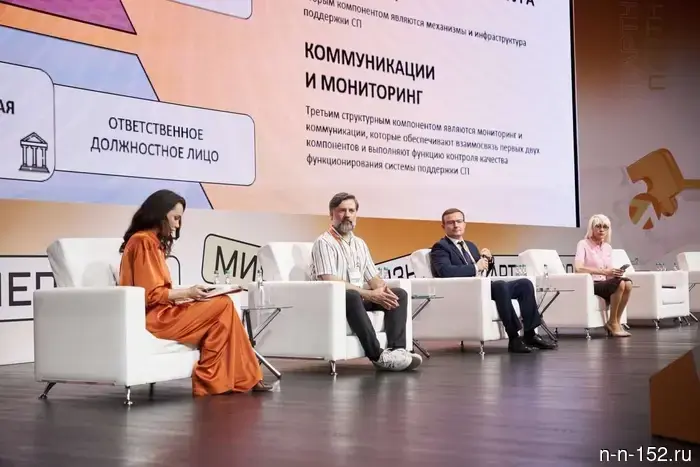
Crowdfunding School in the Nizhny Novgorod Region: How to Assess the Impact of Social Entrepreneurship
In the Nizhny Novgorod region, a free educational intensive course "Crowdfunding School" has been launched, aimed at developing skills for attracting funding for socially significant projects. The program is designed for one month and is implemented with the support of the regional Ministry of Social Development and Family Policy and the Fund for Supporting Social Projects. Upon completion of the training, graduates receive a certificate or qualification upgrade document.
The Nizhny Novgorod region is among the top 5 regions in Russia in terms of the number of social enterprises. A wide range of support measures is provided for them: from tax benefits to preferential microloans.
We invited experts to evaluate this news and answer the questions: "How can social entrepreneurship be integrated into national goals and regional programs under current economic conditions, and how can the effect of social entrepreneurship be accurately assessed?"
Maxim Lubyanoi, Director of the Research Institute of Social Management Problems, Candidate of Philosophical Sciences:
The Nizhny Novgorod initiative to launch the "Crowdfunding School" is not just a targeted training project, but a systemic step. In conditions where budgetary support is under increased strain, the region is betting on developing competencies for attracting extrabudgetary funds. This changes the paradigm: from "recipient of aid" to self-sufficient initiator.
When talking about integrating social entrepreneurship into national goals, it should be viewed as a resource projection of the "May decrees" at the level of local communities. Social entrepreneurs work directly with target groups—families with children, the elderly, people with disabilities—and are able to ensure social cohesion in areas where state mechanisms often prove too inert. In the current economic conditions, marked by structural restructuring, social enterprises relieve some of the burden from budgetary items while simultaneously creating new points of economic activity within settlements. In fact, they become natural co-executors of national goals for population preservation and improving quality of life, not in reporting terms, but in real terms.
The Nizhny Novgorod region has been purposefully building up its support infrastructure for several years—tax preferences, preferential microloans, and the social contracts institute. And when such a mass of tools has been accumulated, a logical gap arises: funds and benefits have been provided, but there are no competencies for their proper utilization. The educational intensive on crowdfunding addresses this very gap.
Regarding the assessment of the effect of social entrepreneurship, it is important to look not at reporting figures, but at real changes. Essentially, three simple parameters: the share of social enterprises that have achieved sustainable operational activity without constant budgetary support; the actual reach of target groups and the dynamics of their income or service quality; as well as the reduction of the burden on state social protection institutions in those niches where social business meets needs faster and cheaper. If positive dynamics is visible across these three points, it means the institution is working, and all tools, including educational programs, are merely means to achieve this result.
So, the event is routine but systemically important, as the institution of social entrepreneurship in the region matures.
Evgeny Semenov, Deputy Chairman of the Public Chamber of the Nizhny Novgorod Region, Head of the Nizhny Novgorod Branch of FoRGO, Political Scientist, Candidate of Political Sciences, Associate Professor:
The paradox of the situation is that in a traumatized economy, the demand for social entrepreneurship is increasing while the supply is decreasing. Elementary logic suggests that the pressure of economic sanctions, the growing resource deficit, and the increasing influence of various negative factors, which often emerge as "black swans," force businesses to contract, think about survival, and postpone the implementation of socially oriented programs until better times. The state, in conditions of budget deficit, is also forced to reconsider and reduce the resource base for social entrepreneurship, cutting the number and volumes of grants and subsidies.
However, even in conditions of economic destabilization, the state does not lose its role as the main subject of organizing the process of social entrepreneurship. Supporting various social groups that require increased attention and social care can be done not only with money. There are various non-monetary tools that help address these tasks. A significant portion of these tools is related to organizational and managerial processes. These include consultative-expert and informational support, assistance in bureaucratic processes ("one-stop shop"), and the provision of infrastructure. Educational support plays a significant role here, as the state, through regional authorities, organizes courses, training sessions, and workshops on topics relevant to the development of social business. The Crowdfunding School, opened in the Nizhny Novgorod region, is an example of an effective maneuver by the state, striving to maintain social entrepreneurship as a participant in the socio-economic process even in unstable economic conditions.
Sergey Sudyin, Doctor of Sociological Sciences, Professor, Head of the Department of General Sociology and Social Work at NNGU named after N.I. Lobachevsky:
Social entrepreneurship is a phenomenon that is unique for most laypeople, and if you think about this phrase, it is quite eclectic. Well, in fact: it is social, but still entrepreneurship; it is entrepreneurship, but still social. Here, you either earn money or try to change the world for the better. In reality, the picture is much more complex, and there are many criteria for the "sociality" of entrepreneurship. Just as there are many who want to don the image of social business among large and wealthy companies, whose missions are far from anything lofty and selfless.
Despite the fact that the Nizhny Novgorod region is among the top 5 regions in Russia in terms of the number of social enterprises, for which a wide range of support measures is provided, from tax benefits to preferential microloans, the opening of the educational intensive "Crowdfunding School" is clearly not accidental and is dictated by the specifics of the current and upcoming economic conjuncture. In the situation of further tightening of monetary policy and reducing funds for financial support for anyone, it remains to shift the upcoming costs onto future clients, whether they are interested or not in the development of products and services offered by social entrepreneurs. Crowdfunding is precisely about this. From the world by a thread, as they say. Or a chicken by a grain.
I do not want to delve into the technical, technological, and legal aspects of crowdfunding: there are indeed many. I want to draw attention again to what I never tire of repeating. Both social entrepreneurship and crowdfunding as its sub-institute are manifestations of what is called civil society worldwide. This is the very "third sector," where civil consolidation occurs to solve problems that are inaccessible to individual efforts. It is from here that requests for solutions to problems that previously neither the state nor the real sector of the economy could address begin to be formulated. Here, options, technologies, and algorithms for problem-solving are proposed, and institutions and mechanisms for evaluation and control are formed. Of course, extrabudgetary. And therefore, it is understandable that any authority wishes to control the third sector, while not depriving it of subjectivity, initiative, or activity.
But that is not the point now. The activities of social entrepreneurs (as far as I understand, this refers to small organizations implementing socially significant projects) are inherently integrated into both national goals and regional programs. This occurs purely from the content of their activities aimed at assistance, protection, drawing attention to problems, and developing social technologies. There is no contradiction with state priorities here. The question of the effects of social entrepreneurship seems more complex. First of all, one needs to ask: have any requirements or expectations been placed on social entrepreneurs, for example, from state structures? Were they formalized? Were criteria for achieving social effects outlined? In that case, there are no problems: one just needs to compare what was promised with what was achieved. If the social entrepreneur defines the effectiveness of their activities themselves, one can resort, for example, to sociological measurements: the technology seems cumbersome, but in reality, it is much simpler, especially if this task is delegated to professionals. Finally, one can entrust the assessment of potential effectiveness to the end consumer, as they can "vote with their wallet," directly determining the fate of a particular social initiative. Crowdfunding is precisely about this.
Elena Mozgunova, Historian, Candidate of Political Sciences, Associate Professor at the Nizhny Novgorod Institute of Management—branch of RANEPA:
The Nizhny Novgorod region is creating conditions for the development of social entrepreneurship and there is a focus of attention from the authorities in this area. Therefore, we are among the top five among Russian subjects in terms of the number of enterprises. Social entrepreneurship addresses several tasks, the main one being support for vulnerable groups by providing jobs, integrating people with disabilities into the general environment, and consequently improving their quality of life.
I believe that further development of the sector and more extensive integration into national goals and regional initiatives may be linked to the growth of social effectiveness, which needs to be measured accurately. Moreover, while financial costs (expenses) can be easily calculated, social or environmental benefits are somewhat more complex. We also understand that often a social project has a delayed effect, which will yield results after several years.
What is more beneficial: to give a job to a person with disabilities or to pay them benefits? This can be measured in quantitative terms. However, the social effect of the activity will also be in the increased self-esteem of such an individual, strengthening social ties, and they will feel like an ordinary person, regardless of their disabilities. And this is already a qualitative assessment that will complement the quantitative results. Therefore, the development and adoption of clear methodologies for measuring effectiveness will contribute to the integration of social entrepreneurship into
Другие Новости Нижнего (Н-Н-152)
 Nizhny Novgorod ex-deputy Nikolai Shumilkov will remain in pre-trial detention until August 14.
News of Nizhny Novgorod
Nizhny Novgorod ex-deputy Nikolai Shumilkov will remain in pre-trial detention until August 14.
News of Nizhny Novgorod
 Fake gas service employees deceived 227 Nizhny Novgorod residents out of 3.5 million rubles.
News of Nizhny Novgorod
Fake gas service employees deceived 227 Nizhny Novgorod residents out of 3.5 million rubles.
News of Nizhny Novgorod
 A new banknote with a denomination of 100 rubles has been put into circulation in Russia.
News of Nizhny Novgorod
A new banknote with a denomination of 100 rubles has been put into circulation in Russia.
News of Nizhny Novgorod
 Public activists discussed the organization of monitoring electoral rights in the upcoming elections.
News of Nizhny Novgorod
Public activists discussed the organization of monitoring electoral rights in the upcoming elections.
News of Nizhny Novgorod
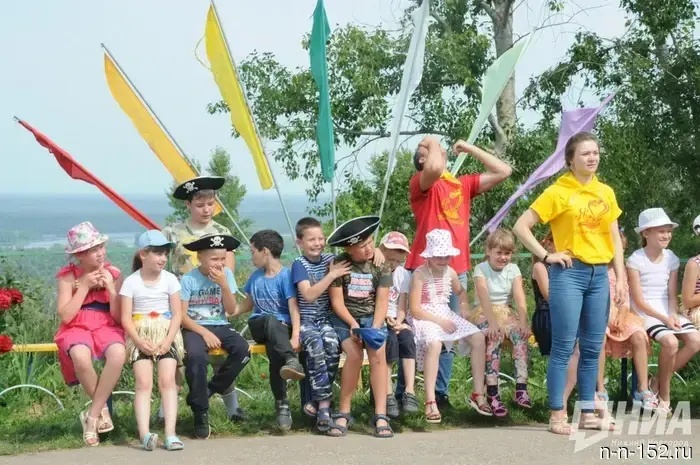 Requirements for children's camps have been tightened in the Nizhny Novgorod region.
News of Nizhny Novgorod
Requirements for children's camps have been tightened in the Nizhny Novgorod region.
News of Nizhny Novgorod
 Nizhny Novgorod residents were promised the end of the fuel crisis in the summer.
News of Nizhny Novgorod
Nizhny Novgorod residents were promised the end of the fuel crisis in the summer.
News of Nizhny Novgorod
Crowdfunding School in the Nizhny Novgorod Region: How to Assess the Impact of Social Entrepreneurship
News of Nizhny Novgorod