
An exhibition of family relics from the merchant dynasty of Kuznetsovs has opened at the Rukavishnikov Estate.
In the Rukavishnikov Estate - the main building of the Nizhny Novgorod Museum-Reserve - an exhibition titled "Family Values" has opened, telling the dramatic fate of the famous Nizhny Novgorod manufacturers of the early 20th century - the merchant dynasty of Kuznetsovs. This was reported by the Ministry of Culture of the Nizhny Novgorod Region. The exhibition features family jewels of merchant Fileter Kuznetsov and a collection of paintings by his brother, impressionist artist Konstantin Kuznetsov, discovered during renovation and restoration work in the former mansion of the family on Malaya Pokrovskaya Street, which currently houses the military medical service of the FSB of Russia in the Nizhny Novgorod region. "The exhibition tells about the origin and entrepreneurial activities of the ancient merchant family, whose contribution to the economy and charity of the Nizhny Novgorod province is hard to overestimate. For example, thanks to the efforts of the Kuznetsovs, the first anti-tuberculosis sanatorium was opened. The amazing discovery of jewels hidden during the revolutionary turmoil prompted Nizhny Novgorod researchers to turn to the history of the glorious merchant dynasty and restore forgotten pages of the past," noted the governor of the Nizhny Novgorod region, Gleb Nikitin. The main exhibits of the exhibition are a treasure found last year and carefully restored by the museum's restorers. This find has become a living and tragic echo of the revolutionary events of 1917, which divided the history of the country and the family into "before" and "after." "The new exhibition 'Family Values' in the Rukavishnikov Estate is not so much about jewelry as it is about memory. About how one find helps literally restore the history of a family, a lineage, and an entire era. For regional museums, such finds are extremely rare. In fact, this is the first jewelry treasure of such scale discovered and fully preserved for future generations in 130 years. It turns out that after more than a hundred years, the treasures of one large and famous family are coming back to life and attention. I thank the FSB of Russia in the Nizhny Novgorod region for the joint work on this project, for attention to detail and the extensive research work conducted together with the museum for the benefit of our region and the history of the country," said Oleg Berkovich, Deputy Governor of the Nizhny Novgorod region, at the opening of the exhibition. "The FSB of Russia in the Nizhny Novgorod region has performed a responsible and honorable task of preserving the historical national heritage. This is symbolic in today's difficult political conditions, when domestic cultural heritage is a primary target of encroachments by our adversaries. Let us preserve it for future generations," reported Roman Rusakov, a representative of the FSB of Russia in the Nizhny Novgorod region. Of particular interest are the wedding rings engraved on the inside with the names of the owners of the house - Fileter Pavlovich Kuznetsov and his wife Valentina Vasilievna (née Markova), as well as the date of their marriage - February 7, 1900. "The jewels were hidden in the house where Valentina and Fileter Kuznetsov lived, apparently just before the house was requisitioned. The house was built with care, and restoration was only needed after 100 years, so the jewels remained untouched all this time. They were found in a box that had contained German soap. With this find, made in an instant, we have revived the entire history of several merchant families," said the curator of the exhibition, head of the history department of the Nizhny Novgorod Museum-Reserve, Tatiana Kuzmina. The found "Kuznetsov treasure" consists of 25 pieces of jewelry: gold earrings, rings, and brooches adorned with diamonds. Among them are works by renowned jewelers of the Russian Empire. A treasure with such a number of jewels, transferred to the museum, is a huge rarity not only for Nizhny Novgorod but for any regional museum. "The Nizhny Novgorod region is a keeper of various treasures. Many treasures are still undiscovered, and those that have been found belong to completely different historical eras, starting from the Stone Age to this very recent Kuznetsov treasure. If we look at the large number of revolutionary treasures, we will see that, for the most part, they are luxury items rather than jewelry, because they were easy to carry and take with them into emigration. Here we are dealing with a treasure that consists entirely of jewelry. This is not just an addition but an exclamation mark of our collection of precious metals. And, of course, this treasure will be used in further scientific and excursion work of the museum. Starting in September, we plan to show this treasure to all university students in the Nizhny Novgorod region as part of a new program on the Pushkin Card 'The Influence of the Merchant Class on the Formation of Russian Statehood at the Turn of the 19th-20th Centuries,'" reported Yuri Filippov, General Director of the Nizhny Novgorod Museum-Reserve. Notably, there is also the legacy of Fileter Kuznetsov's brother - Konstantin. The outstanding artist moved to France before the revolutionary events and became one of the first Russian impressionists. His works were exhibited at the Musée d'Orsay, the Carnavalet Museum of the History of Paris, the Pont-Aven Museum of Fine Arts, the Hague Museum of Art, and others. A large collection of paintings by Konstantin Kuznetsov was also remarkably found after 100 years and brought back to his homeland through the efforts of entrepreneur and philanthropist Andrei Shcherbinin, who founded the Konstantin Kuznetsov Foundation, which has been studying and restoring the artist's legacy since 2015. "Everything related to the Kuznetsovs is amazing and incredibly symbolic! A few of his paintings accidentally came to us. When we began to study the artist's history, it turned out that he was known during his lifetime, and he was called 'the last knight of impressionism,' but then his name was lost in history. We found the heirs, and it turned out that they had a real treasure - a collection of paintings by Konstantin Kuznetsov. For a hundred years, they lay in the attic of an old Parisian house, with his heirs, rolled up in a roll. When we unrolled it, we found a collection of landscapes with the author's signatures of Konstantin Kuznetsov. The Foundation now has more than 400 works, and we consider it our mission to restore and popularize his legacy," said Andrei Shcherbinin, founder of the Konstantin Kuznetsov Foundation. The Konstantin Kuznetsov Foundation has long been working with Nizhny Novgorod museums. This time, eight paintings were brought for the "Family Values" exhibition, including landscapes and a family self-portrait of Konstantin Kuznetsov. According to art historians, the artist's work was influenced by impressions of the nature of the Volga region. Although the main subjects of the paintings were created in France, the artist's style reflects a "Russian perspective" on landscape. The author viewed nature from above, and the scale is immediately felt in the paintings. Specifically for the opening of the exhibition project, the creative team of researchers conducted scientific work. The result was the publication of a research book "Kuznetsovs. The Saga of the Zhelna Millionaires" in collaboration with the publication "Quartz," as well as a co-produced film with GTRK "Nizhny Novgorod" of the same name. The exhibition "Family Values" is part of the overall exhibition of the Rukavishnikov Estate and will run until the end of 2026. It is available through the "Pushkin Card." Let us remind you that the "Pushkin Card" program operates within the framework of the national project "Family," which started in Russia in 2025 at the initiative of President Vladimir Putin. Any citizen of Russia aged 14 to 22 can obtain a virtual card in the "Gosuslugi.Culture" app. The card limit is 5,000 rubles, which is renewed every year on January 1. The money can be spent on visiting museums, theaters, exhibitions, concerts, and cinemas across the country. The event schedule is available on the website: Kultura.RF. In 2026, the operator bank servicing the "Pushkin Card" changed in all regions of Russia. The press service of the governor and the government of the Nizhny Novgorod region.
Другие Новости Нижнего (Н-Н-152)
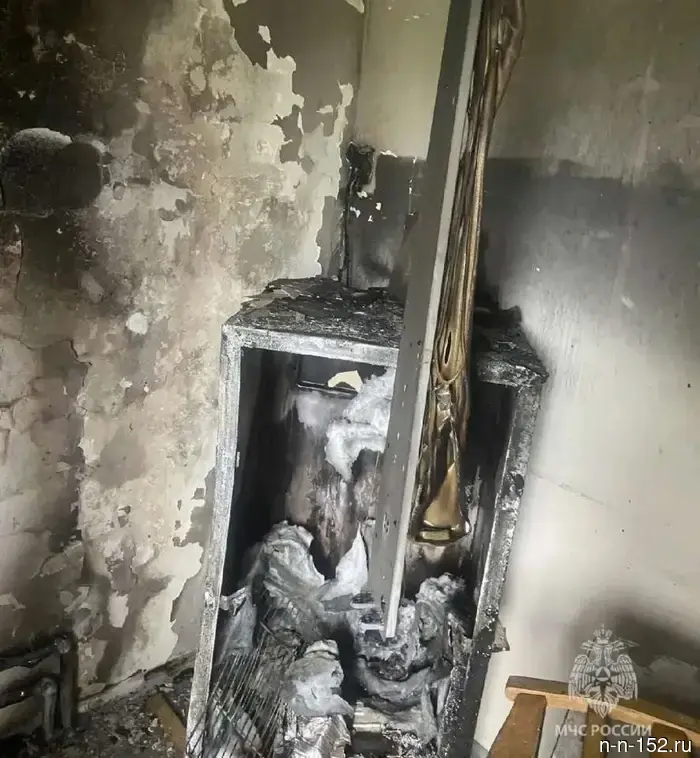 Five people were rescued from a fire at the Pavlovsk Central District Hospital.
News of Nizhny Novgorod
Five people were rescued from a fire at the Pavlovsk Central District Hospital.
News of Nizhny Novgorod
 Four people drowned in the Nizhny Novgorod region over the week.
During the week from June 8 to June 14, there were 10 incidents on the water in the Nizhny Novgorod region. 15.06.2026. vGorodeN.Ru. Nizhny Novgorod region. Nizhny Novgorod.
Four people drowned in the Nizhny Novgorod region over the week.
During the week from June 8 to June 14, there were 10 incidents on the water in the Nizhny Novgorod region. 15.06.2026. vGorodeN.Ru. Nizhny Novgorod region. Nizhny Novgorod.
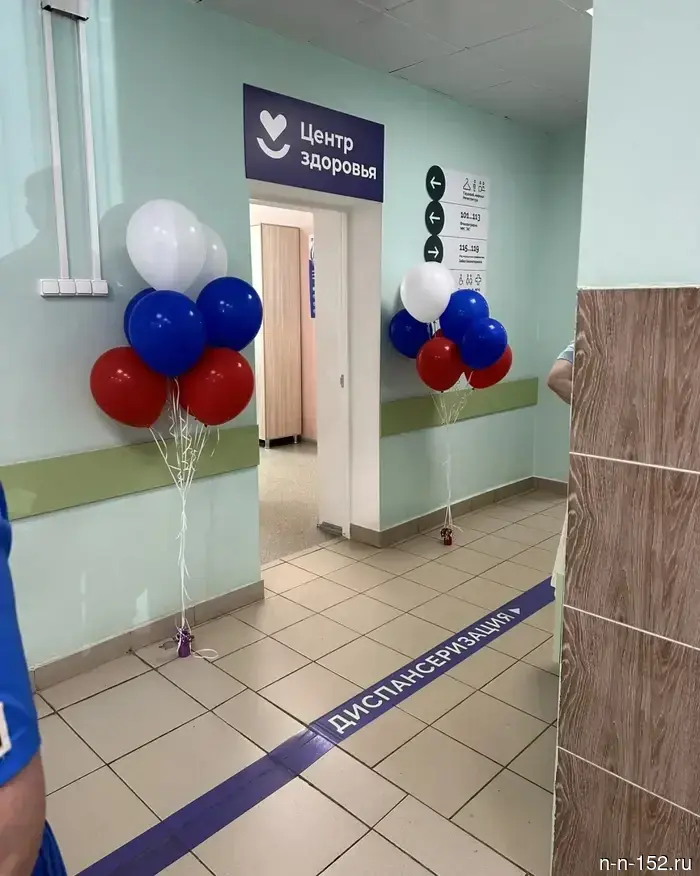 The health center has opened in the city clinic No. 30 of Nizhny Novgorod.
On June 10, 2026, a new Health Center began operating at Nizhny Novgorod City Polyclinic No. 30. June 15, 2026. Vadskiy Municipal District. Nizhny Novgorod Region. Vad.
The health center has opened in the city clinic No. 30 of Nizhny Novgorod.
On June 10, 2026, a new Health Center began operating at Nizhny Novgorod City Polyclinic No. 30. June 15, 2026. Vadskiy Municipal District. Nizhny Novgorod Region. Vad.
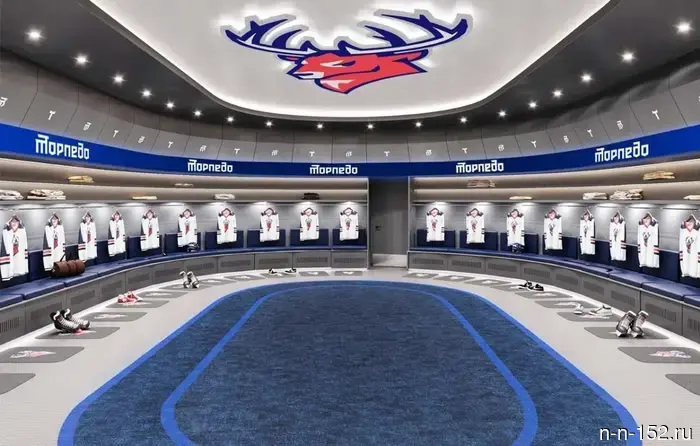 "Torpedo" will open the home season on September 14 with a match against "Ak Bars".
News of Nizhny Novgorod
"Torpedo" will open the home season on September 14 with a match against "Ak Bars".
News of Nizhny Novgorod
 Week results: June 8-14
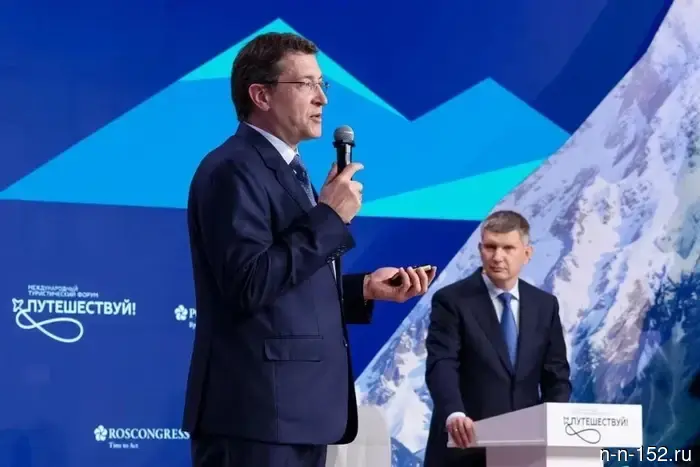
Gleb Nikitin presented the best practices for tourism development in the Nizhny Novgorod region at the forum "Travel! 15.06.2026. Newspaper Znamya. Nizhny Novgorod region. Bolshoye Murashkino.
Week results: June 8-14
Gleb Nikitin presented the best practices for tourism development in the Nizhny Novgorod region at the forum "Travel! 15.06.2026. Newspaper Znamya. Nizhny Novgorod region. Bolshoye Murashkino.
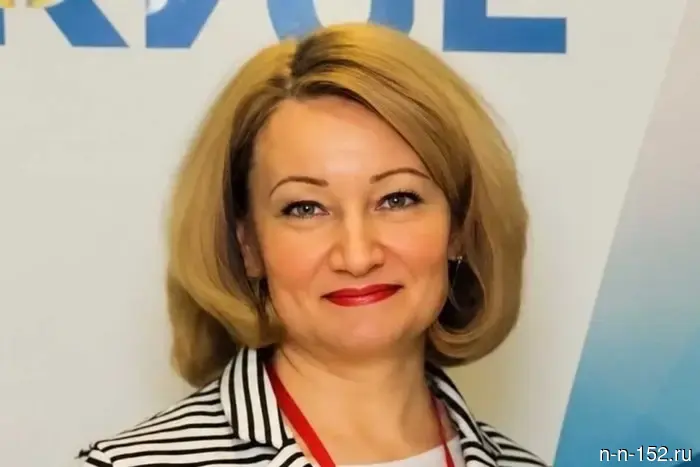 The President of the Russian Federation awarded the honorary title to the chief physician of the Nizhny Novgorod Oncology Center.
Photo: Telegram channel "Bokal Presseka"
The chief physician of the Nizhny Novgorod Oncology Dispensary, Natalia Beloglazova, was awarded the honorary title by the decree of President Vladimir Putin. 15.06.2026. Online publication We Live in Nizhny. Nizhny Novgorod Region. Nizhny Novgorod.
The President of the Russian Federation awarded the honorary title to the chief physician of the Nizhny Novgorod Oncology Center.
Photo: Telegram channel "Bokal Presseka"
The chief physician of the Nizhny Novgorod Oncology Dispensary, Natalia Beloglazova, was awarded the honorary title by the decree of President Vladimir Putin. 15.06.2026. Online publication We Live in Nizhny. Nizhny Novgorod Region. Nizhny Novgorod.
An exhibition of family relics from the merchant dynasty of Kuznetsovs has opened at the Rukavishnikov Estate.
In the Rukavishnikov Estate - the main building of the Nizhny Novgorod Museum-Reserve - an exhibition titled "Family Values" opened on June 15, 2026. Vad Municipal District. Nizhny Novgorod Region. Vad.