
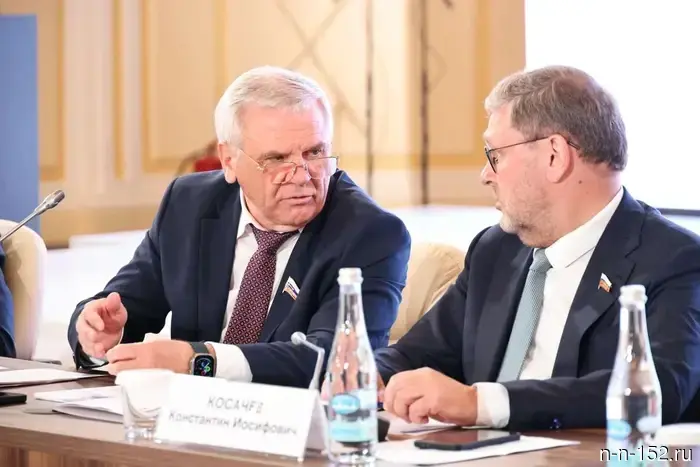
Proposes to unite the efforts of the regions of the Volga Federal District to address the problem of personnel shortages in construction.
On June 10, 2026, at 18:10, Politics. On June 10, the 80th anniversary meeting of the Council of Legislators of the Volga Federal District took place at the Nizhny Novgorod Fair. The plenary session was chaired by the Chairman of the Council of Legislators of the Volga Federal District, Speaker of the Legislative Assembly of Nizhny Novgorod Region, Yevgeny Lyulin. The discussion involved the Plenipotentiary Representative of the President of the Russian Federation in the Volga Federal District, Igor Komarov, the First Deputy Governor of Nizhny Novgorod Region, Andrey Gneushev, Senators of the Russian Federation, heads of legislative bodies of the Volga Federal District regions, and members of the Association of Youth Parliaments of the district.
The participants of the meeting discussed the development of the human resources potential in the construction industry. "Without specialists, we will not be able to build new urban quarters, develop private housing construction, carry out major repairs of housing and social facilities, and resettle emergency housing. The foundation of any infrastructure project is a conscientious and reliable developer with a professional team ready to guarantee results," noted the Chairman of the Council of Legislators of the Volga Federal District, Speaker of the Legislative Assembly of Nizhny Novgorod Region, Yevgeny Lyulin.
Igor Komarov emphasized the need to establish a systematic training of personnel considering the needs of the economy and the development of interaction between government bodies, employers, and educational organizations at all levels—from schools to secondary vocational and higher education based on the "school—SPO—university" model.
According to data for 2024, nearly 970,000 people were employed in the construction industry of the Volga Federal District—about 7% of the total employed population of the district. The leaders in the number of workers remain regions with a diversified economy: Bashkortostan, Samara Region, Perm Krai, Saratov Region, Tatarstan, Nizhny Novgorod Region, Orenburg Region, and Chuvashia. In some regions engaged in the industry, the number of workers is increasing: in Ulyanovsk and Kirov regions, the number of workers has increased by almost 20% over the past three years.
Salaries in the construction industry have increased by 47% over the past three years and averaged about 68,000 rubles in the district in 2025. The highest growth rates were recorded in Nizhny Novgorod Region (96%) and the Republic of Tatarstan (60.4%).
At the same time, the shortage of personnel remains a major challenge. In 2025, there were over 30,000 vacancies in the Volga Federal District, of which more than 80% were for specialists in working professions. The most in-demand positions are plasterers, electricians, roofers, locksmiths, welders, crane operators, and bricklayers. Among specialists with higher education, there is a shortage of engineers, architects, and construction experts.
The Chairman of the Legislative Assembly of Kirov Region, Roman Beresnev, proposed a comprehensive set of measures to address the personnel problem, covering the entire cycle—from career guidance for schoolchildren to the employment of graduates. He noted that early career guidance is of particular importance. There is already positive experience with specialized architectural and construction classes in Mordovia, Chuvashia, Perm Krai, and Nizhny Novgorod Region. According to him, the federal project "Professionalitet" plays an important role. In 7 regions of the Volga Federal District, educational-production clusters have been created in the direction of "Construction Industry": in Nizhny Novgorod, Orenburg, Penza, Samara, Saratov regions, in Mari El, and Chuvashia. The project has involved 36 organizations of secondary vocational education, where about 6,500 students are trained. Over three years, the number of targeted students has increased more than fivefold—from 91 to 464 people.
In the field of higher education, 33 universities in the Volga Federal District are training builders, with more than 26,000 students enrolled. Employers note a gap between theory and practice. It is proposed to include mandatory modules on information modeling technologies and artificial intelligence tools in design and construction in educational programs.
The regions of the Volga Federal District are already using various support measures. In Saratov Region, young specialists at industrial enterprises can receive a one-time payment of 200,000 to 450,000 rubles on the condition of three years of service. In Kirov Region, a draft law on the first job has been prepared with a system of support measures for young specialists and employers. In Ulyanovsk Region, the region pays for the education of students who go to work in local government after graduation.
"We believe that it is necessary to more actively use the mechanism of targeted training and strengthen information work with construction organizations. We will summarize all proposals and send initiatives to our colleagues in the State Duma and the Government of the Russian Federation," concluded the Chairman of the Council of Legislators of the Volga Federal District, Speaker of the Legislative Assembly of Nizhny Novgorod Region, Yevgeny Lyulin. NIA "Nizhny Novgorod" has channels on Telegram and MAX. Subscribe to stay updated on major events, exclusive materials, and operational information. Copyright © 1999—2025 NIA "Nizhny Novgorod". When reprinting, a hyperlink to NIA "Nizhny Novgorod" is mandatory. This resource may contain materials 18+.
Другие Новости Нижнего (Н-Н-152)
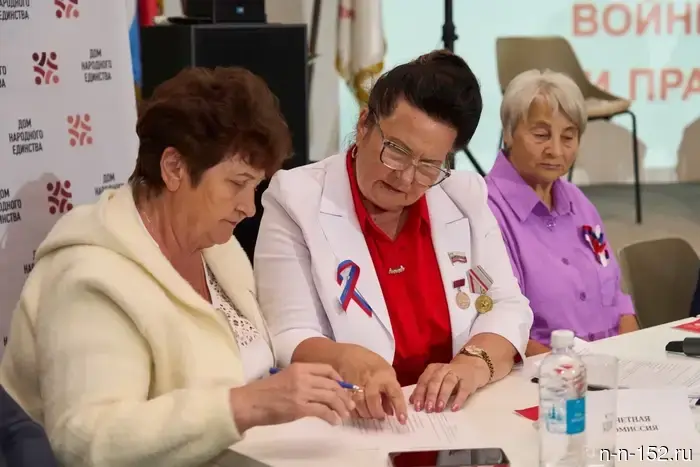 Participants of the events at the House of National Unity voted for the improvement projects under the FCGS.
News of Nizhny Novgorod
Participants of the events at the House of National Unity voted for the improvement projects under the FCGS.
News of Nizhny Novgorod
 The acting head of the State Council of Bashkortostan was injured at a tournament in Nizhny Novgorod.
News of Nizhny Novgorod
The acting head of the State Council of Bashkortostan was injured at a tournament in Nizhny Novgorod.
News of Nizhny Novgorod
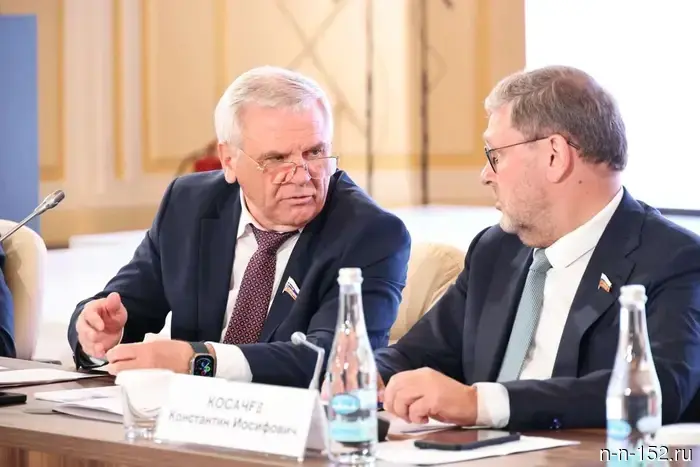 Proposes to unite the efforts of the regions of the Volga Federal District to address the problem of personnel shortages in construction.
News of Nizhny Novgorod
Proposes to unite the efforts of the regions of the Volga Federal District to address the problem of personnel shortages in construction.
News of Nizhny Novgorod
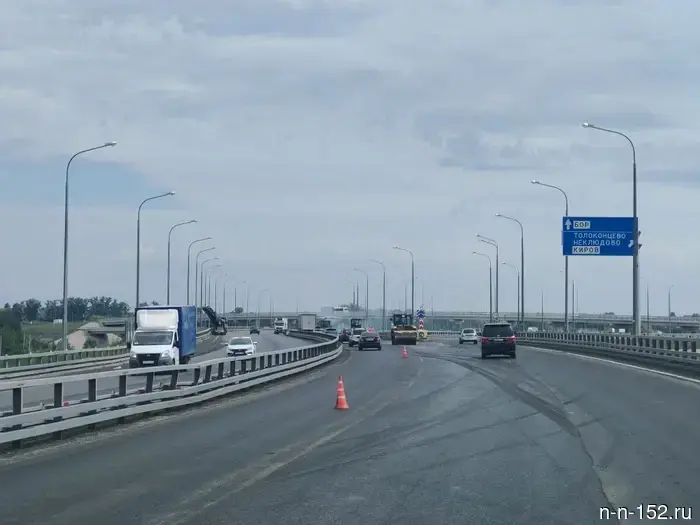 The road workers have completed the elimination of ruts on the approach to the Borsky Bridge.
News of Nizhny Novgorod
The road workers have completed the elimination of ruts on the approach to the Borsky Bridge.
News of Nizhny Novgorod
 All youth parliaments of the Volga Federal District will be granted the right of legislative initiative.
News of Nizhny Novgorod
All youth parliaments of the Volga Federal District will be granted the right of legislative initiative.
News of Nizhny Novgorod
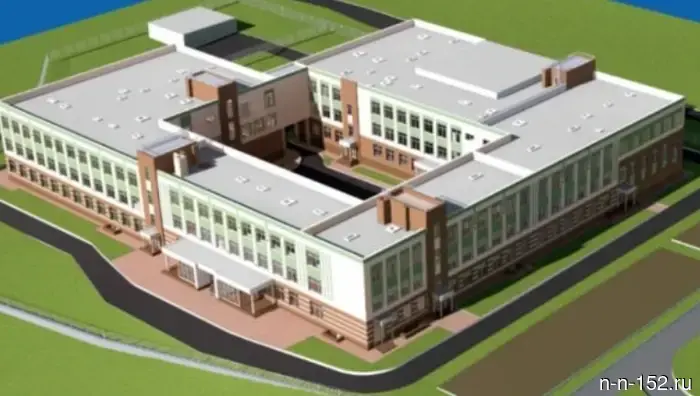 In the Nizhny Novgorod region, the construction of two schools with more than 1000 places has begun.
News of Nizhny Novgorod
In the Nizhny Novgorod region, the construction of two schools with more than 1000 places has begun.
News of Nizhny Novgorod
Proposes to unite the efforts of the regions of the Volga Federal District to address the problem of personnel shortages in construction.
News of Nizhny Novgorod