
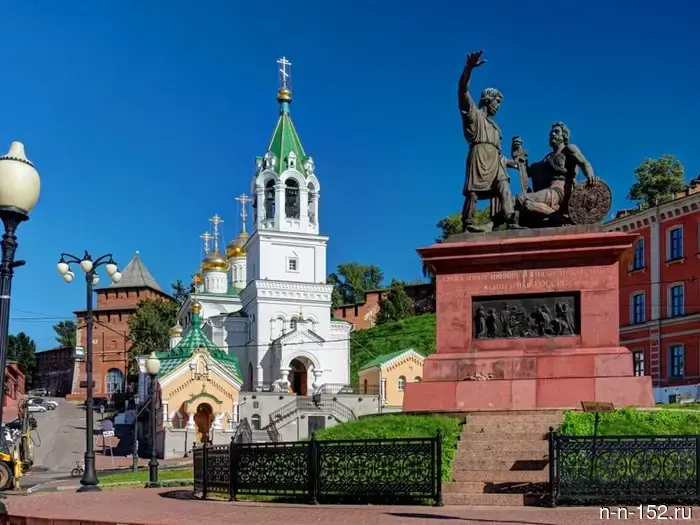
Event monitoring expert report from June 1 to June 5, 2026 by the Autonomous Non-Profit Organization "Minin Center"
Experts from the "Minin Center" analyze the events of the past week that influence the socio-political situation in the world, Russia, and the Nizhny Novgorod region, where long-term trends are manifesting.
The topics of the week are "SPIEF-2026 (18+)", "Russia will create a Ministry for the Protection of Objects from Enemy Drones for the first time", "An expert meeting dedicated to the 'Russian Canon' project took place in Nizhny Novgorod".
Federal topic - SPIEF-2026
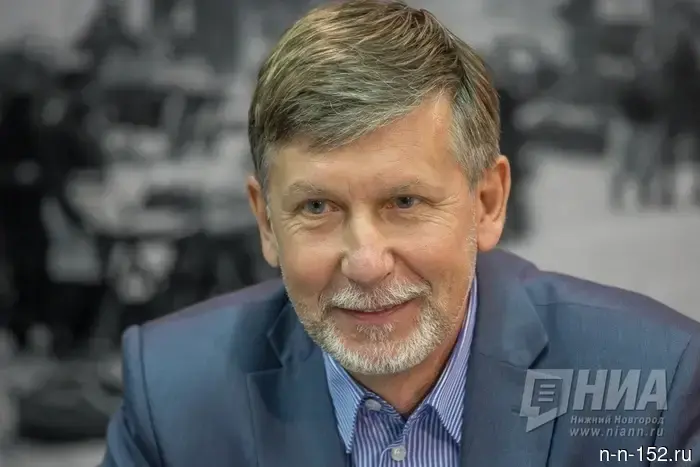
Expert from the "Minin Center", Professor at the RANEPA, Doctor of Philosophy Andrey Dakhin:
"SPIEF-2026 is significant primarily in terms of continuing public dialogues about the priorities and measures of Russia's sovereign economic development, taking into account all the main features of the global economic architecture.
In Russia, the main moderator of such a dialogue with financial and economic institutions is President Vladimir Vladimirovich Putin, whose plenary speech attracted increased interest. The trend he presented of shifting the center of global development from the G7 countries to the BRICS countries reflects that at this level, Russia has a large international economic environment conducive to its economic development. Since Russia is a member of BRICS, it has the potential for friendly relations, mutually beneficial partnerships, and the potential to enter a large growing global market.
However, the main complex issues of economic growth concern domestic policy, where the government still faces the question of measures to transition from 'restrained' economic dynamics to active economic growth. The three key modern technologies that the President of the Russian Federation associates with the country's development - artificial intelligence, autonomous systems, and platform solutions - equally depend on the establishment and development of a new sector of the economy - the information processing economy. As is known, on an industrial scale, this requires building modern data centers, information processing centers (DPCs), which, in turn, require investments in energy, software production, and microchip manufacturing.
Therefore, the emphasis on the task addressed to the government is understandable - to launch a new investment cycle in the Russian Federation. The new aspect is that resources from the state budget are partially redistributed from direct investment to compensating the expenses of regions and business entities for servicing high debt obligations. The 'falling' volumes of budget investments apparently need to be 'covered' and multiplied through private investments. The next link in the causal chain is the factor of reducing construction timelines for facilities and the timelines for their commissioning into commercial operation. In solving these tasks, new elements of the investment cycle should manifest, which the Russian economy is awaiting.
There are prerequisites for this, as evidenced by the results of regional rankings, which are traditionally summarized within the framework of SPIEF. The Nizhny Novgorod region has been noted twice in this regard in Vladimir Putin's address, both as one of the leaders in investment attractiveness and as one of the leaders in reducing construction cycles, including in the area of restoring cultural heritage sites. The optimal combination of resources, regional potential, and the resources and potential of the federal government of Russia is a quite real basis that can ensure the transition of the Russian economy to growth."
Regional topic - Russia will create a Ministry for the Protection of Objects from Enemy Drones for the first time
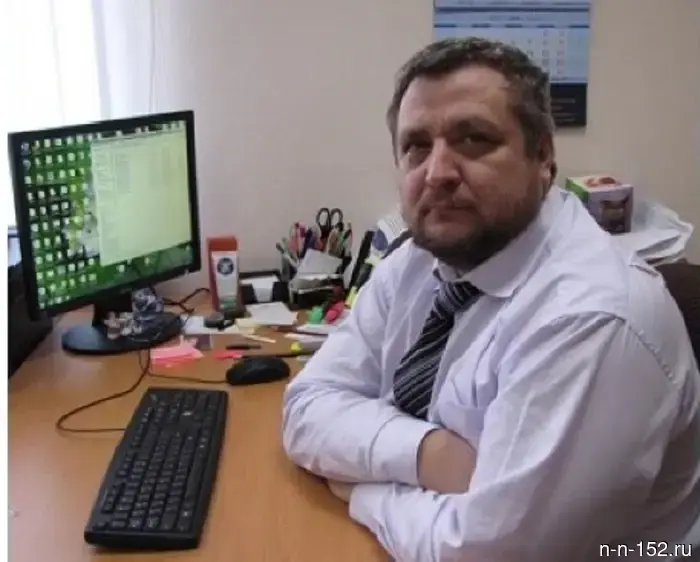
Expert from the "Minin Center", Candidate of Philosophy Pavel Sedaev:
"Against the backdrop of increased strikes from Ukraine deep into Russian territory, a Ministry for the Protection of Objects from Drones will be established in the Nizhny Novgorod region, as per the decree signed by Governor Gleb Nikitin.
The Nizhny Novgorod initiative has sparked a heated wave of discussions at the federal level. So why is a new structure needed?
The Kyiv regime's arsenal is increasingly filled with long-range systems capable of striking deep into our territory. As a result, this leads to an increase in the number of attacks that we are currently observing, including in the Nizhny Novgorod region.
At the same time, the issue is that our country's territory is large, and therefore the main air defense system is not border-based, but object-based. That is, protection systems are built around specific objects. And therefore, the enemy increasingly strikes at those objects that have no military significance, energy and oil refining enterprises, or even completely civilian objects; for instance, last week an attack was made on the building of the regional court.
It seems that the creation of this ministry is essentially the establishment of a coordinating center at the regional level for the interaction of law enforcement agencies, civil authorities, and comprehensive assistance to the Ministry of Defense of the Russian Federation.
A logical question arises: why are there no similar ministries in other regions, even in frontline areas where the protection of objects is a more pressing issue? Apparently, regional authorities believe that the protection of objects cannot be solely a civil function, and that these tasks cannot be fully managed.
And if the experience of the Nizhny Novgorod region proves successful, similar structures may appear in other regions. If the practice is successful, it will be scaled up at the federal level.
It is also important that previously and currently in the Nizhny Novgorod region, in connection with these threats, mobilization reserves are being created and are already operational, with service implying theoretical and practical training, including countering UAVs, within the region with the possibility of attracting resources to solve tasks for the protection of critical infrastructure objects. Moreover, there are real results.
As reported by the military commissariat of the region, territorial defenders of the mobilization reserve 'BARS-NN' have recently destroyed four drones during two days of duty while repelling attacks on critically important objects in the Nizhny Novgorod region.
In our view, all these measures represent a very important step forward in eliminating inter-agency disorganization and removing bureaucratic obstacles for effective protection of both the infrastructure objects themselves and the population. In turn, the application of a comprehensive approach that combines the creation of a unified policy on this issue will allow for effective counteraction to the existing threats from the Kyiv regime."
Municipal topic - An expert meeting dedicated to the "Russian Canon" project took place in Nizhny Novgorod
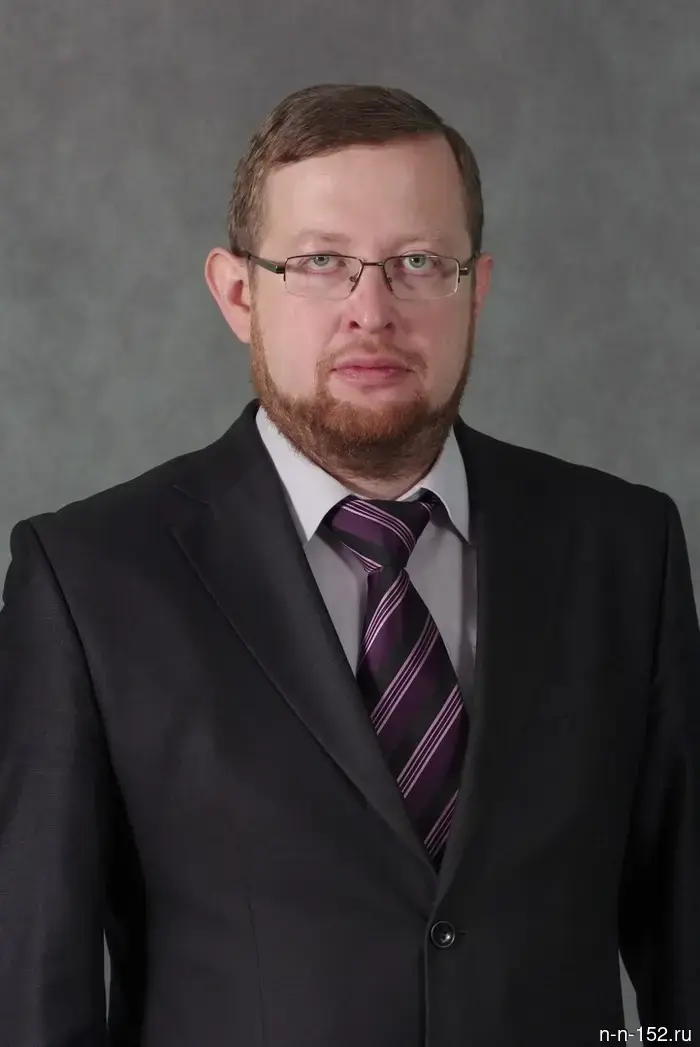
Expert from the "Minin Center", Associate Professor of Philosophy and Theology at NGPU named after K. Minin, Candidate of Philosophy Daniil Semikopov:
"On May 29, 2026, an expert meeting dedicated to the start of the implementation of the project 'Russian Canon: Anthropology of Cultural Memory and New Principles of Humanitarian Education' took place at the Corporate University of the Government of the Nizhny Novgorod Region. The event was organized by the ANO 'Minin Center' and the All-Russian Public Movement 'Russian Dream'. The event was supported by the ANO 'Integration'.
The meeting brought together representatives of the scientific and educational community, experts in the fields of philosophy, history, humanitarian education, cultural policy, and public initiatives. The central theme of the discussion was how the domestic cultural tradition can be presented not merely as a simple collection of historical facts and texts, but as a holistic system of images, symbols, and value orientations that shape a person.
The 'Russian Canon' project is based on the idea that the canon is not just a list of 'great books', but a living system of cultural memory that transmits normative images of a person: a saint, a prince, a warrior, a teacher, a witness, a worker, and a guardian of tradition.
A welcoming address to the participants of the meeting was made by Deputy Head of the 'Russian Dream' Movement Andrey Kovalenko and Chairman of the ANO 'Minin Center', Coordinator of the Regional Branch of the 'Russian Dream' Movement in the Nizhny Novgorod Region Alexey Orekhov.
The main report 'Russian Canon as an Anthropological Project' was presented by Daniil Semikopov, Candidate of Philosophy, Associate Professor of Philosophy and Theology at NGPU named after K. Minin. He presented the methodological framework of the project, connecting three key categories: cultural memory, canon, and anthropological project. This approach allows for structuring humanitarian education around the main question: what kind of person does culture educate, and what images of a person does it preserve in its texts, symbols, historical plots, and educational practices.
Particular attention was paid to the problem of the loss of the anthropological center in modern humanitarian education. Meeting participants noted that Russian culture is often described as a late branch of European history, while Byzantine, Old Russian, and Orthodox traditions find themselves on the periphery of the educational narrative. In this regard, one of the key tasks of the project was identified as the return of a holistic image of a person rooted in domestic cultural memory to humanitarian education.
The second report - 'Modern Traditionalist Worldview of Russia: Composition, Main Theses, Sources, Status, and Pragmatics' - was presented by Sergey Baranov, Candidate of Sociological Sciences, Coordinator of the Expert Council of the 'Russian Dream' Movement. In his speech, he outlined the problem of the absence of a coherent and universally recognized traditionalist worldview canon in Russia in the 2020s, as well as emphasized the need to develop a clear language for describing a person, society, the state, and Russia's civilizational path.
The meeting concluded with a round table dedicated to the issues of further implementation of the project. Participants discussed the prospects for inter-university cooperation and the practical development of the 'Russian Canon' as a research and educational laboratory for cultural anthropology.
Andrey Dakhin, Doctor of Philosophy, Professor of
Другие Новости Нижнего (Н-Н-152)
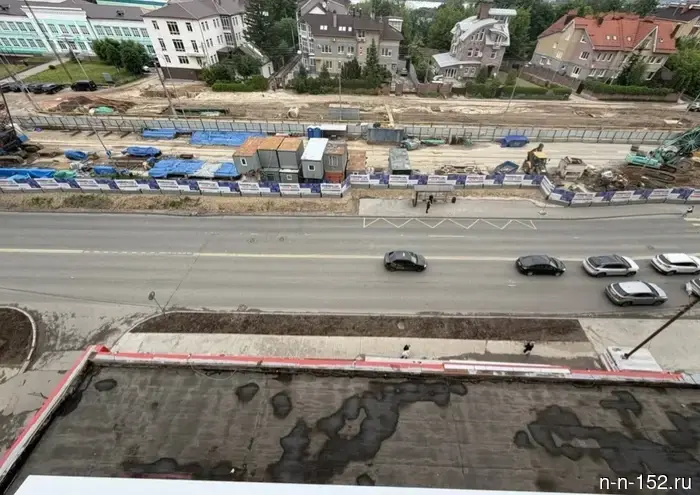 Nizhny Novgorod residents were offered a mechanism to solve the parking shortage on Rodionova Street.
News of Nizhny Novgorod
Nizhny Novgorod residents were offered a mechanism to solve the parking shortage on Rodionova Street.
News of Nizhny Novgorod
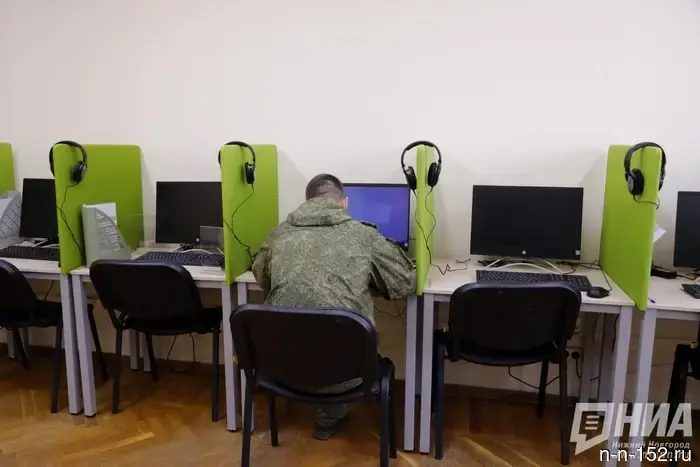 Two Nizhny Novgorod residents returned from Ukrainian captivity.
News of Nizhny Novgorod
Two Nizhny Novgorod residents returned from Ukrainian captivity.
News of Nizhny Novgorod
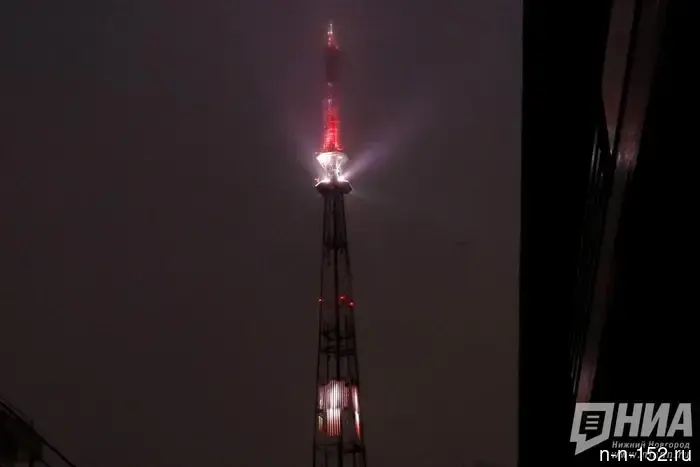 The Nizhny Novgorod TV tower will shine with lines from Pushkin on Russian Language Day.
News of Nizhny Novgorod
The Nizhny Novgorod TV tower will shine with lines from Pushkin on Russian Language Day.
News of Nizhny Novgorod
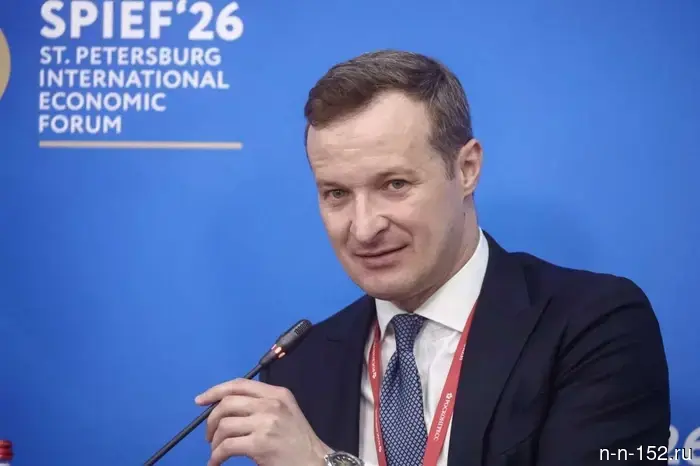 Nizhny Novgorod Region and Kyrgyzstan will cooperate in science and technology.
News of Nizhny Novgorod
Nizhny Novgorod Region and Kyrgyzstan will cooperate in science and technology.
News of Nizhny Novgorod
 Flight restrictions have been lifted at the Nizhny Novgorod airport.
News of Nizhny Novgorod
Flight restrictions have been lifted at the Nizhny Novgorod airport.
News of Nizhny Novgorod
 Two Nizhny Novgorod residents returned from Ukrainian captivity.
News of Nizhny Novgorod
Two Nizhny Novgorod residents returned from Ukrainian captivity.
News of Nizhny Novgorod
Event monitoring expert report from June 1 to June 5, 2026 by the Autonomous Non-Profit Organization "Minin Center"
News of Nizhny Novgorod