
A short path to purchase: why outdoor advertising works like a regular prompt
Let's be honest: when we walk down the street or stand in traffic, we don't think about the "brand mission" or "high company status." We think about where to have lunch, fix our phone, buy a gift, or which dentist to book an appointment with while we have a free minute. In 2026, outdoor advertising is primarily convenient navigation for those who are already "on the move." It's the simplest way to tell a person: "What you need is just around the corner."
The "low-start" buyer
The main difference between a person online and a person on the street is readiness for action. Scrolling through a feed on the couch, we are just consuming content. Being in the city, we are already in work mode. Outdoor advertising catches us at the moment when the journey from "saw" to "went in and bought" takes the least amount of time. Good advertising on the streets doesn't try to make you philosophize. It simply reminds you of the essentials: that it's time to change your tires, that business lunches have started at the café around the corner, or that sales have opened in a new residential complex. It works like a timely piece of advice, not like an intrusive attempt to sell something. Why does this work more simply and quickly?
Minimum unnecessary actions: You don't need to click on links, enter a captcha, or subscribe to a newsletter. You simply register the information with your eyes while waiting for the green light at the traffic light.
Location-based: Outdoor advertising is always about "here and now." It is most relevant for those who live or work in a specific area.
Recognition effect: If you see a sign on a billboard and then hear the advertisement on TV and radio, the puzzle in your head assembles itself. You simply remember that "these guys are somewhere nearby."
Nothing extra—just benefits
In 2026, businesses are moving away from complex schemes. The shortest path to the customer is to be where they pass by. Placement on billboards, bus stops, or in elevators works as a marker. A person sees a familiar name several times a week, and when their faucet breaks or their insurance expires, they don't go to a search engine—they go to where they saw "that very billboard." It's simple psychology: we trust what we see with our own eyes in the real world. If a company has hung a banner, it means it has an office, employees, and a real address. For the average buyer, this is much more important than complex retargeting algorithms.
Conclusion
Outdoor advertising is not about grandeur but about closeness to people. It helps reduce the time for reflection and directs the buyer along the shortest path. When a business simply and clearly marks its presence in the city, it gains not just "reach," but a real flow of people who need its services right now. Advertising. LLC "PR-Company." INN 5403065955 ru-pr.ru The NIA "Nizhny Novgorod" has channels on Telegram and MAX. Subscribe to stay updated on major events, exclusive materials, and timely information. Copyright © 1999—2025 NIA "Nizhny Novgorod." When reprinting, a hyperlink to NIA "Nizhny Novgorod" is mandatory. This resource may contain materials 18+
Другие Новости Нижнего (Н-Н-152)
 Internet conference of the Chairperson of the NRO Association of Lawyers of Russia Irina Fast
News of Nizhny Novgorod
Internet conference of the Chairperson of the NRO Association of Lawyers of Russia Irina Fast
News of Nizhny Novgorod
 Gleb Nikitin presented the Nizhny Novgorod model for the development of the children's industry in Moscow.
News of Nizhny Novgorod
Gleb Nikitin presented the Nizhny Novgorod model for the development of the children's industry in Moscow.
News of Nizhny Novgorod
 Defender Ivan Chesnokov remains in the Torpedo system for another season.
News of Nizhny Novgorod
Defender Ivan Chesnokov remains in the Torpedo system for another season.
News of Nizhny Novgorod
 VTB conducted a study on the savings therapy of Russians.
News of Nizhny Novgorod
VTB conducted a study on the savings therapy of Russians.
News of Nizhny Novgorod
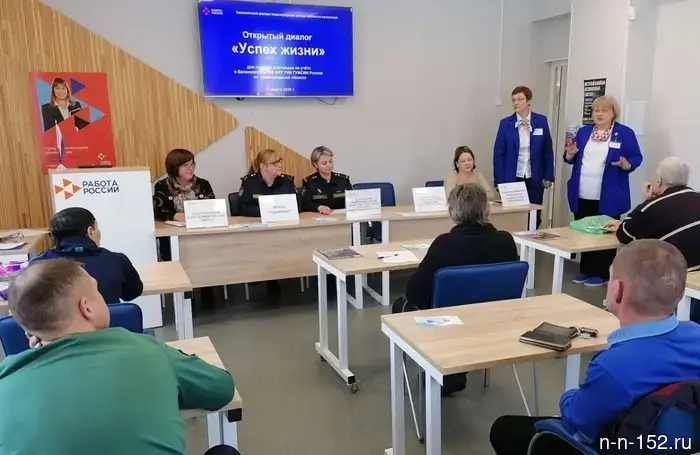 It became known where one can find employment with a criminal record in the Nizhny Novgorod region.
News of Nizhny Novgorod
It became known where one can find employment with a criminal record in the Nizhny Novgorod region.
News of Nizhny Novgorod
 Salaries of Nizhny Novgorod residents have increased at least threefold since 2016.
News of Nizhny Novgorod
Salaries of Nizhny Novgorod residents have increased at least threefold since 2016.
News of Nizhny Novgorod
A short path to purchase: why outdoor advertising works like a regular prompt
News of Nizhny Novgorod