
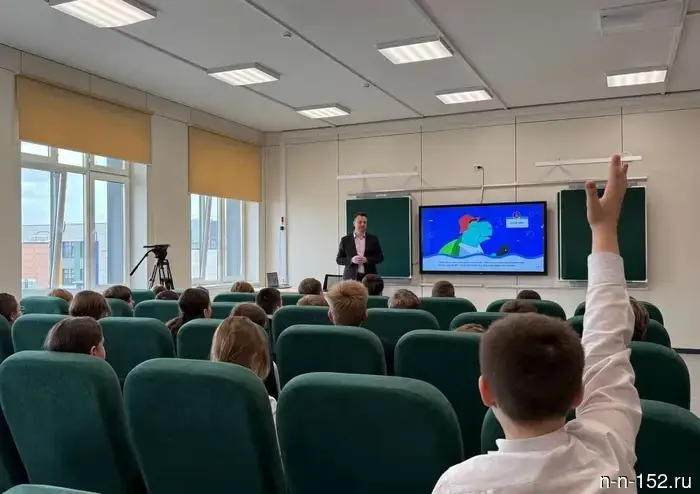
Nizhny Novgorod schoolchildren are getting acquainted with the key principles of cyber hygiene as part of the "Digital Literacy" project.
Nizhny Novgorod schoolchildren are getting acquainted with the key principles of cyber hygiene as part of the "Digital Literacy" project. Students from educational institutions are invited to participate in lessons on the topic "Harmful Advice on Digital Security." Classes prepared by the "Kaspersky Lab" are being held in schools across the region until May 3 inclusive. "Digital cyber hygiene is an important skill for every student, from first graders to graduates. Today, the lessons of the "Digital Literacy" cycle have already become an integral part of the educational process: children are keen to learn how to act online and what threats to avoid. Such classes are regularly held in all 780 schools and 73 vocational education institutions in the region," noted the Minister of Education of the Nizhny Novgorod Region, Mikhail Puchkov.
At school No. 189 in Nizhny Novgorod, a thematic lesson was conducted by the director of the Nizhny Novgorod Center for Coordination of Digital Economy Projects, Vitaly Klimashov. Together with fifth graders, he discussed advice on digital security. The students identified which pieces of advice were true and which were false.
For example, the children learned that it is not safe to publish too much personal information on social networks – such as phone numbers, email addresses, or home addresses. Additionally, it is dangerous to store personal data in cloud storage and other open sources where it can be accessed by malicious actors. One should also not forget about the security of each service used, including accounts for computer games – scammers hack not only messengers and social networks.
Students were told that they can protect their data online by using complex passwords unique to each of their accounts and enabling two-factor authentication. It is important to critically assess an app's access to the phone's camera or microphone. Another useful rule is not to "leak" personal data to dubious services or artificial intelligence and not to click on unknown links from strangers.
"It is extremely important to instill cyber hygiene skills in children from an early age so that they can safely conduct their activities online, which is inextricably linked to our reality. Children and the elderly are indeed the most vulnerable segments of the population when it comes to handling digital technologies. Scammers, of course, understand this very well and sometimes use children to access their parents' personal data," explained Vitaly Klimashov.
Schoolchildren participated in the lesson with great engagement. "I didn't know before that the same password shouldn't be used for all websites. And I will definitely share with my family that you shouldn't click on unknown links from strangers. Anyone can find themselves in such a situation, regardless of age, so it's important for everyone to know these things," said fifth-grade student Olga Koroleva.
Methodological materials for teachers and a test to help students check and reinforce their knowledge are available on the official website of the "Digital Literacy" project. "Ensuring digital security is a crucial direction of the people's program of "United Russia," created in collaboration with voters. Such literacy should start at a young age: children are immersed in the information environment early on without sufficient knowledge about safe internet use. Our task is to increase digital literacy so that kids do not fall for scammers' tricks and can help friends or elderly relatives in such situations. Open lessons within the project, where the basics of cybersecurity are explained in an understandable and accessible language, are an investment in our future, an opportunity to protect children from digital threats and raise a generation for whom online safety will become a natural habit," emphasized State Duma Deputy Yuri Stankevich.
Let us remind you that the "Digital Literacy" project is being conducted in support of the national project "Data Economy and Digital Transformation of the State." The "Digital Literacy" project is intended for the age category of 6+, recommended for viewing with parents or educators, and verified by the Federal State Budgetary Scientific Institution "Institute for the Study of Childhood, Family, and Education." The organizational and methodological support for the project in the Nizhny Novgorod region is provided by the Nizhny Novgorod Institute for Education Development.
Earlier, Russian President Vladimir Putin emphasized that Russia has achieved full digital sovereignty after the launch of the national messenger MAX. The NIA "Nizhny Novgorod" has a Telegram channel. Subscribe to stay updated on the main events, exclusive materials, and operational information.
Другие Новости Нижнего (Н-Н-152)
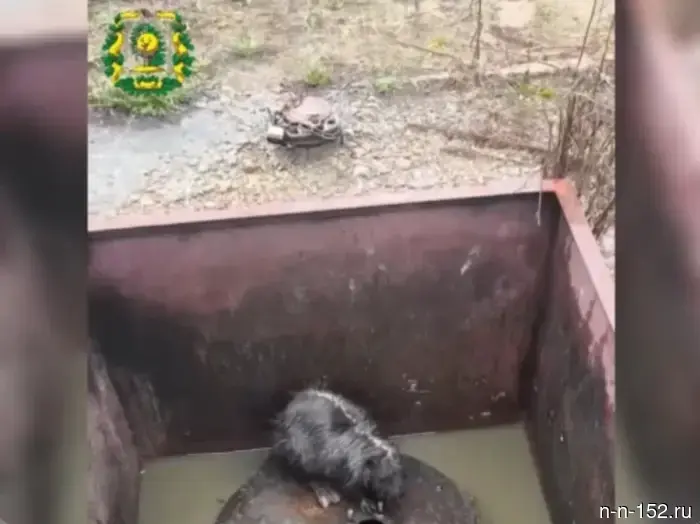 Two beavers were rescued and returned to the forest in the Nizhny Novgorod region.
News of Nizhny Novgorod
Two beavers were rescued and returned to the forest in the Nizhny Novgorod region.
News of Nizhny Novgorod
 The number of crimes against state authority has doubled in the Nizhny Novgorod region.
News of Nizhny Novgorod
The number of crimes against state authority has doubled in the Nizhny Novgorod region.
News of Nizhny Novgorod
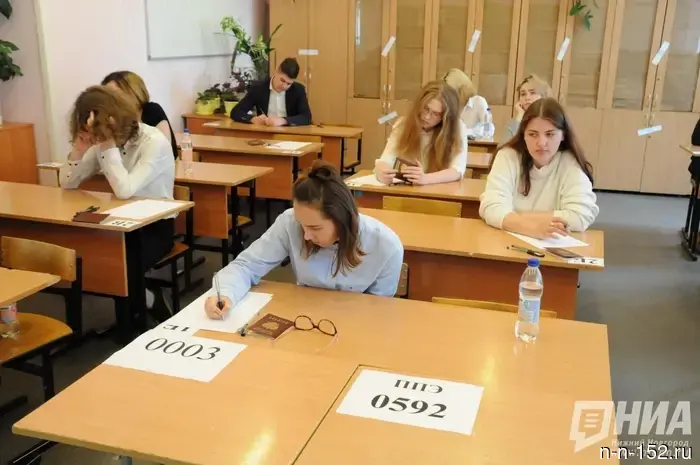 10 Nizhny Novgorod graduates passed the Unified State Exam early.
News of Nizhny Novgorod
10 Nizhny Novgorod graduates passed the Unified State Exam early.
News of Nizhny Novgorod
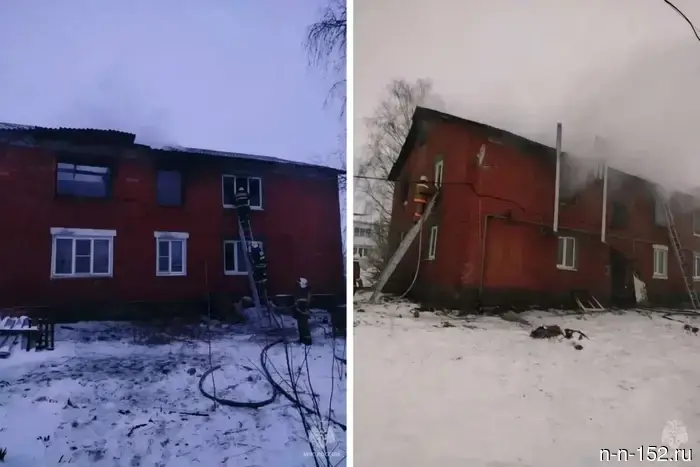 A fire with four fatalities in Nizhny Novgorod has resulted in a criminal case.
News of Nizhny Novgorod
A fire with four fatalities in Nizhny Novgorod has resulted in a criminal case.
News of Nizhny Novgorod
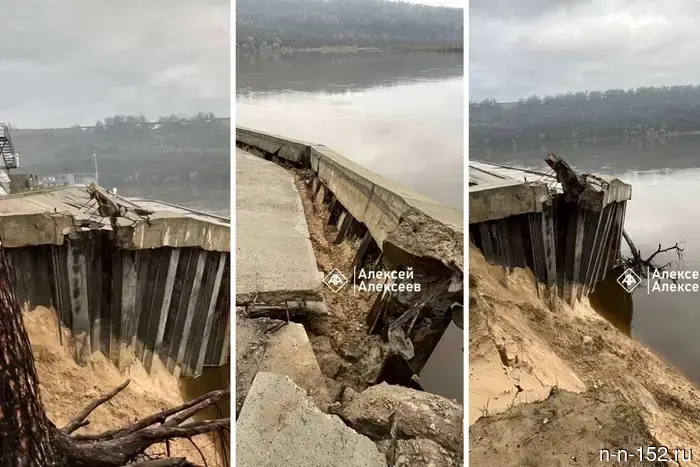 The flood caused the destruction of the embankment near the Shukhov Tower in Dzerzhinsk.
News of Nizhny Novgorod
The flood caused the destruction of the embankment near the Shukhov Tower in Dzerzhinsk.
News of Nizhny Novgorod
 Rospotrebnadzor: HiPP puree with rat poison is not supplied to Russia
News of Nizhny Novgorod
Rospotrebnadzor: HiPP puree with rat poison is not supplied to Russia
News of Nizhny Novgorod
Nizhny Novgorod schoolchildren are getting acquainted with the key principles of cyber hygiene as part of the "Digital Literacy" project.
News of Nizhny Novgorod