
On the epidemiological situation regarding tick-borne infections
The Federal Service for Surveillance on Consumer Rights Protection and Human Wellbeing in the Nizhny Novgorod Region warns that the tick activity season has begun. As of April 8, 2026, 28 cases (including 14 children) have been registered in medical organizations regarding tick bites in 14 municipalities (Balakhna, Bogorodsk, Vachsky, Vetluga, Volodarsky, Gorodetsky, Kstovo, Pavlovo, Sergach, Sosnovsky, Uren, municipal districts of Dzerzhinsk, municipal districts of Pervomaisk, municipal districts of Shakhunya, as well as in 3 districts of Nizhny Novgorod (Avtozavodsky, Soviet, Prioksky)). The population has been bitten by ticks in 43% of cases in household areas, 9% in rural areas, 13% in garden plots, with isolated cases of tick bites in other places. Emergency prevention with anti-tick immunoglobulin has been carried out for 5 affected children. Laboratory tests have been conducted on 23 ticks removed from people. One tick infected with Borrelia has been identified in the Bogorodsk municipal district. As of April 8, 2026, 2,926 people, including 264 children, have been vaccinated against tick-borne viral encephalitis. Annual acaricide treatments are conducted. There is an annual increase in funding for their implementation. The responsible parties for conducting acaricide treatments are: executive authorities of the Russian Federation subjects, legal entities, and individual entrepreneurs. In personal subsidiary farms and on private dacha plots, acaricide treatments are carried out by the owners. Acaricide treatments should be conducted in the most frequented areas: places of mass recreation, cemeteries, garden plots, recreation bases, sanatoriums, territories of suburban public catering enterprises, preschool educational organizations, and general educational organizations, health organizations. Acaricide treatments must be conducted immediately after the snow melts, after removing dry grass, fallen branches, and last year's grass, thinning shrubs, and eliminating household, construction, and forest waste. Areas most frequently visited by people should be cleared of debris and dense vegetation. Special attention should be paid to park paths, playgrounds, cemeteries, and other places of mass gatherings, where grass should be mowed. In areas where acaricide treatment is conducted, warning signs with the inscriptions: "Caution! Ticks!" should be installed in the most frequently visited places. After three days, it is safe to visit the areas without fear.
How to protect yourself from encounters with ticks?
- Wear special or adapted clothing that fits closely to the body when visiting forests and "green" areas.
- Do not rest in shaded places with high grass. Do not sit or lie on the grass; ticks cling to clothing from the grass and always crawl upwards.
- When choosing a parking or camping spot in nature, select dry areas with sandy soil or areas devoid of grass. Before camping, carefully inspect clothing, body, and hair.
- Use substances that repel ticks (repellents), which can be purchased at any pharmacy or supermarket.
- Every 10-15 minutes, conduct self-examinations and mutual examinations for ticks. Inspect clothing, paying attention to seams and collars where ticks may hide, and regularly check pets after walks in nature.
- In case of a tick bite, seek medical help at a clinic in your place of residence or temporary stay.
In case of a tick bite:
You should seek medical assistance as soon as possible (with your passport and health insurance policy) to have the tick removed, where medical professionals will explain to the child's legal representative the rules for delivering the tick to the laboratory. Tick testing is conducted at the expense of personal funds of citizens. It is necessary to test the tick for the presence of markers of tick-borne viral encephalitis and other pathogens of transmissible infections. Individuals under 18 years old who are not vaccinated against tick-borne viral encephalitis should undergo immunoglobulin prophylaxis regardless of the tick test results. Ticks can be tested for tick-borne infections, both live and dead, as long as the integrity of the insect is maintained, and proper storage and delivery conditions are ensured (in a jar, on wet cotton, stored in the refrigerator).
The Federal Service for Surveillance on Consumer Rights Protection and Human Wellbeing in the Nizhny Novgorod Region informs about the work of the laboratory of the Federal Budgetary Institution "Center for Hygiene and Epidemiology in the Nizhny Novgorod Region" for receiving ticks for research - Nizhny Novgorod, Kulibina St., 11B (new laboratory building) from Monday to Thursday from 9:00 to 16:00 (break from 12:00 to 13:00) and Friday from 9:00 to 13:00, tel. 8-9038480430; - Nizhny Novgorod Region, Shakhunya municipal district, Revolutionary St., 32, from Monday to Friday from 8:00 to 16:00 (break from 12:00 to 12:30), tel. 88315227320; - Nizhny Novgorod, Ilyich Ave., 3, from Monday to Thursday from 8:00 to 14:00, and Friday from 9:00 to 12:00 (break from 12:00 to 13:00); tel. 8-8312958714; - Nizhny Novgorod, Lunacharsky St., 4, from Monday to Thursday from 8:00 to 14:00, and Friday from 9:00 to 12:00 (break from 12:00 to 13:00); tel. 8-8312460330; - Bor municipal district, Plekhanova St., 1, from Monday to Thursday from 8:00 to 14:00, and Friday from 9:00 to 12:00 (break from 12:00 to 13:00), tel. 8-8315963848; - Nizhny Novgorod Region, Dzerzhinsk, Dzerzhinsky Ave., 19a, from Monday to Thursday from 8:00 to 14:00, and Friday from 9:00 to 12:00 (break from 12:00 to 13:00), tel. 8-8313224037; - Nizhny Novgorod Region, Kstovo, Talalushkina St., 11A, from Monday to Thursday from 9:00 to 14:00, and Friday from 9:00 to 12:00 (break from 12:00 to 13:00), tel. 8-8314522500. The epidemiological situation regarding diseases transmitted by tick bites is under the control of the Federal Service for Surveillance on Consumer Rights Protection and Human Wellbeing in the Nizhny Novgorod Region.
Другие Новости Нижнего (Н-Н-152)
 Nizhny Novgorod residents will be able to contest the revocation of their driver's licenses due to illness.
News of Nizhny Novgorod
Nizhny Novgorod residents will be able to contest the revocation of their driver's licenses due to illness.
News of Nizhny Novgorod
 Conscripts from the Nizhny Novgorod region have begun service in the Northern Fleet.
The first team of the spring conscription of 2026 from Nizhny Novgorod arrived at the base in Severomorsk. The first group of conscripts for the spring campaign of 2026 arrived at the main base of the Northern Fleet in Severomorsk. 15.04.2026. Newsroom24.Ru. Nizhny Novgorod Region. Nizhny Novgorod.
Conscripts from the Nizhny Novgorod region have begun service in the Northern Fleet.
The first team of the spring conscription of 2026 from Nizhny Novgorod arrived at the base in Severomorsk. The first group of conscripts for the spring campaign of 2026 arrived at the main base of the Northern Fleet in Severomorsk. 15.04.2026. Newsroom24.Ru. Nizhny Novgorod Region. Nizhny Novgorod.
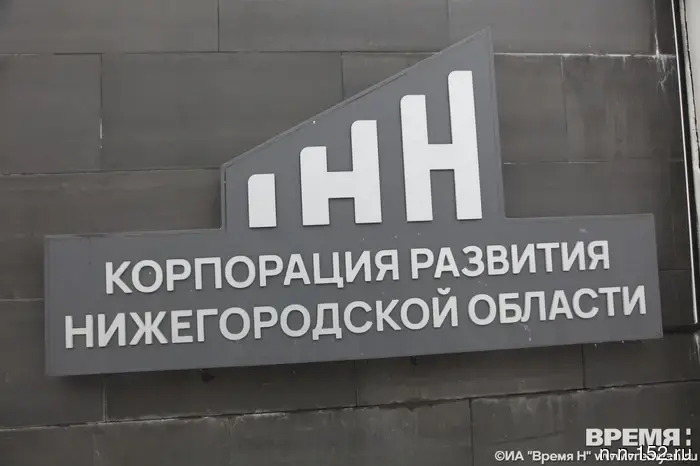 The Development Corporation of the Nizhny Novgorod Region and the Dzerzhinsk Chemical College signed a cooperation agreement.
The General Director of the Nizhny Novgorod Region Development Corporation Igor Ishchenko and the Director of the Dzerzhinsk Chemical Technical School named after the Red Army Yegor Nikitin signed an agreement on cooperation between the organizations. 15.04.2026. Time N. Nizhny Novgorod Region. Nizhny Novgorod.
The Development Corporation of the Nizhny Novgorod Region and the Dzerzhinsk Chemical College signed a cooperation agreement.
The General Director of the Nizhny Novgorod Region Development Corporation Igor Ishchenko and the Director of the Dzerzhinsk Chemical Technical School named after the Red Army Yegor Nikitin signed an agreement on cooperation between the organizations. 15.04.2026. Time N. Nizhny Novgorod Region. Nizhny Novgorod.
 KRN and Dzerzhinsky Chemical College signed a cooperation agreement.
News of Nizhny Novgorod
KRN and Dzerzhinsky Chemical College signed a cooperation agreement.
News of Nizhny Novgorod
 The acceptance of applications for the 17th PFCI competition has begun.
The Presidential Fund for Cultural Initiatives announced on April 15, 2026, the start of applications for the new 17th grant competition. 15.04.2026. NTA-Volga. Nizhny Novgorod Region. Nizhny Novgorod.
The acceptance of applications for the 17th PFCI competition has begun.
The Presidential Fund for Cultural Initiatives announced on April 15, 2026, the start of applications for the new 17th grant competition. 15.04.2026. NTA-Volga. Nizhny Novgorod Region. Nizhny Novgorod.
 The new Nizhny Novgorod car factory will be able to produce up to 110,000 cars per year.
News of Nizhny Novgorod
The new Nizhny Novgorod car factory will be able to produce up to 110,000 cars per year.
News of Nizhny Novgorod
On the epidemiological situation regarding tick-borne infections
The Federal Service for Surveillance on Consumer Rights Protection and Human Wellbeing in the Nizhny Novgorod Region warns that the tick activity season has begun. 15.04.2026. Gorodets Municipal District. Nizhny Novgorod Region. Gorodets.