
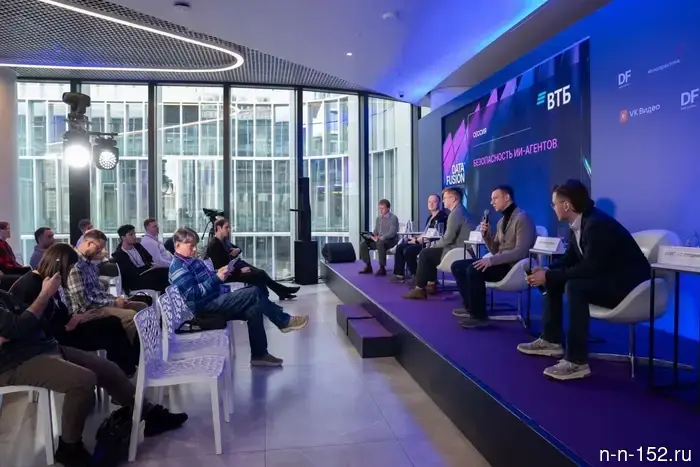
Social media users have recorded the emergence of the AI-agent economy.
April 9, 2026 11:23 Economy The market for AI agents is moving towards the formation of an independent economy, within which digital assistants can become separate entities. Social media users have begun actively discussing the risks and opportunities for monetization with the emergence of this new economy. Such conclusions are contained in the study "Perception of AI Agents Through the Eyes of Social Media Users," conducted by Brand Analytics on behalf of VTB as part of the Data Fusion conference.
The study was conducted in the first quarter of 2026. The authors analyzed mentions of the term "AI agent" in various forms in Russian-language social media.
Economic aspects make up 11% of discussions. Users actively reflect on the impact of AI agents on the labor market and the transformation of employment, particularly expressing concerns about the future of specific professions and job losses. Special attention is given to the emergence of the AI agent economy—a concept in which AI agents become independent economic entities.
Among the key expectations and questions from users:
- how the cost of ownership and use of AI agents will be formed;
- which monetization models will become dominant;
- how the activities of autonomous digital agents will be regulated.
Users directly formulate the hypothesis of a new market's emergence: "If agents become autonomous and trade with each other, buying resources and selling services, this will be a completely new economic system. Who will pay taxes?"
The most discussed topic remains the practical application and functionality of AI assistants (44% of discussions). Users actively seek and discuss specific ways to use digital agents to solve practical tasks, aiming to transform AI from a "talking" tool into a "doing" one. The focus shifts to the question of creating a "personal Jarvis"—a digital assistant acting on behalf of a person to address everyday and personal issues.
The study also notes the transformation of the human role, which becomes the orchestrator of AI agents: they formulate goals, distribute tasks, monitor the progress of processes, and make final decisions. Humans learn to manage a chain of AI agents, as the maximum effect is achieved through the parallel work of different digital assistants.
However, this approach also carries risks, which include cognitive exhaustion and fatigue from the need to simultaneously control multiple AI tools.
35% of discussions are dedicated to the perception of AI agents. User opinions range from complete admiration to deep skepticism. A significant portion of the perception is shaped around potential risks, ethical questions, and technological limitations.
In these opinions, 20% of discussions focus on the idea that AI agents are becoming the norm and an integral part of professional and everyday activities. At the same time, some users (11% of discussions) express distrust or disappointment in AI assistants due to inflated expectations and aggressive marketing. "How much longer can we hype AI? So far, I don't see any breakthrough solutions," is an example of an opinion cited in the study.
Only 7% of opinions concern technological and product-related questions. In these, users discuss technical details, infrastructure, and architecture underlying AI agents. Discussions also include questions about choosing platforms, programming languages, and frameworks for creating and deploying digital assistants.
The remaining 3% of discussions are dedicated to philosophical and futuristic themes. This is a speculative category where users share thoughts on radical changes in the future.
The discussions touch on concepts of Artificial General Intelligence (AGI), uncontrolled AI development, and the changing nature of humanity. Questions about AI consciousness and a new social order are also raised. "If an agent starts inventing its own religions and languages, then we will probably just be 'observers' for it, like in The Matrix," is an example of an opinion cited in the study.
NIА "Nizhny Novgorod" has a Telegram channel. Subscribe to stay updated on major events, exclusive materials, and timely information. Copyright © 1999—2025 NIА "Nizhny Novgorod". When reprinting, a hyperlink to NIА "Nizhny Novgorod" is mandatory. This resource may contain materials 18+
Другие Новости Нижнего (Н-Н-152)
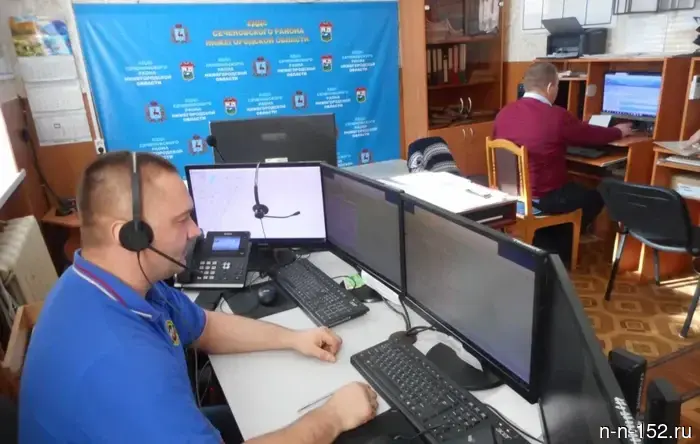 Emergency warning
EMERGENCY WARNING
about the likelihood of emergencies in the Nizhny Novgorod region
According to the Federal State Budgetary Institution "Upper Volga Hydrometeorological Center", 09.04.2026. Sechenovsky Municipal District. Nizhny Novgorod Region. Sechenovo.
Emergency warning
EMERGENCY WARNING
about the likelihood of emergencies in the Nizhny Novgorod region
According to the Federal State Budgetary Institution "Upper Volga Hydrometeorological Center", 09.04.2026. Sechenovsky Municipal District. Nizhny Novgorod Region. Sechenovo.
 VTB named government support measures for the development of the AI market.
News of Nizhny Novgorod
VTB named government support measures for the development of the AI market.
News of Nizhny Novgorod
 Emergency warning
EMERGENCY WARNING
about the likelihood of emergencies in the Nizhny Novgorod region
According to the Federal State Budgetary Institution "Upper Volga Hydrometeorological Center", 09.04.2026. Sechenovsky Municipal District. Nizhny Novgorod Region. Sechenovo.
Emergency warning
EMERGENCY WARNING
about the likelihood of emergencies in the Nizhny Novgorod region
According to the Federal State Budgetary Institution "Upper Volga Hydrometeorological Center", 09.04.2026. Sechenovsky Municipal District. Nizhny Novgorod Region. Sechenovo.
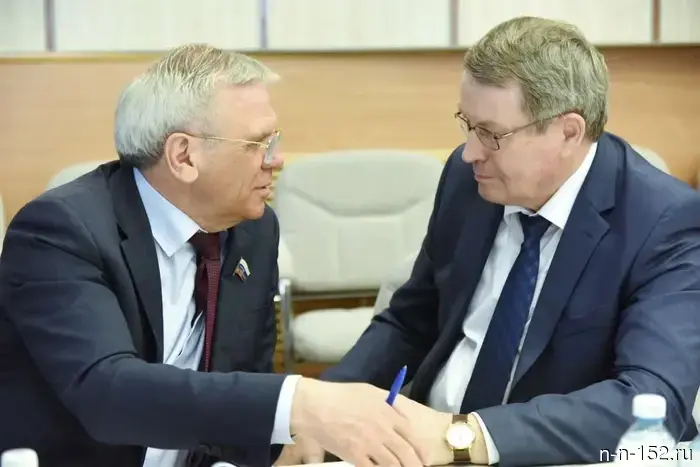 Evgeny Lyulin: "The land of Seraphim of Sarov has become a place where the best minds of the country create the future of Russia."
News of Nizhny Novgorod
Evgeny Lyulin: "The land of Seraphim of Sarov has become a place where the best minds of the country create the future of Russia."
News of Nizhny Novgorod
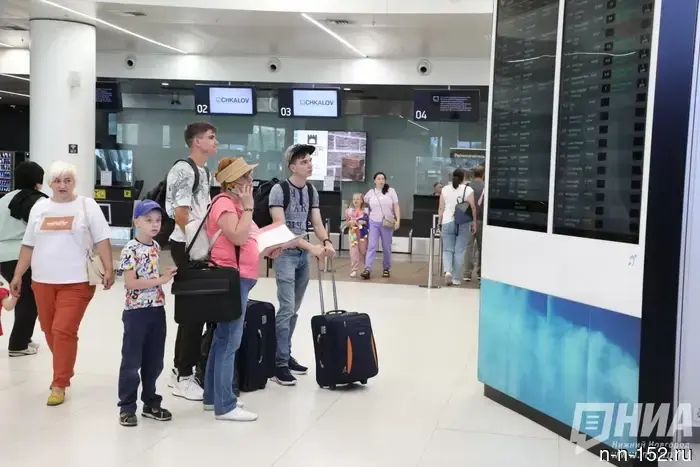 Direct flights from Nizhny Novgorod to Batumi will resume on June 8.
News of Nizhny Novgorod
Direct flights from Nizhny Novgorod to Batumi will resume on June 8.
News of Nizhny Novgorod
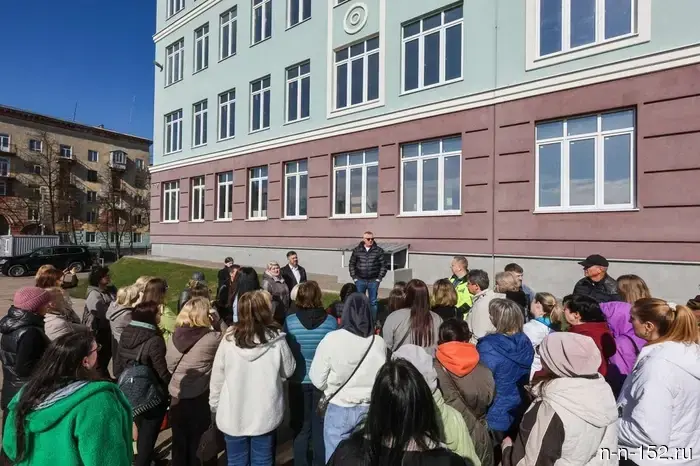 Photos of the long-awaited Molyov School in Dzerzhinsk have been published.
News of Nizhny Novgorod
Photos of the long-awaited Molyov School in Dzerzhinsk have been published.
News of Nizhny Novgorod
Social media users have recorded the emergence of the AI-agent economy.
News of Nizhny Novgorod