
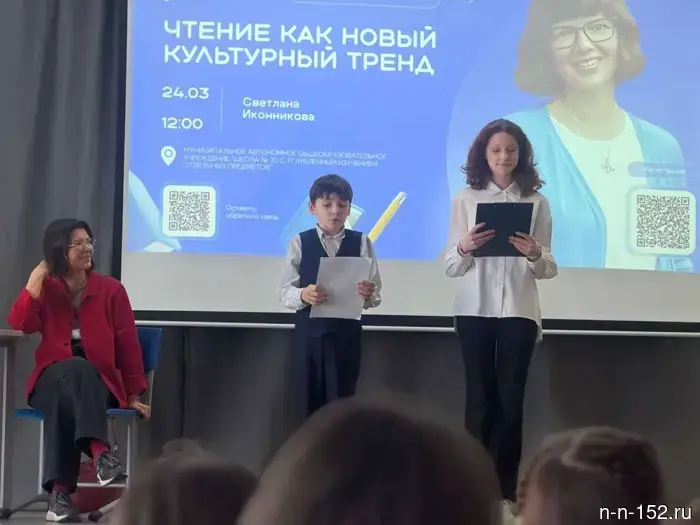
Writer Ekaterina Ikonnikova talked to young residents of Nizhny Novgorod about the love of reading.
On March 25, 2026, at 16:33, Culture and Leisure. A meeting was held at School No. 70 in Nizhny Novgorod with a lecturer from the Russian Society "Knowledge," writer Svetlana Ikonnikova. The event took place as part of the federal project "Reading Programs," which is implemented by the Russian Society "Knowledge" in collaboration with the Ministry of Education of the Russian Federation at the request of the President of Russia, Vladimir Putin.
The meeting turned into an open conversation about literature, how modern children can acquire the skill of free reading, and the books that stay with a person for a lifetime. During the discussion, the writer talked with the students about their reading experiences, shared observations on how the perception of literature is changing among the younger generation, and asked the kids about the book that made them "read avidly."
She reflected with the students on the fact that people have skills that develop over time, while some seem to be innate from birth.
"I was lucky: the ability to put words together was built into me from childhood. When I was little, I created stories but couldn't write them down because I didn't know the letters. As soon as I learned them, I immediately started writing and organizing them. But this doesn't mean that if you, for example, want to be a journalist or write books but haven't written anything yet, you won't succeed. In fact, almost anyone can develop this skill within themselves. Writing books comes easily to different people in different ways. For me, for example, it was hard to talk," shared the lecturer.
Until about ten years old, she loved fairy tales, especially "Turkish Folk Tales" — a thick book she read three times. From ten to thirteen, she was fascinated by detective stories, reading everything she could find and deriving immense pleasure from it. Alongside this, she also began to enjoy books on pedagogy and psychology. From about fifteen years old to the present day, her favorite genre in fiction has been psychological drama.
Svetlana Ikonnikova noted that people's perceptions are very differently structured: some find one thing easy, while others find another easy. And that's good, because otherwise, everyone would find it equally difficult, for example, to keep accounts, and chaos would reign in the world.
Speaking about modern schoolchildren, the writer noted that today, it is harder for children to acquire the skill of free reading than for those who grew up in an era without the internet, and sometimes even without television. Therefore, during the meeting, she discussed with the kids what helped them transform reading from a complex cognitive operation into almost a reflex.
"Incredibly, the children named traditional works for first and second graders, including 'Barankin, Be a Human!' They recalled children's science fiction and fairy tales. But there were also two completely surprising responses. One boy said he fell in love with reading after he was introduced to the book 'Robinson Crusoe' at the age of eight. The language of this work is quite complex for those just mastering fluent reading, not to mention the many nautical terms. However, School No. 70 is located not far from the 'Krasnoe Sormovo' factory, where river and sea vessels are produced, and perhaps for the boy, these terms were familiar," shared the lecturer from the Society "Knowledge."
The lecturer particularly remembered the response of one of the students. The girl recounted that in the first grade, she accidentally discovered Ivan Turgenev's novella "Mumu." Her older sister was then in the fifth grade, and this work was assigned to her for reading at school. The younger sister decided not to fall behind and also took on the book. The work moved her to tears, but it was after this experience that reading ceased to be difficult for her. As the girl herself admitted, after "Mumu," any other book came easily to her.
These and other stories shared by the schoolchildren did not leave the writer indifferent. Svetlana Ikonnikova was struck not only by the books children choose but also by how deeply and consciously they relate to what they have read. The meeting showed that interest in serious literature among modern schoolchildren is alive, and reading can become for them not just a school assignment but a true discovery.
NIA "Nizhny Novgorod" has a Telegram channel. Subscribe to stay updated on major events, exclusive materials, and timely information.
Copyright © 1999—2025 NIA "Nizhny Novgorod." When republishing, a hyperlink to NIA "Nizhny Novgorod" is mandatory. This resource may contain materials 18+.
Другие Новости Нижнего (Н-Н-152)
 Another child was bitten by a tick in the Nizhny Novgorod region.
News of Nizhny Novgorod
Another child was bitten by a tick in the Nizhny Novgorod region.
News of Nizhny Novgorod
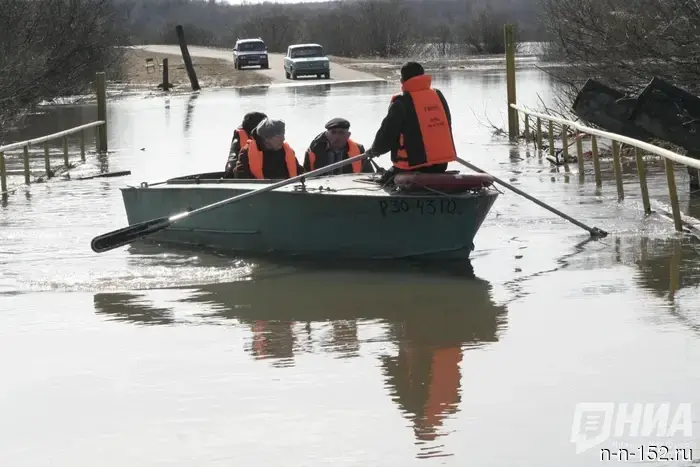 Flood-2026: 70 settlements in the Nizhny Novgorod region are at risk
News of Nizhny Novgorod
Flood-2026: 70 settlements in the Nizhny Novgorod region are at risk
News of Nizhny Novgorod
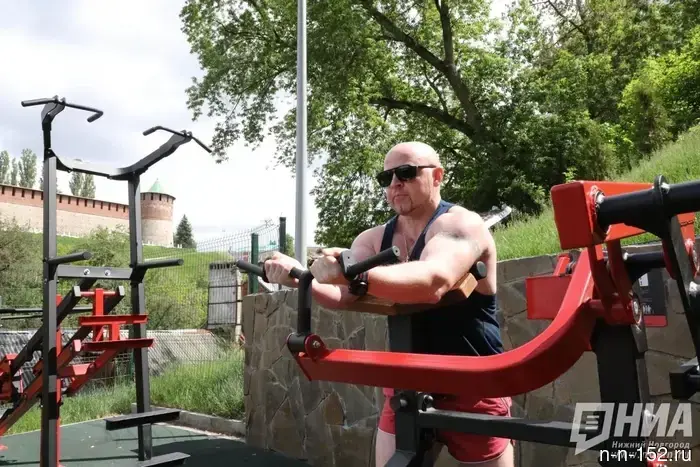 "United Russia" proposed to promote a healthy lifestyle.
News of Nizhny Novgorod
"United Russia" proposed to promote a healthy lifestyle.
News of Nizhny Novgorod
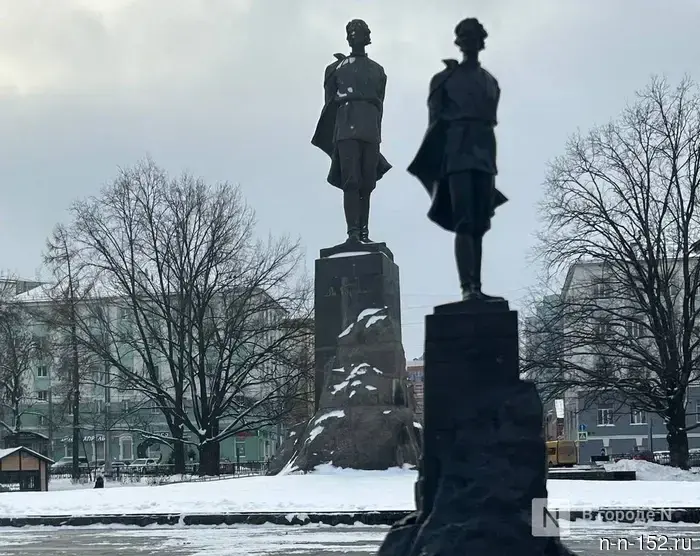 Video surveillance will be installed in Gorky Square for the protection of the tactile model.
The tactile model of the monument to Maxim Gorky will be restored after the installation of the video surveillance system in the square of the same name. 25.03.2026. vGorodeN.Ru. Nizhny Novgorod Region. Nizhny Novgorod.
Video surveillance will be installed in Gorky Square for the protection of the tactile model.
The tactile model of the monument to Maxim Gorky will be restored after the installation of the video surveillance system in the square of the same name. 25.03.2026. vGorodeN.Ru. Nizhny Novgorod Region. Nizhny Novgorod.
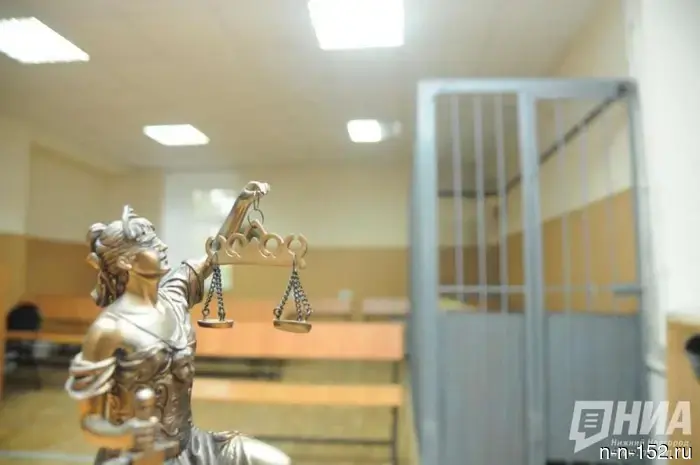 Four residents of Sarov were convicted for theft at a defense enterprise.
News of Nizhny Novgorod
Four residents of Sarov were convicted for theft at a defense enterprise.
News of Nizhny Novgorod
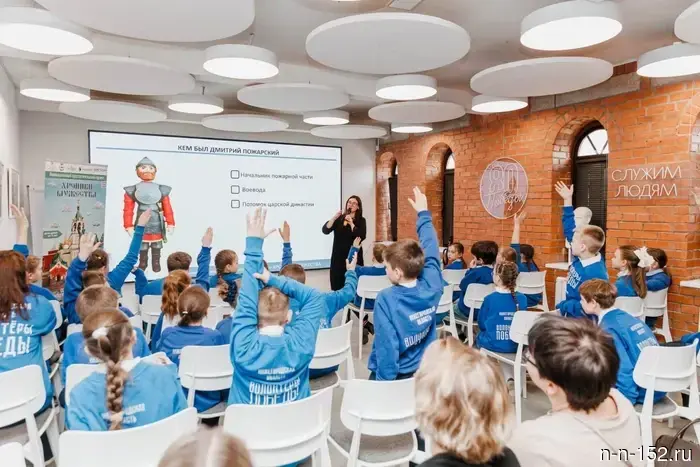 The students participated in the tournament for the game "Treasures of the People's Feat."
In Nizhny Novgorod, a tournament for the board game "Treasures of the People's Feat" was held at the "Kupno. Start" venue, dedicated to the Year of Unity of the Peoples of Russia declared by President Vladimir Putin. 25.03.2026. Nizhny Novgorod Truth. Nizhny Novgorod Region. Nizhny Novgorod.
The students participated in the tournament for the game "Treasures of the People's Feat."
In Nizhny Novgorod, a tournament for the board game "Treasures of the People's Feat" was held at the "Kupno. Start" venue, dedicated to the Year of Unity of the Peoples of Russia declared by President Vladimir Putin. 25.03.2026. Nizhny Novgorod Truth. Nizhny Novgorod Region. Nizhny Novgorod.
Writer Ekaterina Ikonnikova talked to young residents of Nizhny Novgorod about the love of reading.
News of Nizhny Novgorod