
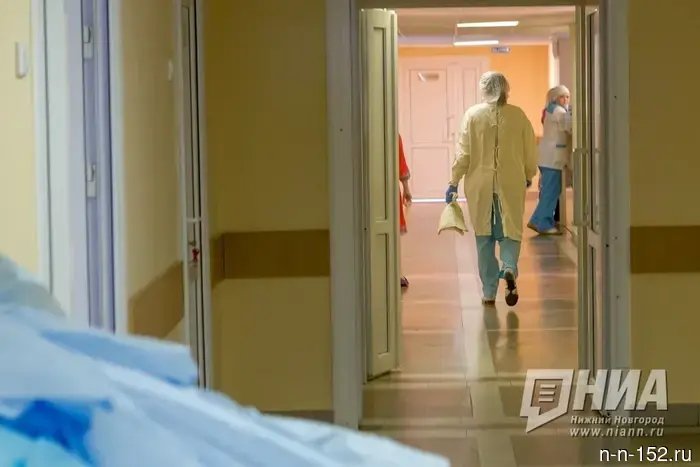
Doctor Borodina explained what you need to know about the diagnosis and treatment of tuberculosis.
March 23, 2026 08:00 Society Tuberculosis remains one of the most dangerous infections in the world, claiming up to a million lives each year. According to estimates from the World Health Organization, Russia still ranks among the countries with a high prevalence of the disease. This makes both the systematic work of medical professionals and the careful attention of citizens to their health particularly important.
Natalia Borodina, the deputy chief physician of the Nizhny Novgorod Regional Clinical Tuberculosis Dispensary, spoke about the situation regarding morbidity, methods of diagnosis, and prevention.
Who and how can get infected
According to her, the main source of infection is a person with an active form of tuberculosis who expels mycobacteria with their sputum. During coughing, sneezing, talking, or even laughing, particles containing the pathogen can spread in the air up to 15 meters and enter the respiratory tracts of those nearby.
The risk of infection increases with a weakened immune system, as well as with chronic inflammatory diseases, including bronchitis in smokers.
The most common form of the disease remains pulmonary tuberculosis. Among newly diagnosed patients, it accounts for about 95% of cases. Extrapulmonary forms are significantly rarer—just over 4% of those infected. Men are more frequently diagnosed with bone and joint lesions, while women are more often affected in the urogenital system.
How it is treated
Modern treatment approaches involve comprehensive examinations when tuberculosis is suspected. This includes radiological studies of the chest organs, blood tests, multiple sputum examinations for mycobacteria, as well as tuberculin tests. If necessary, the patient is referred for a full course of anti-tuberculosis therapy, after which they are under dispensary observation for at least two years.
What is required for diagnosis
Special attention in medicine is given not only to diagnosis but also to the early detection of the disease. As the specialist notes, identifying tuberculosis is a key task. The main method today remains fluorography, which allows for the detection of the disease 2-3 times more effectively.
For accurate diagnosis, modern methods are used—a combination of non-invasive and invasive studies. This allows for confirmation of the disease in more than 95% of patients in a short time. In practice, CT, ultrasound, and various types of endoscopic diagnostics, including video thoracoscopy, are used.
The expert emphasizes: it is impossible to completely eliminate the risk of infection: about 80% of the country's population are carriers of mycobacteria. However, in most cases, the infection remains in the body in a "dormant" state and does not lead to the development of the disease. The highest likelihood of falling ill remains within the first two years after infection.
Risks can be reduced through careful attention to one's health and regular check-ups. One of the most reliable methods for early detection remains fluorography, which is conducted as part of health screenings.
When to see a doctor
Symptoms such as chest pain, cough with sputum, elevated temperature, and night sweats can be reasons to see a doctor. In such cases, it is important to undergo additional examinations in a timely manner.
Specialists remind that one person with tuberculosis can infect up to ten people in a year. At the same time, the disease is preventable and treatable, and the methods of therapy used in Russia remain effective and are accompanied by strict recovery criteria.
Conducting preventive medical examinations and health screenings is aimed at achieving the goals of the national project "Long and Active Life," which has been implemented in Russia since 2025 at the direction of President Vladimir Putin. The project is focused on increasing life expectancy and includes modernization of medical infrastructure, attracting qualified personnel, implementing modern approaches to the prevention and treatment of chronic diseases, as well as developing emergency care and rehabilitation.
NIA "Nizhny Novgorod" has a Telegram channel. Subscribe to stay updated on major events, exclusive materials, and timely information. Copyright © 1999—2025 NIA "Nizhny Novgorod." When reprinting, a hyperlink to NIA "Nizhny Novgorod" is mandatory. This resource may contain materials 18+
Другие Новости Нижнего (Н-Н-152)
 The columbarium at the Bugrovsky cemetery will be able to accommodate 530 urns with ashes.
News of Nizhny Novgorod
The columbarium at the Bugrovsky cemetery will be able to accommodate 530 urns with ashes.
News of Nizhny Novgorod
 Some electric trains from Nizhny Novgorod to Kazan will be canceled due to repairs starting March 30.
News of Nizhny Novgorod
Some electric trains from Nizhny Novgorod to Kazan will be canceled due to repairs starting March 30.
News of Nizhny Novgorod
 The organizer continues to sell tickets for the canceled concert in Arzamas.
News of Nizhny Novgorod
The organizer continues to sell tickets for the canceled concert in Arzamas.
News of Nizhny Novgorod
 A pensioner from Sarov lost 8 million rubles after communicating with scammers.
News of Nizhny Novgorod
A pensioner from Sarov lost 8 million rubles after communicating with scammers.
News of Nizhny Novgorod
 Almost 23 km of engineering networks will be built at the Diveyevo Monastery.
News of Nizhny Novgorod
Almost 23 km of engineering networks will be built at the Diveyevo Monastery.
News of Nizhny Novgorod
 "Torpedo-Gorky" lost to "Magnitka" in the first match of the series.
News of Nizhny Novgorod
"Torpedo-Gorky" lost to "Magnitka" in the first match of the series.
News of Nizhny Novgorod
Doctor Borodina explained what you need to know about the diagnosis and treatment of tuberculosis.
News of Nizhny Novgorod