
In the village of Lvovka, a parish school was opened at the museum-reserve "Boldino."
In the A. S. Pushkin Museum-Reserve "Boldino," after a large-scale restoration and update of the exhibition, a church-parish school was opened in the village of Lvovka. This was reported by the Ministry of Culture of the Nizhny Novgorod Region. "After the celebration of the anniversary events for Pushkin's 225th birthday, restoration work on the museum's territory did not end, as this is a significant and important task that takes more than one year. It is very symbolic that we completed the restoration and update of the church-parish school exhibition by Knowledge Day—an object that served education for about 70 years. While working on the update of the exhibition, we tried to recreate the interiors of that time, filling them with historical items. At the same time, we are again talking about a comprehensive approach, as the territory of Lvovka is also being transformed: paths, swings, and a bridge have appeared, work is underway to clean the ponds and create a site for conducting master classes. Meanwhile, the museum territory does not lose its charm, continuing to be a place of power and immersion in the creativity of Alexander Pushkin," noted the Minister of Culture of the Nizhny Novgorod Region, Natalia Sukhanova. The building of the church-parish school is a cultural heritage site of regional significance. It was built in 1903-1904 by the peasant community with the support of the poet's son, Alexander Alexandrovich Pushkin, who allocated land and provided financial assistance. After the closure of the church-parish school, the building continued to serve education: from 1934, it housed a primary school, later an eight-year school, which closed in 1972. Then the building was transferred to the museum-reserve, and on June 6, 2009, an exhibition was opened in the school. From June 2025 to June 2026, work was carried out to preserve the object: a major overhaul of the brick foundation was completed, the facade was repaired, partial replacement of the log crown was done, restoration of window and door blocks, and the construction of porches, with stoves recreated based on historical references. About 15 million rubles were allocated from the regional budget for these purposes. "The restoration process went quite quickly—it took just one year. All these works extended the life of the object for another three decades. Special attention was paid to recreating historical interiors. For example, a large Russian stove appeared in the hallway—almost the same as the one that was here at the beginning of the century. It was used to dry children's clothes, cook food, it provided warmth and made the space truly alive. In the classroom, we tried to recreate an authentic environment. Ahead of us is the excursion season "Boldinskaya Osenn," which traditionally opens on September 3—on this day in 1830, Pushkin first arrived in Boldino. As before, many tourists are expected in the fall, not only in Boldino but also in Lvovka," reported the director of the A. S. Pushkin Museum-Reserve "Boldino," Nina Zhirkova. In the space of the church-parish school, three key zones have been recreated: the classroom, the teacher's room, and the hallway. Each of them has been developed with detailed historical accuracy. The exhibition has been enriched with authentic furniture, household items, and educational materials from the early 20th century. The Honorary Citizen of Nizhny Novgorod, collector, and founder of the Technical Museum, Vyacheslav Hurtin, actively assisted the museum-reserve in updating the exhibition. "Having studied dozens of photographs of school interiors, I determined what the details of the environment should be. Mandatory elements included a portrait of Emperor Nicholas II, maps of the hemispheres, fountain pens, and ink bottles. The search for Erismann desks took a year and a half—they were also found in the church-parish school in the territory of Bashkortostan. It was difficult to find fountain pens from the early century—I collected 12 such pens over the course of a year. I also managed to find blank pre-revolutionary notebooks and a unique anniversary series released in 1937 for the 100th anniversary of Pushkin's death. I was lucky enough to find six blank notebooks from this series. The entire work took more than two years, and I did it not only out of professional interest—I fell in love with Lvovka," shared Vyacheslav Hurtin about the painstaking work process. The updated exhibition is not just a museum space, but a living reconstruction of the era, allowing visitors to feel the atmosphere of a rural school, understand the value of education, and see the contribution of individuals and local communities to the development of education. The "Boldino" museum-reserve continues its mission to preserve and popularize cultural heritage, making history tangible and close for visitors of all ages.
Kristina Koretskaya Photo: press service of the Ministry of Culture of the Nizhny Novgorod Region
Другие Новости Нижнего (Н-Н-152)
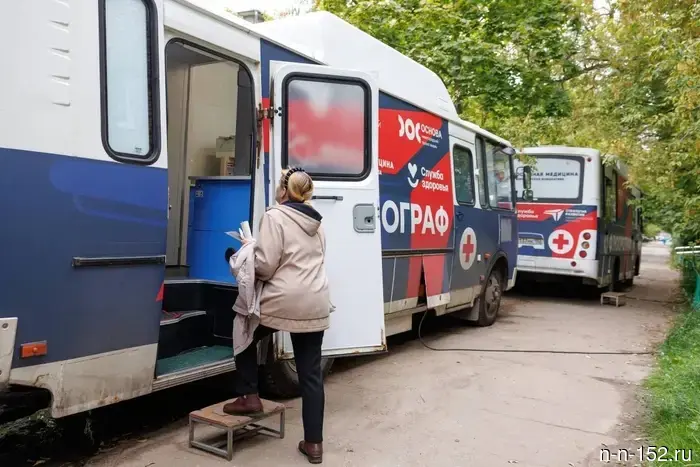 "Health trains" made 160 trips to the municipalities of the region.
Since the beginning of 2026, the mobile diagnostic complexes "Health Trains" have already made 160 trips to municipalities in the Nizhny Novgorod region. 03.09.2026. Nizhny Novgorod Truth. Nizhny Novgorod region. Nizhny Novgorod.
The Nizhny Novgorod Personnel Center invites residents of the region to the September job fairs.
In September 2026, the Nizhny Novgorod personnel center "Work of Russia" will hold a series of job fairs for residents of the region. 03.09.2026. Lukoyanovskaya Pravda newspaper. Nizhny Novgorod region. Lukoyanov.
"Health trains" made 160 trips to the municipalities of the region.
Since the beginning of 2026, the mobile diagnostic complexes "Health Trains" have already made 160 trips to municipalities in the Nizhny Novgorod region. 03.09.2026. Nizhny Novgorod Truth. Nizhny Novgorod region. Nizhny Novgorod.
The Nizhny Novgorod Personnel Center invites residents of the region to the September job fairs.
In September 2026, the Nizhny Novgorod personnel center "Work of Russia" will hold a series of job fairs for residents of the region. 03.09.2026. Lukoyanovskaya Pravda newspaper. Nizhny Novgorod region. Lukoyanov.
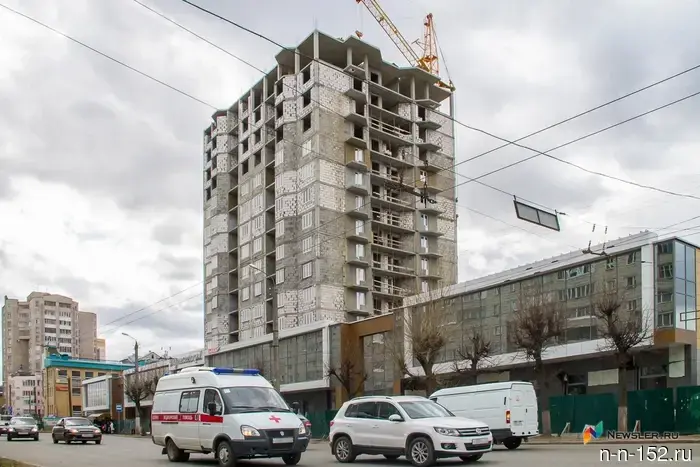 The flight from Nizhny Novgorod to Turkey with 155 passengers was grounded due to broken toilets.
5:28 PM September 3
Yulia Bakaeva
About the City
A passenger plane flying a charter flight from Nizhny Novgorod to the Turkish resort of Antalya, 09.03.2026. ProGorodNN.Ru. Nizhny Novgorod Region. Nizhny Novgorod.
The flight from Nizhny Novgorod to Turkey with 155 passengers was grounded due to broken toilets.
5:28 PM September 3
Yulia Bakaeva
About the City
A passenger plane flying a charter flight from Nizhny Novgorod to the Turkish resort of Antalya, 09.03.2026. ProGorodNN.Ru. Nizhny Novgorod Region. Nizhny Novgorod.
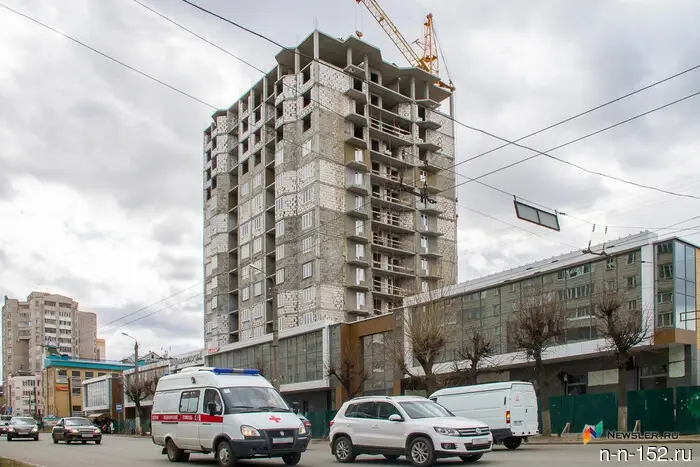 The flight from Nizhny Novgorod to Turkey with 155 passengers was grounded due to broken toilets.
5:28 PM September 3
Yulia Bakaeva
About the City
A passenger plane flying a charter flight from Nizhny Novgorod to the Turkish resort of Antalya, 09.03.2026. ProGorodNN.Ru. Nizhny Novgorod Region. Nizhny Novgorod.
The flight from Nizhny Novgorod to Turkey with 155 passengers was grounded due to broken toilets.
5:28 PM September 3
Yulia Bakaeva
About the City
A passenger plane flying a charter flight from Nizhny Novgorod to the Turkish resort of Antalya, 09.03.2026. ProGorodNN.Ru. Nizhny Novgorod Region. Nizhny Novgorod.
 About 500 business representatives gathered at the "Retail Days" forum in Nizhny Novgorod.
News of Nizhny Novgorod
About 500 business representatives gathered at the "Retail Days" forum in Nizhny Novgorod.
News of Nizhny Novgorod
 About 500 business representatives gathered at the "Retail Days" forum in Nizhny Novgorod.
News of Nizhny Novgorod
About 500 business representatives gathered at the "Retail Days" forum in Nizhny Novgorod.
News of Nizhny Novgorod
In the village of Lvovka, a parish school was opened at the museum-reserve "Boldino."
In the A. S. Pushkin Museum-Reserve "Boldino," after a large-scale restoration and update of the exhibition, a church parish school was opened in the village of Lvovka. 03.09.2026. Nizhny Novgorod Truth. Nizhny Novgorod Region. Nizhny Novgorod.