
The financier Barkhota explained where salaries disappear unnoticed and what to do about it.
Stable income does not always guarantee financial stability. Even with regular money inflows into an account, many face a shortage of funds before the next paycheck. The reason lies not in low incomes or extravagance, but in the peculiarities of personal finance management. Financial market expert Andrey Barkhota explained in a conversation with 360.ru why this happens and how one can learn to save.
Why money disappears
Even with a stable income, people often encounter a lack of money before the next paycheck. Most people's incomes are predictable, while expenses can be unexpected. For example, even a regular grocery basket can subtly increase in price over the course of a month. If at the beginning of the month the shopping basket costs 1500 rubles, by the end of the month it may cost 1700 rubles.
Secondly, unforeseen expenses always arise in life. This could be a breakdown of household appliances, the need for an urgent purchase of clothing or other goods. Such expenses can significantly alter the budget, and a person may find themselves in the red.
How to solve the problem
Recognizing the problem is just the first step. To start saving, one needs to develop specific actions that will help manage finances more effectively. Andrey Barkhota suggests three methods that can be used even with a small income:
- Detailed expense planning. It is important not just to plan expenses in your head, but to detail them for each day. This will help control your spending and stay within budget.
- Reviewing daily norms after major purchases. If you spent money on an expensive item, you need to adjust your expenses for the remaining days. For example, if your daily norm was 1500 rubles, and you spent 3000 rubles on a purchase, then in the following days you will have to cut your expenses to 1000 rubles.
- Assessing the consequences of large expenditures. Before making a large purchase, you need to evaluate how it will affect your budget in the remaining days until payday. This will help avoid unnecessary expenses and maintain financial stability.
How to see hidden expenses
The main problem is not low income, but unnoticed expenses that eat away at the budget. To understand which expenses contribute to the disruption of income plans, it is necessary to analyze your spending. This can be done using banking apps that offer expense breakdowns.
First, you need to categorize expenses by functional criteria: food, utilities, clothing, transportation, and others. Then, analyze how this structure changes from month to month. It is especially important to pay attention to periods with a clear imbalance in expenses.
It is also worth reconsidering the approach to shopping, comparing prices in different stores and choosing the most advantageous offers. Additionally, you need to pay attention to "invisible" expenses. These are subscriptions to services that are no longer used, daily coffee purchases to go, food delivery, and other small spontaneous purchases. For example, 200 rubles on coffee a day can turn into 6,000 rubles a month and 72,000 rubles a year—a sum comparable to a major purchase.
How to make large purchases without loans: practical tips
Planning large expenses without the need to take out loans is possible, but for this, you need to create a financial safety cushion. Without it, any significant purchase can become a serious blow to the budget and force you to resort to borrowed funds.
Andrey Barkhota emphasizes: a financial safety cushion is not a luxury, but a necessity. It should amount to 3 to 12 months of income. This will help avoid the need to take out loans and ensure financial stability.
Building a reserve fund starts with the regular habit of saving money. Barkhota recommends saving from 3% to 7% of monthly income. In 20 months, you can accumulate an amount equal to one month's income. It is optimal to have a reserve equal to three months' income.
It is important to manage savings properly and clearly define spending goals. For example, purchasing household appliances is a justified expense, while unnecessary gifts are better excluded. For convenience, you can open a separate savings account and set up automatic transfers.
How to avoid impulsive purchases
To avoid succumbing to impulsive spending, Barkhota recommends using the 90-day rule. If you want to buy an expensive item, write it down on a list and wait three months. If the desire does not fade, you can make the purchase. This rule helps avoid unnecessary expenses and approach large purchases more consciously.
Budgeting: app or notebook
Many people postpone starting a budget due to fear of complicated calculations. To begin, you can use a simple method: record the balance at the beginning, middle, and end of the month. If the amounts are close to zero or go into the negative, this is a signal for a more detailed budget analysis.
After that, you can choose a suitable tool for budgeting. Smartphone apps allow you to automatically upload transactions from bank cards and provide visual expense charts. However, they require some time for learning and setup.
If you prefer more traditional methods, you can keep a budget manually in a notebook or an Excel spreadsheet.
Discipline is the key to financial stability
Financial stability does not depend on the level of income, but on discipline and the willingness to analyze your expenses. Start small: keep track of income and expenses, save at least a small amount each month. Gradually, you will develop a habit that will help you avoid financial difficulties and achieve financial independence.
NIA "Nizhny Novgorod" has channels on Telegram and MAX. Subscribe to stay updated on major events, exclusive materials, and timely information. Copyright © 1999—2025 NIA "Nizhny Novgorod". When reprinting, a hyperlink to NIA "Nizhny Novgorod" is mandatory. This resource may contain materials 18+.
Другие Новости Нижнего (Н-Н-152)
 36 Nizhny Novgorod families participated in the stage of the All-Russian game "Family Zarnitsa."
News of Nizhny Novgorod
Photos of the new landscaped area in the Sormovsky district have been published.
It appeared opposite the residential complex "Ships."
Photo: Yulia Ivanova
The results of the landscaping of the area opposite the residential complex "Ships" were checked by the head of Nizhny Novgorod, Yuri Shalabaev, on August 11. 11.08.2026. Time N. Nizhny Novgorod Region. Nizhny Novgorod.
36 Nizhny Novgorod families participated in the stage of the All-Russian game "Family Zarnitsa."
News of Nizhny Novgorod
Photos of the new landscaped area in the Sormovsky district have been published.
It appeared opposite the residential complex "Ships."
Photo: Yulia Ivanova
The results of the landscaping of the area opposite the residential complex "Ships" were checked by the head of Nizhny Novgorod, Yuri Shalabaev, on August 11. 11.08.2026. Time N. Nizhny Novgorod Region. Nizhny Novgorod.
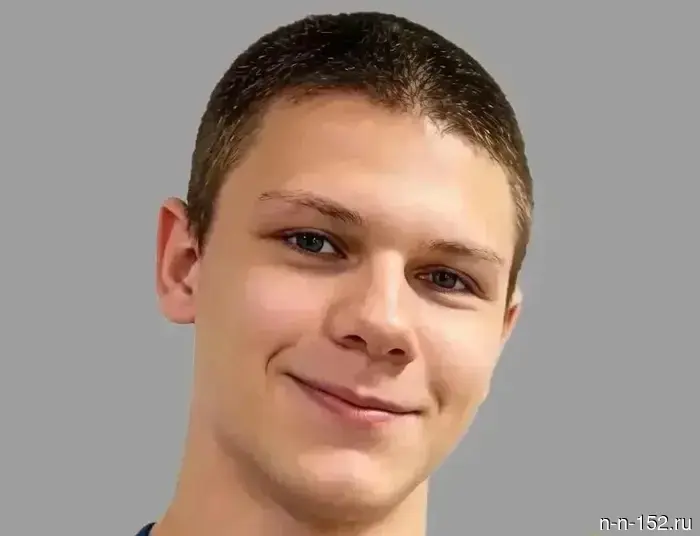 The police are searching for a missing teenager in the Dalnekonstantinovsky district.
The police are asking for help in the search for 17-year-old Ilya Kholodkov, who went missing in the village of Bogoyavlenie in the Dalenekonstantinovsky district. 11.08.2026. Nizhny Novgorod Truth. Nizhny Novgorod region. Nizhny Novgorod.
The police are searching for a missing teenager in the Dalnekonstantinovsky district.
The police are asking for help in the search for 17-year-old Ilya Kholodkov, who went missing in the village of Bogoyavlenie in the Dalenekonstantinovsky district. 11.08.2026. Nizhny Novgorod Truth. Nizhny Novgorod region. Nizhny Novgorod.
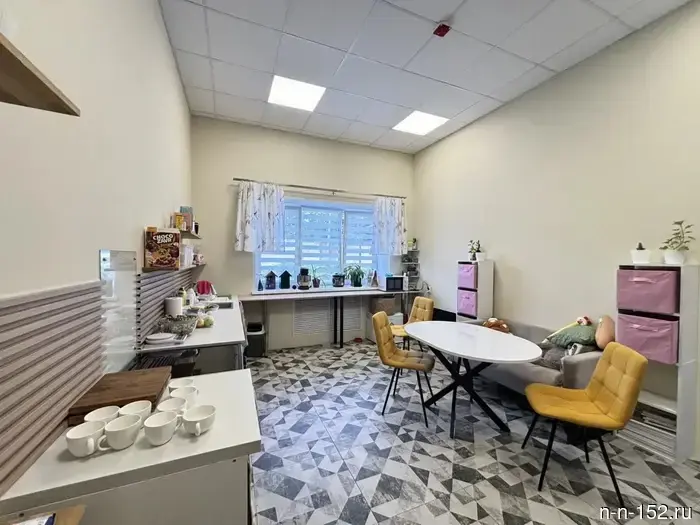 Two training and educational dormitories have been opened in Nizhny Novgorod.
Two educational and training dormitories for students opened at the Social Service House for Children and Young Adults "Nadezhda" in Nizhny Novgorod. 11.08.2026. Nizhny Novgorod Truth. Nizhny Novgorod Region. Nizhny Novgorod.
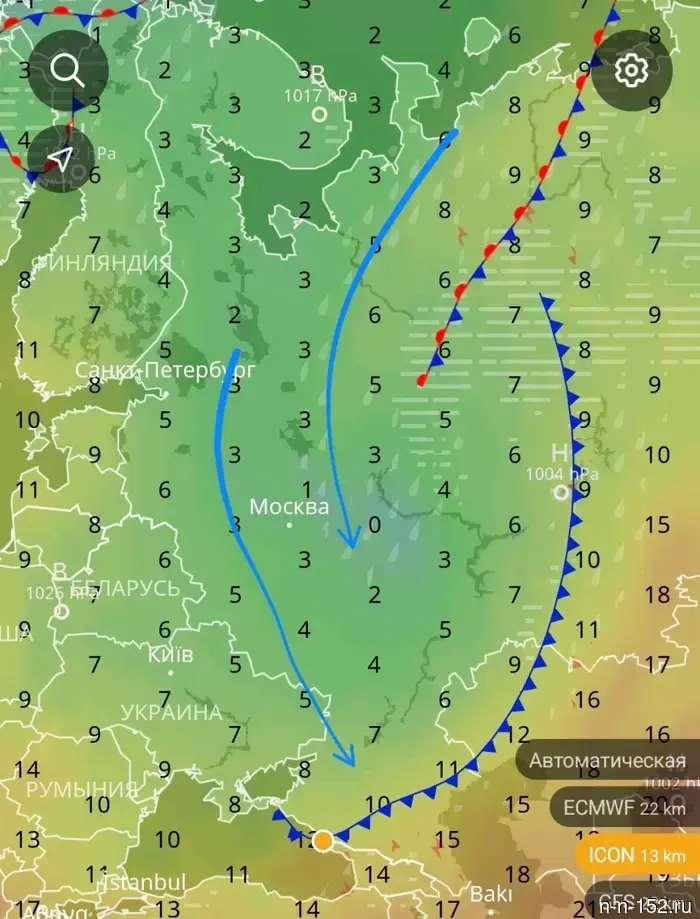
In Nizhny Novgorod, ten days of rain are forecasted starting from August 12.
In Nizhny Novgorod, a prolonged period of rainy weather is forecasted starting from August 12. 11.08.2026. Open Nizhny. Nizhny Novgorod Region. Nizhny Novgorod.
Two training and educational dormitories have been opened in Nizhny Novgorod.
Two educational and training dormitories for students opened at the Social Service House for Children and Young Adults "Nadezhda" in Nizhny Novgorod. 11.08.2026. Nizhny Novgorod Truth. Nizhny Novgorod Region. Nizhny Novgorod.
In Nizhny Novgorod, ten days of rain are forecasted starting from August 12.
In Nizhny Novgorod, a prolonged period of rainy weather is forecasted starting from August 12. 11.08.2026. Open Nizhny. Nizhny Novgorod Region. Nizhny Novgorod.
 VTB records a twofold increase in demand for voluntary health insurance among young people.
News of Nizhny Novgorod
VTB records a twofold increase in demand for voluntary health insurance among young people.
News of Nizhny Novgorod
The financier Barkhota explained where salaries disappear unnoticed and what to do about it.
News of Nizhny Novgorod