
Recommendations for disinfecting a country pool
From the specialists of the Institute of Disinfectology of the Federal Budgetary Scientific Institution "FNCG named after F.F. Erismana" of Rospotrebnadzor. Having your own pool at the dacha is a real pleasure; it's so nice to dive into the cool water on a hot day. To ensure a safe rest and that the water always delights with its clarity and freshness, regular and proper cleaning is necessary. Without proper care, the water in the pool quickly becomes cloudy, the walls are covered with deposits, and in the warm and nutrient-rich environment, dangerous bacteria, viruses, and algae begin to multiply rapidly. Daily, organic and inorganic contaminants enter the water: sand, grass, leaves, insects, as well as particles of skin, sweat, and remnants of cosmetics from bathers, while the impact of sunlight and increased temperature create ideal conditions for the development of pathogenic microflora, which can cause intestinal infections, skin, and fungal diseases.
Important! Before swimming, be sure to take a shower, and when the pool is not in use, cover it with a tarp to protect it from debris and sunlight. Maintaining cleanliness in the pool is always a comprehensive approach that includes three main stages:
– mechanical cleaning,
– filtration,
– chemical treatment.
Step 1. Before applying chemical reagents, it is necessary to remove visible debris and insects using a leaf skimmer. Brushes and scrapers can be used to clean the walls and bottom of the pool from deposits. Regular manual cleaning, as well as the use of a bottom vacuum cleaner to remove sand and silt, significantly reduces the load on the filtration equipment and saves on chemical expenses.
Step 2. The filtration system is the foundation of cleanliness in the pool. It can be sand, cartridge, or diatomaceous. The entire volume of water in the pool should pass through the filter at least two to three times a day. However, filtration only removes mechanical particles; it is powerless against bacteria and algae. Therefore, it is chemical disinfection that ensures the microbiological safety of the water.
Step 3. The most common and effective method of disinfection is chlorination. Chlorine destroys pathogenic microflora, oxidizes organic matter, and prevents algae growth. It is available in convenient tablets for maintenance disinfection, granules for shock treatment, as well as powders and solutions. For outdoor pools, it is recommended to use stabilized chlorine containing cyanuric acid, which is protected from destruction by ultraviolet light. If you want to avoid the characteristic chlorine smell and irritation of mucous membranes, excellent alternatives are products based on active oxygen, which also effectively disinfect the water and are suitable for pool disinfection.
In addition to the main disinfectants, algicides are also used – special preparations for combating algae that destroy their shells and prevent water "blooming." The use of such preparations is especially relevant in hot weather and after heavy rains, and in cases of severe contamination, a shock dose of algicide is required along with shock chlorination. Coagulants and flocculants also help in the fight against cloudiness, which bind the smallest suspended particles into large flakes, after which they are trapped by the filter or settle to the bottom and can be easily removed with a vacuum cleaner.
When using any chemical agents, strictly follow the dosage and application rules according to the instructions, never mix different preparations together, store them in a place inaccessible to children and animals, and purchase only officially registered products. The presence of a certificate of state registration for the product can be verified before purchase in the Register of State Registration Certificates (single form of the Customs Union, Russian part) on the designated search server for Rospotrebnadzor Registers (available for free) or in the Unified Register of State Registration Certificates (available for free). It is not advisable to use unregistered products, as they may be ineffective or unsafe.
Important! A key point before any disinfection is to control the pH level, as the optimal acid-base balance should be within 7.0–7.4. When the pH is below 7.0, the water becomes aggressive, irritates the skin and eyes, causes corrosion of metal parts, and sharply reduces the effectiveness of chlorine, while at a pH above 7.6, the water becomes cloudy, and disinfection practically stops working. These indicators should be checked with special test strips or devices at least two to three times a week, and in hot weather – daily.
At the beginning of the dacha season, a general preparation of the pool is mandatory: the water is drained, the walls and bottom are thoroughly cleaned with brushes and detergent, surfaces are disinfected with special solutions, after which everything is rinsed with clean water, dried, and only then is the pool filled with fresh tap or drinking water. The frequency of disinfection during the summer depends on the intensity of pool use, water temperature, type of pool, and availability of filtration. On average, cleaning and renewing chemical reagents is recommended once every two weeks or more often, while in small frame pools without filtration, it is recommended to change the water every three to four days. In cases of severe pool contamination, it is advisable to contact specialized organizations for disinfection.
Remember that a clean and safe dacha pool is the result of not a one-time action, but regular care, where mechanical cleaning, filtration, and properly selected chemical disinfection work in unison, ensuring crystal clarity of the water and reliable protection against pathogenic microorganisms throughout the swimming season.
More news on the event:
Recommendations for disinfecting the dacha pool
From the specialists of the Institute of Disinfectology of the Federal Budgetary Scientific Institution "FNCG named after F.F. Erismana" of Rospotrebnadzor. 07:03 11.08.2026 Lyskovsky Municipal District - Lyskov
Recommendations for disinfecting the dacha pool
From the specialists of the Institute of Disinfectology of the Federal Budgetary Scientific Institution "FNCG named after F.F. Erismana" of Rospotrebnadzor. 09:09 11.08.2026 Knyagininsky Municipal District - Knyagini
Recommendations for disinfecting the dacha pool
From the specialists of the Institute of Disinfectology of the Federal Budgetary Scientific Institution "FNCG named after F.F. Erismana" of Rospotrebnadzor. 08:59 11.08.2026 Sergachsky Municipal District - Sergach
News from neighboring regions on the topic:
The territorial department for western Crimea of the Interregional Office of Rospotrebnadzor for the Republic of Crimea and the city of Sevastopol informs
The dacha pool is a source of joy and benefit, but only if the water in it is safe. 10:28 10.08.2026 Razdolnensky District - Razdolnoe
Tips for disinfecting the dacha pool
Tips for disinfecting the dacha pool
Having your own pool at the dacha is a real pleasure, especially on a hot summer day. 08:40 10.08.2026 Rospotrebnadzor - Samara
Recommendations for disinfecting the dacha pool
Having your own pool at the dacha is a real pleasure; it's so nice to dive into the cool water on a hot day. 11:10 10.08.2026 Center for Hygiene and Epidemiology - Abakan
Recommendations for disinfecting the dacha pool
The specialists of the Institute of Disinfectology of the Federal Budgetary Scientific Institution "FNCG named after F.F. Erismana" of Rospotrebnadzor provided advice on how to ensure safety in the dacha pool. 21:52 09.08.2026 BusinessPskov.Ru - Pskov
Другие Новости Нижнего (Н-Н-152)
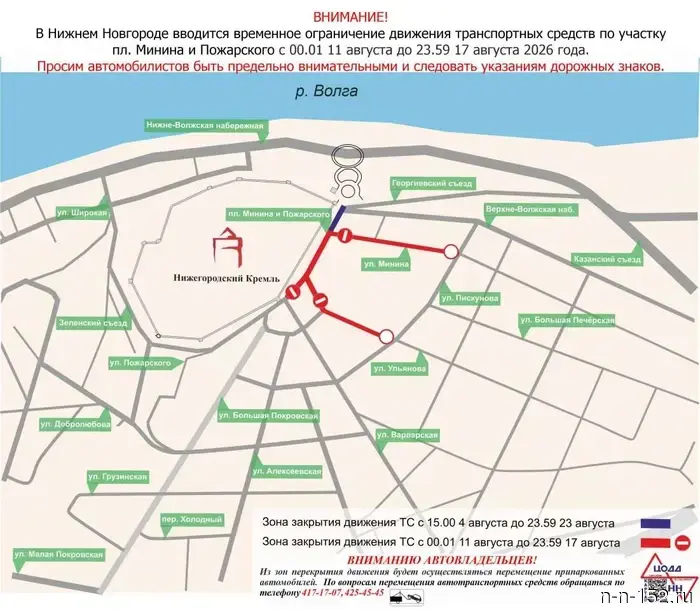 Another section of Minin Square will be closed to traffic starting August 11.
News of Nizhny Novgorod
In Uren, the traffic police and the youth traffic safety squad reminded about the safety rules when using SIM.
During the summer holidays, the employees of the State Traffic Inspectorate of the Ministry of Internal Affairs of Russia "Urensky" together with the kids from the Youth Traffic Inspectorate "Road Patrol" held an informational and promotional campaign "We roll safely with SIM!". 11.08.2026. Main Directorate of the Ministry of Internal Affairs of the Nizhny Novgorod Region. Nizhny Novgorod Region. Nizhny Novgorod.
Another section of Minin Square will be closed to traffic starting August 11.
News of Nizhny Novgorod
In Uren, the traffic police and the youth traffic safety squad reminded about the safety rules when using SIM.
During the summer holidays, the employees of the State Traffic Inspectorate of the Ministry of Internal Affairs of Russia "Urensky" together with the kids from the Youth Traffic Inspectorate "Road Patrol" held an informational and promotional campaign "We roll safely with SIM!". 11.08.2026. Main Directorate of the Ministry of Internal Affairs of the Nizhny Novgorod Region. Nizhny Novgorod Region. Nizhny Novgorod.
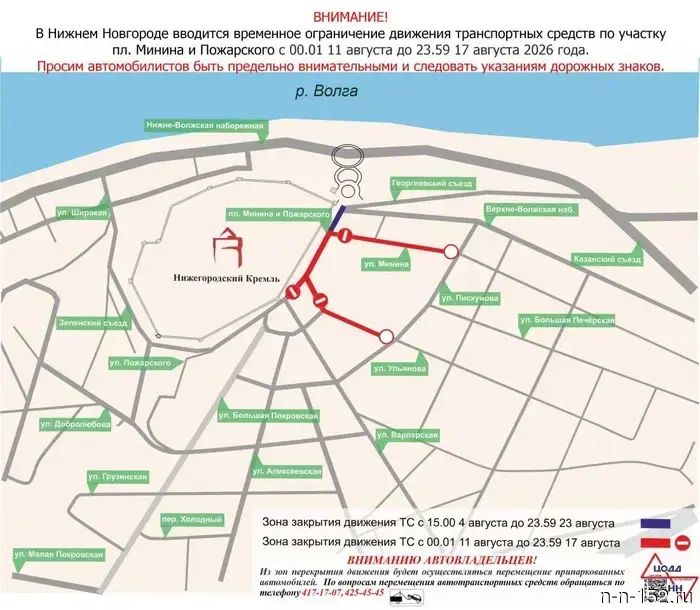 Another section of Minin Square will be closed to traffic starting August 11.
News of Nizhny Novgorod
Another section of Minin Square will be closed to traffic starting August 11.
News of Nizhny Novgorod
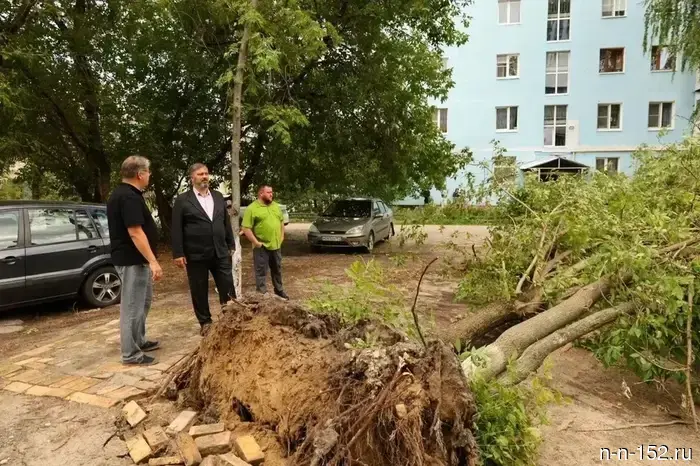 Hurricane winds left homes in Dzerzhinsk without power.
The Unified Dispatch Service received 93 reports about the consequences of the storm. Hurricane winds left homes in Dzerzhinsk without electricity. 11.08.2026. Komsomolskaya Pravda. Nizhny Novgorod Region. Nizhny Novgorod.
Hurricane winds left homes in Dzerzhinsk without power.
The Unified Dispatch Service received 93 reports about the consequences of the storm. Hurricane winds left homes in Dzerzhinsk without electricity. 11.08.2026. Komsomolskaya Pravda. Nizhny Novgorod Region. Nizhny Novgorod.
Recommendations for disinfecting a country pool
From specialists of the Institute of Disinfection of the Federal State Budgetary Institution "FNCG named after F.F. Erismana" of Rospotrebnadzor. 11.08.2026. Seryozhsky Municipal District. Nizhny Novgorod Region. Seryozh.