
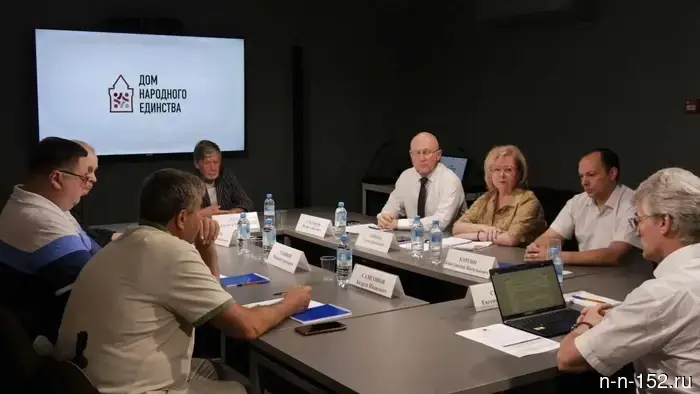
About 1500 Nizhny Novgorod residents underwent training for work in the upcoming elections.
On August 4, 2026, at 14:26, Political Electoral experts from the Public Headquarters of the Nizhny Novgorod region for election observation discussed the ongoing preparation of observers. Last week, about 1,500 citizens completed training in Nizhny Novgorod, who will observe the upcoming elections for deputies of the State Duma of the Russian Federation and the regional Legislative Assembly. Today, training for public observers began in other municipalities of the region. The updated teaching program, developed by the "Independent Public Monitoring" association, includes practical cases, analysis of conflict situations, with an emphasis on knowledge of legislation, stress resistance, and communication.
As noted by the Deputy Chair of the Public Chamber of the Nizhny Novgorod region, Elena Lenina, public observation is an institution that is still in the process of formation. It is a living organism that actively absorbs all innovations, technological, social, political, and cultural trends. A significant portion of observers at polling stations will be working for the first time. Among them, citizens under 40 years old prevail, with many young people.
Electoral experts responded positively to the rotation of public observers. "The more citizens go through training and the observation procedure, the deeper the understanding of the state system in society, and thus, the higher the trust in political institutions, elections, and their results," emphasized Senior Researcher at the Research Institute of Social Management Problems, Researcher at the Federal Research Sociological Center of the Russian Academy of Sciences Andrey Samsonov.
Electoral experts also noted the growing influence of the media on public observation. Today, informing about the voting process through social networks and mobile applications has become a crucial part of the work of observers, most of whom will be bloggers during the elections.
Doctor of Philosophy, Professor at the Nizhny Novgorod branch of the Russian Academy of National Economy and Public Administration Andrey Dakhin stated that this is a systemic process of transitioning public observers from "silently doing" to "doing and speaking." As a result, public commentary directly from polling stations on the course of elections legitimizes them and counters information distortions.
Electoral experts also discussed the analytical report from the Center for Public-Political Projects and Communications titled "The Candidate Nomination Process in the 2026 Elections - An Assessment of Electoral Dynamics." According to the moderator of the round table, Deputy Chair of the Public Chamber of the Nizhny Novgorod region, Head of the Nizhny Novgorod branch of the "Civil Society Development Fund," Political Science Candidate Evgeny Semyonov, the presented report is a classic informational-analytical release that records the completion of a key stage in the nomination of candidates for deputies. Its main task is to confirm the legitimacy of the process and demonstrate the systematic nature of the electoral campaign.
"The report relies on quantitative indicators: data on 11 parties, 1,717 candidates, and 80 self-nominees. This allows for an assessment of the scale of the campaign compared to previous electoral periods. The publication of such statistics at early stages serves as a marker of transparency of procedures for the audience. Special attention in the report is paid to compliance with legal norms and the thesis of a 'stable core' of the party system, which the authors interpret as a sign of stability and procedural legitimacy of the elections," stated the political scientist.
Senior Researcher at the Institute of Political Psychology Alexander Prudnik noted that the current party structure has entered a stage of completion. The nature of the participation of individual parties in the electoral campaign shows the distribution of their positions in the political space of the country. "Leading Duma parties firmly hold their leading positions. However, they do not monopolize the entire public political space. Within the existing political system, smaller party projects perform a rather important function. They express the interests of local or regional population groups. It is through these parties that consolidated political positions of such social groups are formed and presented at the national level," reported Alexander Prudnik.
The NIA "Nizhny Novgorod" has channels on Telegram and MAX. Subscribe to stay updated on major events, exclusive materials, and timely information. Copyright © 1999—2025 NIA "Nizhny Novgorod". When republishing, a hyperlink to NIA "Nizhny Novgorod" is mandatory. This resource may contain materials 18+.
Другие Новости Нижнего (Н-Н-152)
 The state debt of the Nizhny Novgorod region has decreased by 12 billion rubles since the beginning of the year.
News of Nizhny Novgorod
16 Nizhny Novgorod residents won the "Big Change" competition.
16 Nizhny Novgorod school students from grades 5-7 became winners of the All-Russian competition "Big Break," which is held as part of the national project "Youth and Children." 05.08.2026. NTA-Volga. Nizhny Novgorod Region. Nizhny Novgorod.
The illegally imported car into Russia has been seized by a court decision in Tatarstan.
In Tatarstan, in Naberezhnye Chelny, at the request of the transport prosecutor, the court seized a car that was illegally imported from abroad. 05.08.2026. NTA-Volga. Nizhny Novgorod region. Nizhny Novgorod.
The state debt of the Nizhny Novgorod region has decreased by 12 billion rubles since the beginning of the year.
News of Nizhny Novgorod
16 Nizhny Novgorod residents won the "Big Change" competition.
16 Nizhny Novgorod school students from grades 5-7 became winners of the All-Russian competition "Big Break," which is held as part of the national project "Youth and Children." 05.08.2026. NTA-Volga. Nizhny Novgorod Region. Nizhny Novgorod.
The illegally imported car into Russia has been seized by a court decision in Tatarstan.
In Tatarstan, in Naberezhnye Chelny, at the request of the transport prosecutor, the court seized a car that was illegally imported from abroad. 05.08.2026. NTA-Volga. Nizhny Novgorod region. Nizhny Novgorod.
 "Rostelecom," United Russia, and "Lesta" will hold a cyber tournament "Battle for Moscow"
News of Nizhny Novgorod
"Rostelecom," United Russia, and "Lesta" will hold a cyber tournament "Battle for Moscow"
News of Nizhny Novgorod
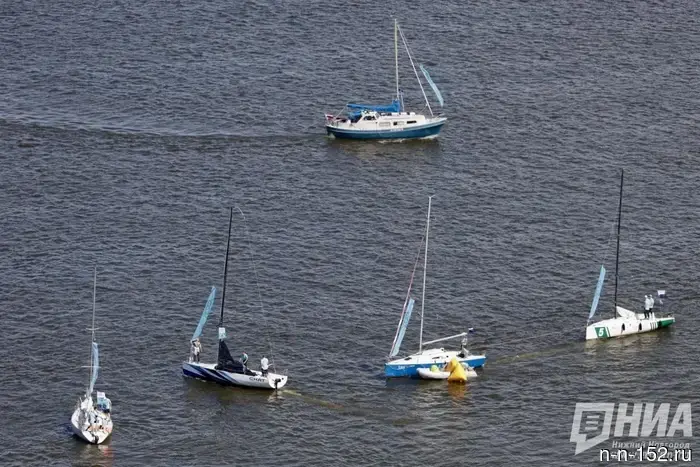 The mother of the deceased at the sailing regatta will receive 1.5 million rubles.
News of Nizhny Novgorod
The mother of the deceased at the sailing regatta will receive 1.5 million rubles.
News of Nizhny Novgorod
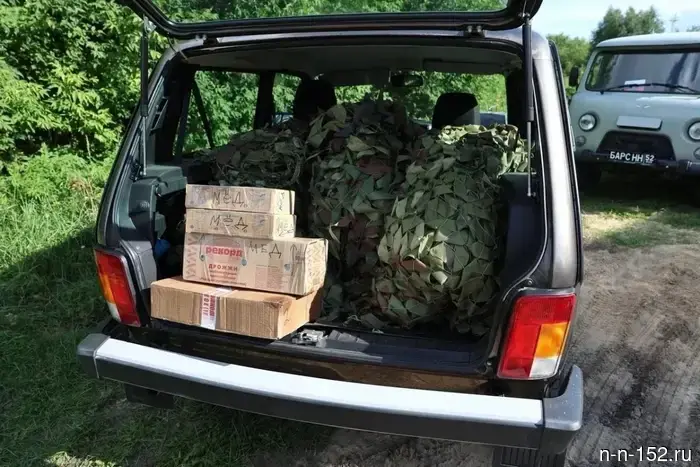 Nizhny Novgorod volunteers provided assistance to the fighters of "BARS-NN".
Camouflage nets and humanitarian aid from the residents of the Nizhny Novgorod region were delivered to one of the units of "BARS-NN." 05.08.2026. Nizhny Novgorod Truth. Nizhny Novgorod region. Nizhny Novgorod.
Nizhny Novgorod volunteers provided assistance to the fighters of "BARS-NN".
Camouflage nets and humanitarian aid from the residents of the Nizhny Novgorod region were delivered to one of the units of "BARS-NN." 05.08.2026. Nizhny Novgorod Truth. Nizhny Novgorod region. Nizhny Novgorod.
About 1500 Nizhny Novgorod residents underwent training for work in the upcoming elections.
News of Nizhny Novgorod