
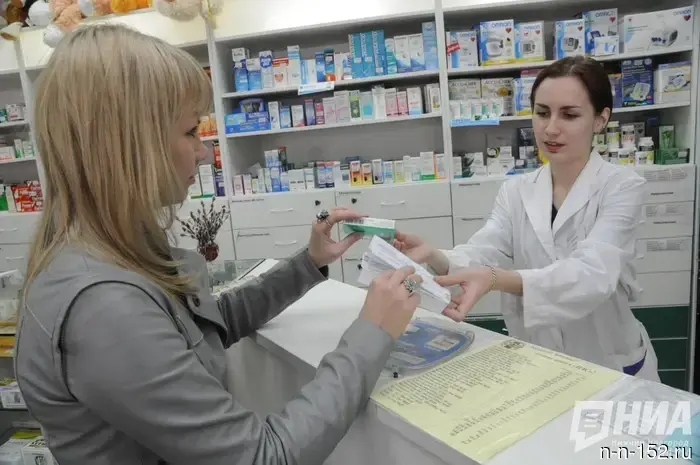
Nizhny Novgorod residents were informed about the updated recommendations for vitamin D.
July 1, 2026 09:40 Society The Russian Association of Endocrinologists has released updated clinical guidelines on vitamin D. This was reported by healthcare specialist Alexey Nikонов from the Nizhny Novgorod region.
Most of Russia is located above the 35th parallel north latitude—this zone includes Moscow, St. Petersburg, Vladivostok, and Sochi. From November to March, sunlight hits at a sharp angle, and the skin hardly synthesizes vitamin D regardless of the time spent outdoors. The risk of deficiency is increased by office work, cloudiness, and the use of sunscreen.
Status assessment is conducted based on the level of 25(OH)D in the blood: less than 20 ng/ml indicates a pronounced deficiency. This can lead to decreased bone density, muscle weakness, and an increased risk of fractures. Levels of 20−29 ng/ml are considered insufficient. This level may be enough to maintain bone tissue, but it is insufficient for other effects of vitamin D, including its impact on the immune and neuromuscular systems. A level of 30−60 ng/ml is considered the target range.
It is difficult to obtain sufficient amounts of vitamin D solely from food—large quantities would be required, such as fatty fish or milk. Taking extremely high doses (300,000−500,000 IU at once) is recognized as ineffective and may increase the risk of falls, so daily intake is preferred. The preventive dose for adults is 800−1000 IU per day, and for pregnant women, it is 800−2000 IU. Without a doctor's supervision, it is not recommended to exceed 4000 IU per day due to the risk of toxicity and kidney damage.
If a deficiency is confirmed in the laboratory, a treatment course with a total dose of 400,000 IU is prescribed according to an individual scheme. Patients with obesity (BMI over 30) may require doses 2−3 times higher than standard, as vitamin D is stored in fat tissue.
Experts emphasize that vitamin D aids in calcium absorption but does not replace it. Adults are recommended to obtain 1000−1200 mg of calcium per day—this corresponds to about three servings of dairy products a day. Constant weakness, fatigue, and muscle pain may be reasons for examination and determining the level of 25(OH)D, as noted in the guidelines.
Earlier, we reported that residents of Nizhny Novgorod have been getting revaccinated against diphtheria and tetanus more frequently. NIA "Nizhny Novgorod" has channels on Telegram and MAX. Subscribe to stay updated on major events, exclusive materials, and timely information. Copyright © 1999—2025 NIA "Nizhny Novgorod". When reprinting, a hyperlink to NIA "Nizhny Novgorod" is mandatory. This resource may contain materials 18+
Другие Новости Нижнего (Н-Н-152)
 Gleb Nikitin thanked the veterans of combat operations for their service and loyalty to duty.
News of Nizhny Novgorod
Gleb Nikitin thanked the veterans of combat operations for their service and loyalty to duty.
News of Nizhny Novgorod
 Nizhny Novgorod region summed up the results of the first year of the "Osnova" program.
News of Nizhny Novgorod
Nizhny Novgorod region summed up the results of the first year of the "Osnova" program.
News of Nizhny Novgorod
 Another 73 plots will be seized for the construction of the Eastern Bypass of Nizhny Novgorod.
News of Nizhny Novgorod
Another 73 plots will be seized for the construction of the Eastern Bypass of Nizhny Novgorod.
News of Nizhny Novgorod
 Nizhny Novgorod residents can propose areas for improvement.
News of Nizhny Novgorod
Nizhny Novgorod residents can propose areas for improvement.
News of Nizhny Novgorod
 Another 73 plots will be seized for the construction of the Eastern Bypass of Nizhny Novgorod.
News of Nizhny Novgorod
Another 73 plots will be seized for the construction of the Eastern Bypass of Nizhny Novgorod.
News of Nizhny Novgorod
 Nizhny Novgorod residents can propose areas for improvement.
News of Nizhny Novgorod
Nizhny Novgorod residents can propose areas for improvement.
News of Nizhny Novgorod
Nizhny Novgorod residents were informed about the updated recommendations for vitamin D.
News of Nizhny Novgorod