
.jpg)
June 27 - the day of remembrance of the prophet Elisha (9th century B.C.)
June 27 - the day of remembrance of the prophet Elisha (9th century BC)
The prophet Elisha lived in the village of Abel-Meholah near the Jordan River in the 9th century BC. The holy prophet Elijah called him to serve the Lord. When it was time for them to part, Elisha boldly asked Elijah for a special grace: the gift of prophecy and miracles that Elijah possessed, but double. To which the holy one replied: you ask for something difficult. If you see me taken from you, it will be so for you; but if you do not see me, it will not be (2 Kings 2:9, 10). Elisha was able to see how, during their conversation, a fiery chariot appeared and took Elijah away. The prophet fulfilled his promise: he left Elisha his cloak, passing on to him the prophetic gift and ministry. From then on, with Elijah's grace, Elisha prophesied during the reign of six kings of Israel. Over the course of 65 years, he performed many miracles. Once, a certain woman took Elisha in, and in gratitude, he prayed for her to be granted a long-awaited child. Soon the newborn died, but Elisha was able to resurrect him. The prophet performed many miraculous deeds with water: he parted the Jordan River; he made the water drinkable at the spring of Jericho; he brought moisture for the armies of the kings of Israel and Judah, who were perishing in the desert from drought. Elisha preached orally, but his deeds can be read in the 3rd and 4th Books of Kings, the Book of Wisdom of Jesus, son of Sirach, and the Gospel of Luke. The saint departed to the Lord in his old age. His body was laid to rest in Samaria. A year after Elisha's death, a dead man was thrown into the cave with his remains. The touch of the holy relics revived the deceased. In the 4th century, Julian the Apostate came to power and ordered the destruction of the relics of the prophets Obadiah, John the Baptist, and Elisha. However, the faithful preserved the remains, and part of them was transported to Alexandria.
Troparion, tone 4
In the flesh, an Angel,/ the foundation of prophets,/ the second Forerunner of Christ's coming, the glorious Elijah,/ sent from above, grant Elisha grace/ to drive away sickness/ and to cleanse the possessed,// to those who honor him, grant healing.
In Troparion, tone 4
You, in the flesh, an Angel,/ and the chief witness of the prophets, glorious Elisha,/ have performed wondrous miracles, O prophet,/ by the grace of the Holy Spirit;/ by the power of Elijah, you healed the nature of water,/ and destroyed the beasts that devoured,/ and cleansed Naaman's leprosy,/ and raised the widow's son,// and grant grace and healing to all who honor you.
Kontakion, tone 2
You have appeared as a prophet of God,/ receiving double grace,/ truly worthy of you, blessed Elisha:/ for you were a companion of Elijah,// with whom pray to Christ God unceasingly for all of us.
(From the materials of the official website of the Holy Elizabeth Convent in Minsk)
June 27 - the day of remembrance of the venerable Methodius, abbot of the Peshnosha Monastery (14th century)
Venerable Methodius was one of the disciples of Venerable Sergius of Radonezh. In his youth, Methodius spent several years following the teachings of his spiritual father, after which he was blessed by the venerable one for hermit life. The saint settled in a forest beyond the Yakhroma River, in a remote marshy place. After some time, disciples began to settle near the cell of Venerable Methodius. All of them imitated the pious monk in spiritual life. Venerable Sergius of Radonezh also visited his former pupil and blessed him to build a monastery and a church. Thus, the Peshnosha Monastery was established. This name is derived from the words "pesh nosya" - carrying on foot. It was Methodius himself who transported logs across the river, which has since been called Peshnosh.
The venerable one was elected abbot of the Peshnosha Monastery. Until his death in 1392, he wisely governed his flock. From time to time, he would go two versts from the monastery for solitary prayer. There, he would meet with Venerable Sergius for spiritual conversations.
After his passing, the venerable one was buried in his monastery, and in 1732 a church was built over his relics, named in honor of Venerable Sergius of Radonezh and Venerable Methodius of Peshnosha.
Troparion, tone 8
With divine love from youth you were inflamed,/ all that is beautiful in the world you hated,/ you loved Christ the One,/ and for this reason you settled in the wilderness,/ created a monastery in it,/ and, gathering many monks,/ you received from God the gift of miracles, O Father Methodius,/ and you were a companion and co-worker of Christ,/ with whom ask for health for Orthodox Christians and salvation,// and great mercy for our souls.
Kontakion, tone 4
Being a good steward of obedience,/ you strongly put to shame the bodiless enemies with your tearful prayers,/ and you appeared as a dwelling of the Most Holy Trinity,/ which you saw, blessed one, clearly,/ O God-wise Methodius the Venerable,/ you received the gift of miracles from Her./ Therefore, you heal the ailments of those who come with faith,/ you soothe sorrows// and pray unceasingly for all of us.
Prayer
O holy head, earthly Angel and Heavenly man, our venerable and God-bearing Father Methodius! We bow to you with faith and love, and we earnestly pray: show us, humble and sinful, your holy paternal intercession: for because of our sins we have no freedom to ask the Lord and our Master for our needs, but to you, a gracious intercessor to Him, we offer our prayers, and we ask you with great diligence to ask for us from His goodness the necessary gifts for our souls and bodies: true faith, unwavering hope of salvation, sincere love for all, courage in temptations, patience in tribulations, constancy in prayers, health for soul and body, fruitful land, pleasant air, sufficiency for earthly needs, a peaceful and tranquil life, a good Christian end, and a good answer at the Terrible Judgment of Christ. Ask, O servant of God, from the King of kings and Lord of lords, salvation for Orthodox Christians and victory over enemies and peace, tranquility, and prosperity for our homeland. Do not deprive us of your heavenly help, but by your prayers lead us all to the haven of salvation and make us heirs of the everlasting Kingdom of Christ, that we may sing and glorify the unspeakable mercies of the Loving God, the Father, the Son, and the Holy Spirit, and your holy paternal intercession forever and ever. Amen.
(From the materials of the official website of the Holy Elizabeth Convent in Minsk)
June 27 - the day of remembrance of Saint Methodius, Patriarch of Constantinople (847)
Saint Methodius was born in Sicily. In his youth, he took monastic vows in one of the monasteries on the island of Chios.
No information has survived about the early years of the saint's life. He gained fame during the reign of Emperor Leo the Armenian, during which he held a high position under Patriarch Nikephoros. The patriarch sent Saint Methodius to Rome with a commission, where he stayed for a while. At that time, Leo the Armenian deposed Patriarch Nikephoros and elevated the iconoclast Theodotus Melissinos, nicknamed Cassiter (815-822), to the throne.
Returning from Rome after the death of Emperor Leo, Methodius courageously opposed the iconoclastic heresy. For this, under Emperor Michael the Stammerer, he was imprisoned in Akritai. After Michael's death, Emperor Theophilus ascended the throne, who initially showed himself merciful to the icon venerators, while in reality being an iconoclast. More educated than his father, he freed Saint Methodius as a learned man, well-versed in both ecclesiastical and civil matters. Gaining his freedom, Saint Methodius renewed the struggle against the heretics. The emperor tolerated this for a time, but after a defeat in battle against the Arabs, he accused Methodius of idolatry and unleashed all his wrath upon him. After tortures, the saint was exiled to the island of Antigone and languished there with two robbers for 7 years, not even seeing the sunlight.
After the death of Theophilus, Empress Theodora, an icon venerator, came to power. She freed the prisoners from the dungeons, and Methodius, as the most worthy of men, as a strong pillar of orthodoxy and an unwavering affirmation of piety, as a warrior of Christ adorned with martyrdom, was elected patriarch. Together with the righteous queen Theodora, he convened a Local Council in Constantinople in 842, which confirmed the dogmatic definitions of the Seventh Ecumenical Council, restored the veneration of icons, and decreed to annually celebrate
Другие Новости Нижнего (Н-Н-152)
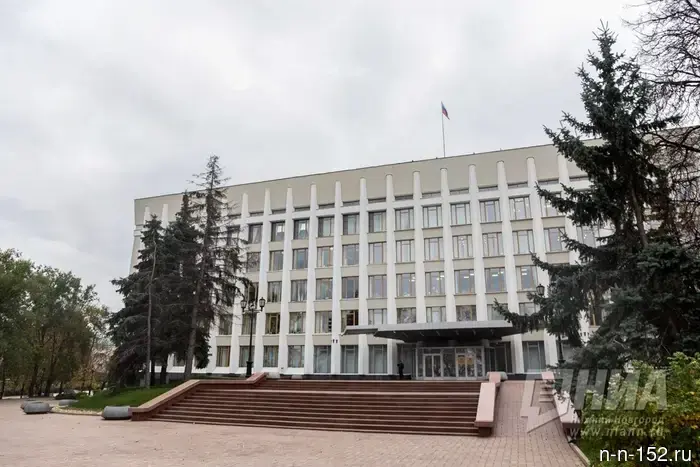 Nizhny Novgorod Region and the Republic of Belarus are developing cooperation.
News of Nizhny Novgorod
Nizhny Novgorod Region and the Republic of Belarus are developing cooperation.
News of Nizhny Novgorod
 The resident card of the Nizhny Novgorod region can be used as a key for the intercom.
News of Nizhny Novgorod
The resident card of the Nizhny Novgorod region can be used as a key for the intercom.
News of Nizhny Novgorod
 The first intermunicipal department of the "Defenders of the Fatherland" fund has opened in Kstovo.
News of Nizhny Novgorod
The first intermunicipal department of the "Defenders of the Fatherland" fund has opened in Kstovo.
News of Nizhny Novgorod
 Together a friendly family
Alexandra GOLIKOVA
Photo provided by the heroine of the material
Soon we will celebrate the all-Russian family holiday. 26.06.2026. Semenovsky Vestnik Newspaper. Nizhny Novgorod Region. Semyonov.
Together a friendly family
Alexandra GOLIKOVA
Photo provided by the heroine of the material
Soon we will celebrate the all-Russian family holiday. 26.06.2026. Semenovsky Vestnik Newspaper. Nizhny Novgorod Region. Semyonov.
 Three barrack-type houses caught fire in the Lenin district of Nizhny Novgorod.
News of Nizhny Novgorod
Three barrack-type houses caught fire in the Lenin district of Nizhny Novgorod.
News of Nizhny Novgorod
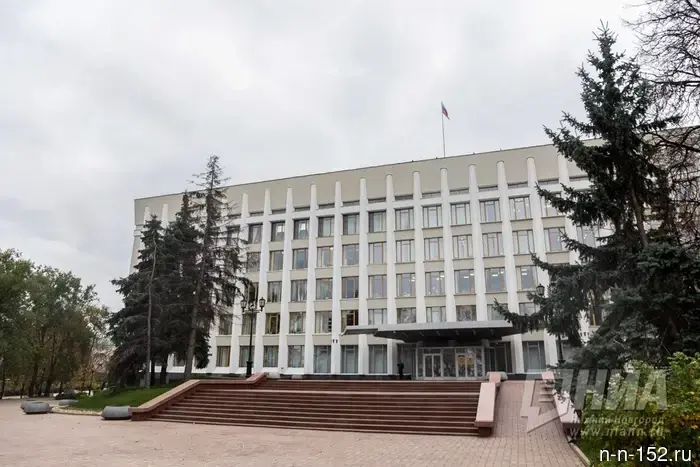 Nizhny Novgorod Region and the Republic of Belarus are developing cooperation.
News of Nizhny Novgorod
Nizhny Novgorod Region and the Republic of Belarus are developing cooperation.
News of Nizhny Novgorod
June 27 - the day of remembrance of the prophet Elisha (9th century B.C.)
June 27 - the day of remembrance of the prophet Elisha (9th century BC) The prophet Elisha lived in the village of Abel Meholah near the Jordan in the 9th century BC. 06/27/2026. Women's Monastery Diveevo. Nizhny Novgorod region. Arzamas.