

What concerns Nizhny Novgorod youth the most today?
In Nizhny Novgorod, special attention is paid to youth. The city has long been the largest university center in the country, and with the opening of the first phase of the IT campus "Neimark" in 2025, it has become an undisputed leader in modern education. Nizhny Novgorod was one of the first cities in Russia to receive the title of "Youth Capital of Russia" and set a high standard for this Russian event. Speaking of the interests of the young, Nizhny offers a wide range of opportunities for creative youth: from various music, theater, and film festivals to street art festivals and the media art festival Intervals (0+).
In Nizhny, the homeland of the great citizen of the Russian land Kuzma Minin, a unique experience of cultural-historical and patriotic education of youth has formed. Great attention is paid to history and local studies, and there is a strong volunteer movement. This experience and deep understanding of youth allow for serious study of the current generation of young people. That is why, on the eve of Youth Day, we invited our experts to reflect on the challenges facing Russian youth today. We asked the experts to answer key questions: what problems concern young Russians the most and how does their view of life differ from that of their peers around the world?
Nikita Shangin, head of the Department of Philosophy, Sociology, and Psychology of Management at the Nizhny Novgorod branch of the Presidential Academy (RANEPA), candidate of sociological sciences, associate professor:
When talking about the problems that concern Russian youth the most, the main problem is how to achieve success? At the same time, success is perceived as a complex phenomenon: a strong and good family, financial stability, an interesting job with a convenient schedule and opportunities for self-realization. At first glance, there is nothing particularly new here; one could say that everyone wants this. But the catch is that modern Russian youth wants all of this at the same time, which is already problematic. A well-paid job, for example, often leaves no time for family. And here lies the problem for youth—how to combine all of this and get it at once? At the same time, Russian youth are in a state of transition from collectivist values to individualist values, which is reflected in the declared reliance on their own strengths with minimal involvement from their immediate surroundings and low expectations of help from the state. Here we see differences from the youth of other countries, for example, China, where collectivist values are still quite strong, or from some European countries where such a transition has already occurred. The use of weak social ties (hometowns, classmates, colleagues, etc.) of different natures, but allowing one to find their place in the sun, makes achieving success more possible. Russian youth should look around and see in others not only competitors or friends but also helpers, to whom they, in turn, can also help.
Evgeny Semyonov, deputy chairman of the Public Chamber of the Nizhny Novgorod region, head of the Nizhny Novgorod branch of ForGO, political scientist, candidate of political sciences, associate professor:
Youth of the first quarter of the 21st century, living in different countries, really have a lot in common. They are children of globalization, and digital transformation is a natural environment for them. They coexist in a single information space where social networks, streaming services, and online games erase many barriers. They feel comfortable in the global cultural mainstream, preferring the same brands, gadgets, and idols. They speak the same language, and their requests and interests often coincide.
However, youth living in Russia has one very important distinction. They are people from a warring country, and they live in a somewhat different reality. Their worldview is shaped under conditions of limited resources and opportunities, in circumstances of permanent anxiety and a higher responsibility for their lives and fate, the lives of their relatives, and, importantly, the fate of the country. The time demands that they make difficult moral decisions. This shapes different value systems and a different worldview.
Who those we now call young will become, what assessment they will give to today's time, and how they will manage the legacy of their fathers, we do not know. Contemporary individuals can only assess the challenges of the time very subjectively, but it is already clear to the whole world that they will be different.
Andrey Samsonov, researcher at the Volga branch of the FNIIS RAS, senior researcher at the ANO "Research Institute of Social Management Problems":
One of the key challenges of the modern world is the challenge of a "single open space." Modern technologies have consistently led to the erasure of physical distances, then informational, and then linguistic barriers. Modern youth have grown (and are growing) in a world where these boundaries, which previously contributed to the formation of cultures and traditions within state borders, no longer seem insurmountable. At the same time, the political, economic, social, and other contradictions between states have not disappeared anywhere. Cultural and other peculiarities and differences, various manifestations and forms of social injustice have not disappeared either.
The problems of youth, as a social group, are largely determined by its main characteristic (age) and, in general terms, are similar from generation to generation. This is the choice of path, education, and profession, self-identification in relation to society and the state, choice of partner and place of future life. The latter, in the modern conditions of a "single open space," generates an internal conflict that is uncharacteristic of past eras, which in the language of the 20th century sounds like a conflict of "cosmopolitanism" and "patriotism."
Both points of view in the youth environment largely rely on the problems and peculiarities of the modern world order, technical and informational opportunities, and the prevailing "worldview." "Cosmopolitanism" is the feeling of a "citizen of the world," the desire for exclusive personal success and comfort. Most often, in the logic of the idea that true success, a comfortable life, and other opportunities exist only beyond the borders of the country. Even if this requires sacrificing cultural and linguistic identity. Often, at the core lies the traditional, characteristic of youth "rebellion," the desire for change of place, the pursuit of the new. Many studies show that if at the age of 18-25 such a position is expressed by up to a third of young people, after 25 years their number begins to sharply decrease with each year of increasing age.
In recent years, there has been an increasingly pronounced difference in the "worldviews" of Russian youth and their peers from other developed countries. This difference lies in the perception of their country, its socio-economic situation and development, and attitudes towards power. In 2024-2026, several studies were conducted worldwide that showed a catastrophic decline in trust in power, approval of the country's development course and its prospects, and assessments of one's own socio-economic situation among the population as a whole, and especially among youth (to minimal values of 10% - 15%). This is practically universal—USA, most EU countries, Latin America, and many Asian countries. Against this backdrop, Russia is one of the few large developed countries where the opposite situation is observed: the share of youth supporting the direction of the country's development, trusting the authorities, and assessing state and their personal prospects is significantly more than half of the group (on average from 60% to 80% on various issues). Such a change in attitude towards their country, choosing it as a point of application for professional knowledge and skills, as a place of comfortable and prosperous living, is a dominant trend of recent times among Russian youth.
Fedor Sosenkov, Doctor of Law, head of the Department of Constitutional and Municipal Law at the Law Faculty of Nizhny Novgorod State University named after N.I. Lobachevsky:
The main thing that drives young Russians today, in our opinion, is the search for their own foothold. Youth is concerned about practical stability: the ability to obtain a decent profession, buy housing, and start a family. This is not consumerist egoism, but a natural desire to find solid ground and feel that their labor and talent are in demand in their native country.
The second deep need is to be heard and needed. Today's young men and women acutely feel the gap between the speed of their ideas and the inertia of "adult" institutions. They want not just to participate but to really influence the environment around them—in their city, university, and workplace. It is important for them to see that their initiative does not go unnoticed but meets support and trust from the older generation.
Moreover, among young Russians, there is a strong demand for justice—not abstract, but the most mundane: that talent and hard work are valued more than connections and wealth, that everyone's voice carries weight, and that the promises of the older generation do not diverge from their actions. They want to see a world where the rules are the same for everyone and are ready to participate in its creation themselves—but only if they see sincerity and honesty from those currently in power. This is not rebellion or protest, but a mature desire to negotiate like adults, to build a country where it is not shameful to live and raise their children. It is precisely on the sense of justice that all organizers of "orange revolutions" have speculated, so the state cannot cede this agenda to hostile forces.
What distinguishes our youth from their Western peers? The main difference lies in the attitude towards the country. A young Russian, unlike a European or an American, almost never perce
Другие Новости Нижнего (Н-Н-152)
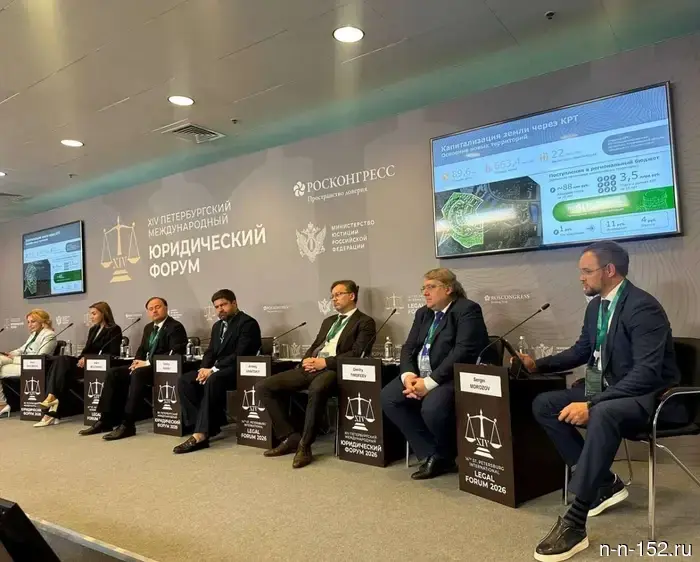 Nizhny Novgorod region assessed the potential of areas near M-12 at 156 billion rubles.
News of Nizhny Novgorod
Nizhny Novgorod region assessed the potential of areas near M-12 at 156 billion rubles.
News of Nizhny Novgorod
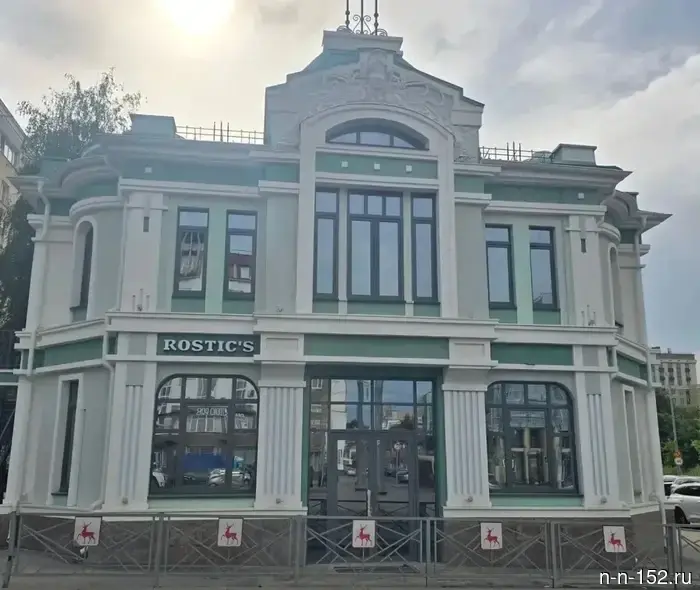 The restoration of the historic Samgin House has been completed in Nizhny Novgorod.
News of Nizhny Novgorod
The restoration of the historic Samgin House has been completed in Nizhny Novgorod.
News of Nizhny Novgorod
 A Nizhny Novgorod woman was punished after her son’s night walk in Shakhunya.
News of Nizhny Novgorod
A Nizhny Novgorod woman was punished after her son’s night walk in Shakhunya.
News of Nizhny Novgorod
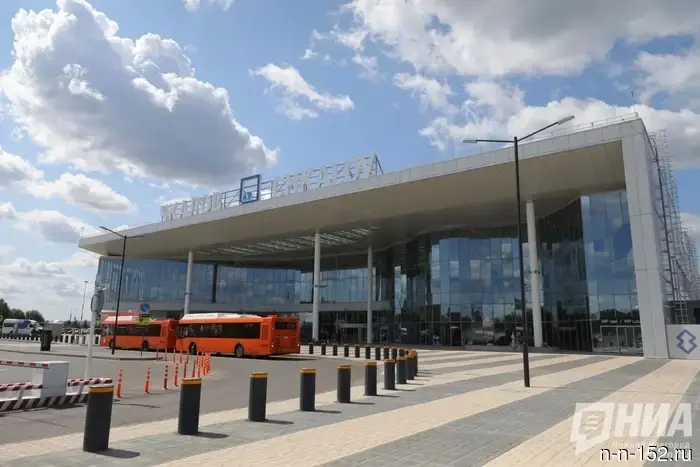 Nizhny Novgorod airport has been closed since the night of June 26: three flights have been delayed.
News of Nizhny Novgorod
Nizhny Novgorod airport has been closed since the night of June 26: three flights have been delayed.
News of Nizhny Novgorod
 What concerns Nizhny Novgorod youth the most today?
News of Nizhny Novgorod
What concerns Nizhny Novgorod youth the most today?
News of Nizhny Novgorod
 The last weekend of June in Nizhny Novgorod will be cool and rain-free.
News of Nizhny Novgorod
The last weekend of June in Nizhny Novgorod will be cool and rain-free.
News of Nizhny Novgorod
What concerns Nizhny Novgorod youth the most today?
News of Nizhny Novgorod