
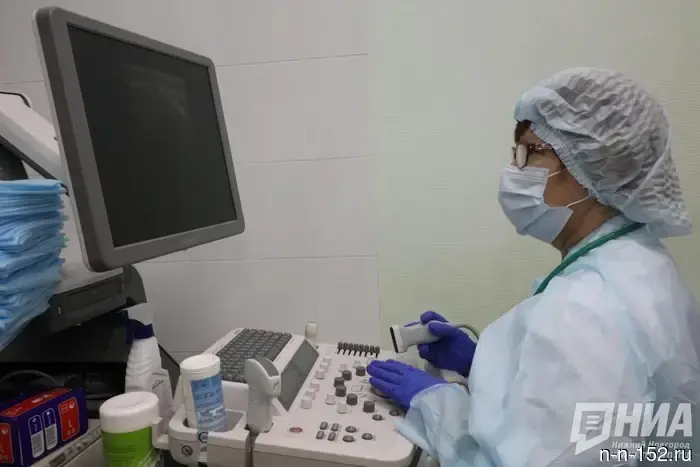
The phlebologist explained how to notice varicose veins in time and prevent complications.
On June 23, 2026, at 16:10 Society According to statistics, signs of varicose veins are detected to some extent in almost every second adult. Svetlana Toropova, a surgeon-phlebologist at Hospital No. 33, spoke to pravda-nn.ru about the causes of the disease and modern approaches to treatment. To understand the mechanism of disease development, it is important to visualize how the venous system of the lower limbs is structured. It includes deep veins located within the muscles that carry the majority of blood, and superficial veins located under the skin. Connecting vessels run between them, ensuring blood flow in one direction—from the superficial system to the deep one. Blood in the legs moves upward against gravity. This is aided by the so-called muscle-venous pump: when walking, the muscles contract, compress the veins, and push blood towards the heart. Additionally, venous valves work—they allow blood to flow upward and prevent its backflow. According to the specialist, the problem begins when this mechanism fails. Prolonged static positions—hours of sitting in an office or standing work, as with hairdressers, teachers, and surgeons—lead to the muscle pump becoming inactive. "Blood stagnates in the lower parts of the limbs, pressure in the veins increases, their walls stretch, and the valves stop closing tightly. This is where swelling, a feeling of heaviness, and pain come from," explained Svetlana Toropova. The condition in which swelling, fatigue, and heaviness in the legs appear by evening is called phlebopathy, or the heavy legs syndrome. This is not yet varicose veins, but it is already a signal of overload in the venous system. The doctor noted that at this stage, local remedies—ointments, creams, and gels—help reduce swelling and alleviate pain. However, they do not affect the root cause—blood stagnation and dilated veins. "If a person does not change their sedentary lifestyle, the disease continues to progress, as the pathological process in the vein has not gone anywhere," she emphasized. If twisted, knotted veins become visible under the skin, it is already a case of varicose disease. The specialist emphasizes that it is impossible to return the vessel to its original shape. No pill, dietary supplement, or cream can make a deformed vein healthy and narrow again. If the pathological process continues to progress, it can lead to serious complications—thrombophlebitis and trophic ulcers. Thrombophlebitis is inflammation of the venous wall with the formation of clots. It requires urgent medical attention, as there is a risk of pulmonary artery blockage. Trophic ulcers are long-healing wounds on the skin of the legs. In the early stages of varicose veins, compression hosiery and medication therapy are prescribed twice a year. In cases of pronounced vein deformation, surgical treatment is applied, where the affected vessel is excluded from blood flow, and its function is taken over by the deep veins. During laser treatment, a thin light guide is inserted into the affected vein through a tiny puncture, along which a laser beam is delivered that "seals" the vein from the inside. In radiofrequency ablation, the principle is the same, but instead of a laser, radiofrequency radiation is used to heat and glue the vessel walls. According to the phlebologist, both procedures are performed under local anesthesia, take less than an hour, and do not require hospitalization. On the same day, the patient goes home on their own feet. After the intervention, to prevent recurrence, it is necessary to wear compression hosiery and undergo a course of phlebotonic medications prescribed by a doctor twice a year. Additionally, those with varicose veins should avoid heavy weightlifting, foods that cause bloating, and refrain from baths and saunas. The doctor reminds that varicose disease often has a hereditary predisposition. People with harmful habits, low physical activity, and those whose work involves prolonged sitting in one position are at risk. "For sedentary work, you should get up and walk a little every two hours to engage the calf muscles. At home, perform a therapeutic exercise complex for the calf muscles. The best sports for venous health are swimming and walking," recommended Svetlana Toropova. At the first signs of phlebopathy, the specialist advises using compression hosiery. It should be put on in the morning without getting out of bed and worn throughout the day. During long flights or travels, compression stockings are recommended even for people without pronounced vein problems—as a preventive measure against deep vein thrombosis. According to the doctor, the earlier prevention and treatment begin, the more effective they are. It was previously reported that the GKB No. 5 in Nizhny Novgorod has started performing laser minimally invasive surgeries for varicose veins of the legs. NIA "Nizhny Novgorod" has channels on Telegram and MAX. Subscribe to stay updated on major events, exclusive materials, and timely information. Copyright © 1999—2025 NIA "Nizhny Novgorod". When reprinting, a hyperlink to NIA "Nizhny Novgorod" is mandatory. This resource may contain materials 18+.
Другие Новости Нижнего (Н-Н-152)
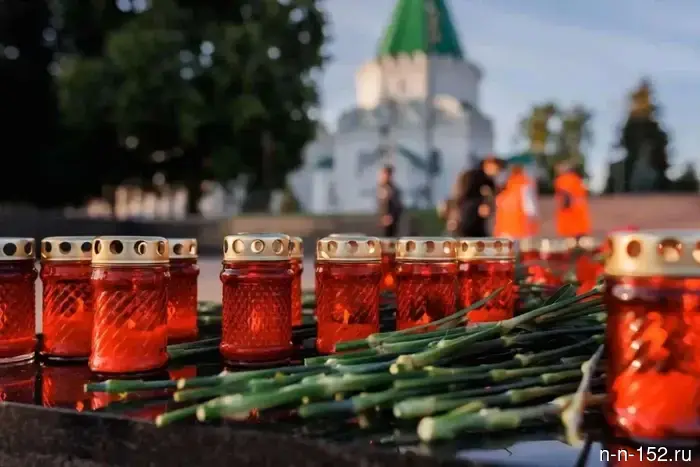 Nizhny Novgorod residents participated in the All-Russian action "Candle of Memory"
News of Nizhny Novgorod
Nizhny Novgorod residents participated in the All-Russian action "Candle of Memory"
News of Nizhny Novgorod
 Messages from the past were found by restorers in the historical doors of NNGASU.
News of Nizhny Novgorod
Messages from the past were found by restorers in the historical doors of NNGASU.
News of Nizhny Novgorod
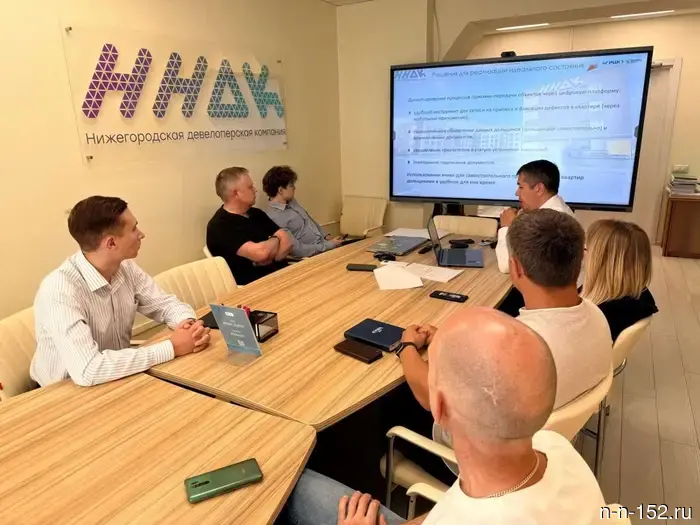 The output has increased for the construction company thanks to the "Labor Productivity" project.
News of Nizhny Novgorod
The output has increased for the construction company thanks to the "Labor Productivity" project.
News of Nizhny Novgorod
 The output has increased for the construction company thanks to the "Labor Productivity" project.
News of Nizhny Novgorod
The output has increased for the construction company thanks to the "Labor Productivity" project.
News of Nizhny Novgorod
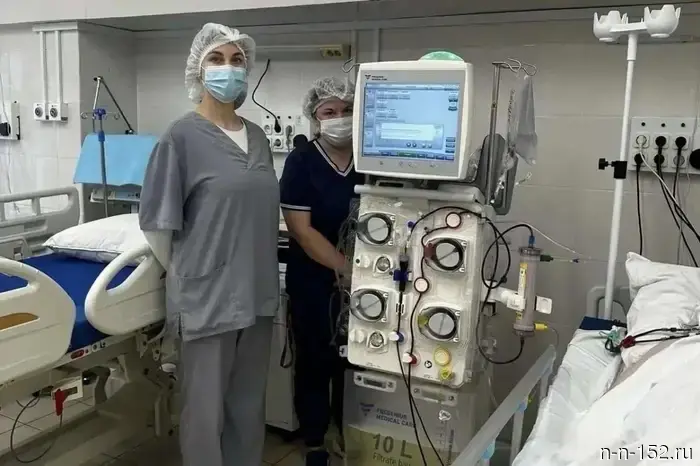 Substitute kidney therapy has been implemented at the Nizhny Novgorod Geriatric Center.
News of Nizhny Novgorod
Substitute kidney therapy has been implemented at the Nizhny Novgorod Geriatric Center.
News of Nizhny Novgorod
 The Nizhny Novgorod housewife became a millionaire for the second time in a year.
News of Nizhny Novgorod
The Nizhny Novgorod housewife became a millionaire for the second time in a year.
News of Nizhny Novgorod
The phlebologist explained how to notice varicose veins in time and prevent complications.
News of Nizhny Novgorod