
Elections-2026 in the assessments and forecasts of experts
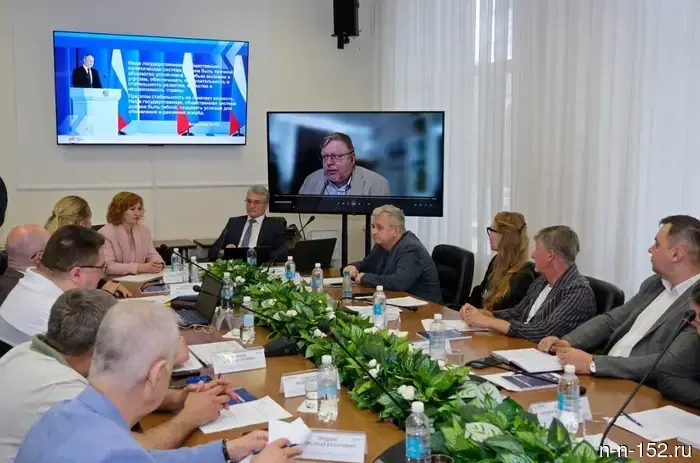
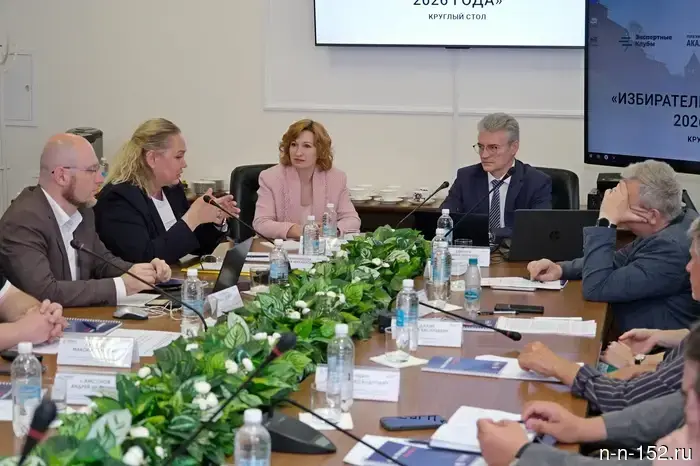
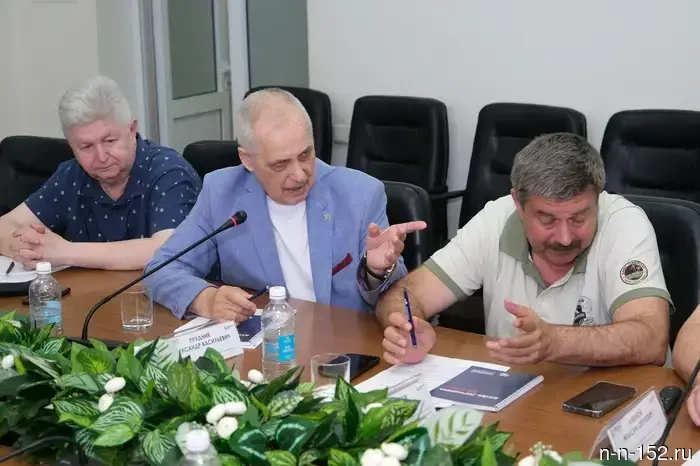
The Nizhny Novgorod "Expert Club," in partnership with the House of National Unity and the National Research University Higher School of Economics, resumed its activities in the format of public expert discussions and held a round table on June 18, 2026, titled "The 2026 Election Campaign." The meeting of experts took place in the meeting room of the Academic Council of the National Research University. Participants of the round table included well-known federal and regional experts—political scientists, sociologists, lawyers, representatives of the Nizhny Novgorod Regional Election Commission, and journalists.
During the discussion, experts addressed the main trends, scenarios, and forecasts of the election campaign for the State Duma and the Legislative Assembly of the Nizhny Novgorod Region, focusing their attention on the following agenda items:
- Social well-being and electoral preferences at the start of the 2026 election campaign;
- The political landscape and party strategies (federal and regional aspects);
- The electoral potential of participants in the Special Military Operation (SMO);
- The influence of AI technologies on electoral processes.
We publish the comments of the experts.
Pavel Danilin, General Director of the Center for Political Analysis:
At the outset, I would like to refer to the words of President Vladimir Putin. He said: "Our state-public-political system must be transparent, absolutely resilient to any challenges and threats, ensuring progress and stability of development, unity and independence of the country." These are very important words, especially against the backdrop of today's events, so I will speak about the challenges.
Today, a war is being waged against Russia. This war is being conducted by the global West. These are not abstract words; this is what concerns you and me, and this is precisely what we will be dealing with during this election campaign. Unfortunately, we must admit that the conflict with the West is forever ours. And even when the military conflict ceases and the intensity of economic confrontation decreases, we will remain in a state of information-psychological warfare with the West. It is being waged against us today especially actively, and this is what we must take into account in the context of the election campaign.
This is a total psychological war; you cannot hide from it. Citizens and the civilian population are the targets for the enemy. A particular target is the youth.
What topics today influence the 2026 election campaign? First of all, of course, it is restrictive prohibitive initiatives. Here we are talking about internet restrictions, but there are also other initiatives that affect the life we have become accustomed to over the years.
Secondly, there are drone strikes on Russian regions, which create a sense of vulnerability, a general sense of anxiety. The West is actively trying to instill in us that we are supposedly losing the conflict, which is far from the truth. We are winning the conflict against the global West. Ukraine is being used as a tool to strike at us. They know some of our weak points, which is why they constantly hit there.
They strike with the theme of interethnic relations, they strike with the theme of migration. They are trying to disorient people, making the elections tense and anxious. And this, of course, needs to be worked on, this needs to be fought against.
While we have other challenges besides those mentioned. The elections to the State Duma are a challenge in themselves. This is obvious because there is a clash of various political positions—this is a challenge. Socio-economic problems are also a challenge. Western sanctions are a challenge. Digitalization, artificial intelligence—this is undoubtedly a challenge.
There are other factors, but the information-psychological war being waged against us is the most serious challenge.
Here we will face much more significant issues. Essentially, every participant in this election campaign, regardless of which party they represent, regardless of which organization they belong to, will bear the role of a fighter, a soldier, if you will, for our sovereign right to choose. Not to let anyone interfere with our choice, not to let anyone influence this choice—this is very important. We are all doing a common cause together. We must all strive to ensure that the voices of our citizens are clearly accounted for and that external players do not influence this voting.
Elena Mozgunova, historian, candidate of political sciences, associate professor at the Nizhny Novgorod Institute of Management—branch of RANEPA:
Artificial intelligence technologies are permeating our lives everywhere. The electoral process is no exception. In the run-up to the elections to the State Duma in September 2026, as well as the regional elections to the Legislative Assembly of the Nizhny Novgorod Region, this topic is extremely relevant. On the one hand, AI is an assistant in many processes related to data processing, targeted communication with voters, rapid response to citizens' requests using chatbots, and speeding up many routine operations. On the other hand, there is the threat of manipulating public consciousness through deepfakes, the dissemination of false information, and targeted disinformation. Often, even a specialist cannot determine whether a video is real or created using a neural network. What can we say about the ordinary voter!
How can we combat the negative consequences and neutralize the threats posed by AI? First, legislative regulation of the process and its permissible limits. It is appropriate to recall the case from the Chelyabinsk region, when during the elections to the Legislative Assembly, the Communists created a video featuring deceased public and political figures. This became a trigger for the State Duma to adopt a law (No. 1155581-8) in April 2026, which prohibits the use of fictional or deceased individuals in campaign materials, as well as images generated by neural networks, except for the candidates themselves.
Secondly, a comprehensive program to improve digital literacy for both voters and candidates, the main goal of which is to develop critical thinking when assessing audio and visual content. Yes, this is not a quick process; however, given the rapid further development of AI, it is extremely necessary.
Thirdly, enhanced monitoring of the media and the internet space during the election campaign. This should be a joint effort of the Central Election Commission and a number of organizations (for example, the ANO "Dialogue Regions") to identify and refute false information, expose deepfakes, which undermine trust in the electoral institution as a whole.
Fedor Sosenkov, Doctor of Law, Head of the Department of Constitutional and Municipal Law at Nizhny Novgorod State University named after N.I. Lobachevsky:
In the run-up to the federal and regional elections, let us pay attention to the May amendments of 2026 to Federal Law No. 67-FZ "On the Basic Guarantees of Electoral Rights and the Right to Participate in a Referendum of Citizens of the Russian Federation." They represent a significant step in the development of the regulation of campaigning technologies, dictated by modern challenges.
In my opinion, the key changes are as follows:
A ban on the use of synthetic content: a direct ban is established on the use in campaign materials of the image or voice of a person (including fictional and deceased individuals) created using artificial intelligence. This norm is aimed against the "deepfake" technology, which can be used to create deliberately false and misleading statements on behalf of public figures.
Mandatory labeling of campaign materials in which the image or voice of a person affiliated with a foreign agent is used. The latter is understood as a person who has been or is part of the structure of a foreign agent organization, as well as anyone who has received funds or other property from a foreign agent. An important feature: the money or property must have been received specifically for the purpose of carrying out political activities.
These are not all the amendments; however, the others are procedural in nature. They relate to clarifying the procedure for interaction with commissions and technical details of organizing voting and do not have a significant impact on the strategy and course of the election campaign.
The main goal of the discussed innovations is to ensure the security and legitimacy of elections. The legislator seeks to protect the electoral process from disinformation and manipulation, creating transparent conditions for the expression of citizens' will in a digital environment.
Andrey Samsonov, researcher at the Volga Branch of the Federal Research Institute of Social Sciences, senior researcher at the ANO "Research Institute of Social Management Problems":
The agenda of the upcoming election campaign and the issues related to its conduct, the position of parties, and social well-being are so diverse that they allow us to focus on specific moments. The highlighted aspects do not negate all others; however, as it seems to me, they remain outside the broad discussion and are undeservedly ignored (or remain outside the main focus of the campaign).
The first aspect. The social well-being of the population consists of a multitude of parameters, among which material well-being, security, social justice, accessibility of social services, and others are usually highlighted. However, the growth of indicators in these key areas does not lead to a reduction in the demands of the population; on the contrary, it forms new demands based on what has been achieved. And one of the most important demands of recent times has become the demand for "comfort." A comfortable living environment, comfortable working conditions, comfortable consumption of services and goods, comfortable infrastructure, including the ubiquitous "digital" etc. If we analyze the multitude of complaints, demands, and questions to the authorities in recent times, they often boil down to violations or insufficient provision of comfortable living conditions for the population. And even the recent rise in popularity of the "New People" party, noted by sociologists, is largely related to the fact that over the past few years, a significant portion of this party's initiatives can be grouped under the common slogan of "
Другие Новости Нижнего (Н-Н-152)
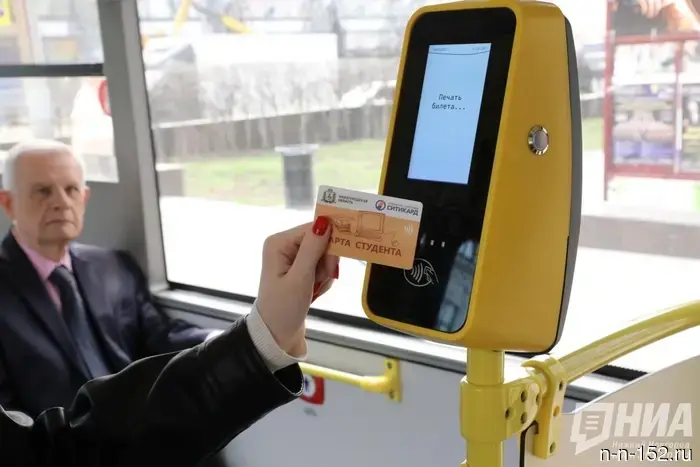 The contactless system is being implemented in buses in Arzamas.
News of Nizhny Novgorod
The contactless system is being implemented in buses in Arzamas.
News of Nizhny Novgorod
 The projects of the forum "Strong Ideas for a New Time" will be developed at Archipelago-2026.
News of Nizhny Novgorod
The projects of the forum "Strong Ideas for a New Time" will be developed at Archipelago-2026.
News of Nizhny Novgorod
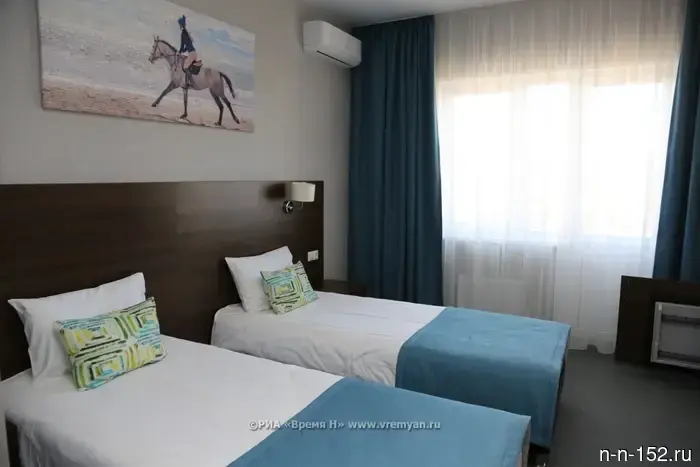 Almost 2 million people became clients of Nizhny Novgorod hotels in a year.
The growth of the hotel fund in the Nizhny Novgorod region accelerated in 2025.
By 2025, there were 664 accommodation facilities in the Nizhny Novgorod region with 20.1 thousand rooms, which allowed for the simultaneous reception of more than 56 thousand guests. 19.06.2026. Time N. Nizhny Novgorod region. Nizhny Novgorod.
Almost 2 million people became clients of Nizhny Novgorod hotels in a year.
The growth of the hotel fund in the Nizhny Novgorod region accelerated in 2025.
By 2025, there were 664 accommodation facilities in the Nizhny Novgorod region with 20.1 thousand rooms, which allowed for the simultaneous reception of more than 56 thousand guests. 19.06.2026. Time N. Nizhny Novgorod region. Nizhny Novgorod.
 Funding is being sought for the construction of a heated football field in Meshchera.
News of Nizhny Novgorod
Funding is being sought for the construction of a heated football field in Meshchera.
News of Nizhny Novgorod
 More than 30 book exchange points have opened in Nizhny Novgorod.
They operate based on libraries and in public spaces of the city. 19.06.2026. Time N. Nizhny Novgorod Region. Nizhny Novgorod.
More than 30 book exchange points have opened in Nizhny Novgorod.
They operate based on libraries and in public spaces of the city. 19.06.2026. Time N. Nizhny Novgorod Region. Nizhny Novgorod.
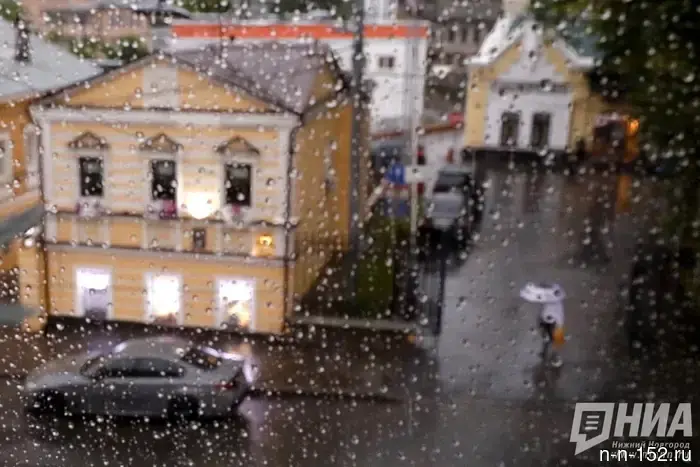 Light rain and temperatures up to +21 degrees are expected in Nizhny Novgorod over the weekend.
News of Nizhny Novgorod
Light rain and temperatures up to +21 degrees are expected in Nizhny Novgorod over the weekend.
News of Nizhny Novgorod
Elections-2026 in the assessments and forecasts of experts
News of Nizhny Novgorod