

A special biotesting experiment was launched at the aeration station.
The facilities of the first stage are already treating discharges to design parameters. The Joint Utility Operator is completing the commissioning works (CWR) of biological wastewater treatment processes after the reconstruction of the first technological stage of the Nizhny Novgorod Aeration Station (NAA). The facilities of the first stage are already treating discharges to design parameters. Alongside laboratory quality control of wastewater, specialists and ecologists are conducting an experiment with biotesting – river crayfish have been introduced into the treated water in the secondary clarifiers, and the station workers have been observing their life for a month. "The logic is simple: we took crayfish that live in the Volga to understand how well the treated water after the secondary clarifier corresponds to their habitat. We made a special box, populated it with crayfish, and are monitoring their health and development. For us, this is a biotester that will allow us to respond in a timely manner if something is wrong," commented Elmurod Rasulmukhamedov, Executive Director of the Russian Ecological Movement and member of the Public Council under the Ministry of Natural Resources of the Russian Federation. According to the general director of the contracting organization involved in the commissioning works for biological treatment at the NAA, Svetlana Maskaleva, the result of the CWR is the quality of wastewater treatment at the outlet from the reconstructed secondary clarifiers. "It is well known that crayfish live in clean water. And we want to see if they will live in wastewater after the secondary clarifiers. So far, this experiment proves that the discharges are being treated consistently. They enter the Volga in accordance with all parameters. If there were spikes in pollution, the crayfish would not have survived for such a long period," Svetlana Maskaleva reported.
Reference. The Nizhny Novgorod Aeration Station is the largest wastewater treatment facility in the Nizhny Novgorod region, with an average daily inflow of over 500 thousand cubic meters. For the first time since the station was built in 1974, a large-scale modernization is being carried out. The work started in 2022, is divided into stages, and is being conducted without stopping the acceptance of wastewater. In 2025, the first stage of reconstruction will be completed, which includes 50 facilities. The second stage of reconstruction of the NAA will begin in the summer of 2026, which will include 60 facilities, including the construction of two new ultraviolet disinfection stations. Upon completion of the second stage, the technology for processing sludge will be completely changed, which will include two-stage dewatering and thermal drying, allowing for the abandonment of the outdated technology of placing sludge on special sites at the station's landfill.

Другие Новости Нижнего (Н-Н-152)
 In the Nizhny Novgorod region, additional applications have begun for three grants for agribusiness.
The Ministry of Agriculture and Food Resources of the Nizhny Novgorod Region has announced the start of additional selections for grants for the development of farming and the "Agroprogress" and "Agromotivator" grants. 06/17/2026. Nizhny Novgorod Truth. Nizhny Novgorod Region. Nizhny Novgorod.
In the Nizhny Novgorod region, additional applications have begun for three grants for agribusiness.
The Ministry of Agriculture and Food Resources of the Nizhny Novgorod Region has announced the start of additional selections for grants for the development of farming and the "Agroprogress" and "Agromotivator" grants. 06/17/2026. Nizhny Novgorod Truth. Nizhny Novgorod Region. Nizhny Novgorod.
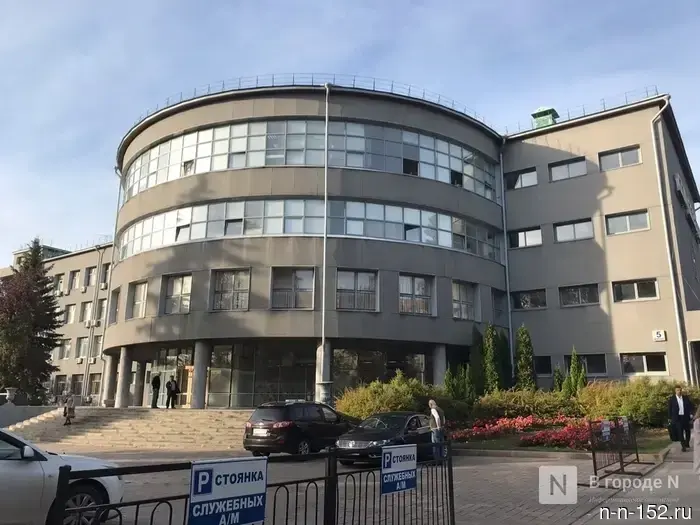 Nizhny Novgorod deputies may be deprived of the right to speak for violating ethics.
The City Duma of Nizhny Novgorod will consider a draft regulation on deputy ethics, which outlines the norms of behavior for elected representatives. 06/17/2026. vGorodeN.Ru. Nizhny Novgorod Region. Nizhny Novgorod.
Nizhny Novgorod deputies may be deprived of the right to speak for violating ethics.
The City Duma of Nizhny Novgorod will consider a draft regulation on deputy ethics, which outlines the norms of behavior for elected representatives. 06/17/2026. vGorodeN.Ru. Nizhny Novgorod Region. Nizhny Novgorod.
 A case has been opened regarding the death of a worker on Mokrousova Street in Nizhny Novgorod.
A criminal case regarding the death of a worker has been initiated in Nizhny Novgorod. This was reported by the Investigative Committee of Russia for the region on June 17, 2026. 06/17/2026. IA Nizhny Now. Nizhny Novgorod Region. Nizhny Novgorod.
A case has been opened regarding the death of a worker on Mokrousova Street in Nizhny Novgorod.
A criminal case regarding the death of a worker has been initiated in Nizhny Novgorod. This was reported by the Investigative Committee of Russia for the region on June 17, 2026. 06/17/2026. IA Nizhny Now. Nizhny Novgorod Region. Nizhny Novgorod.
A special biotesting experiment was launched at the aeration station.
The facilities of the first phase are already treating discharges to design parameters. The Joint Utility Operator is completing the commissioning works of biological wastewater treatment processes after the end of the reconstruction on June 17, 2026. City Day Newspaper. Nizhny Novgorod. Nizhny Novgorod Region. Nizhny Novgorod.