
The invasion of mosquitoes in Nizhny Novgorod: why there are so many and how to protect yourself
NIA "Nizhny Novgorod" - Alexandra Turovskaya
With the arrival of warmth in Nizhny Novgorod, there has been a huge increase in the number of mosquitoes. Many residents of Nizhny Novgorod note that this year there are noticeably more mosquitoes than in previous years. These pesky bloodsuckers are now swarming not only near water bodies or in parks but also on the central streets of the city. What dangers do mosquitoes pose, what is behind this invasion, and how to protect yourself - read in the material from NIA "Nizhny Novgorod."
May "boom"
As Tatiana Popkova, a senior lecturer at the Department of Botany and Zoology at the Nizhny Novgorod State University named after N.I. Lobachevsky, explained, two factors influenced the sharp increase in the number of mosquitoes in the Nizhny Novgorod region: climatic and hydrological. In winter, the region experienced heavy snowfall, which covered the ground like a dense "blanket." As a result, the soil with dormant organisms did not freeze to a great depth, providing optimal conditions for the wintering of eggs and imago.
With the arrival of spring and the melting of the massive snow cover, small temporary water bodies, warmed puddles, as well as flooded ditches and lowlands formed. All this became the best environment for the reproduction of insects, whose mass emergence began with the onset of abnormal heat.
"This situation is absolutely not unique to the Nizhny Novgorod region. A similar phenomenon is currently being faced by almost the entire basin of the Middle and Lower Volga. After a long winter, we really get unaccustomed to mosquitoes, and the first encounter with them is not pleasant," noted the interlocutor of NIA "Nizhny Novgorod."
At the same time, the expert emphasized that from a scientific point of view, the number of mosquitoes in May objectively exceeded the average annual indicators of recent years. Nevertheless, what is happening cannot be called abnormal; all this is natural cyclical fluctuations in the population, which are tied to the weather conditions of a specific year. The peak activity of bloodsuckers, which we witnessed in the last month of spring, will not last all summer. In May, only the first wave of mass emergence occurred. The further development of events will completely depend on the weather in June and July. If residents of Nizhny Novgorod observe drought and heat, then the temporary water bodies and puddles will quickly dry up, and there will simply be no place for new larvae to develop. Thus, the number of mosquitoes will sharply decline by mid-June.
However, during a rainy summer, local outbreaks of activity will recur, but still not as massively and universally as in May. Closer to the middle of the season, spring species will be replaced by summer ones, whose reproductive strategy is less dependent on melting puddles, and therefore the population density is significantly lower in normal conditions.
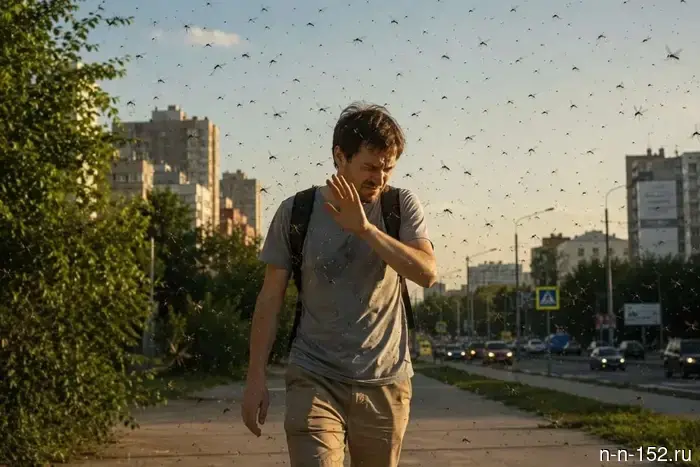
Image generated by neural network
The most attractive
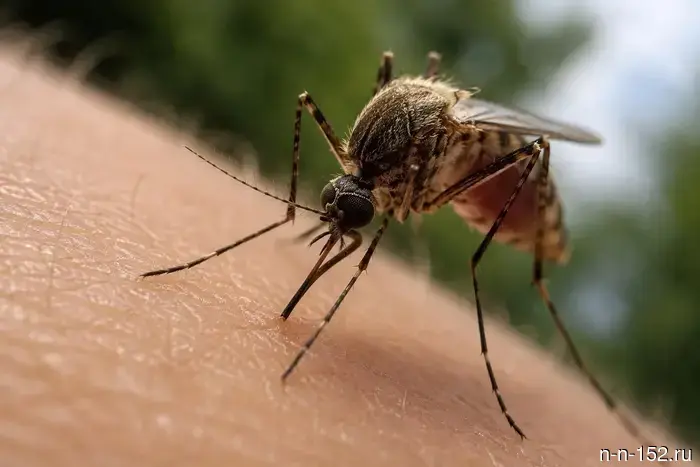
There are two secrets that are known to everyone. First, only female mosquitoes drink blood; males feed on nectar and plant juices because their mouthparts' anatomy does not allow them to pierce the skin of humans or warm-blooded animals. Some species hunt not only humans, animals, or birds but also reptiles, fish, or amphibians, and there are even those that suck the hemolymph of large insects. Secondly, mosquitoes do not bite everyone.
A number of studies show that mosquitoes more often choose people with the first blood type. By the way, they recognize this characteristic of the body by the smell that arises when a person releases certain chemical substances. This feature is present in 85% of the population.
In addition, mosquitoes sense their prey by the carbon dioxide that each of us exhales. Insects can detect its streams from several dozen meters away and strive towards where it is more abundant. That is why bloodsuckers more often choose adults (rather than children) and athletes (rather than those resting), as they exhale a larger volume of gas.
Experiments have also confirmed that these insects do not distinguish between identical twins, but they will prefer one of the fraternal twins. Thus, it can be considered that genes also influence attractiveness to mosquitoes, as they determine blood type, the smell that informs insects about it, sweat composition, and much more.
However, it would be unfair to claim that it is only about smell or carbon dioxide, as mosquitoes can see and hear. They prefer dark shades, so wearing light or colorful clothing will make you less of a target for bloodsuckers. Regarding the second point, it turned out that these insects can remember smells associated with unpleasant vibrations for them and then avoid them. For example, if you clap your hands, a mosquito is likely to avoid you.
Photo: Alexander Volozhanin
Not just itching
Unfortunately, a mosquito bite can bring not only skin redness and irritating itching but also other unpleasant surprises. In particular, Viktor Krasnov, head of the Department of Infectious Diseases at PIMU and Doctor of Medical Sciences, warns that these insects in the Nizhny Novgorod region can carry such dangerous diseases as tularemia, dirofilariasis, and West Nile fever.
Tularemia is a natural focal acute infection that affects lymph nodes and skin, and sometimes the mucous membranes of the eyes, throat, lungs, and intestines. In dirofilariasis, a parasitic worm in the larval stage can penetrate under the skin at the site of a mosquito bite. There, the helminth grows and remains mobile. In turn, West Nile fever is characterized as a viral disease, with symptoms such as serous inflammation of the meninges, systemic damage to mucous membranes, and enlargement of lymph nodes.
Every year, Rospotrebnadzor publishes statistics on infections from the previous year. Currently, information for 2024 is publicly available, when only isolated cases of these diseases were recorded. According to this data, in that year, two residents of Nizhny Novgorod contracted tularemia, six people had dirofilariasis, and one patient had West Nile fever.
It is also worth mentioning malaria, but in Russia, only imported cases of infection among tourists visiting endemic countries are registered. These include Africa, Southeast Asia, India, Central Asia, Pacific Basin countries, and South America. Rospotrebnadzor warns that within three years after visiting a country where this disease is widespread, even with a slight increase in temperature, one should immediately consult a doctor and be sure to inform them about the trip to a malaria-endemic region.
According to Rospotrebnadzor, in 2024, 172 imported cases of malaria were recorded in Russia. According to WHO estimates, in 2024, 282 million cases of malaria were registered in 80 countries worldwide, 610,000 of which resulted in death.
How to protect yourself from these pesky creatures?
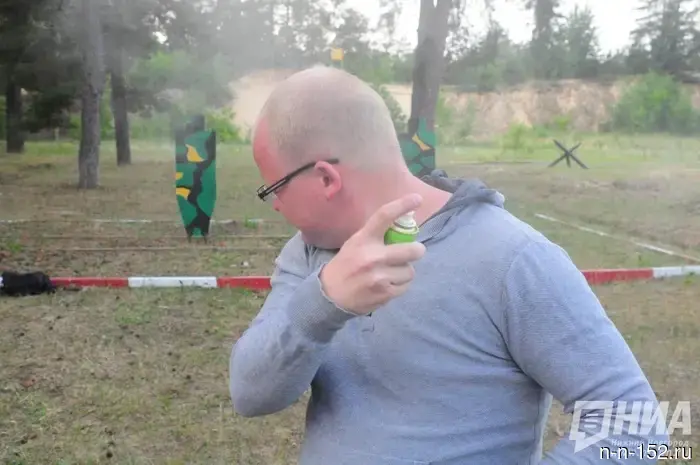
Advice to use repellents and fumigators, as well as to close windows with screens with cells no more than 1.2 millimeters, is nothing new. In addition to repellents and mosquito nets, specialists recommend additional protective measures. For example, Viktor Krasnov, Doctor of Medical Sciences, suggests using acaricides (permethrin or analogs) to treat clothing. The agent creates a protective barrier that repels and kills mosquitoes, midges, ticks, fleas, and spiders.
In turn, healthcare specialist in the Nizhny Novgorod region Alexey Nikонов reminds that any alcohol, even a glass of beer, sharply changes the body's metabolism and skin temperature, which only attracts bloodsuckers. Therefore, the consumption of alcoholic beverages, especially in the fresh air, should be limited.
Scientists have also concluded that soaps and gels with a coconut scent repel mosquitoes, while floral and citrus aromas attract them. For this reason, some prefer natural coconut oil to chemical insect sprays. The lauric acid in its composition can block the taste receptors of bloodsuckers, so they will not touch a person with such "perfume."
The chosen clothing also plays an important role. A mosquito senses the release of carbon dioxide, activates its vision, and begins to look for red, orange, or black. To become a less obvious target, it is advisable to choose clothing in white, green, purple, or blue colors.
In addition, at a distance of one meter from the victim, these insects begin to use infrared sensors. Clothing made from ordinary fabrics heats up from body heat and "glows" for the mosquito. This can be avoided by choosing sportswear made from cooling fabrics, for example, with titanium oxide threads, which helps effectively dissipate heat.
NIA "Nizhny Novgorod" has channels on Telegram and MAX. Subscribe to stay updated on the main events, exclusive materials, and timely information. Copyright © 1999—2025 NIA "Nizhny Novgorod." When reprinting, a hyperlink to NIA "Nizhny Novgorod" is mandatory. This resource may contain materials 18+
Другие Новости Нижнего (Н-Н-152)
 Nizhny Novgorod region plans to raise 20 billion rubles through the issuance of bonds.
News of Nizhny Novgorod
Nizhny Novgorod region plans to raise 20 billion rubles through the issuance of bonds.
News of Nizhny Novgorod
 A Nizhny Novgorod resident was fined for selling goods featuring Cheburashka on a marketplace.
News of Nizhny Novgorod
A Nizhny Novgorod resident was fined for selling goods featuring Cheburashka on a marketplace.
News of Nizhny Novgorod
 Nizhny Novgorod Region plans to raise 20 billion rubles through the issuance of bonds.
News of Nizhny Novgorod
Nizhny Novgorod Region plans to raise 20 billion rubles through the issuance of bonds.
News of Nizhny Novgorod
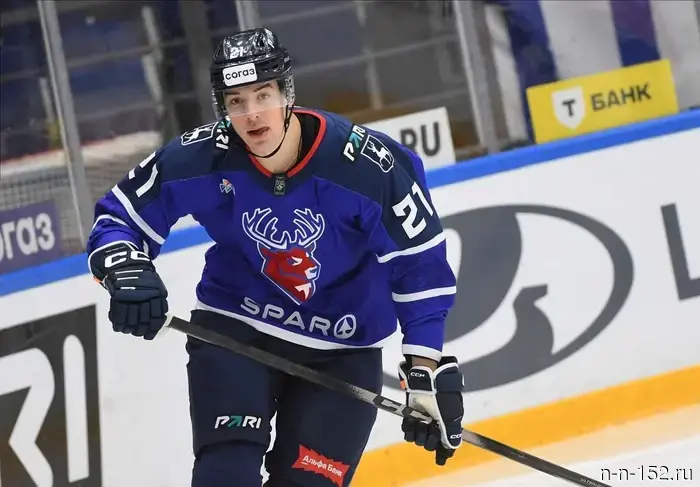 Anton Silaev thanked the fans of HC Torpedo before leaving for the NHL.
News of Nizhny Novgorod
Anton Silaev thanked the fans of HC Torpedo before leaving for the NHL.
News of Nizhny Novgorod
.png) Lawyer Salnikov explained to Nizhny Novgorod residents the permissible actions during inspections at the Unified State Exam (USE).
In Nizhny Novgorod, discussions are underway regarding the examination checks for graduates, Dmitry Salnikov explained, 03.06.2026. Newsroom24.Ru. Nizhny Novgorod Region. Nizhny Novgorod.
Lawyer Salnikov explained to Nizhny Novgorod residents the permissible actions during inspections at the Unified State Exam (USE).
In Nizhny Novgorod, discussions are underway regarding the examination checks for graduates, Dmitry Salnikov explained, 03.06.2026. Newsroom24.Ru. Nizhny Novgorod Region. Nizhny Novgorod.
 The Nizhny Novgorod authorities intend to issue a bond loan of 20 billion rubles.
The Ministry of Finance of the Nizhny Novgorod Region has begun the selection of organizations to provide services for the placement of state bonds of the region for the year 2026. 03.06.2026. IA Nizhny Now. Nizhny Novgorod Region. Nizhny Novgorod.
The Nizhny Novgorod authorities intend to issue a bond loan of 20 billion rubles.
The Ministry of Finance of the Nizhny Novgorod Region has begun the selection of organizations to provide services for the placement of state bonds of the region for the year 2026. 03.06.2026. IA Nizhny Now. Nizhny Novgorod Region. Nizhny Novgorod.
The invasion of mosquitoes in Nizhny Novgorod: why there are so many and how to protect yourself
News of Nizhny Novgorod