
"Girl" or "boy," nitrates and storage: how to choose a quality watermelon
With the arrival of summer, the first watermelons appear in markets and stores. How to choose the sweetest and ripest watermelon while avoiding nitrates and spoiled fruit? Dietitian Elena Solomatina shared her tips in an interview with 360.ru.
How to choose a ripe watermelon?
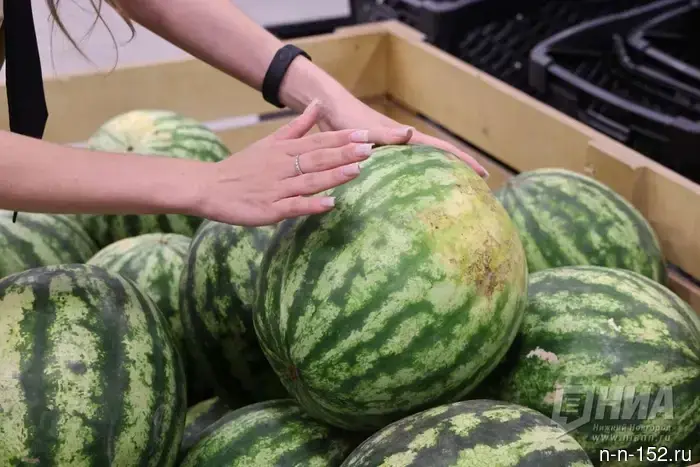
Spot on the side. A ripe watermelon has a spot of rich yellow-orange color, not white. The larger the spot, the longer the watermelon has been lying and, accordingly, the better it has ripened.
Stem. Ideally, the stem of the watermelon should be dry. This is a sign that the watermelon is ripe and can be eaten.
Sound when tapped. Many prefer to squeeze watermelons, but ripeness can also be determined by the sound when tapping. A ripe watermelon makes a ringing sound, while a dull sound or no sound at all means it is not yet ripe.
Appearance. A ripe watermelon should have a shiny surface. The size and color of the stripes depend on the variety, but the watermelon should still be shiny, not dull.
Weight of the watermelon. An optimal weight for a watermelon is considered to be 6−8 kg, but much depends on the variety. A watermelon that is too large may have been artificially grown and may not have developed sweetness, while a small watermelon may turn out to be unripe.
Flesh. The ripeness of a watermelon can also be determined at home. The flesh should be bright raspberry and loose. A glossy surface may indicate under-ripeness or the use of nitrates. Bright white streaks may also indicate that the watermelon is unripe. The seeds in such watermelons are usually not dark, and the watermelon itself will be unsweet and tasteless.
Some people determine the "gender" of a watermelon by its "bottom." It is believed that "female" watermelons are sweeter and have fewer seeds, while "male" watermelons are less sweet and have more seeds. However, this opinion is not scientifically substantiated, as modern technologies allow for the cultivation of watermelons with few seeds regardless of their "gender."
How to store watermelons and which ones to avoid?
It is not advisable to buy watermelons with cracks, unevenness, or holes. Bacteria can enter such cracks, which can lead to rotting or fermentation inside the watermelon. It is also not advisable to take watermelons showing signs of decay, even if the seller offers them at half price. Inside such a watermelon, there may be fungal spores that are not visually noticeable but can cause poisoning or stomach upset.
Cut watermelons are better purchased in supermarkets where cooling systems are in place. Such stores have a ready-to-eat food section, gloves, and clean knives. This guarantees that the cut watermelon has been stored under appropriate conditions and does not pose a health risk.
A ripe watermelon can be stored without refrigeration in a cool place, but not for more than 5−6 days. However, this depends on transportation and storage conditions. If the watermelon has been stored in unsuitable conditions, its taste may deteriorate. A cut watermelon should only be stored in the refrigerator and not for more than 1−2 days.
Benefits of watermelon
Watermelon is not only a tasty but also a healthy product. It consists mainly of water and sucrose, and its structured water is easily absorbed by the body without requiring additional energy expenditure. This contributes to the proper functioning of cells, maintaining water balance, protein and enzyme synthesis, as well as the effective functioning of mitochondria.
It contains vitamins A, C, and B6, as well as antioxidants, helps eliminate toxins from the body, and improves the functioning of the cardiovascular system. Regular consumption of watermelon helps prevent blood clots by thinning the blood and maintains stable blood pressure. Additionally, watermelon is beneficial for the brain, joints, tendons, lymphatic system, skin, mucous membranes, and eyes.
Watermelon contains citrulline—a amino acid that promotes muscle tissue growth. It is also rich in magnesium and potassium, which play an important role in maintaining the cardiovascular system, blood pressure, nervous system, and water-salt balance. Magnesium is essential for bone and dental health, as well as for energy production.
Lycopene, a powerful antioxidant present in watermelon, protects the body from aging, supports the health of mucous membranes, and reduces the risk of cancer. However, watermelon contains a lot of glucose and sucrose, so its consumption should be moderate, especially for people with insulin resistance, excess weight, or diabetes.
Possible risks and contraindications
Despite all its beneficial properties, watermelon can be harmful to some people—those with diabetes, obesity, and other diseases. It is also not advisable to consume watermelon in large quantities, as this can lead to stomach upset.
Due to its high water content, it is not recommended for consumption in cases of kidney problems and heart failure. Additionally, watermelon should not be eaten in large quantities in one meal—it's better to limit it to 200−300 grams or eat it often and in small amounts.
It is important to remember that nitrates present in watermelon can convert to nitrites, which block oxygen transport by hemoglobin. This can lead to hypoxia, a drop in blood pressure, tachycardia or arrhythmia, nausea, vomiting, and dehydration. Therefore, watermelons should only be purchased from trusted sources and thoroughly washed before consumption.
Signs of watermelon poisoning
Watermelon poisoning may manifest with the following symptoms:
Hypoxia (oxygen starvation)
Drop in blood pressure
Tachycardia or arrhythmia
Nausea and vomiting
Dehydration
If you notice these symptoms in yourself or someone close after consuming watermelon, it is necessary to seek medical help. NIA "Nizhny Novgorod" has channels on Telegram and MAX. Subscribe to stay updated on major events, exclusive materials, and timely information. Copyright © 1999—2025 NIA "Nizhny Novgorod". When reprinting, a hyperlink to NIA "Nizhny Novgorod" is mandatory. This resource may contain materials 18+
Другие Новости Нижнего (Н-Н-152)
 Personal reception of citizens
June 23, 2026, at the reception of citizens of the Governor and Government of the Nizhny Novgorod region, at the address: Nizhny Novgorod, 03.06.2026 street. Tonshaevsky district. Nizhny Novgorod region. Tonshaево.
Personal reception of citizens
June 23, 2026, at the reception of citizens of the Governor and Government of the Nizhny Novgorod region, at the address: Nizhny Novgorod, 03.06.2026 street. Tonshaevsky district. Nizhny Novgorod region. Tonshaево.
 Traffic will be restricted from June 3 on two important sections of Nizhny Novgorod.
News of Nizhny Novgorod
Traffic will be restricted from June 3 on two important sections of Nizhny Novgorod.
News of Nizhny Novgorod
 Anton Silaev thanked the fans of HC "Torpedo" before leaving for the NHL.
News of Nizhny Novgorod
Anton Silaev thanked the fans of HC "Torpedo" before leaving for the NHL.
News of Nizhny Novgorod
 The director of the travel company Arutyunov shared how not to become a victim of theft while on vacation.
News of Nizhny Novgorod
The director of the travel company Arutyunov shared how not to become a victim of theft while on vacation.
News of Nizhny Novgorod
 The invasion of mosquitoes in Nizhny Novgorod: why there are so many and how to protect yourself
News of Nizhny Novgorod
The invasion of mosquitoes in Nizhny Novgorod: why there are so many and how to protect yourself
News of Nizhny Novgorod
 4 cars of drunk drivers will help the fighters in the special military operation.
Dzerzhinsk bailiffs transferred 4 cars, confiscated from intoxicated drivers, for the needs of the special military operation. 03.06.2026. UFSSP Nizhny Novgorod Region. Nizhny Novgorod Region. Nizhny Novgorod.
4 cars of drunk drivers will help the fighters in the special military operation.
Dzerzhinsk bailiffs transferred 4 cars, confiscated from intoxicated drivers, for the needs of the special military operation. 03.06.2026. UFSSP Nizhny Novgorod Region. Nizhny Novgorod Region. Nizhny Novgorod.
"Girl" or "boy," nitrates and storage: how to choose a quality watermelon
News of Nizhny Novgorod