

Rental of load module: testing regulations for diesel generators
The backup generator must not only confidently start at idle but also confirm stable operation under the calculated electrical load. The load module accurately simulates the actual consumption of the facility and allows for a comprehensive check of the diesel engine, alternator, cooling system, automation, protective devices, and the stability of output parameters. Such tests are critically important for enterprises where sudden failure of backup power systems inevitably leads to accidents, damage to produced goods, or disruption of continuous technological processes.
What regulations require load testing
The necessity of conducting tests on diesel generator sets (DGS) is determined not by a single document but by a combination of technical requirements. This list includes the manufacturer's passport, operating regulations, design documentation, rules for the technical operation of electrical installations, directives from supervisory authorities, and internal instructions of the facility itself. Full-scale load tests help engineers confirm the actual readiness of the backup source to operate in real emergency conditions, rather than just recording a successful engine start.
GOST, PTEEP, and Rostekhnadzor requirements
When commissioning and operating backup power sources, energy companies take into account the requirements of relevant regulatory documentation, rules for the technical operation of consumer electrical installations (PTEEP), and industrial safety standards. This is especially important and strictly adhered to if the enterprise is classified as a hazardous production facility. The specific list of mandatory documents always depends on the type of facility, the reliability category of the power supply, the rated power of the DGS, the network connection scheme, and the intended purpose of the backup.
Frequency of checks of backup power sources
The frequency of checks is strictly regulated by operational documentation, the requirements of the equipment manufacturer, and the internal regulations of the enterprise. It is important to understand the difference between a brief test run and a full load test. An idle run does not show the generator's behavior when delivering real power and conceals possible serious problems with cooling, fuel lines, voltage stabilization, and power automation operation.
How load testing is conducted with a load module
The load module is connected to the generator instead of real consumers or in parallel with them according to an agreed scheme. This allows for the creation of a strictly controlled electrical safe load. The test is conducted according to a pre-prepared and approved program. Engineers carefully check the quality of the connection, grounding circuit, protection settings, ventilation system, fuel level, engine parameters, and the overall condition of the generating unit.
Step-by-step procedure and testing protocol
The standard load testing program includes a strict sequence of technological operations:
- Visual inspection of the DGS, power cable lines, switching, and connection points;
- Checking the fuel level, engine oil, coolant, and readiness of automation;
- Connecting the load module and verifying the correctness of the assembled scheme;
- Starting the generator and checking parameters without load;
- Gradual increase of power (for example, 25%, 50%, 75%, and up to the rated value);
- Continuous monitoring of voltage, frequency, current, temperature, oil pressure, and cooling efficiency;
- Operation of the generating unit under load according to the temporary schedule of the testing program;
- Smooth step-by-step removal of the load and normal shutdown of the generator;
- Preparation of an official protocol recording parameters and identified comments.
For most industrial enterprises, renting a load module is convenient, as full-scale tests are only needed periodically, and purchasing and maintaining expensive equipment is economically unjustified.
What to do if faults are detected
If deviations in frequency, voltage, temperature, excessive exhaust smoke, strong vibration, automatic protection activation, or unstable operation of the internal combustion engine are recorded, the test is immediately stopped or the generator is switched to a safe mode. Service engineers then perform a deep diagnosis: checking the fuel system, cooling radiators, electronic speed regulator, generator part, power contacts, protective devices, and the quality of previous maintenance. Re-testing is conducted only after the complete elimination of the physical causes of the malfunction, not just after a software reset of the emergency error on the panel.
Penalties and risks of lack of regular tests
Ignoring load testing schedules is dangerous not only due to possible directives during inspections by supervisory authorities but also due to the real failure of backup power at the most critical moment of external network disconnection. Such technical risks are particularly high and unacceptable for continuous production, large warehouses, medical facilities, data centers, engineering infrastructure, boiler houses, and pumping stations.
Accidents, equipment failure, directives
The absence of regular load checks leads to the following negative consequences:
- The backup generator starts successfully but stalls or does not hold the rated load;
- Automation does not switch power to the facility at the right moment;
- Critical overheating of the engine or generator part occurs;
- Hidden problems with fuel supply, cooling, or exhaust gas removal suddenly manifest;
- Power protection falsely triggers when attempting to connect real industrial consumers;
- The facility receives an official directive from supervisory authorities to eliminate gross violations of operation.
Regular technical testing helps to identify weak points in the energy complex in advance and prepare the backup source for a real emergency situation in the power supply network.
Load testing of DGS is a practical verification of backup power readiness, not a formal documentary procedure. An objective and reliable result can only be provided by testing with controlled active load, recording operating parameters, and promptly eliminating all identified faults. Such a professional approach significantly reduces the risk of generator failure, legally confirms the operability of expensive equipment, and maintains 100% readiness of the facility for disconnection from the external power grid.
Advertising. LLC "AGK". TIN 7705838531 agk-russia.ru. Erid: 2SDnjdJrB7G. NIA "Nizhny Novgorod" has channels on Telegram and MAX. Subscribe to stay updated on major events, exclusive materials, and operational information. Copyright © 1999—2025 NIA "Nizhny Novgorod". When reprinting, a hyperlink to NIA "Nizhny Novgorod" is mandatory. This resource may contain materials 18+.
Другие Новости Нижнего (Н-Н-152)
 The budget of Sarov will be reviewed at the meeting of the Duma.
On May 19, at a meeting of the Planning and Budget Committee (PBC), the deputies reviewed the expenditure part of the budget for Sarov for the year 2026 and the planned period of 2027–2028. 21.05.2026. City Duma of Sarov. Nizhny Novgorod Region. Sarov.
The budget of Sarov will be reviewed at the meeting of the Duma.
On May 19, at a meeting of the Planning and Budget Committee (PBC), the deputies reviewed the expenditure part of the budget for Sarov for the year 2026 and the planned period of 2027–2028. 21.05.2026. City Duma of Sarov. Nizhny Novgorod Region. Sarov.
 The summer of 2026 will be hotter than the previous one in Nizhny Novgorod.
News of Nizhny Novgorod
The summer of 2026 will be hotter than the previous one in Nizhny Novgorod.
News of Nizhny Novgorod
 A 67-year-old resident of Nizhny Novgorod was diagnosed with tick-borne borreliosis.
As of May 20, 2026, 1,522 people, including 473 children, sought medical assistance in the Nizhny Novgorod region due to tick bites. 21.05.2026. NIA Nizhny Novgorod. Nizhny Novgorod region. Nizhny Novgorod.
A 67-year-old resident of Nizhny Novgorod was diagnosed with tick-borne borreliosis.
As of May 20, 2026, 1,522 people, including 473 children, sought medical assistance in the Nizhny Novgorod region due to tick bites. 21.05.2026. NIA Nizhny Novgorod. Nizhny Novgorod region. Nizhny Novgorod.
 Kstovo schools have returned from distance learning after the cancellation of the drone threat.
News of Nizhny Novgorod
Kstovo schools have returned from distance learning after the cancellation of the drone threat.
News of Nizhny Novgorod
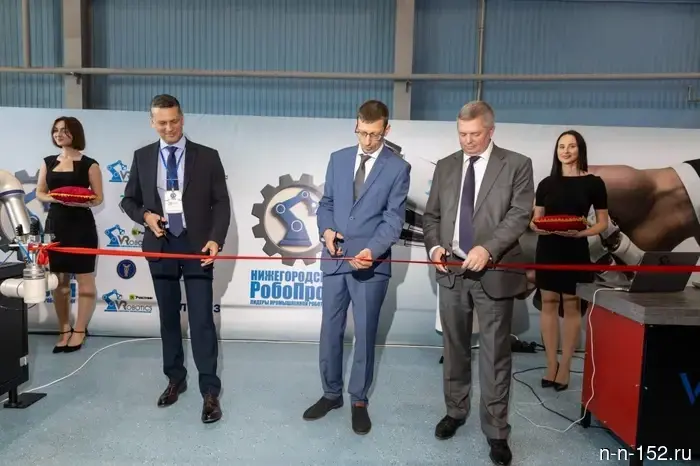 A factory for industrial robotics has opened in Nizhny Novgorod.
In Nizhny Novgorod, with government support, the industrial robotics plant LLC "VR Robotics" has been established. 21.05.2026. NTA-Volga. Nizhny Novgorod region. Nizhny Novgorod.
A factory for industrial robotics has opened in Nizhny Novgorod.
In Nizhny Novgorod, with government support, the industrial robotics plant LLC "VR Robotics" has been established. 21.05.2026. NTA-Volga. Nizhny Novgorod region. Nizhny Novgorod.
 "In the hole": the son of the former head of "Luidor" caused a mass accident in Nizhny Novgorod
News of Nizhny Novgorod
"In the hole": the son of the former head of "Luidor" caused a mass accident in Nizhny Novgorod
News of Nizhny Novgorod
Rental of load module: testing regulations for diesel generators
News of Nizhny Novgorod