
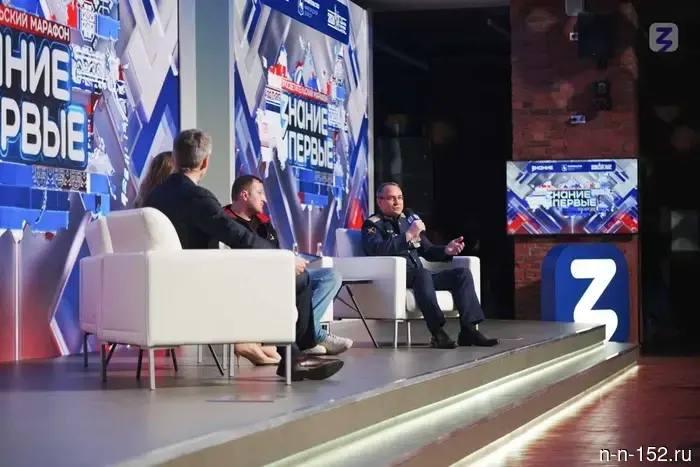
"It is impossible to imagine oneself outside the fate of the people": at the Knowledge marathon. The first spoke about the truth and the fate of the country.
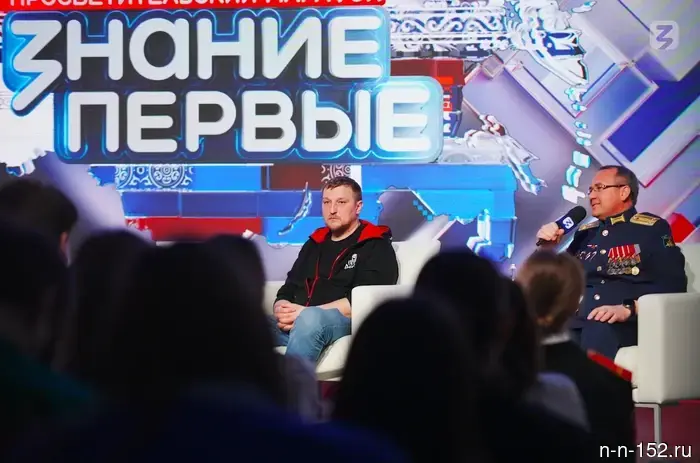
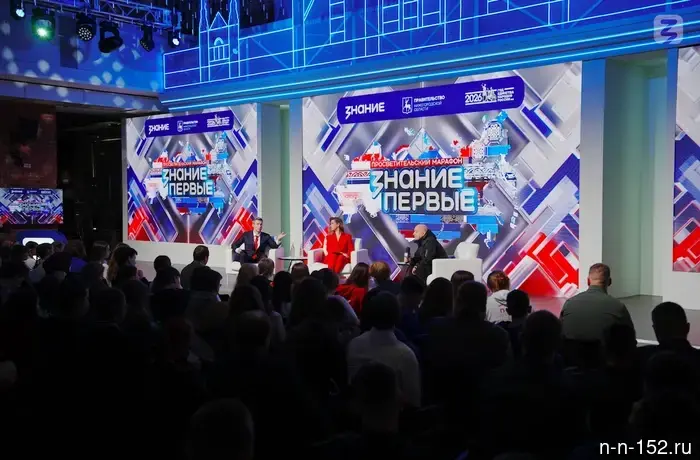
At the Knowledge Marathon. The first two events in Nizhny Novgorod on April 29 were held under the common theme of responsibility for the country, historical memory, and the inner support of a person. A meeting took place between the chairman of the Nizhny Novgorod City Duma, a member of the United Russia party, and a holder of three Orders of Courage, Evgeny Chintsov, and military correspondent of MIA "Russia Today" Dmitry Radchenko with the youth on the topic "Courage and Glory of the Defenders of the Fatherland." Another event was a lecture by writer and lieutenant colonel Zakhar Prilepin titled "One Country - One Destiny: Russia Through the Eyes of a Writer."
Both discussions were dedicated to what helps a person maintain dignity and loyalty to their country in times of upheaval. Participants spoke about brotherhood in arms, support from loved ones, the truth and responsibility of words, the role of historical memory, and why culture and personal experience together shape the image of the Motherland and the feeling of belonging to its fate.
Evgeny Chintsov noted that unity is particularly felt where people of different ages, nationalities, and faiths come together for a common cause. According to him, true solidarity is manifested not in words, but in the readiness to support another, take on responsibility, and move forward together. "When people of different ages, nationalities, and religions unite, they don't even need to speak about it. They are ready and give their lives for a person they have never met before. This, of course, is the most valuable thing our people have," emphasized Evgeny Chintsov.
A special place in the conversation was occupied by the theme of support that defenders receive from children and youth. Evgeny Chintsov admitted that letters from children become a true source of inner strength for many soldiers and help maintain resilience even in the most difficult circumstances. "When you receive a letter from a child you have never seen, you understand for whom you are doing this. I have personally seen soldiers on the front line, at the line of combat contact, simply pull out these letters and read them. And this works like an additional plate of body armor - faith in a just cause truly saves," said Evgeny Chintsov.
Military correspondent of MIA "Russia Today" Dmitry Radchenko spoke about his work in the combat zone and why accuracy, source verification, and careful handling of facts are particularly important today. Personal experience and personal feelings play a significant role in this work. "As a correspondent, I cannot give my opinion. I can show the opinions of people on the ground. Look at them - everything is visible in their eyes. When you hear what people have experienced, you feel it," said the lecturer.
According to him, in the conditions of a large number of fakes and information leaks, a correspondent needs to double-check data, understand the origins of messages, and maintain maximum objectivity, primarily conveying facts and testimonies from people at the scene.
In response to questions about the "Time of Heroes" program, Evgeny Chintsov emphasized that Russian President Vladimir Putin initiated it so that participants of the Special Military Operation could continue to serve the country in a new sphere - at the municipal, regional, or federal level. The lecturers also spoke with the youth about the importance of studying history, careful attention to information, and personal discipline. They advised the students to refer more to domestic films and books that help understand the character of the people and the value of unity.
Next, lieutenant colonel and writer Zakhar Prilepin addressed the marathon participants with a lecture titled "One Country - One Destiny: Russia Through the Eyes of a Writer." He spoke about the mission of a writer, the connection between the past and the present, and how culture helps a person understand the time in which they live and find moral guidelines. According to the writer, literature cannot exist separately from the fate of the people, because true words are always connected to the life of the country and responsibility for it. "If a writer, poet, or author is not involved in the life of their people, in the life of their nation, then their work is essentially useless. When someone says, 'I am outside of politics,' it is important to understand that politics is simply a form of life for the people, a form of life for the nation. Everything that happens to us: peace, war, industry, development, degradation - this is politics, its immediate results. It is impossible to imagine Pushkin, Lermontov, Tolstoy, or Dostoevsky outside of politics because they were responsible for everything happening in the country - for the fate of an individual and for the fate of all of vast Russia," said Zakhar Prilepin.
The lecturer paid special attention to historical memory and the image of one's own heroes in national culture. He emphasized that it is especially important for our youth not to lose touch with their history, their language, and their literary tradition, as it is in them that the living representation of the people about themselves is preserved. This is how one can preserve their essence, their face, their language. The NIA "Nizhny Novgorod" has channels on Telegram and MAX. Subscribe to stay updated on major events, exclusive materials, and operational information. Copyright © 1999—2025 NIA "Nizhny Novgorod". When reprinting, a hyperlink to NIA "Nizhny Novgorod" is mandatory. This resource may contain materials 18+.
Другие Новости Нижнего (Н-Н-152)
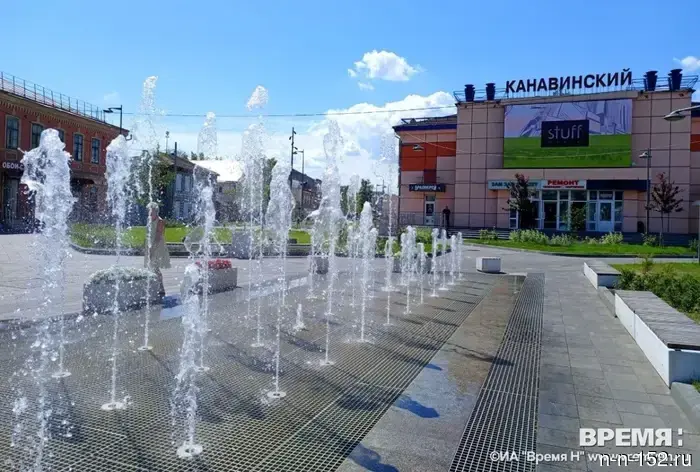 All 25 fountains are being prepared for launch in Nizhny Novgorod.
All 25 fountains in Nizhny Novgorod are undergoing deconservation and equipment checks as part of preparations for operation during the summer period. 29.04.2026. Time N. Nizhny Novgorod Region. Nizhny Novgorod.
All 25 fountains are being prepared for launch in Nizhny Novgorod.
All 25 fountains in Nizhny Novgorod are undergoing deconservation and equipment checks as part of preparations for operation during the summer period. 29.04.2026. Time N. Nizhny Novgorod Region. Nizhny Novgorod.
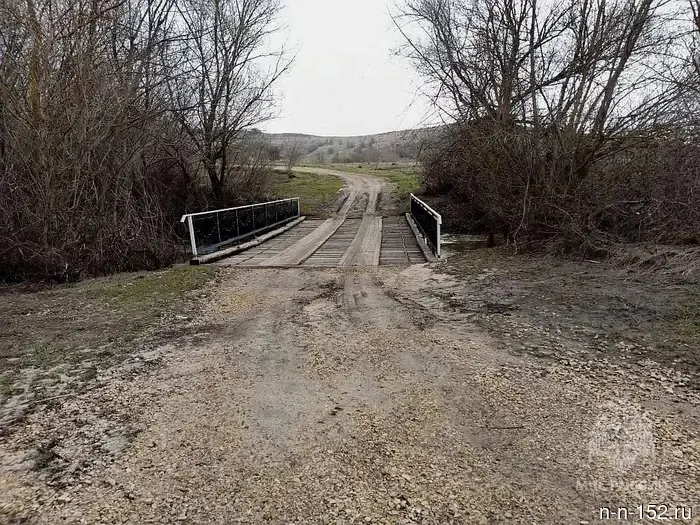 One bridge and part of the highway have cleared of water in the Nizhny Novgorod region.
News of Nizhny Novgorod
One bridge and part of the highway have cleared of water in the Nizhny Novgorod region.
News of Nizhny Novgorod
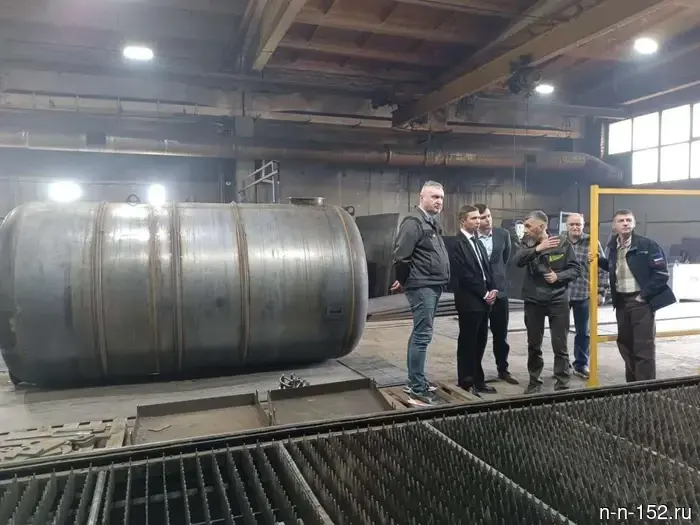 The output will increase for the manufacturer of utility equipment thanks to the national project.
News of Nizhny Novgorod
The output will increase for the manufacturer of utility equipment thanks to the national project.
News of Nizhny Novgorod
 Russians are urged to assess risks before traveling to unfriendly states.
News of Nizhny Novgorod
Russians are urged to assess risks before traveling to unfriendly states.
News of Nizhny Novgorod
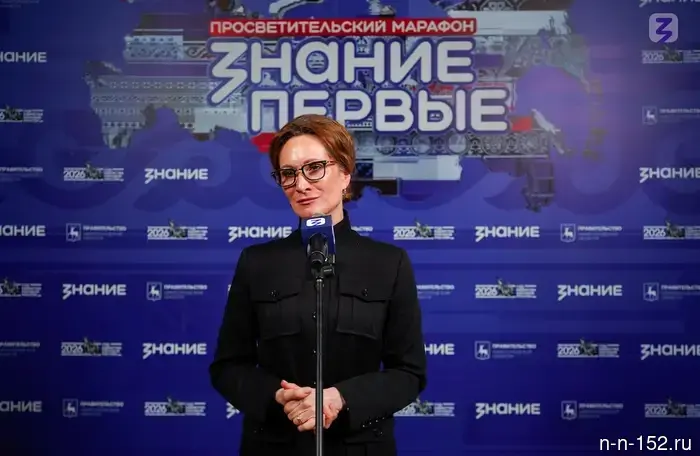 To love your work and Russia: champion Maria Kiseleva and TV presenter Federico Arnaldi spoke in Nizhny Novgorod.
News of Nizhny Novgorod
To love your work and Russia: champion Maria Kiseleva and TV presenter Federico Arnaldi spoke in Nizhny Novgorod.
News of Nizhny Novgorod
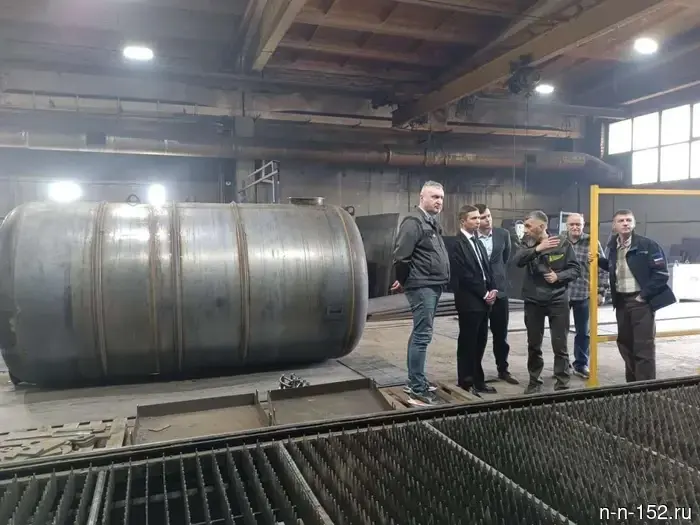 The output will increase for the manufacturer of communal equipment thanks to the national project.
News of Nizhny Novgorod
The output will increase for the manufacturer of communal equipment thanks to the national project.
News of Nizhny Novgorod
"It is impossible to imagine oneself outside the fate of the people": at the Knowledge marathon. The first spoke about the truth and the fate of the country.
News of Nizhny Novgorod