
Dead City and Red Forest: A Nizhny Novgorod Resident's Memories of the Chernobyl Spring
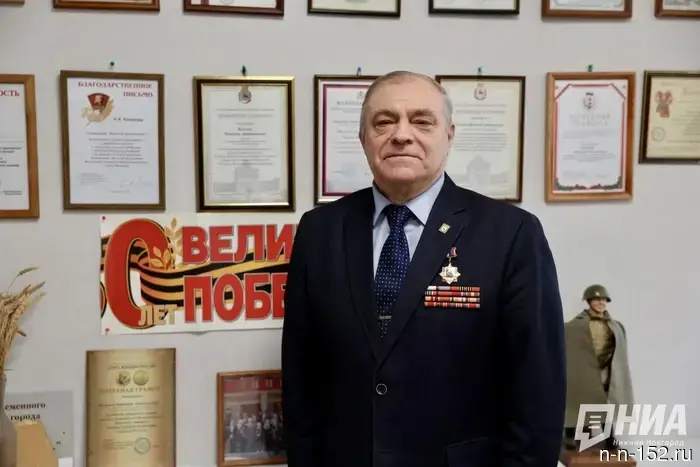
NIА "Nizhny Novgorod" - Maria OrlovaToday marks 40 years since the largest man-made disaster at the Chernobyl Nuclear Power Plant. On April 26, 1986, an explosion occurred at the fourth reactor of the plant, which forever changed attitudes towards nuclear energy and safety and affected the lives of millions of people. According to official data, more than 500,000 people from all corners of the Soviet Union participated in the aftermath of the disaster. Among them was the chairman of the Council of Veterans of War, Labor, Armed Forces, and Law Enforcement of Nizhny Novgorod, the director of the city House of Veterans, retired Colonel Nikolai Anatolyevich Kolosov.
Business trip to the zone
Kolosov arrived in Chernobyl on June 10, 1986, that is, a month and a half after the explosion. At that time, he was serving in the headquarters of the Moscow Military District, holding the position of head of the Komsomol work department. Since many young soldiers and Komsomol members were involved in the aftermath of the disaster, it was decided to include him in the operational group of the headquarters.
"Each district sent several military units there. From ours, five went. It was necessary to coordinate their work, organize living conditions, and provide moral and psychological support," recalls the interlocutor of NIA "Nizhny Novgorod."
Upon arriving in the Chernobyl Nuclear Power Plant area, the operational group was stationed at the base of the 26th Chemical Defense Brigade. Within a couple of days, they were taken to the plant itself to show the scale of the destruction and the boundaries of the 30-kilometer zone. The officers saw the destroyed reactor and drove past the "red forest" — a pine forest that burned from radiation and turned from green to rusty.
The impressions of Pripyat were the most oppressive. Before the officers stood a surreal and dead city, frozen in time.
"You drive — on the balconies, laundry is drying, children's strollers are standing by the entrances. And not a soul. Only dogs are running around. A dead city," recalls the retired colonel.
In the villages, the picture was even more horrifying: abandoned livestock (sheep, chickens, cows) wandered unattended. In one of the settlements, the military met elderly people who refused to leave.
"Oh, guys, we are already old. Where to go? We will die here," they replied to the evacuation offer.
During the three weeks of the business trip, Nikolai Anatolyevich visited the plant itself two or three times. The rest of the time, he and his colleagues traveled to the sites where the military personnel were working, engaging in the decontamination of the area — removing contaminated soil in layers of 15–20 centimeters, loading it into trucks that then took the soil to special burial sites. Houses and streets were washed with a special solution.
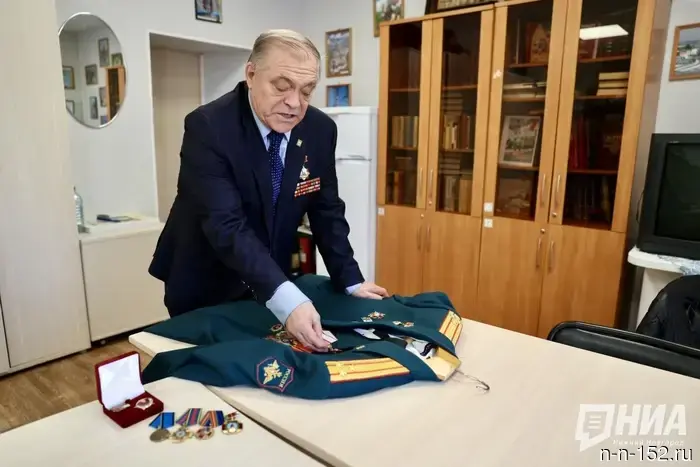
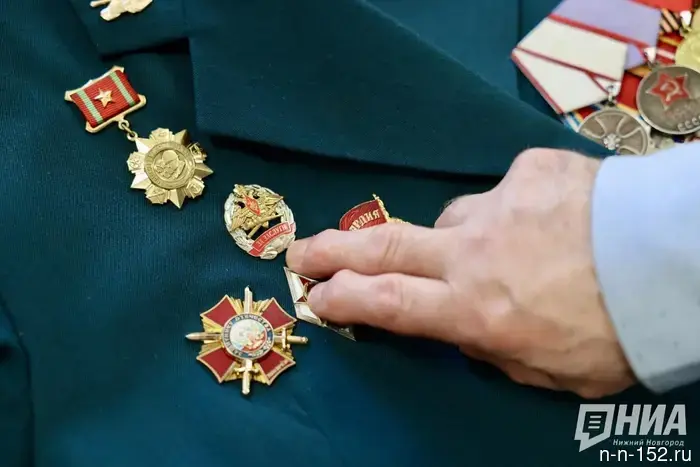
As a senior Komsomol worker, he also accompanied a delegation from the Central Committee of the Komsomol, which came to the plant. Together with representatives of the committee, he visited the units, presenting the fighters with badges from the Central Committee of the Komsomol and honorary certificates. One of those certificates — "specifically for Chernobyl" — is still kept by him.
"Of course, the hardest days were the first days after the disaster. And the most terrifying work was done by the firefighters of Pripyat. They arrived at the plant 15–20 minutes after the explosion and, at the cost of their lives, prevented the spread of fire to the 3rd reactor. The second most dangerous task was dropping pieces of radioactive graphite from the roof of the 4th block. Scientists calculated that a person could stay on that roof under the protection of lead plates for no more than 30 seconds," recalls the liquidator.
The same air and the same water
Looking back, Nikolai Anatolyevich admits that he did not feel fear before the trip. According to him, the army learned about the tragedy almost the next day and began preparing the units for dispatch: calling up reservists, checking equipment, forming units.
"There was no fear. There was even some curiosity — to see for myself what kind of plant it was, what kind of explosion it was," he recalls.
The officer understood the danger of radiation, but, as the veteran emphasizes, it was not physically felt: "The same air and the same water. A person does not feel radiation. He begins to feel it when he has already received a large dose."
Initially, the permissible dose of radiation, according to the liquidator's recollections, was 25 roentgen. Later, the threshold was lowered, measurement units changed, and stricter norms were introduced.
At the same time, it was difficult to objectively assess the received dose, as radiation was distributed extremely unevenly. Nikolai Anatolyevich explains this with a specific example — the underground passage between the third and fourth reactors, which was dug and concreted by miners.
"The width of the tunnel is four meters. The dosimetrist walked strictly in the center, and his devices showed one level of radiation. But as soon as he took a step to the left or right, closer to the wall, the radiation skyrocketed. The walls were so saturated with radioactive materials that a person walking two steps from the center received a dose that the dosimetrist simply could not record. And what exact dose you actually received — no one knew. Especially since there were no individual dosimeters at first," he said.
Of course, radiation could not but affect the health of the liquidators. "Caught in the crossfire" was Kolosov as well.
"Diabetes, thyroid problems were found immediately. But I lived for forty years and plan to live another twenty," said the director of the Nizhny Novgorod House of Veterans.
However, many liquidators did not live to see the "anniversary" date. In the late 1990s and early 2000s, when Kolosov headed the organization of Chernobyl veterans in Sormovo, there were about 450 liquidators in the area.
"Today, there are just over 50 left. Instead of the Chernobyl organization, it has practically become an organization of widows," he notes.
So that they remember what a feat looks like
In Kolosov's opinion, the disaster was a lesson for the entire industry. He believes that the cause of the accident was gross violations during testing, as well as insufficient technical safety measures.
"Now the reactors are more reliable, the human factor is being minimized," he says, emphasizing that the world still needs nuclear energy.
However, as Nikolai Anatolyevich himself admits, in the series of subsequent historical events after the disaster, the memory of Chernobyl temporarily faded into the background. The 90s were difficult: the collapse of the country, local conflicts, and a severe economic situation overshadowed the feat of the liquidators. At that time, there was no time for anniversary dates — it was about survival.
The officers in his department were forced to work in shifts to feed their families: "Five people went on duty, while the other five went to earn money — some as security guards, some unloading wagons."
For Nikolai Anatolyevich himself, April 26 is a "day of remembrance for youth" and for those who are no longer alive...
NIA "Nizhny Novgorod" has a Telegram channel. Subscribe to stay updated on the main events, exclusive materials, and operational information. Copyright © 1999—2025 NIA "Nizhny Novgorod". When reprinting, a hyperlink to NIA "Nizhny Novgorod" is mandatory. This resource may contain materials 18+
Другие Новости Нижнего (Н-Н-152)
 Rain will cover Nizhny Novgorod before the May holidays.
News of Nizhny Novgorod
Rain will cover Nizhny Novgorod before the May holidays.
News of Nizhny Novgorod
 Nikitin: "Nizhny Novgorod region remembers the liquidators of the Chernobyl nuclear power plant disaster"
News of Nizhny Novgorod
Nikitin: "Nizhny Novgorod region remembers the liquidators of the Chernobyl nuclear power plant disaster"
News of Nizhny Novgorod
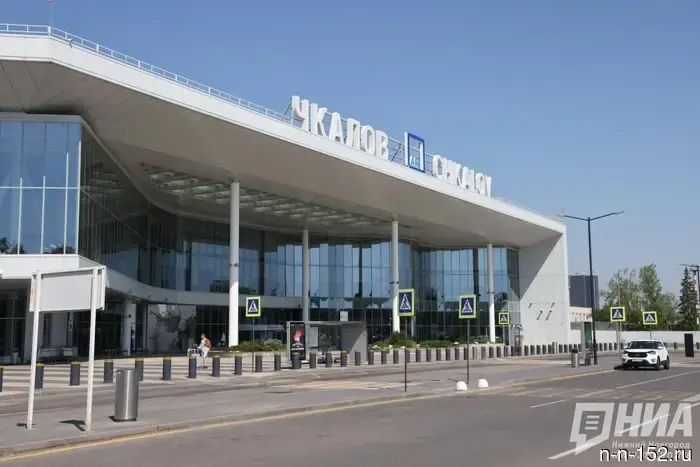 Flight restrictions have been lifted at the Nizhny Novgorod airport.
News of Nizhny Novgorod
Flight restrictions have been lifted at the Nizhny Novgorod airport.
News of Nizhny Novgorod
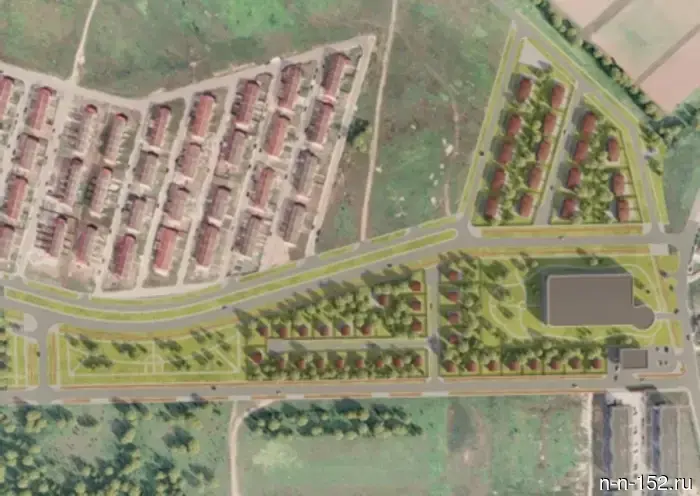 A microdistrict of cottages and townhouses is planned to be built near Novinki.
News of Nizhny Novgorod
A microdistrict of cottages and townhouses is planned to be built near Novinki.
News of Nizhny Novgorod
 Nizhny Novgorod's "Chaika" lost the first game of the Kharlamov Cup semifinals.
News of Nizhny Novgorod
Nizhny Novgorod's "Chaika" lost the first game of the Kharlamov Cup semifinals.
News of Nizhny Novgorod
 Nizhny Novgorod carrier owes employees nearly 4 million rubles.
News of Nizhny Novgorod
Nizhny Novgorod carrier owes employees nearly 4 million rubles.
News of Nizhny Novgorod
Dead City and Red Forest: A Nizhny Novgorod Resident's Memories of the Chernobyl Spring
News of Nizhny Novgorod