
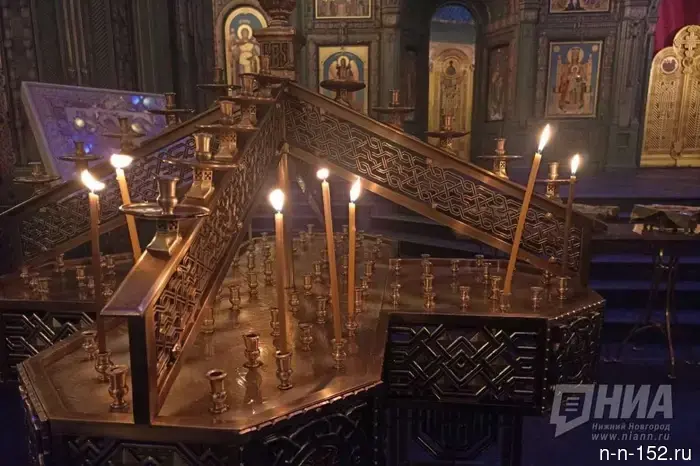
The religious scholar Fominikh explained what Radonitsa is and how it is celebrated.
April 14, 2026 15:30 Society Radonitsa is a special memorial day in the Orthodox calendar when believers remember their deceased relatives. This day does not have a fixed date and is celebrated on the ninth day after Easter. In 2026, Radonitsa falls on April 21.
The essence and significance of Radonitsa
On this day, believers not only remember the deceased but also share the joy of the Resurrection of Jesus Christ with those who have already passed into the other world. As noted in an interview with 360.ru by religious scholar Natalia Fominykh, during Holy Week, the commemoration of the dead is not conducted, as the holiday of the Resurrection of Christ symbolizes the triumph of life over death. Radonitsa, the name of which comes from the word "joy," emphasizes the belief that even after death, the soul remains a part of the Church and has hope for eternal life.
Historical context
Originally, Radonitsa was not associated with Christianity and was celebrated as one of the spring days of remembrance for the dead, known as Raduница. This name has pagan roots and comes from the Lithuanian word rauda, which means "funeral song." Pagans believed that during this period, the deceased returned to life and participated in the memorial feast.
With the adoption of Christianity in Rus, the holiday acquired new meaning and became part of the Orthodox calendar. Its name was changed to Radonitsa, and the connection with Easter emphasized the importance of the relationship between life and death, resurrection and repose.
Traditions of remembrance on Radonitsa
The Church reminds that leaving food and drinks at graves is part of a pagan tradition revived in the Soviet Union, and this should not be done. Next to the photograph of the deceased, one should not leave black bread and vodka, as this is considered a ritual unrelated to either Orthodoxy or paganism.
The religious scholar clarified that leaving food is not a church tradition, but it is customary among the people to leave alms, especially in Russia. Alcoholic beverages have never been part of the church tradition of commemorating the dead.
At the grave of a relative, one should light a candle and perform a liturgy with a priest. If this is not possible, one can read an akathist for the repose of the deceased. The burial site should be tidied up. It is important to remember that in Orthodoxy, the deceased are referred to as the "sleeping," and they will rise from the dead at a certain time. Therefore, the grave should be clean and tidy, and the cross, symbolizing the Holy Life-Giving Cross, should be painted and upright.
At the burial site, one can simply be silent and remember the deceased mentally or in conversation. Before visiting the cemetery, it is recommended to go to the church, light a candle for the deceased, and pray for them. A panikhida can be served. The prayer will be more effective if the person commemorating receives communion on that day.
If the grave of a close deceased person is not nearby, it is recommended to visit the nearest cemetery and choose any grave, leaving alms for the needy on it.
What is prohibited on Radonitsa
On Radonitsa, it is not recommended to hold noisy celebrations, feasts, or drinking parties. While a little wine may be allowed, moderation is important. Instead, it is better to organize a modest dinner dedicated to the memory of the deceased.
One should also not grieve excessively for the dead. On the contrary, they should be remembered with kindness and gratitude. It is important to remember that quarrels and disputes are unacceptable on this day.
Working on this day is also not encouraged, as it is believed that physical labor may disturb the earth. However, cleaning the house, cooking, or sewing is not prohibited if it does not interfere with visiting the church and cemetery.
The NIA "Nizhny Novgorod" has a Telegram channel. Subscribe to stay updated on the main events, exclusive materials, and timely information. Copyright © 1999—2025 NIA "Nizhny Novgorod". When reprinting, a hyperlink to NIA "Nizhny Novgorod" is mandatory. This resource may contain materials 18+
Другие Новости Нижнего (Н-Н-152)
 The head coach of "Metallurg" praised the coach of "Torpedo," Alexey Isakov.
News of Nizhny Novgorod
The head coach of "Metallurg" praised the coach of "Torpedo," Alexey Isakov.
News of Nizhny Novgorod
 River cruises from Nizhny Novgorod to Gorodets and Makaryevo will launch in June.
News of Nizhny Novgorod
River cruises from Nizhny Novgorod to Gorodets and Makaryevo will launch in June.
News of Nizhny Novgorod
 The police became interested in the damaged tombstones at the Dzerzhinsk cemetery.
News of Nizhny Novgorod
The police became interested in the damaged tombstones at the Dzerzhinsk cemetery.
News of Nizhny Novgorod
 The religious scholar Fominikh explained what Radonitsa is and how it is celebrated.
News of Nizhny Novgorod
The religious scholar Fominikh explained what Radonitsa is and how it is celebrated.
News of Nizhny Novgorod
 A chatbot to combat vaping has been launched in the Nizhny Novgorod region.
News of Nizhny Novgorod
A chatbot to combat vaping has been launched in the Nizhny Novgorod region.
News of Nizhny Novgorod
 The Nizhny Novgorod project has been awarded the national prize "Our Contribution."
News of Nizhny Novgorod
The Nizhny Novgorod project has been awarded the national prize "Our Contribution."
News of Nizhny Novgorod
The religious scholar Fominikh explained what Radonitsa is and how it is celebrated.
News of Nizhny Novgorod