

What contribution has the Nizhny Novgorod region made to the exploration of space?
The NIA "Nizhny Novgorod" - Maria Orlova Nizhny Novgorod and the Nizhny Novgorod region are directly connected to the exploration of space. Here, astronauts were born and raised, enterprises of the aerospace industry operate, and scientific institutes and educational centers function. For decades, they have participated in the creation of space technology, communication systems, and scientific equipment. The contribution of the region to the development of the industry was discussed by the lecturer of the G.M. Grechko Planetarium, Ulyana Avdeyenko, during a lecture dedicated to Cosmonautics Day. A correspondent from NIA "Nizhny Novgorod" was also present. From astronauts to small planets Two astronauts lived at different times on Nizhny Novgorod land. Vyacheslav Zudov was born in Bor. In 1965, he was enrolled in the astronaut corps, completed a full training course for flights on Soyuz-type spacecraft and the military orbital station "Almaz." In October 1976, Vyacheslav Zudov flew as the commander of the Soyuz-23 spacecraft. Due to technical problems, the docking with the orbital station did not take place, and the return was accompanied by an emergency landing. Despite the difficult circumstances, the mission became an important page in the history of domestic cosmonautics. After the flight, he continued to work at the Cosmonaut Training Center. Another name is Yuriartyukhin, flight engineer of the Soyuz-14 spacecraft and the Salyut-3 orbital station. His childhood was spent in the Voznesensky district of the Nizhny Novgorod region. In 1963, Artyukhin was enrolled in the corps of Soviet cosmonauts and underwent training for flights on Soyuz-type spacecraft. In July 1974, together with Pavel Popovich, he made a space flight as a flight engineer. The duration of the stay in space was 15 days. After the flight, he left the cosmonaut corps and continued to work at the Cosmonaut Training Center. Nine small planets of the solar system are named after Nizhny Novgorod residents: Gorky No. 2768, Gaidaria No. 1835, Chkalov No. 2692, Lobachevsky No. 1858, Semyonov No. 2475, Kukarkin No. 1954, Kaplan No. 1987, Radzievsky No. 3923, Shcherbakovia No. 3886. "This is recognition of the contribution of our fellow countrymen to the development of cosmonautics and science," said Ulyana Avdeyenko. Enterprises working in space The lecturer noted that there are many enterprises in the region working in the space sector. One of them is the Nizhny Novgorod Aviation Plant "Sokol," which is one of the leading enterprises of the aerospace industry in Russia. "In the 1950s, specialized design bureaus and a powerful antenna production facility were created here, where unique antenna systems were manufactured, including "Orbita" for long-distance space communication," Avdeyenko said. In the 1980s, the plant produced elements of the hull of the orbital spacecraft "Buran." The enterprise also participated in the development of the reusable booster "Baikal" for the Angara launch vehicle. The Nizhny Novgorod Machine Engineering Plant contributed to the creation of special equipment and tools for space exploration, ensuring ultra-long-distance communication and space radar. "The developments of the scientific and production enterprise "Salyut" are used in the creation of aerospace technology, communication systems, and control of spacecraft," the lecturer noted. Here, the electronic block of the positronimeter of the "Uran" spacecraft was created, as well as devices for tracking and controlling spacecraft. The Frunze Plant, which traces its history back to the Nizhny Novgorod Radio Laboratory, played an important role in the development of domestic radio electronics, providing space programs with communication, navigation, and control equipment. The Production and Design Association "Teploobmennik" is one of the leaders in the design and production of science-intensive heat engineering products for the aerospace industry. Here, units of the thermostat system for the electronic equipment of the "Ural" space shuttle were designed. The scientific and production enterprise "Micromontage" developed an assembly unit for the video cone - the electronic eye of the television camera, which first transmitted an image of the far side of the Moon in 1972. Today, the company produces microelectronic components for spacecraft, as well as medical equipment and simulators for cosmonaut training. The special design bureau IKAR, created for the development of radio components, is the leading enterprise of the Russian Federation in this direction. Resistors manufactured here were used in artificial Earth satellites, as well as in the Salyut, Mir, and ISS space stations. The enterprise "Hydromash" developed and manufactured hydraulic system units for ground equipment, as well as chassis for the "Buran" spacecraft. In 2011, the "Vremya-Ch" observatory was put into operation, uniting a 10-meter Russian space radio telescope and the largest ground telescopes in the world. And this, according to Ulyana Avdeyenko, is far from a complete list of all enterprises. Space as a realm of science In the Nizhny Novgorod region, the space industry is not only industrial enterprises working on space programs but also a powerful scientific school. Here, one cannot fail to mention the Institute of Applied Physics of the Russian Academy of Sciences, which conducts research in the fields of astrophysics, plasma, radio astronomy, and space technologies. The Scientific Research Radio Physics Institute of Lobachevsky NNGU participates in space research and prepares experiments within the framework of the "IONOZOND-2025" project. The Russian Federal Nuclear Center participates in projects related to the "Spectrum-RG" space observatory, X-ray metal optics technologies, as well as in educational and career guidance programs. Lobachevsky NNGU implements projects within the framework of the "Advanced Engineering School" program. In 2025, students and scientists from the university launched a small satellite "Lobachevsky," intended for environmental monitoring of the Earth, remote sensing of forests and agricultural lands, as well as testing new technologies. It was previously reported that the "Lobachevsky" satellite captured the northwest of Russia. NIA "Nizhny Novgorod" has a Telegram channel. Subscribe to stay updated on major events, exclusive materials, and operational information. Copyright © 1999—2025 NIA "Nizhny Novgorod." When reprinting, a hyperlink to NIA "Nizhny Novgorod" is mandatory. This resource may contain materials 18+


Другие Новости Нижнего (Н-Н-152)
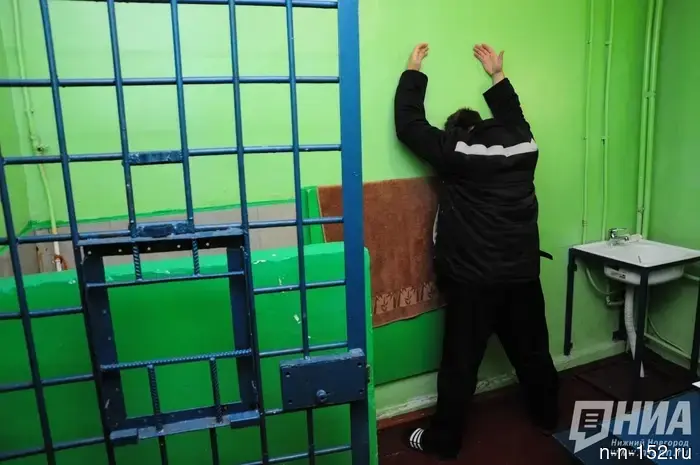 The criminal who had been hiding for 28 years was caught in the Nizhny Novgorod region.
News of Nizhny Novgorod
The criminal who had been hiding for 28 years was caught in the Nizhny Novgorod region.
News of Nizhny Novgorod
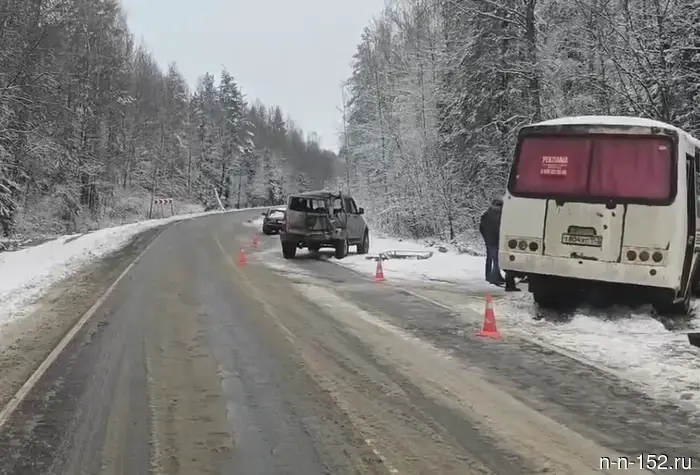 The bus collided with a UAZ in Semyonov: three people were injured.
News of Nizhny Novgorod
The bus collided with a UAZ in Semyonov: three people were injured.
News of Nizhny Novgorod
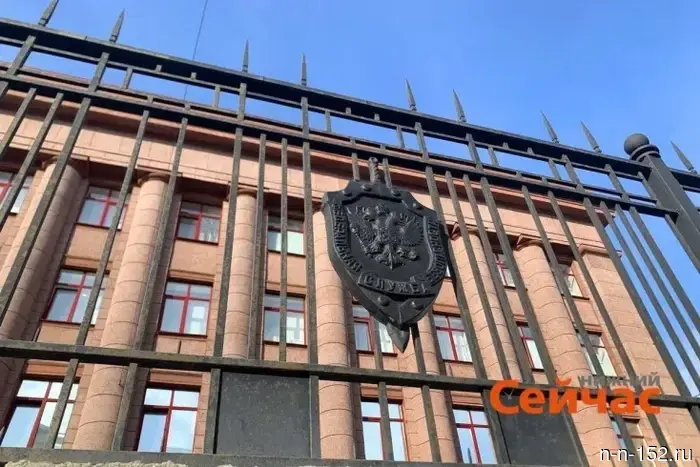 A fence costing 150 million rubles will be installed at the FSB building on Malaya Pokrovskaya.
The Municipal Institution "Main Department for the Construction and Repair of the Metro, Bridges, and Road Networks in Nizhny Novgorod" has announced a procurement for the installation of a fence in the area of house No. 1 on Malaya Pokrovskaya Street. 10.04.2026. Nizhny Now News Agency. Nizhny Novgorod Region. Nizhny Novgorod.
A fence costing 150 million rubles will be installed at the FSB building on Malaya Pokrovskaya.
The Municipal Institution "Main Department for the Construction and Repair of the Metro, Bridges, and Road Networks in Nizhny Novgorod" has announced a procurement for the installation of a fence in the area of house No. 1 on Malaya Pokrovskaya Street. 10.04.2026. Nizhny Now News Agency. Nizhny Novgorod Region. Nizhny Novgorod.
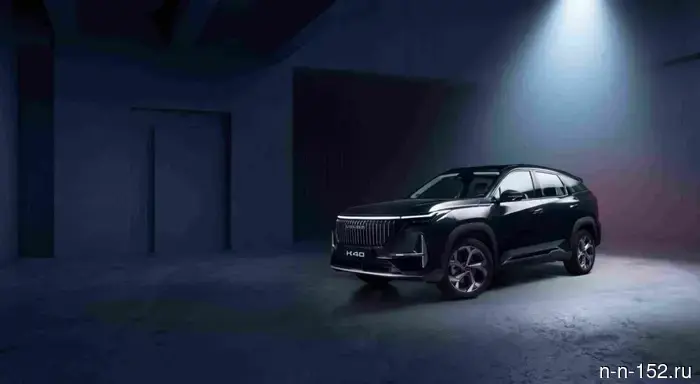 VOLGA has introduced the mid-size crossover K40.
Photo: VOLGA
VOLGA has introduced the third model of the brand, which is the mid-size crossover K40. 04.10.2026. Online publication We Live in Nizhny. Nizhny Novgorod Region. Nizhny Novgorod.
VOLGA has introduced the mid-size crossover K40.
Photo: VOLGA
VOLGA has introduced the third model of the brand, which is the mid-size crossover K40. 04.10.2026. Online publication We Live in Nizhny. Nizhny Novgorod Region. Nizhny Novgorod.
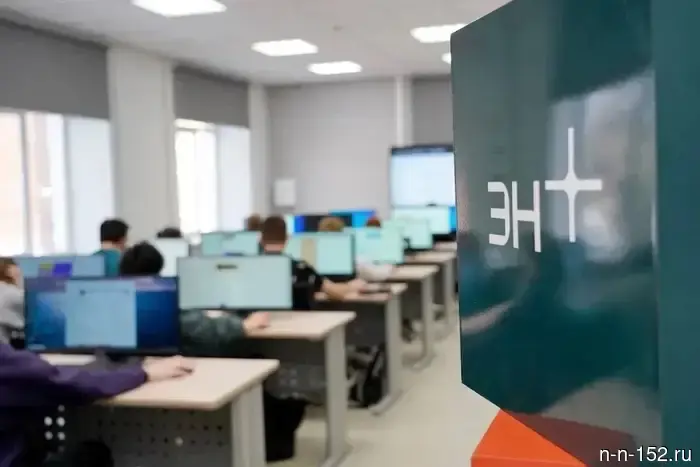 Students of Nizhny Novgorod technical schools are trained in "AI-Start" from En+ and RUSAL.
En+ and RUSAL launched the educational project "AI-Start," aimed at developing practical skills in working with artificial intelligence. 04.10.2026. Nizhny Novgorod Truth. Nizhny Novgorod Region. Nizhny Novgorod.
Students of Nizhny Novgorod technical schools are trained in "AI-Start" from En+ and RUSAL.
En+ and RUSAL launched the educational project "AI-Start," aimed at developing practical skills in working with artificial intelligence. 04.10.2026. Nizhny Novgorod Truth. Nizhny Novgorod Region. Nizhny Novgorod.
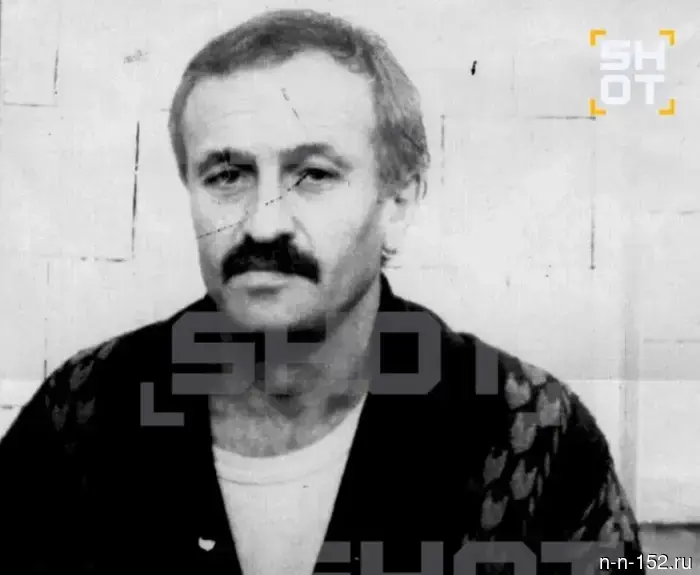 A criminal who escaped 28 years ago was detained in the Nizhny Novgorod region.
Photo: SHOT
In the Nizhny Novgorod region, a 65-year-old recidivist, Ibrahim Tekuev, was detained, who escaped from a pre-trial detention center 28 years ago and changed his name. 10.04.2026. Online publication We Live in Nizhny. Nizhny Novgorod region. Nizhny Novgorod.
A criminal who escaped 28 years ago was detained in the Nizhny Novgorod region.
Photo: SHOT
In the Nizhny Novgorod region, a 65-year-old recidivist, Ibrahim Tekuev, was detained, who escaped from a pre-trial detention center 28 years ago and changed his name. 10.04.2026. Online publication We Live in Nizhny. Nizhny Novgorod region. Nizhny Novgorod.
What contribution has the Nizhny Novgorod region made to the exploration of space?
News of Nizhny Novgorod