

Almost 70% of Russians are ready to house a robot android for cleaning and cooking.
April 8, 2026 14:33 Economy Russians, in general, do not fear new technologies, even if they do not fully understand how they work. As shown by a survey conducted for the Data Fusion conference by VTB, about 70% of respondents are willing to delegate household tasks to humanoid robots and live under the same roof with them. The work of intelligent systems, including robots, is based on big data. Russians create vast amounts of information about themselves daily by using the internet, banking services, and digital platforms. However, the level of understanding of technologies remains low: only one-fifth of respondents have a good idea of what big data is, even though this technology increasingly influences their daily lives and work.
Digital activity outpaces awareness
Only 20% of Russians are aware of what big data is and can explain it. Almost half of the survey participants (48%) have heard the term but are unsure of its meaning, while 32% of respondents do not know what it is at all.
However, Russians are actively engaged in the digital environment and regularly create data about themselves. Thus, 63% of citizens use search engines or artificial intelligence services daily, effectively forming their own "digital profile." Particularly high activity is observed in the Central Federal District, where the share of daily users of AI and internet search engines reaches 72%. Another 24% of Russians use search engines and AI 2-3 times a week, and 9% do so once a week or less.
Additionally, 62% of survey participants use bank cards or applications daily, 29% use them two to three times a week, and 5% once a week. Among the respondents, there are none who would choose the answer "never." 54% of respondents visit the "Gosuslugi" portal at least once a month.
Intuitive understanding of the value of technology
Despite the low level of awareness, Russians quite accurately guess the main areas of application for big data:
- 47% of Russians believe that big data is used to analyze consumer behavior and personalize services;
- 40% think that big data can be used for scientific research and technology development;
- 35% associate it with forecasting various events and phenomena, such as weather forecasts, traffic conditions, or epidemics;
- 34% named the automation of business and government services as the goal of data collection.
Interest instead of fear
Almost 70% of Russians are somewhat willing to have a humanoid robot in their home to perform household tasks, such as cleaning, cooking, or caregiving. Exactly ready are 16%, somewhat ready are 27%, and partially ready are 25%.
About half of Russians feel the influence of AI services on their cognitive skills (memory, attention, and thinking). However, for 32% of Russians, this influence is positive, while for 17%, it is negative.
Concerns about job loss due to AI are moderate. Thus, 25% of Russians fear that AI may replace them in the next 5-10 years, while only 7% have actually encountered such cases, and about 21% have heard of similar cases.
Using but doubting
Most Russians (66%) are somewhat or completely satisfied with the current level of personalization of banking and internet services. However, only 10% of respondents are willing to trust financial advice from AI. Financial consultants and acquaintances inspire more trust, while a quarter of the audience does not trust anyone.
This gap shows that, in general, users are tolerant of technology for their convenience but are not ready to fully delegate decision-making to AI.
"User behavior is formed faster than knowledge: first, people start using services, and only then try to understand how they work. This approach creates a risk of manipulation and reduces the level of conscious consumption of technologies. As a bank, we actively participate in increasing financial literacy and popularizing technologies, including AI and big data. Thanks to the developed market of financial technologies, most Russians do not experience strong fear of AI despite the risks and are even ready to integrate it into their daily lives. This shows that VTB is moving in the right direction by implementing AI into its services," said Vadim Kulik, Deputy President-Chairman of the VTB Management Board.
The survey was conducted in February 2026 in cities with a population of over 100,000. It involved 1,500 respondents aged 18-65.
The NIA "Nizhny Novgorod" has a Telegram channel. Subscribe to stay updated on major events, exclusive materials, and timely information. Copyright © 1999—2025 NIA "Nizhny Novgorod". When republishing, a hyperlink to NIA "Nizhny Novgorod" is mandatory. This resource may contain materials 18+
Другие Новости Нижнего (Н-Н-152)
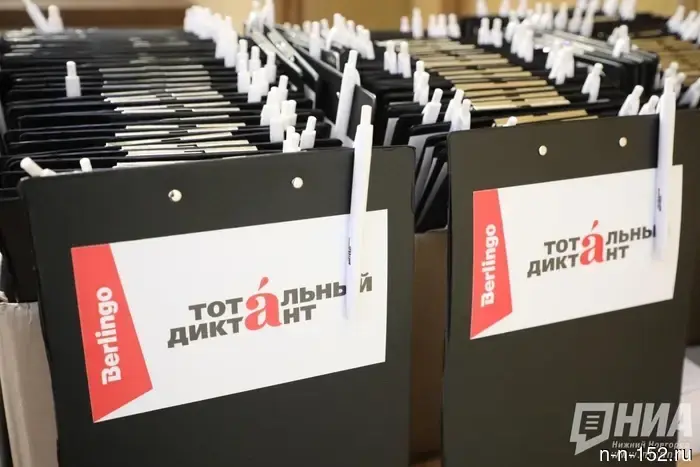 The venues for the "Total Dictation 2026" in Nizhny Novgorod have been announced.
News of Nizhny Novgorod
The venues for the "Total Dictation 2026" in Nizhny Novgorod have been announced.
News of Nizhny Novgorod
 Queues for IVF have been eliminated in the Nizhny Novgorod region.
News of Nizhny Novgorod
Queues for IVF have been eliminated in the Nizhny Novgorod region.
News of Nizhny Novgorod
 At the Data Fusion conference, the regulation of artificial intelligence was discussed.
News of Nizhny Novgorod
At the Data Fusion conference, the regulation of artificial intelligence was discussed.
News of Nizhny Novgorod
 The Russian government will consider increasing the limit on family mortgages.
News of Nizhny Novgorod
The Russian government will consider increasing the limit on family mortgages.
News of Nizhny Novgorod
 At the Data Fusion conference, the regulation of artificial intelligence was discussed.
News of Nizhny Novgorod
At the Data Fusion conference, the regulation of artificial intelligence was discussed.
News of Nizhny Novgorod
 Minleskhoz: Moose and roe deer populations have increased in the Nizhny Novgorod region.
News of Nizhny Novgorod
Minleskhoz: Moose and roe deer populations have increased in the Nizhny Novgorod region.
News of Nizhny Novgorod
Almost 70% of Russians are ready to house a robot android for cleaning and cooking.
News of Nizhny Novgorod