
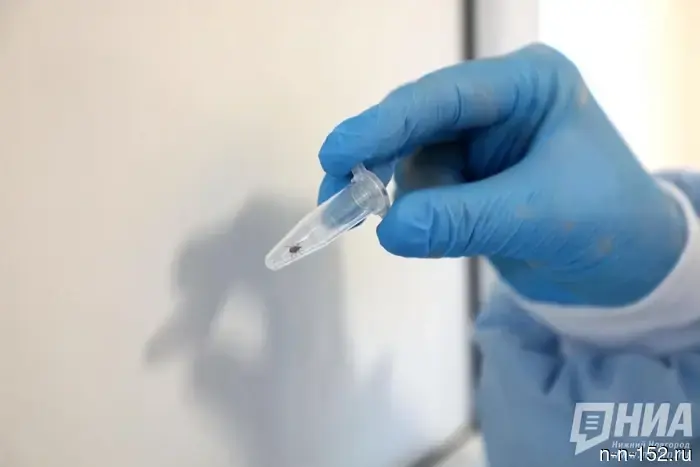
Not only through a bite: the infectious disease specialist revealed how tick-borne encephalitis is transmitted.
The tick season has already begun: in the Nizhny Novgorod region, these dangerous bloodsuckers have awakened earlier than usual due to the early spring. Typically, ticks become active when the average daily air temperature exceeds +10 degrees, but this year their first bites were recorded as early as the end of March.
Ticks can transmit serious diseases, including tick-borne encephalitis and borreliosis (Lyme disease), which can lead to disability or even death if timely treatment is not provided.
What is tick-borne encephalitis?
Tick-borne encephalitis is an acute infectious disease caused by a virus from the Flaviviridae family. This virus is transmitted through the bites of ixodid ticks. The virus can remain in the tick's body throughout its life and be passed on to its offspring.
The term "encephalitis" means inflammation of the brain. As infectious disease doctor Sergey Voznesensky told 360.ru, in addition to viruses, encephalitis can also be caused by bacteria and fungi. For example, herpes viruses can be transmitted through the air, and bacterial pneumonia can lead to sepsis and inflammation of the brain.
Diagnosing encephalitis can be challenging, as its symptoms—fever, intoxication, and neurological manifestations—can resemble those of other diseases. An accurate diagnosis usually requires MRI and a spinal tap.
How is tick-borne encephalitis contracted?
Infection with tick-borne encephalitis most often occurs through the bite of an infected tick. The virus is transmitted through the infected saliva that the tick injects into the wound. It is also possible to become infected by crushing such a tick on damaged skin or mucous membranes.
People who spend a lot of time outdoors are at risk: summer residents, tourists, and outdoor enthusiasts. Urban residents are also at risk, especially if they neglect preventive measures.
However, infection can also occur through food products. The tick-borne encephalitis virus can be present in the milk of infected animals—cows, sheep, and goats. Consuming unboiled or unpasteurized milk, as well as products made from it, can lead to infection. The virus does not get destroyed in the stomach.
It is important to note that tick-borne encephalitis is not transmitted through the air, so an infected person does not pose a danger to others.
How does the disease progress?
The incubation period for tick-borne encephalitis usually lasts from one to two weeks after a tick bite. In rare cases, symptoms may appear on the fifth or sixth day or even after 25 days. In cases of foodborne infection, the incubation period is shorter and can be as little as three days.
The first signs of the disease include fever, nausea, vomiting, and headaches and muscle pain. Over the course of several days, a full clinical picture develops.
There are several forms of tick-borne encephalitis, each with its own characteristics:
- **Meningeal form:** Characterized by high fever, severe headache, vomiting, facial asymmetry, and different pupil sizes. This is associated with inflammation of the meninges and increased intracranial pressure.
- **Feverish form:** Symptoms are related to high fever, including headaches and muscle pain, chills, photophobia, and sweating.
- **Meningoencephalitic form:** Rarely occurs (5-15% of cases) and is characterized by altered consciousness, seizures, and eye twitching.
- **Rare forms:** May include paralysis, and disturbances in muscle and speech functions.
Tick-borne encephalitis can be fatal, especially in severe forms and in certain territories. In the European part of Russia, the risk of death is 1-3%, while in the Far East it can reach 40%.
How to avoid contracting tick-borne encephalitis?
To prevent tick-borne encephalitis, it is important to follow these measures:
- Drink milk only after thorough heat treatment: Consuming unboiled or unpasteurized milk from domestic animals can lead to infection.
- Avoid tick bites: Ticks prefer shady and damp places, so it is important to wear light-colored clothing with long sleeves and pants, as well as use repellents.
- Check your body after visiting nature: After walks in the forest or park, it is necessary to carefully inspect yourself and your loved ones for ticks.
- Seek medical help promptly: If symptoms such as headache, vomiting, or neurological manifestations appear, it is essential to consult a doctor immediately.
Those who have recovered from tick-borne encephalitis develop lifelong immunity, so reinfection is unlikely. However, following precautionary measures will help avoid this dangerous disease.
NIA "Nizhny Novgorod" has a Telegram channel. Subscribe to stay updated on major events, exclusive materials, and timely information. Copyright © 1999—2025 NIA "Nizhny Novgorod". When reprinting, a hyperlink to NIA "Nizhny Novgorod" is mandatory. This resource may contain materials 18+.
Другие Новости Нижнего (Н-Н-152)
 The daughter of the former chief doctor of Nizhny Novgorod Hospital No. 33 will remain in pre-trial detention until June 2.
News of Nizhny Novgorod
The daughter of the former chief doctor of Nizhny Novgorod Hospital No. 33 will remain in pre-trial detention until June 2.
News of Nizhny Novgorod
 The construction of two new metro stations will be completed by August 2027.
News of Nizhny Novgorod
The construction of two new metro stations will be completed by August 2027.
News of Nizhny Novgorod
 Raids against the illegal sale of vapes will take place in the Nizhny Novgorod region.
News of Nizhny Novgorod
Raids against the illegal sale of vapes will take place in the Nizhny Novgorod region.
News of Nizhny Novgorod
 The Nizhny Novgorod branch of "T Plus" will replace 20 km of heating networks in 2026.
News of Nizhny Novgorod
The Nizhny Novgorod branch of "T Plus" will replace 20 km of heating networks in 2026.
News of Nizhny Novgorod
 Clean pipes – clean water: hydropneumatic cleaning of networks in the Avtozavodsky district
News of Nizhny Novgorod
Clean pipes – clean water: hydropneumatic cleaning of networks in the Avtozavodsky district
News of Nizhny Novgorod
 Two new medical centers for children have opened in Nizhny Novgorod.
News of Nizhny Novgorod
Two new medical centers for children have opened in Nizhny Novgorod.
News of Nizhny Novgorod
Not only through a bite: the infectious disease specialist revealed how tick-borne encephalitis is transmitted.
News of Nizhny Novgorod