
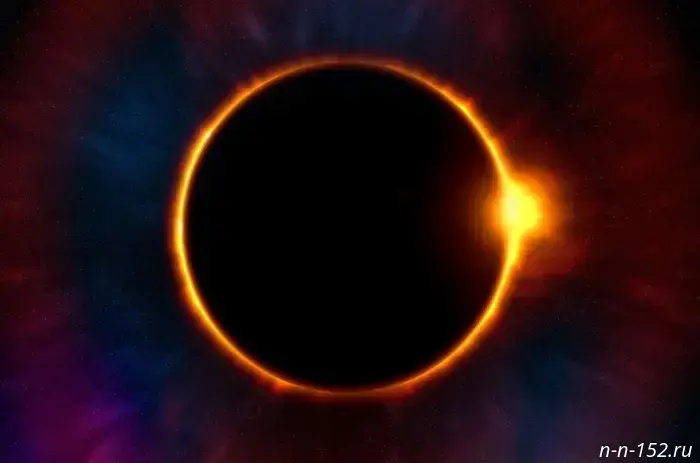
A Nizhny Novgorod physicist named the most spectacular celestial events in 2026.
January 5, 2026, 09:12 Society: It has been revealed which astronomical events await Nizhny Novgorod residents in 2026. The information was shared by the dean of the Faculty of Physics of Nizhny Novgorod State University, Alexander Malyshev.
On January 10, Jupiter will be in opposition — on that day Earth will be between it and the Sun, making the planet especially bright in the evening and night sky.
Jupiter is already easily visible: it rises in the northeast immediately after sunset, is high above the horizon by midnight, and by 6 a.m. moves toward the west. With binoculars or a telescope you can see not only the planet’s disk but also its four moons lined up. Their positions change daily, which makes observation particularly fascinating.
On January 28 the waxing Moon will pass through the Pleiades star cluster. Around midnight on the 27th it will approach the stars in the west, and by 1:30 a.m. it will be right among them. The Moon and the Pleiades will set together around 4 a.m. in the northwest.
On the evening of February 27 there will be a small planetary parade. About an hour after sunset the Moon will join the planets. Participants include Uranus (between Saturn and Jupiter) and Neptune (to the right of Saturn), but they will be difficult to see without powerful optics.
The total lunar eclipse on March 3 will attract interest, but it will not be observable in Nizhny Novgorod. However, on March 8 after sunset a close approach of Venus and Saturn can be noticed in the west — they will be almost next to each other above the horizon.
In the first half of June an impressive close approach of Venus and Jupiter is expected. The two bright “stars” will be visible low in the west immediately after sunset. They will be closest to each other on June 9. Mercury will be nearby, and on June 16–17 a thin crescent of the Moon will join the group.
The morning of July 11 promises to be interesting: before sunrise the Moon will again enter the Pleiades, and Mars will be nearby. For observation it is important to have a view of the northeast horizon.
The solar eclipse on August 12 will be visible to residents of Western Europe, but not to Nizhny Novgorod residents. The same applies to the lunar eclipse on August 28: at its start the Moon will already be almost at the horizon and will soon disappear below it.
By the autumn equinox in late September Venus will reach its maximum brightness. However, noticing this will be difficult: it will set below the horizon almost simultaneously with the Sun. It is better to begin observations at the end of August — then it can be seen even in its crescent phase using magnifying optics.
According to Malyshev, in early October Saturn will be in opposition, making it especially bright. The planet will be visible from evening until morning, moving across the sky from east to west.
From November 10 to 20 it will be possible to observe a close approach of Mars and Jupiter. Their conjunction will occur on November 16, and by morning both planets will rise in the south to an altitude of about 45 degrees. During the same period the “morning star” Venus will be clearly visible, appearing in the sky more than three hours before sunrise. Near it you can try to spot Mercury as well.
NIA "Nizhny Novgorod" has a Telegram channel. Subscribe to stay informed about the main events, exclusive materials and оперативная информация. Copyright © 1999—2025 NIA "Nizhny Novgorod". When reprinting, a hyperlink to NIA "Nizhny Novgorod" is mandatory. This resource may contain 18+ materials.
Другие Новости Нижнего (Н-Н-152)
 On January 4 a New Year's theatrical performance, "The Adventure of Buratino," will be held at the neighborhood center of the Kanavinsky District.
The production was organized by the young activists of the neighborhood center from the theater club "Kaleidoscope"
January 4 at 11:00 at the neighborhood center "#vMeste" on St. 05.01.2026. Newspaper Day of the City. Nizhny Novgorod. Nizhny Novgorod Oblast. Nizhny Novgorod.
New Year's holidays in Nizhny Novgorod will end with -18°C frosts.
On January 4 a New Year's theatrical performance, "The Adventure of Buratino," will be held at the neighborhood center of the Kanavinsky District.
The production was organized by the young activists of the neighborhood center from the theater club "Kaleidoscope"
January 4 at 11:00 at the neighborhood center "#vMeste" on St. 05.01.2026. Newspaper Day of the City. Nizhny Novgorod. Nizhny Novgorod Oblast. Nizhny Novgorod.
New Year's holidays in Nizhny Novgorod will end with -18°C frosts.
 The film "Buratino" has grossed more than one billion rubles in four days at the box office.
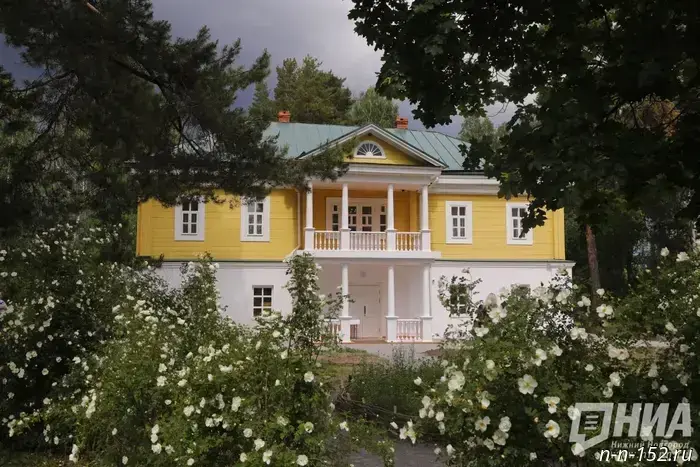 The Boldino Museum-Reserve has expanded its youth programs under the "Pushkin Card".
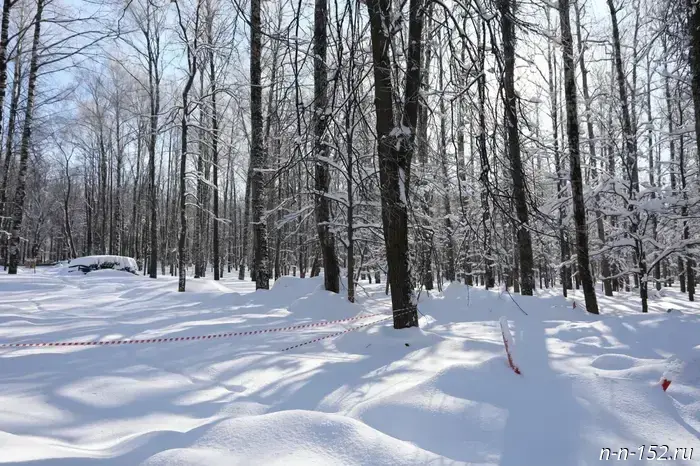 Three teenagers went missing in a forest in the Nizhny Novgorod region.
There is a threat to their lives.
Three teenagers went missing in the forest in Zavolzhye, Nizhny Novgorod Oblast on January 4. 04.01.2026. Vremya N. Nizhny Novgorod Oblast. Nizhny Novgorod.
Three teenagers went missing in a forest in the Nizhny Novgorod region.
There is a threat to their lives.
Three teenagers went missing in the forest in Zavolzhye, Nizhny Novgorod Oblast on January 4. 04.01.2026. Vremya N. Nizhny Novgorod Oblast. Nizhny Novgorod.
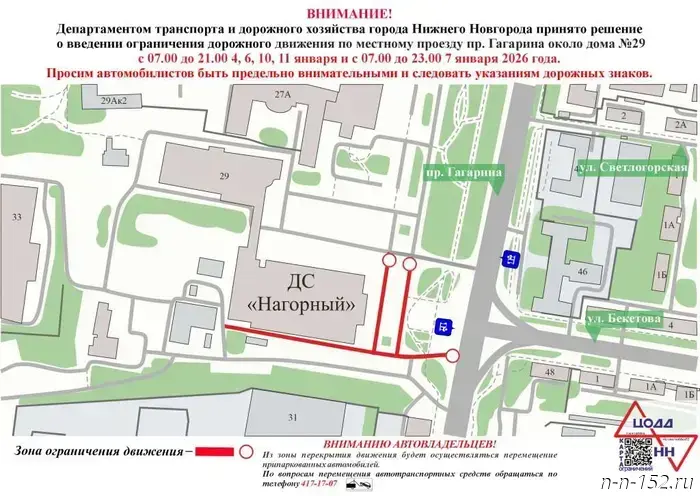 Traffic on the local access road of Gagarin Avenue will be restricted during the January holidays.
Drivers are asked to move their vehicles outside the restricted zones in advance
In Nizhny Novgorod from 07:00 to 21:00 on 4, 6, 10, 05.01.2026. Newspaper "Day of the City". Nizhny Novgorod. Nizhny Novgorod Oblast. Nizhny Novgorod.
Traffic on the local access road of Gagarin Avenue will be restricted during the January holidays.
Drivers are asked to move their vehicles outside the restricted zones in advance
In Nizhny Novgorod from 07:00 to 21:00 on 4, 6, 10, 05.01.2026. Newspaper "Day of the City". Nizhny Novgorod. Nizhny Novgorod Oblast. Nizhny Novgorod.