
Architect of the New Era
What Vadim Voronkov Did for Our City
On November 20, at the House of Books, people recalled Dzerzhinsk’s chief architect Vadim Voronkov, who worked in our city from 1958 to 1966. The meeting, attended by his daughter, Candidate of Historical Sciences Galina Vadimovna, was dedicated to the 100th anniversary of the well-known architect. It should be noted that this year the passage behind the Palace of Culture of Chemists, which he designed, was rightfully named after Vadim Vasilievich.
Why did an architect who graduated from a Moscow institute choose to work in Dzerzhinsk? What are the lasting memories of his eight years of work in our city? What kind of person was Vadim Vasilievich? This is what today’s piece is about.
Path into the profession
Vadim Vasilievich was born into a large family with five other children. The architect’s father made a meteoric career before the revolution — from a shop boy to an accountant at one of the respectable firms in St. Petersburg. He spoke six languages fluently. After the 1917 revolution, Vasily Ivanovich’s career went into decline. The Voronkov family endured the revolution very hard, losing almost everything they had.
Nevertheless, under the new regime the successful tsarist-era employee Vasily Voronkov managed to give his children higher education, including the youngest — Vadim, born in 1925. Well, what can you expect — genes are genes. If the father knew six languages, the son at least had to show himself in an intellectual field.
Vadim Vasilievich first came to our city in 1949, while still studying at the Moscow Architectural Institute. His wife, who had earlier received a capital education, was sent by assignment to work at the Rulon plant (now Dzerzhinsk Orgsteklo). “Dzerzhinsk immediately attracted the young architect with its freshness, by the fact that it was, in essence, still a blank sheet where new urban-planning techniques could be tried out, unlike cities with already established development,” Voronkov’s biographers write.
In 1951 Vadim Voronkov chose Dzerzhinsk as the place for his pre-diploma practice — specifically, the department of the city executive committee’s chief architect under Alexey Kusakin. After finishing his studies he began working in Gorky (Nizhny Novgorod), but lived with his wife in Dzerzhinsk — first in a hotel, then in an apartment on what is now Klyukvina Street. Naturally, commuting every day to the regional center was not very comfortable. And as soon as the opportunity arose, Vadim Vasilievich began to work where he lived. This happened in June 1958, when the post of chief architect became vacant — Kusakin was appointed chief architect of the regional center.
They say that on the hill where the Palace of Culture of Chemists now stands, Kusakin wanted to build a new drama theater. However, the city leadership had other plans. In the end the Palace of Culture of Chemists was erected there — and according to a standard design by a non-local architect. The same story happened with the Rodina cinema — the building was designed by an architect not from Dzerzhinsk.
This was a blow to Alexey Fedorovich, who had for nearly twenty years defined urban policy in Dzerzhinsk. Moreover, the country was conducting a campaign against architectural excesses that unfolded after the death of the leader. Balustrades, stucco and Corinthian columns were no longer in demand. The aim was to build cheaply and with no frills. And in Kusakin’s place came the young Vadim Voronkov.
From a first attempt to large-scale development
First of all, it was necessary to resettle people from factory barracks as quickly as possible. The development of planning solutions for blocks (later — microdistricts) was put at the forefront. Architects had rarely worked like that before. But Vadim Vasilievich fitted perfectly into the city’s fabric. He did not argue with his superiors over trifles; he simply did his job. I spoke with people who worked with Voronkov both in Dzerzhinsk and in Gorky. They claimed that our hero was a strict and demanding manager, but at the same time knew how not to needlessly irritate his superiors.
Voronkov developed planning and construction projects for about thirty blocks. The “first attempt” was two rows of houses on Pravda Street, built by the “people’s construction” method. Under him the south side of Lenin Avenue was built up. Tsiolkovsky Avenue and the 40th Anniversary of October Avenue (Victory Boulevard) appeared. Also — Griboedov Street and Zhdanov Boulevard (Mira) with Heroes’ Square.
After the small blocks, larger microdistricts began to be built. The first of them started from the station and ran between Tereshkova Street and Tsiolkovsky Avenue. Voronkov left a rich legacy. The Scriabin Music School on Kirov Street and the music college on Mira Boulevard, the railway station, children’s hospitals, schools — these are only some of the facilities built from his designs.
The architect himself singled out two of them — the Palace of Children’s Creativity and the stadium with the Zarya swimming pool. The Palace was dear to him primarily because of the façade with the mosaic panel “Children’s Creativity.” Nearly 60 years after its construction we can confidently state — it is undeniably a masterpiece. For the mosaic Voronkov invited eminent artists from Gorky — Kim Shikhov and Dmitry Arsenin. They were assisted by Dzerzhinsk craftsmen, including VGIK graduate Nikolai Burdastov.
At the Khimik stadium during Voronkov’s tenure the famous sgraffito “Athletes” appeared. Here too the artists from Gorky took the lead. Vadim Voronkov was especially proud that the image appeared on the concave wall between the West and North stands.
A hero from the pages of books
As recently as ten years ago Vadim Vasilievich was alive and well. He visited Dzerzhinsk at the request of the employees of the Palace of Culture of Chemists. The leading specialist of the Palace, Maria Popova, told the Dzerzhinsk Gazette how it was.
“Vadim Vasilievich and I met while working on an illustrated booklet about the Palace of Culture of Chemists. Vadim Vasilievich was the architectural consultant,” Maria says. “I remember how we walked through different spaces of the palace and he would advise how to correctly name a particular architectural element. Vadim Vasilievich struck me as a true hero who had stepped out of the pages of a book. He was not only tall in stature, but also of high moral qualities, highly intelligent, and at the same time very open and easy to communicate with.”
Vadim Vasilievich always followed trends in architecture and construction; he did not renounce the architectural styles of the new era. Holding himself to high standards, he valued quality, solid, well-considered work.
Architect Voronkov was a far-sighted professional who saw the essence in everything. For example, now in Nizhny Novgorod the “Preserved Quarters,” showcasing historic buildings, are at the peak of popularity. Yet Vadim Vasilievich spoke many years ago about the need to preserve this development, noting that along with the Nizhny Novgorod Kremlin these unique buildings make up the face of the city and enchant foreign tourists.
Vadim Vasilievich traveled widely around the world, lived for many years in the regional center, but always treated Dzerzhinsk — where his creative path began — with great tenderness. He called it “a young, comfortable city for living, oriented toward the future.”
Sergey Anisimov. Photos by the author and Ivan Usov.
Другие Новости Нижнего (Н-Н-152)
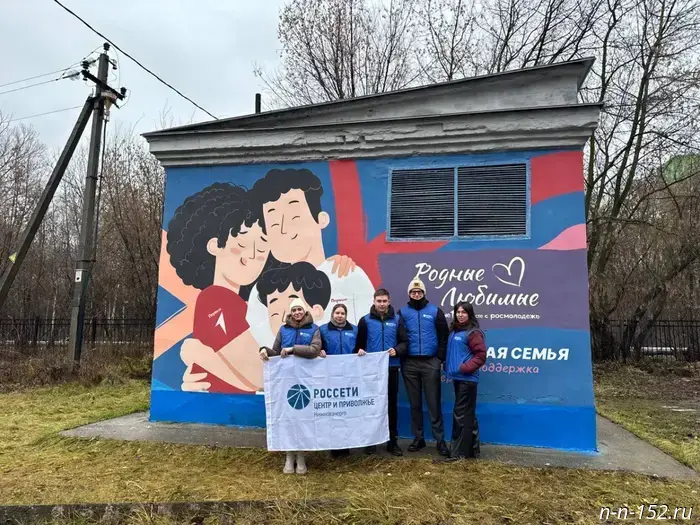 A mural dedicated to the "Rodnye — Lyubimye" community has appeared on one of Nizhnovenergo's facilities.
An art installation was unveiled on the grounds of School No. 182 in the Leninsky District of the city of Nizhny Novgorod. December 1, 2025. Vremya N. Nizhny Novgorod Oblast. Nizhny Novgorod.
A mural dedicated to the "Rodnye — Lyubimye" community has appeared on one of Nizhnovenergo's facilities.
An art installation was unveiled on the grounds of School No. 182 in the Leninsky District of the city of Nizhny Novgorod. December 1, 2025. Vremya N. Nizhny Novgorod Oblast. Nizhny Novgorod.
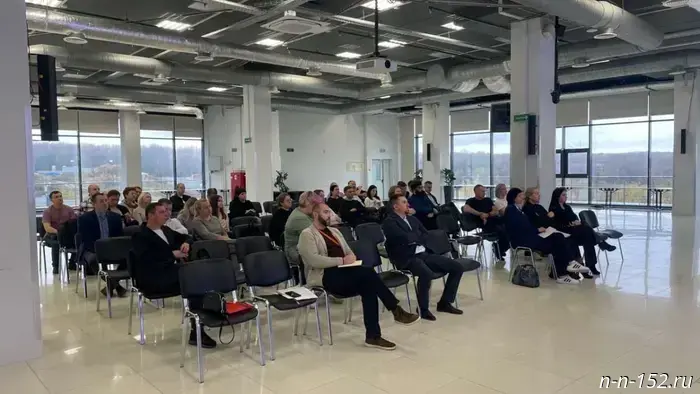 Nizhny Novgorod manufacturers and trading organizations are invited to free training on product labeling.
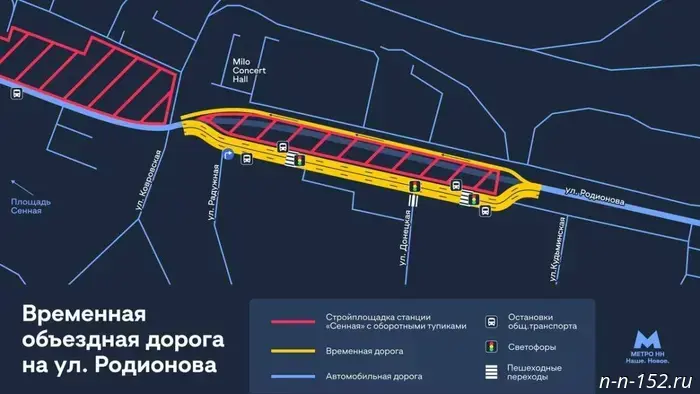 The bypass on Rodionova Street will open on the night of December 2.
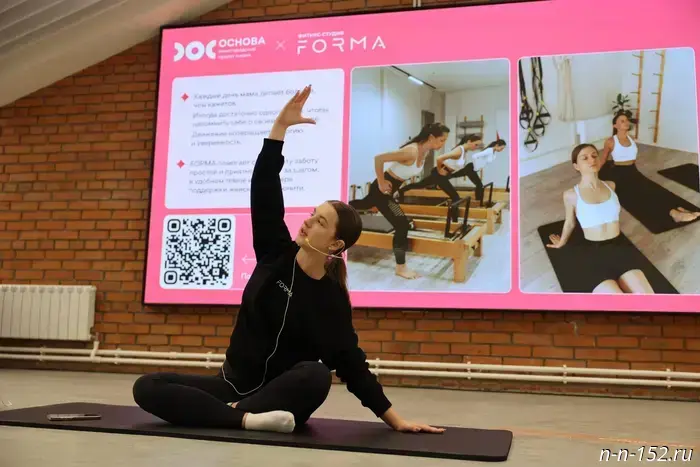 The Institute for Demographic Development held a celebration for women of Nizhny Novgorod in honor of Mother's Day.
More than 300 female residents of the Nizhny Novgorod Region took part in a celebratory event in honor of Mother's Day on December 1, 2025. Government of the Nizhny Novgorod Region. Nizhny Novgorod Region. Nizhny Novgorod.
The Institute for Demographic Development held a celebration for women of Nizhny Novgorod in honor of Mother's Day.
More than 300 female residents of the Nizhny Novgorod Region took part in a celebratory event in honor of Mother's Day on December 1, 2025. Government of the Nizhny Novgorod Region. Nizhny Novgorod Region. Nizhny Novgorod.
 A "NEYMARK" Day was held in Nizhny Novgorod with 400 people participating.
On November 29, 2025, the "NEYMARK" Day, organized by the "NEYMARK" University, was held for the first time in Nizhny Novgorod. December 1, 2025. NTA-Privolzhye. Nizhny Novgorod Region. Nizhny Novgorod.
A "NEYMARK" Day was held in Nizhny Novgorod with 400 people participating.
On November 29, 2025, the "NEYMARK" Day, organized by the "NEYMARK" University, was held for the first time in Nizhny Novgorod. December 1, 2025. NTA-Privolzhye. Nizhny Novgorod Region. Nizhny Novgorod.
 Nizhny Novgorod's measures to support the IT sector have once again been recognized as the most effective in Russia.
Photo: Gorky Tech
Nizhny Novgorod Region took first place among Russian regions in terms of the availability and effectiveness of measures supporting the IT industry in 2025. December 1, 2025. Government of the Nizhny Novgorod Region. Nizhny Novgorod Region. Nizhny Novgorod.
Nizhny Novgorod's measures to support the IT sector have once again been recognized as the most effective in Russia.
Photo: Gorky Tech
Nizhny Novgorod Region took first place among Russian regions in terms of the availability and effectiveness of measures supporting the IT industry in 2025. December 1, 2025. Government of the Nizhny Novgorod Region. Nizhny Novgorod Region. Nizhny Novgorod.
Architect of the New Era
What Did Vadim Voronkov Do for Our City At the House of Books on November 20 they recalled the chief architect of Dzerzhinsk, Vadim Voronkov, who worked in our city from 1958 to 1966. December 1, 2025. Dzerzhinsk Gazette. Nizhny Novgorod Region. Dzerzhinsk.