
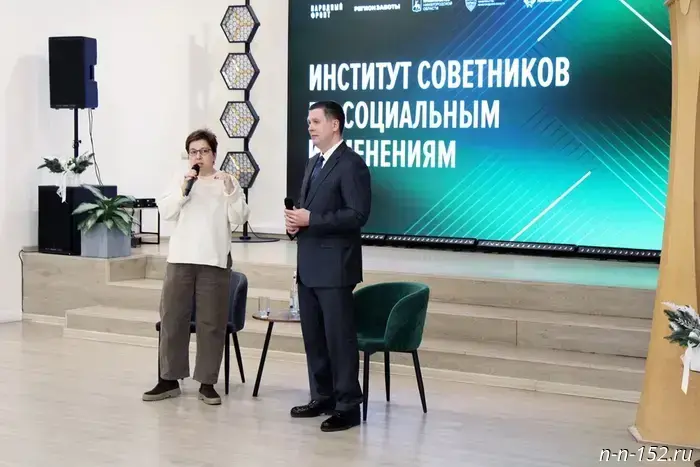
Aid projects for vulnerable population groups were presented in Nizhny Novgorod.
01 December 2025 17:04 Society From November 28 to December 1, the final module of the fourth cohort of the Institute of Advisors for Social Change took place in Nizhny Novgorod. Thirty-nine participants of the educational program from 21 regions of Russia presented projects to help orphans, people with intellectual disabilities, mothers in difficult life situations, veterans of the special military operation (SVO) and their families. The projects address topics such as preventing bullying in schools, identifying postpartum depression in young mothers, preventing destructive behavior among adolescents, helping people with disabilities find employment, creating public spaces for people with intellectual impairments, and many others.
Deputy Governor of the Nizhny Novgorod Region Andrey Gneushev congratulated the participants of the Institute of Advisors on defending their projects. He noted that thanks to this program people learn to reorganize social work based on the principle of caring for the individual.
“We all must help those who most need support at a given moment. For the participants of the Institute of Advisors, this is a meaning of life — a life you dedicate to serving people. And your initiatives are real actions that help and change the lives of thousands of people. Congratulations to everyone on defending your projects and I wish you success in their implementation!” said Andrey Gneushev.
The Institute of Advisors for Social Change is a cross-sector program for preparing leaders of change in the social sphere, implemented by the People’s Front project “Region of Care” and the Corporate University of the Government of the Nizhny Novgorod Region. The Institute’s task is to form a professional community of representatives from different fields — executive authorities, non-profit organizations, business, media, managers, and socially oriented social institutions — so that they work together for the benefit of those who are more vulnerable.
The project started in 2021; since then 154 people from 36 regions have taken part in the educational program. Graduates have successfully implemented 39 projects helping vulnerable groups of citizens.
“There is a concept called ‘top-down social blindness’: the higher a person is in position, the harder it is for them to see details and individual people. The supreme commander sees the army, the president sees the population, the mayor sees the city and its electorate. In a family we see each specific person, but at a high level it is impossible to respond to the needs of everyone, because the state’s task is to distribute resources evenly. In this context the Institute of Advisors plays an important role — it removes this gap between the authorities and the people, between the ‘top’ and the ‘bottom’. Working together, we can see the individual, understand that any rules, protocols and laws are needed to free up time for an individual approach,” said Nyuta Federmesser, adviser to the governor of the Nizhny Novgorod Region and author of the People’s Front project “Region of Care.”
During the training, program participants travel to educational modules in different cities of Russia to study best practices of assistance. They visit children’s and adult boarding homes, hospices, crisis centers and charitable foundations to then apply the experience in their work.
During the sixth module, program participants visited the Arzamas social care home “Mayak,” which houses children with severe developmental disabilities. The director of Mayak, Institute of Advisors alumna Evgenia Gabova, with the support of Region of Care, is implementing a unique program — restoring family ties: locating biological relatives or alternative families for the children. Over time, Mayak is transforming from a children’s boarding home into a multidisciplinary center to help families raising children with intellectual disabilities. In such a center parents will be able to bring children aged 4 to 18, much like a daycare.
“This center will give the child the opportunity to live in a family, and the mother — to live an ordinary life, work, socialize, spend time with friends, have time for medical treatment, hospital visits and vacation. I really hope that we will live to see the time when boarding homes like ours no longer exist at all,” said Evgenia Gabova.
The Institute of Advisors forms a community of like-minded people who continue to share practices and implement joint initiatives after completing the course.
Thus, the Mayak experience inspired this year’s program participants Mikhail Petukhov, director of the Kuzmiyar Psychoneurological Boarding Home, and Alexey Gribanov, director of the State Budgetary Institution “Vetluzhsky Psychoneurological Boarding Home,” to create their own project — “Path to the Native Harbor.” For people with intellectual disabilities they will search for relatives in order to restore their communication.
NIA "Nizhny Novgorod" has a Telegram channel. Subscribe to stay informed about the main events, exclusive materials and timely information. Copyright © 1999—2025 NIA "Nizhny Novgorod". When reprinting, a hyperlink to NIA "Nizhny Novgorod" is mandatory. This resource may contain 18+ materials.
Другие Новости Нижнего (Н-Н-152)
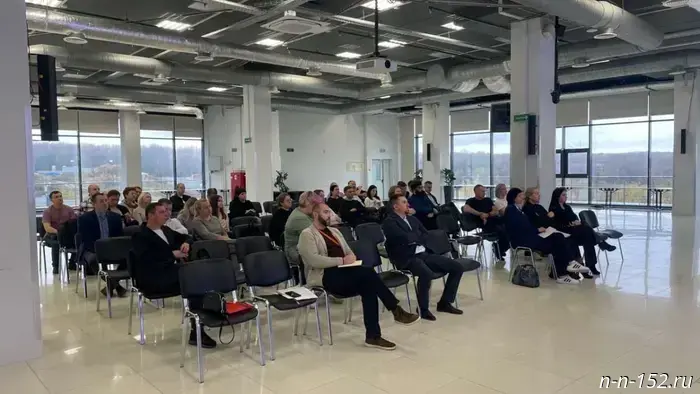 Nizhny Novgorod manufacturers and trading organizations are invited to free training on product labeling.
Andrey Chibis: Entrepreneurs who work in the Arctic should be granted preferential tax treatment.
Andrey Chibis at a meeting of the State Council's sectoral commission: entrepreneurs who operate in the Arctic should be granted preferential tax treatment. December 1, 2025. NTA-Privolzhye. Nizhny Novgorod Oblast. Nizhny Novgorod.
Nizhny Novgorod manufacturers and trading organizations are invited to free training on product labeling.
Andrey Chibis: Entrepreneurs who work in the Arctic should be granted preferential tax treatment.
Andrey Chibis at a meeting of the State Council's sectoral commission: entrepreneurs who operate in the Arctic should be granted preferential tax treatment. December 1, 2025. NTA-Privolzhye. Nizhny Novgorod Oblast. Nizhny Novgorod.
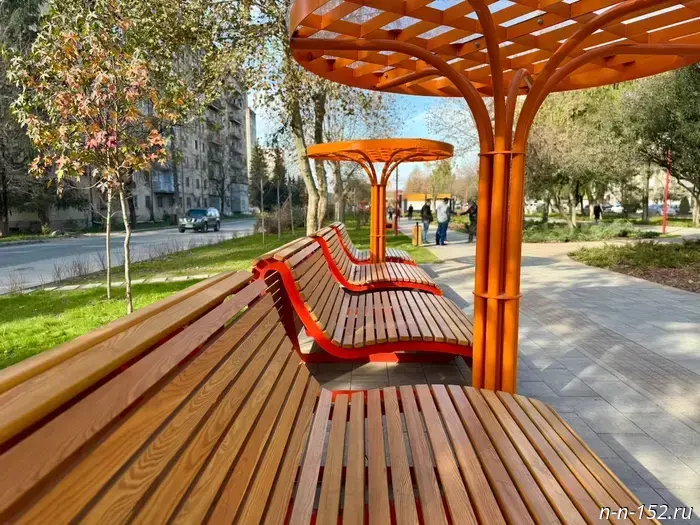 Yuri Shalabaev opened the Nizhny Novgorod Square in Sukhumi.
The head of Nizhny Novgorod, Yury Shalabaev, took part in the opening of an upgraded public square in the Novy District of the city of Sukhumi. 01.12.2025. Nizhegorodskaya Pravda. Nizhny Novgorod Region. Nizhny Novgorod.
Yuri Shalabaev opened the Nizhny Novgorod Square in Sukhumi.
The head of Nizhny Novgorod, Yury Shalabaev, took part in the opening of an upgraded public square in the Novy District of the city of Sukhumi. 01.12.2025. Nizhegorodskaya Pravda. Nizhny Novgorod Region. Nizhny Novgorod.
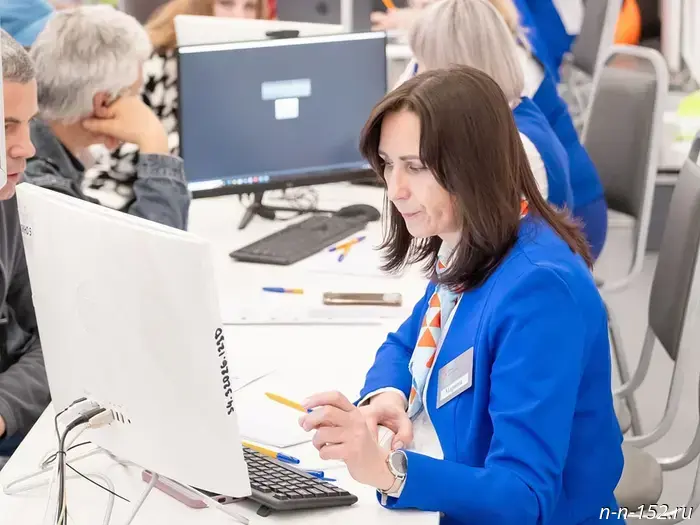 The Nizhny Novgorod Personnel Center invites citizens to events as part of the Decade for Persons with Disabilities.
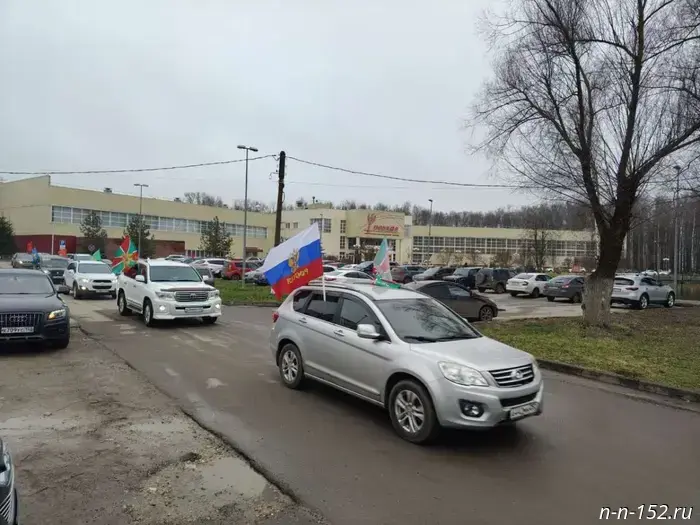 A car rally was held in Bogorodsk in memory of fellow townspeople — veterans of combat operations.
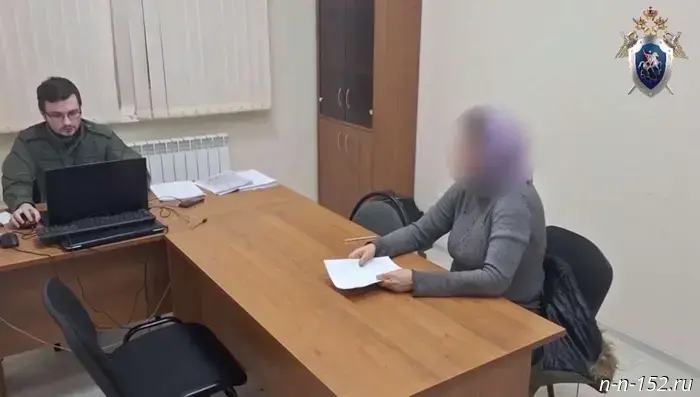 A woman from Nizhny Novgorod will be convicted of torturing four children for many years.