
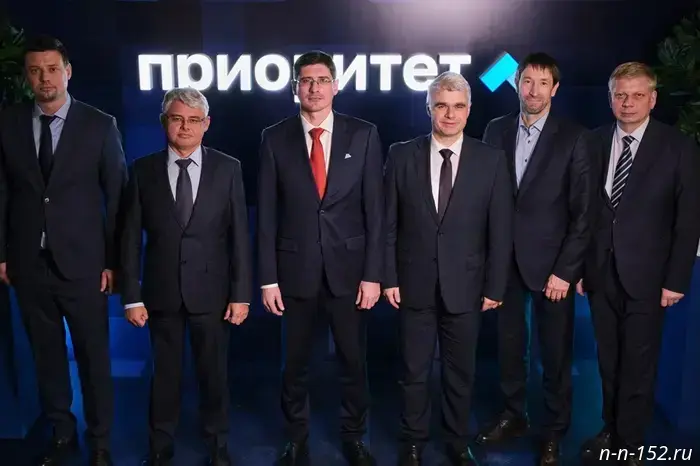
Three universities in Nizhny Novgorod Oblast will receive grants under the 'Priority 2030' program in 2026.
Three universities in the Nizhny Novgorod Region retained their status as participants in the "Priority 2030" program in 2026 and will receive grants totaling 600 million rubles. The list of participants was approved by the council for supporting university development programs chaired by the head of the Ministry of Science and Higher Education of Russia, Valery Falkov.
Meetings of the council chaired by the head of the ministry are a key event for participants in the "Priority 2030" program. From November 18 to 21, over four days, the ministry, experts from business and the scientific community reviewed the preliminary results of the universities' work. Representatives of 99 universities, as well as candidate universities recommended for participation in the main track of the program, spoke before the council.
"As a result of this work, an updated list of 'Priority' universities has been produced. A total of 106 universities will receive support under the program this year. The total amount of funds to be distributed among the universities will be 26.8 billion rubles. It is important to note that the subsidy recipients are predominantly regional universities. Today they are competing on an equal footing with leading Moscow and St. Petersburg universities for the best outcomes from the implementation of their strategic technological projects," Valery Falkov said.
The strategic academic leadership program "Priority 2030" has been implemented since 2021 and is one of the key instruments for supporting higher education within the national project "Youth and Children."
The grant recipients are:
— N. I. Lobachevsky National Research Nizhny Novgorod State University (the grant the university will receive in 2026 will be about 400 million rubles). The university will continue implementing its strategy focused on developing new materials and high-purity substances for microelectronics, strengthening its role as an "incubator" for breakthrough technologies;
— R. E. Alekseev Nizhny Novgorod State Technical University (the grant the university will receive in 2026 will be up to 100 million rubles). NGTU's priorities remain the creation of engineering systems for nuclear power installations, the development of radio-electronic complexes for transport security and unmanned aerial systems, as well as technologies for designing machine-tool equipment;
— Privolzhsky Research Medical University of the Ministry of Health of the Russian Federation (the grant the university will receive in 2026 will be up to 100 million rubles). PIMU will concentrate efforts on the development of biotechnologies, nuclear medicine and oncology research, and on creating new technologies to strengthen the mental health of children and adults.
Two more universities remain candidates for participation in the program in 2026: Nizhny Novgorod State University of Architecture and Civil Engineering and Kozma Minin Nizhny Novgorod State Pedagogical University.
Gleb Nikitin, Governor of the Nizhny Novgorod Region, emphasized the importance of the program for regional development.
"Participation in 'Priority 2030' allows our leading universities to focus resources on the most promising and in-demand areas. It is important that universities do not simply receive funding, but create real projects that work for the region's economy and social sphere," Gleb Nikitin said.
According to Andrey Sanosyan, Deputy Governor of the Nizhny Novgorod Region, the program is one of the key elements of integrating science, education and industry.
"'Priority 2030' gives universities the opportunity to renew their material and technical base, solve complex problems together with industrial partners and, crucially, to train a new generation of researchers and engineers, thereby securing the future not only of the region but of the entire country," Andrey Sanosyan added.
The main goal of the "Priority 2030" program is to concentrate resources to ensure the contribution of Russian universities to achieving the national development goals of the Russian Federation up to 2030, to increase their scientific and educational potential, and to ensure the participation of higher education institutions in the socio-economic development of the regions.
Recall that from 2025, by order of President Vladimir Putin, the national project "Youth and Children" began to operate in Russia, carrying out tasks previously provided for in the national projects "Education" and "Science and Universities." The national project is aimed at creating opportunities for developing talents and self-realization of young people, and at fostering a responsible and highly moral person. At the center of the national project are construction and renovation of schools, professional development of teachers, creation of new teaching methods and comfortable learning conditions. Special attention is paid to supporting talented youth, including young specialists.
The national project includes nine federal projects and programs: "Russia — Land of Opportunity," "We Are Together," "Russia in the World," "All the Best for Children," "Leading Schools," "Teachers and Mentors," "Creating a Network of Modern Campuses," "Universities for a Generation of Leaders," and "Professionalitet."
The period from 2022 to 2031 was declared the Decade of Science and Technology in Russia by decree of President Vladimir Putin. The main tasks of the Decade are to attract talented young people to research and development, involve researchers and developers in solving the most important problems of society and the country, and increase public awareness of the achievements and prospects of domestic science. Up-to-date information about the project and its initiatives can be found at: nauka.rf.
NIA "Nizhny Novgorod" has a Telegram channel. Subscribe to stay informed about major events, exclusive materials and operational information. Copyright © 1999–2025 NIA "Nizhny Novgorod." When reprinting, a hyperlink to NIA "Nizhny Novgorod" is mandatory. This resource may contain materials for ages 18+.
Другие Новости Нижнего (Н-Н-152)
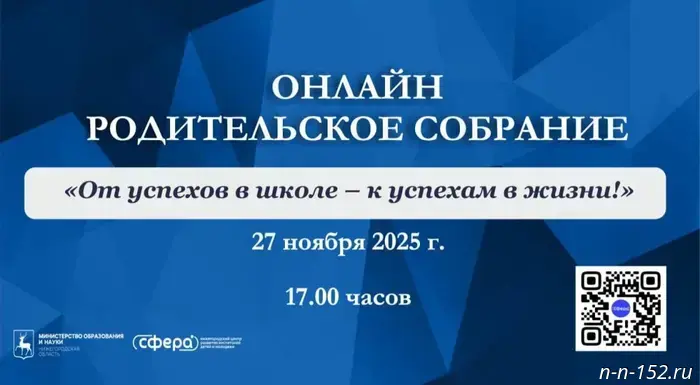 Nizhny Novgorod residents were invited to an online parents' meeting on November 27.
On November 27, a regional online parents' meeting entitled "From Success at School to Success in Life!" will be held in the Nizhny Novgorod Region. November 26, 2025. NTA-Privolzhye. Nizhny Novgorod Region. Nizhny Novgorod.
Nizhny Novgorod residents were invited to an online parents' meeting on November 27.
On November 27, a regional online parents' meeting entitled "From Success at School to Success in Life!" will be held in the Nizhny Novgorod Region. November 26, 2025. NTA-Privolzhye. Nizhny Novgorod Region. Nizhny Novgorod.
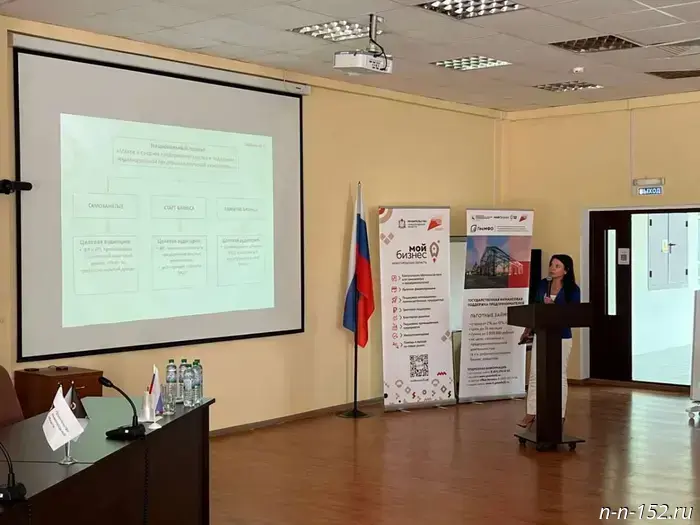 Entrepreneurs from Nizhny Novgorod were invited to the roundtable "Support Measures. Business Development Tools"
Nizhny Novgorod News
Entrepreneurs from Nizhny Novgorod were invited to the roundtable "Support Measures. Business Development Tools"
Nizhny Novgorod News
 The director of a construction firm received a suspended sentence for the death of a worker in Semyonov.
Nizhny Novgorod News
The director of a construction firm received a suspended sentence for the death of a worker in Semyonov.
Nizhny Novgorod News
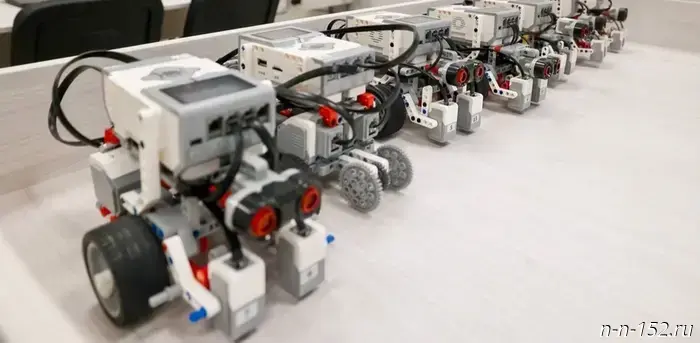 The new branch of the V. P. Chkalov Palace of Children's Creativity on Composer Kasyanov Street has opened.
A new branch of the V. P. Chkalov Palace of Children's Creativity on Composer Kasyanov Street has opened. 26.11.2025. Administration of the city of Nizhny Novgorod. Nizhny Novgorod Region. Nizhny Novgorod.
The new branch of the V. P. Chkalov Palace of Children's Creativity on Composer Kasyanov Street has opened.
A new branch of the V. P. Chkalov Palace of Children's Creativity on Composer Kasyanov Street has opened. 26.11.2025. Administration of the city of Nizhny Novgorod. Nizhny Novgorod Region. Nizhny Novgorod.
 Nizhny Novgorod residents will be able to buy tickets for the Ded Moroz Train on November 27.
Nizhny Novgorod News
Nizhny Novgorod residents will be able to buy tickets for the Ded Moroz Train on November 27.
Nizhny Novgorod News
 Plans to increase labor productivity in the social sector were discussed at a meeting of the regional headquarters.
Nizhny Novgorod News
Plans to increase labor productivity in the social sector were discussed at a meeting of the regional headquarters.
Nizhny Novgorod News
Three universities in Nizhny Novgorod Oblast will receive grants under the 'Priority 2030' program in 2026.
Nizhny Novgorod News