
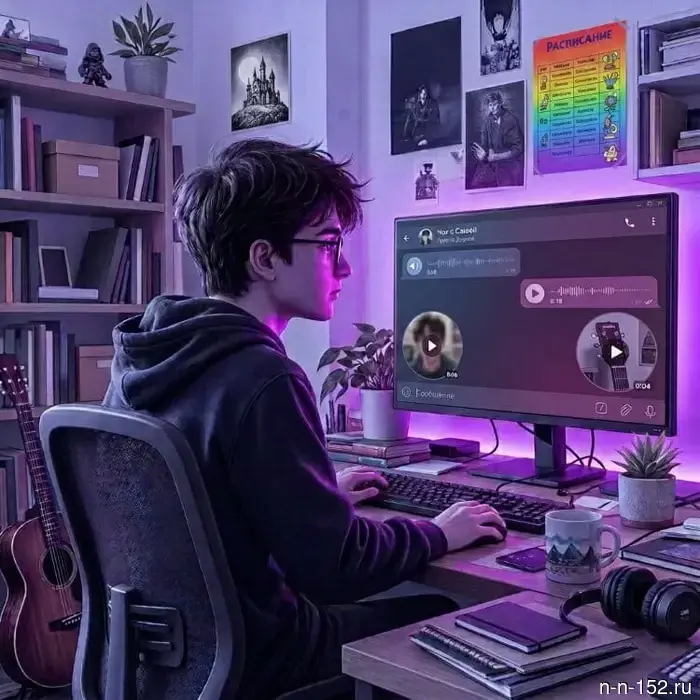
Cybercriminals are involving teenagers in criminal schemes using AI.
September 1, 2026 16:01 Society With the start of the school year, experts from "Rostelecom" draw the attention of parents and educators to another alarming trend: criminals are moving to unconventional, more sophisticated methods of involving children and teenagers in criminal schemes. Often - with the use of artificial intelligence technologies. In the second half of 2026, fundamentally new threats targeting students and schoolchildren have been added to traditional methods of deception. Criminals have started actively using photographs and voices of teenagers from social networks to create realistic video or audio messages. Usually, such content is created using neural networks and is used for blackmail, deception, and extortion. The number of attacks on teenagers through fake mobile applications, which disguise themselves as educational platforms and gaming services, is also increasing. Such programs not only steal personal data but also gain access to the camera and microphone, turning the child's gadget into a surveillance tool. Experts from "Rostelecom" also draw the attention of parents and educators to a new potentially dangerous scenario for involving youth in illegal activities - the offer of easy earnings through content creation using generative neural networks. In thematic chats, strangers ask teenagers to generate images, texts, or audio recordings on a given topic. Externally, this looks like a harmless order, but subsequently, the material can be used to create fake news, compromising leaks, or launch phishing campaigns. In this case, all legal responsibility falls on the minor performer. Marina Koprusova, head of the awareness-raising department of the information security block at "Rostelecom": "Today we are faced with a paradoxical situation: a generation that has been accustomed to using gadgets from early childhood and feels confident on the internet has become vulnerable to technological manipulations. If earlier cybercriminals tried to influence teenagers using social engineering methods, now they actively use neural networks. For example, a teenager sees a video where their relative, friend, or popular blogger asks them to take certain actions, and critical thinking is instantly disabled. Young users do not think about the fact that any act committed under the influence of such content entails criminal liability from the age of 14 - regardless of whether the teenager acted voluntarily or was pressured." Modern teenagers spend hours in games and messengers. However, there is practically no quality and youth-adapted content on these platforms that visually explains the mechanisms of fraud and tells about the real consequences of cybercrimes. With the increasing availability of neural networks, the gap between digital literacy and real threats is only widening: teenagers skillfully generate images and voice messages using AI, but do not always understand that using these tools at the request of third parties can be classified as aiding a crime, and a generated deepfake can turn into a criminal case. For the new school year, "Rostelecom" has introduced a project on the basic rules of safe behavior on the internet called "Children Know." The course consists of 18 video lessons led by kids aged 6 to 14 and is available for free on the educational online platform "Rostelecom Lyceum." The project is implemented with the support of the Alliance for the Protection of Children in the Digital Environment. "Rostelecom" is also developing its own digital solutions in the field of cybersecurity. In 2025, the company launched a comprehensive set of cybersecurity services for home and mobile internet, as well as mobile communications. On all devices connected to the internet from "Rostelecom," protection against phishing automatically applies, and there is also the option to set up flexible traffic filtering for oneself and loved ones to limit access to potentially undesirable resources and create a safe internet environment for the whole family. This summer, "Rostelecom" announced the "Child Protection" subscription, which makes mobile communication and the internet even safer for young users. The new offer combines all necessary cybersecurity services and connects with one click. 6+ Photo provided by PJSC "Rostelecom." Advertisement. PJSC "Rostelecom" rt.ru The NIA "Nizhny Novgorod" has channels on Telegram and MAX. Subscribe to stay updated on major events, exclusive materials, and timely information. Copyright © 1999—2025 NIA "Nizhny Novgorod." When reprinting, a hyperlink to NIA "Nizhny Novgorod" is mandatory. This resource may contain materials 18+.
Другие Новости Нижнего (Н-Н-152)
 The fertilizer manufacturer in Bor was fined for environmental violations.
News of Nizhny Novgorod
The fertilizer manufacturer in Bor was fined for environmental violations.
News of Nizhny Novgorod
 Nizhny Novgorod became the second in the implementation of the national project "Infrastructure for Life."
News of Nizhny Novgorod
Russians choose the east: Beeline showed how foreign trips have changed
News of Nizhny Novgorod
Nizhny Novgorod became the second in the implementation of the national project "Infrastructure for Life."
News of Nizhny Novgorod
Russians choose the east: Beeline showed how foreign trips have changed
News of Nizhny Novgorod
 A fire in the Pavlovsk high-rise claimed the life of a man.
News of Nizhny Novgorod
A new video has emerged of a "Mazda" crashing into a bus stop with people in Nizhny Novgorod.
News of Nizhny Novgorod
A fire in the Pavlovsk high-rise claimed the life of a man.
News of Nizhny Novgorod
A new video has emerged of a "Mazda" crashing into a bus stop with people in Nizhny Novgorod.
News of Nizhny Novgorod
 Billionaire Traber may demand an apology from the prosecutor for the criminal prosecution.
News of Nizhny Novgorod
Billionaire Traber may demand an apology from the prosecutor for the criminal prosecution.
News of Nizhny Novgorod
Cybercriminals are involving teenagers in criminal schemes using AI.
News of Nizhny Novgorod