
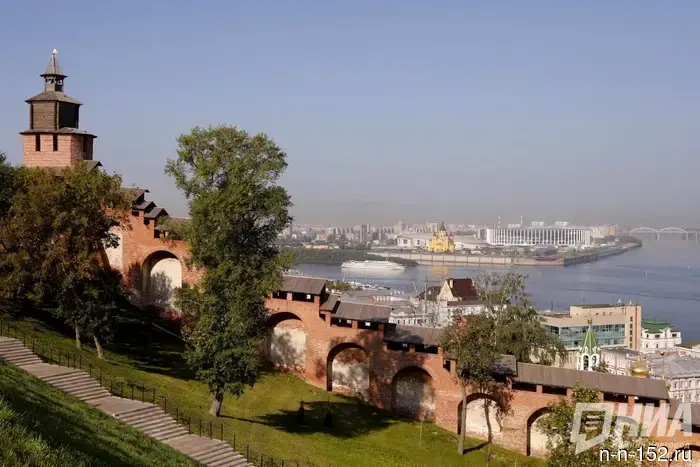
A city in an era of change: how Nizhny Novgorod coped with the challenges of recent years
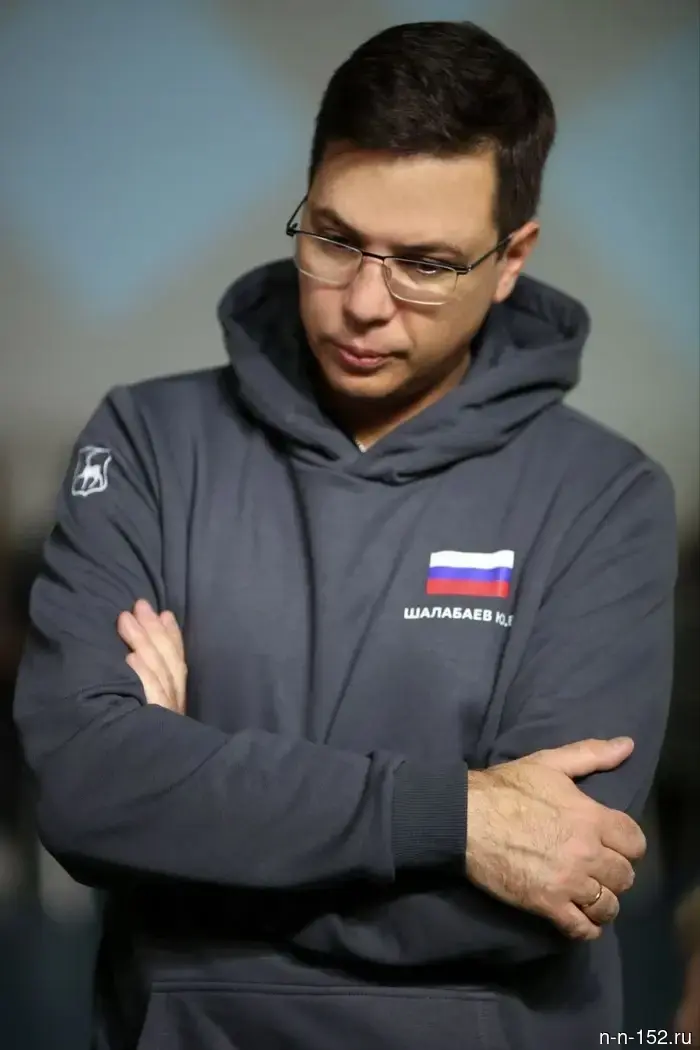
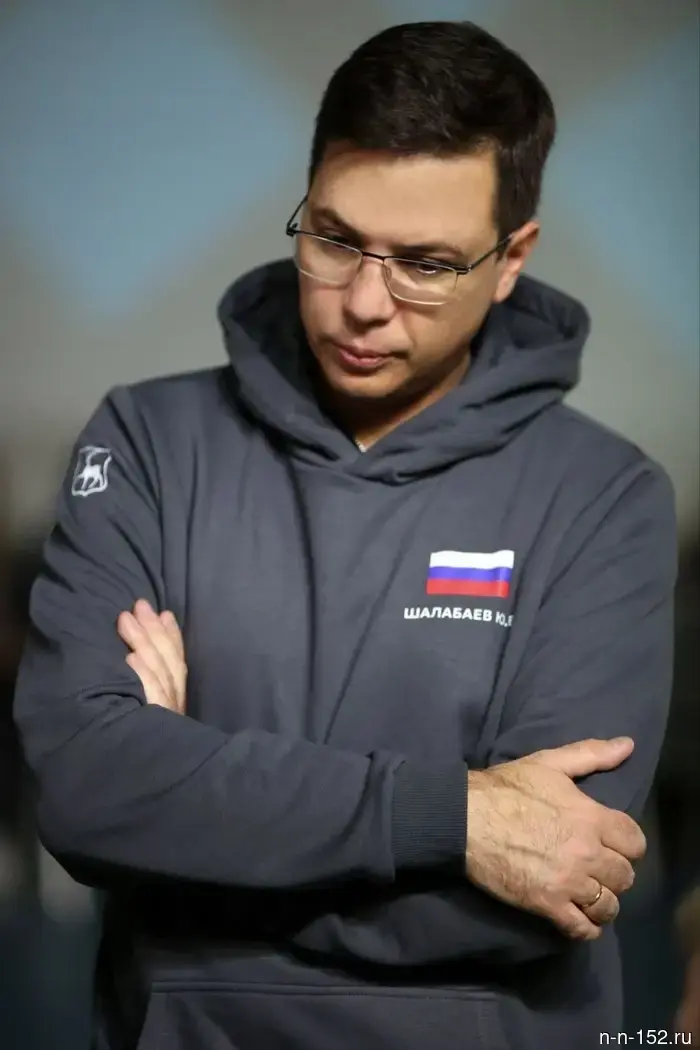
NIA "Nizhny Novgorod" - Maria Orlova Six years ago, Nizhny Novgorod was headed by Yuri Shalabaev - first in the capacity of acting mayor on May 6, 2020, and then officially on October 28. During this time, the administration had to work under a series of crises - from the COVID-19 pandemic to sanctions pressure and changes in the city's borders. The editorial team of NIA "Nizhny Novgorod" decided to analyze how the municipality, led by the mayor, coped with a series of challenges. Yuri Shalabaev himself admits that it is practically impossible to separate all these stages.
"In 2020, when I started working as acting head of the city, and in 2022, there were no ready-made 'cases' on how to deal with the problems that arose, as we all faced such challenges for the first time," the head of the city noted in a conversation with NIA "Nizhny Novgorod."
But the tasks before the city remained the same: to ensure the uninterrupted operation of housing and communal services, to build kindergartens, schools, housing, and to improve public spaces - in a word, to fulfill all obligations to the residents. However, they had to be solved in non-standard conditions.
Pandemic and Budget Stability
The first serious test for Shalabaev's administration was the coronavirus pandemic. Restrictions affected small and medium-sized businesses, and there were risks of rising social tension. The focus was on strict optimization of expenses and mobilization of internal reserves. The budget grew by about 5.3 billion rubles, reaching almost 37.4 billion rubles. Savings on purchases exceeded one billion rubles, while the debt burden was simultaneously reduced. This allowed for the preservation of funding for key areas - road repairs, landscaping, and social obligations. One of the indicators was the elimination of the queue for kindergartens for children aged three to seven and the creation of more than two thousand new places. At the same time, some of the decisions were anti-crisis in nature and aimed at keeping the system in a stable state rather than launching large-scale reforms.
"It is important to understand that a non-standard situation is not only difficulties but also opportunities for further development. They need to be sought and used correctly," believes Yuri Shalabaev.
800th Anniversary as a Driver of Renewal
While the capital of the Volga region continued to live under restrictions, preparations for its 800th anniversary were underway. The anniversary became not only a major celebration but also an opportunity to accelerate the renewal of the urban environment. Later, Yuri Shalabaev noted in an interview with journalists that thanks to the anniversary, Nizhny Novgorod managed to attract a record amount of funding from federal and regional budgets, as well as off-budget sources.
Facades were repaired, illegally installed structures were dismantled, public spaces were improved, and historical buildings were restored. Some of the work continued even after the grand celebration, which was attended by Russian President Vladimir Putin. The head of state then said that the city "concentrates the cultural code, national identity, power, and scale of the Russian people."
New Economic Reality and Special Military Operation
The special military operation and subsequent sanctions created a new economic reality. For the industrial center, this meant the risk of stagnation and loss of markets. However, the city not only maintained its development pace but also reached new records.
"An important feature of our economy is its high diversification, which gives it an additional margin of safety and creates a kind of 'safety cushion' when influenced by negative external factors," noted Yuri Shalabaev.
In 2022, the budget of Nizhny Novgorod grew to 68 billion rubles. Over the year, more than 23 km of roads were repaired, and one and a half thousand people were relocated from emergency housing.
Over six years, the municipal budget more than doubled - from 37.7 billion to 87.3 billion rubles in revenue. The debt burden decreased from 85% to 50%. According to the mayor, such positive dynamics could not have been achieved without joint work with the region and the use of all available financial instruments, such as national projects, public-private partnerships, and infrastructure loans. Active participation in national projects allowed for the attraction of 35 billion rubles.
"I do not perceive the budget as numbers because behind every ruble, I see schools and kindergartens, new roads, engineering communications, and improved spaces," the mayor confessed.
To the economic difficulties, a block of tasks related to the special military operation was added: support for soldiers and their families, integration of veterans into civilian life, and patriotic education of youth. A "single window" system for providing targeted assistance has been created in the districts, and about 15 municipal support measures are in place. A museum of the special military operation has been opened, and programs for military-patriotic education are being developed. These areas have become a permanent part of the city's social policy under Shalabaev's leadership.
"Big Nizhny"
Another major challenge for the municipality will be the merger of Nizhny Novgorod and the Kstovo district in 2025.
"I would not call the process of unification the inclusion or annexation of the city of Kstovo and the Kstovo district to Nizhny Novgorod. It was precisely the unification of two municipalities into one strong entity with great joint prospects. And it had its prerequisites and foundations," noted Yuri Shalabaev.
The administration faced the task of building a unified management system, synchronizing landscaping standards, and social services. Funding for greening has been increased in the Kstovo district, new territories have been included in the national project "Infrastructure for Life," and projects for the construction of schools and kindergartens have been launched. At the same time, the integration process is just gaining momentum: leveling the infrastructure provision will require several years and significant investments.
Over six years, changes have affected all areas of the urban economy of Nizhny Novgorod: from the construction of social infrastructure to the road network to communal infrastructure.
"From the very beginning, we identified two important tasks among others: the renewal of communal infrastructure and solving the problem of emergency housing. Without this, it is impossible to ensure real development and renewal of the city, no matter how large other projects may be," emphasized the head of the administration.
Since 2020, more than 80 thousand square meters of emergency housing have been vacated, and nearly seven thousand people have received new apartments or compensation. The construction of municipal houses has resumed - a practice that had not been applied for decades. At the same time, engineering networks were updated: about 1,000 km of communications were replaced, boiler houses were modernized, and the reconstruction of the aeration station continues. According to the city hall, the number of technological violations in the networks has decreased by 22% over the past year. The scale of work is significant; however, the renewal of infrastructure remains a systemic problem requiring long-term investments.
No less noticeable changes have also occurred in the social sphere. New schools and kindergartens have been built, sports facilities have been updated, hundreds of kilometers of roads have been repaired, and the construction of new metro stations is underway. The external appearance of the city has also changed. During the current administration's tenure, more than 200 public spaces have been improved, with the flagship project being the fully modernized "Switzerland" park. The city's lighting system has been modernized - the level of illumination of the urban area has increased from 70% to 98%.
"The city must be convenient, safe, and reliable for everyone who lives in it. We have taken on commitments in the most challenging areas and are gradually trying to fulfill them," added Yuri Shalabaev.
New Horizons
The mayor notes that the administration has managed to transition from reactive problem-solving to systematic, proactive development in recent years, launching large-scale projects with a high level of investment in urban infrastructure, which create a reliable foundation for the city's long-term development, where the main priority remains the people.
"Nevertheless, we have to work now in difficult economic conditions. We are very meticulously tackling the work of prioritizing expenses," he added.
Today, Nizhny Novgorod consistently ranks in the top 5 million-plus cities in terms of industrial production, investment, and quality of life. Traditional industries remain the base, while the IT sector is becoming a growth point. The construction of the IT campus "Neimark" is underway, which will function in a unified contour with the IT technopark. In the coming years, about three dozen comprehensive development projects (CDP) are planned to be implemented, which will ensure an influx of investments in construction, the development of engineering and social infrastructure, and the creation of recreational areas.
"Nizhny Novgorod continues to develop despite challenging times. And at the forefront of all changes are the interests of Nizhny Novgorod residents," concluded Yuri Shalabaev. NIA "Nizhny Novgorod" has channels on Telegram and MAX. Subscribe to stay updated on major events, exclusive materials, and operational information. Copyright © 1999—2025 NIA "Nizhny Novgorod". When reprinting, a hyperlink to NIA "Nizhny Novgorod" is mandatory. This resource may contain materials 18+

Другие Новости Нижнего (Н-Н-152)
 Three Volga cars will be purchased for Nizhny Novgorod officials.
News of Nizhny Novgorod
Three Volga cars will be purchased for Nizhny Novgorod officials.
News of Nizhny Novgorod
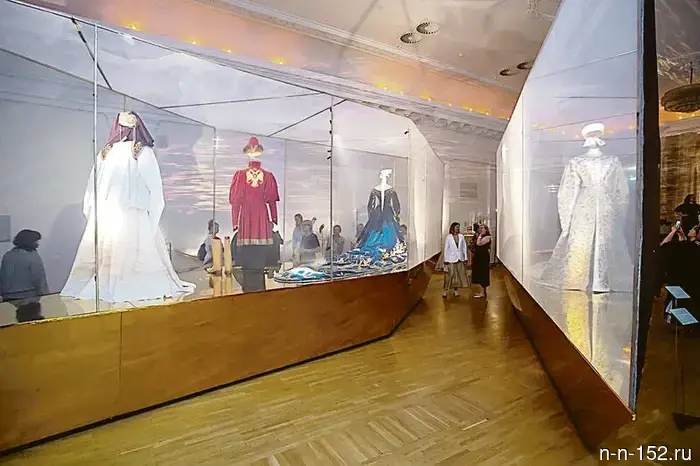 Golden River - embroidered shores
At the Nizhny Novgorod Art Museum, the exhibition "Gold of the North" features the best examples of gold embroidery collected from several museums in Russia. 01.08.2026. Nizhny Novgorod News. Nizhny Novgorod Region. Nizhny Novgorod.
Golden River - embroidered shores
At the Nizhny Novgorod Art Museum, the exhibition "Gold of the North" features the best examples of gold embroidery collected from several museums in Russia. 01.08.2026. Nizhny Novgorod News. Nizhny Novgorod Region. Nizhny Novgorod.
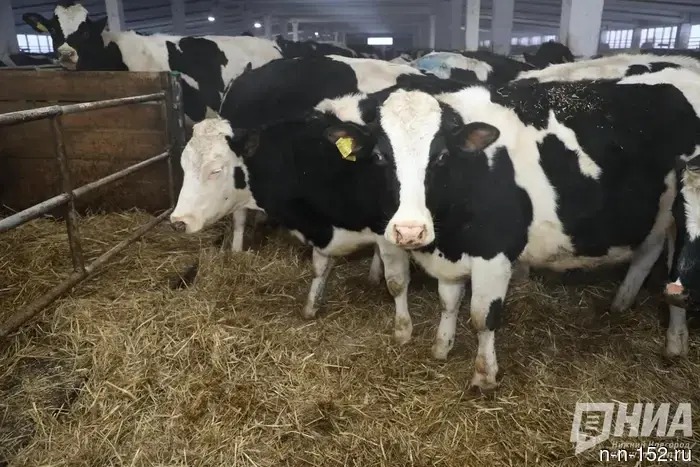 A livestock complex for 625 cows has been built in the Sharang district.
News of Nizhny Novgorod
A livestock complex for 625 cows has been built in the Sharang district.
News of Nizhny Novgorod
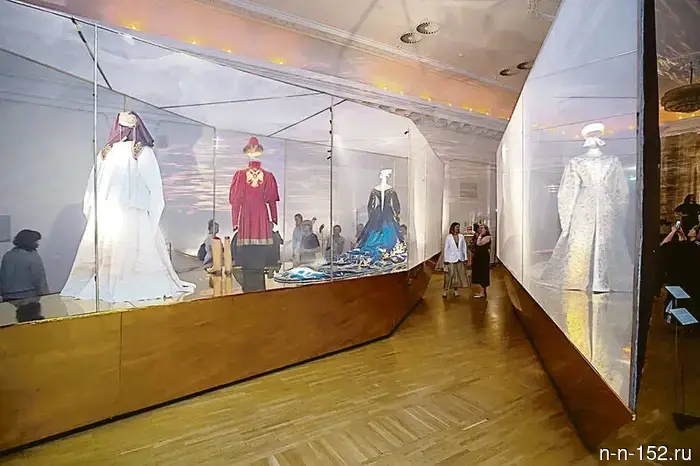 Golden river - embroidered shores
At the Nizhny Novgorod State Art Museum, the exhibition "Gold of the North" features the best examples of gold embroidery collected from several museums in Russia. 01.08.2026. Nizhny Novgorod News. Nizhny Novgorod Region. Nizhny Novgorod.
The drone danger mode is once again in effect in the Nizhny Novgorod region.
Citizens are asked to remain calm.
The "Drone Danger" regime was introduced in the Nizhny Novgorod region on the night of August 2. 02.08.2026. Time N. Nizhny Novgorod region. Nizhny Novgorod.
Golden river - embroidered shores
At the Nizhny Novgorod State Art Museum, the exhibition "Gold of the North" features the best examples of gold embroidery collected from several museums in Russia. 01.08.2026. Nizhny Novgorod News. Nizhny Novgorod Region. Nizhny Novgorod.
The drone danger mode is once again in effect in the Nizhny Novgorod region.
Citizens are asked to remain calm.
The "Drone Danger" regime was introduced in the Nizhny Novgorod region on the night of August 2. 02.08.2026. Time N. Nizhny Novgorod region. Nizhny Novgorod.
A city in an era of change: how Nizhny Novgorod coped with the challenges of recent years
News of Nizhny Novgorod