
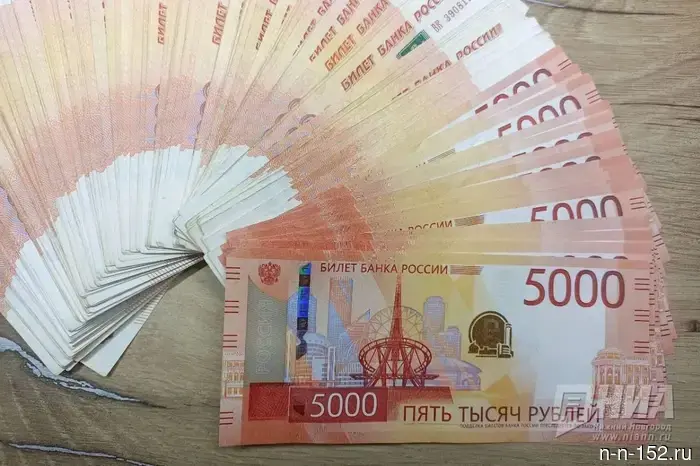
The economist explained what depositors should do when interest rates on deposits decrease.
On June 25, 2026, 17:39 Society In the 20 largest Russian banks, the average rate on two-year deposits has fallen below 11% for the first time in a year. This happened after the Bank of Russia lowered the key rate from 14.5% to 14.25%. Credit organizations began to adjust their deposit terms. Experts predict further rate reductions. According to the "Finuslug" deposit index, the average rate on two-year deposits as of June 22 was 10.97%. This is the lowest value since December 2025, when the figure was recorded at 10.94%. Compared to the previous day, June 19, the yield on two-year deposits decreased by 0.03 percentage points. The average rate on deposits in the largest banks was:
13.42% for three-month deposits;
12.97% for six-month deposits;
12.27% for one-year deposits;
11.16% for one-and-a-half-year deposits;
10.97% for two-year deposits;
10.69% for three-year deposits.
According to "Finuslug," the banks' response to the Central Bank's decision was prompt. Two credit organizations from the top 20 lowered their rates on two-year deposits by 0.25 percentage points. Other banks also adjusted their terms, reducing yields by 0.12−0.30 percentage points. The trend of decreasing deposit yields began before the June meeting of the Bank of Russia. Already in April, the average rate on three-month deposits fell by 0.24 points, on one-and-a-half-year deposits by 0.23 points, and on two-year deposits by 0.21 points. One-year deposits remained virtually unchanged. According to the Bank of Russia, the average maximum rate on deposits in the ten largest banks in the second decade of June was 12.86%, which is 0.92 percentage points lower than in December 2024. As of June 24, the average rate on deposits in the largest banks for amounts starting from 100,000 rubles was:
for one month — 11.23%;
for three months — 12.10%;
for six months — 11.70%;
for one year — 10.55%;
for three years — 8.89%.
Candidate of Economic Sciences Nikolai Kulbaka explained the rate reduction in a conversation with 360.ru as a result of the actions of the Bank of Russia. "Deposit rates depend on the key rate, which is currently decreasing. This is a normal mechanism for regulating the money supply," he noted. Kulbaka added that the rate reduction will be gradual but at different speeds depending on the banks' strategies. The expert also noted that currently, banks offer the most favorable terms for short-term deposits, while long-term deposits yield significantly lower returns. Moreover, credit organizations are already factoring in further reductions in the key rate in their forecasts. "High rates for short periods mean that banks in their strategy understand that rates will continue to decrease. Therefore, taking out loans at the current high rates for a long term is simply unprofitable for them," he commented. Recall that on June 19, the Bank of Russia lowered the key rate to 14.25%, which turned out to be a more cautious step than analysts expected. Nevertheless, this is already the ninth easing since the summer of 2025, with a total reduction of 6.75 percentage points. The key rate affects loans and deposits. The Central Bank will assess the rate reduction based on inflation, inflation expectations, and risks. Price growth has slowed but remains within 4−5% per year. Lending has accelerated, and fiscal policy may be stimulative. The next meeting on the key rate is scheduled for July 24. NIA "Nizhny Novgorod" has channels on Telegram and MAX. Subscribe to stay updated on major events, exclusive materials, and timely information. Copyright © 1999—2025 NIA "Nizhny Novgorod". When reprinting, a hyperlink to NIA "Nizhny Novgorod" is mandatory. This resource may contain materials 18+
Другие Новости Нижнего (Н-Н-152)
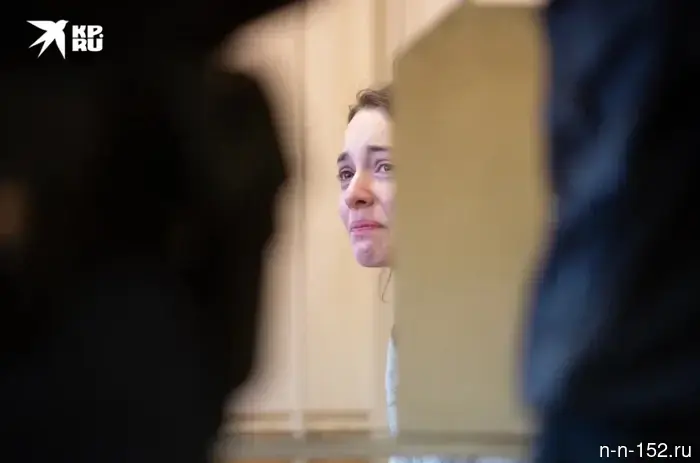 Actress Alexandra Drozdova was freed from punishment for the stabbing of Ilya Delya.
News of Nizhny Novgorod
Actress Alexandra Drozdova was freed from punishment for the stabbing of Ilya Delya.
News of Nizhny Novgorod
 The rules for resettlement under the CCRT have been clarified in the Nizhny Novgorod region.
News of Nizhny Novgorod
The rules for resettlement under the CCRT have been clarified in the Nizhny Novgorod region.
News of Nizhny Novgorod
 The rules for resettlement under the CHT have been clarified in the Nizhny Novgorod region.
News of Nizhny Novgorod
The rules for resettlement under the CHT have been clarified in the Nizhny Novgorod region.
News of Nizhny Novgorod
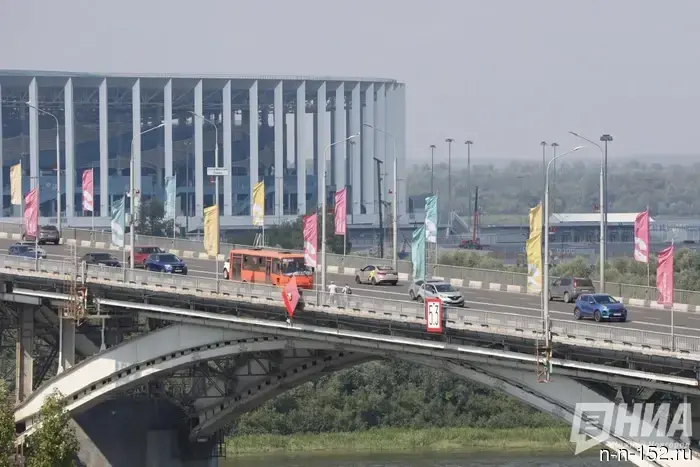 Five buses will change their routes due to Basta's concert in Nizhny Novgorod.
News of Nizhny Novgorod
Five buses will change their routes due to Basta's concert in Nizhny Novgorod.
News of Nizhny Novgorod
 The ban on vapes in the Nizhny Novgorod region will not be postponed.
News of Nizhny Novgorod
The ban on vapes in the Nizhny Novgorod region will not be postponed.
News of Nizhny Novgorod
The economist explained what depositors should do when interest rates on deposits decrease.
News of Nizhny Novgorod