

Oleg Anderson: "It cannot be said that there is a rear in Donbass."
NIА "Nizhny Novgorod" - Anastasia Nazarova On June 2, the head of the Donetsk People's Republic, Denis Pushilin, announced the creation of a unit to combat drones. The formation of "BARS-DNR" has already begun, and one of the first to go into service will be Oleg Anderson, an employee of the Legislative Assembly of the Nizhny Novgorod Region, who has been assisting Donbass for over 12 years. Since 2014, he has been involved in the collection and delivery of humanitarian cargo, and in November 2022, he volunteered to go to the front. He served as a machine gunner in the First Army Corps of the DNR. After returning in March 2023, he continued his volunteer activities. Now he has decided to go back to the SVO zone. Oleg Anderson spoke about what the new unit will do and why the fight against drones has become one of the key tasks in an interview with NIA "Nizhny Novgorod."
— The head of the DNR just announced the formation of the unit, and you are already preparing to leave. Why did you decide so quickly?
— For a long time, I have been collaborating with structures that deal with clearing the Donetsk sky of drones. This is the airspace protection system "Dome of Donbass" and the "Gorynych" unit of the FSB of Russia in the DNR. To assist them, "BARS-DNR" is being created — essentially, a small air defense. I was invited to participate in its creation from scratch. This is my last chance to do something big, good, and necessary for the whole country, so I agreed.
— What exactly will you be doing?
— I can't say, but was it in vain that I completed accelerated courses for junior commanders? (smiled. — Ed. note).
— Explain in simple terms what the work of "BARS-DNR" will entail.
— Imagine: drones are flying. To shoot them down, you first need to understand exactly where they are. Then, at the necessary point, there must be means of destruction. Since FPV drones — quadcopters and hexacopters — usually operate within a radius of 20-30 kilometers from the front line, the main work is done on aircraft-type drones. By the way, I want to express my dissatisfaction with some journalists. When they write about attacks on the Nizhny Novgorod region and illustrate materials with photos of quadcopters, they mislead people. Moreover, this can cause unnecessary panic. If a person thinks that quadcopters are flying here, it means they are being launched somewhere nearby, and that is a completely different level of threat. Mainly large aircraft-type drones, such as "Lyuty," cross the front line at high altitude and then sharply descend and fly along riverbeds, ravines, and other lowlands. That is, where they are not seen by large air defense. Therefore, they have to be detected using forward posts — acoustic and radar. But detection is only part of the job.
— And how many such stages are there?
— The work of clearing the sky consists of several parts. The first and most important is the Combat Control Center (CCC). Information comes from all observation posts there. In real-time, specialists see what and where is flying approximately. After that, a decision is made: whether the target can be hit by army air defense or whether it is more effective to deploy mobile groups. After receiving data from the CCC, mobile fire groups move to the areas of the presumed passage of drones. But it's not that simple. You can't just point to a map and say, "Go here." You need to arrive at the location in advance, assess the situation, understand in which sectors fire can be opened, and where residential buildings are located. Based on this, the work is organized.
The training of personnel is of great importance. The commander must clearly understand how to manage the group and where to direct the fighters' attention. It is necessary to agree in advance on landmarks and a system of designations. Serious training is also required for machine gunners. Shooting at a fast-moving aerial target requires proper lead. At the same time, the drone is in the machine gun's kill zone for a maximum of 15-20 seconds. During this time, it is necessary to work on it. If everything is organized correctly, the system works quite effectively. If not, there will be no result, even if hundreds of people are constantly moving on the roads. In short, this is the work that "BARS-DNR" will face.
— In the Nizhny Novgorod region, there is already a "BARS-NN" unit created to protect critically important facilities from drone attacks. Judging by your words, the tasks of the two units are still different?
— They are fundamentally different. Here, mainly long-range drones like "Lyuty" fly. They are not very fast, and with proper organization, they can be shot down even at distant approaches. In Donbass, the situation is different. There, not only such devices operate. Right now, "Hornet" and "Marsianin-1" pose a serious problem. It is currently more challenging to deal with them. These drones appeared relatively recently. They operate through Starlink, so they cannot be suppressed by electronic warfare means. By the way, "Lyuty" is also now controlled via satellite communication. Therefore, turning off mobile internet does not affect them.
— Who can join the unit? Only residents of the DNR or representatives from other regions as well?
— I think mainly local residents will join. But personally, after joining the service, I will invite a few of my friends and former colleagues. Competent people are needed.
— Volunteers of "BARS-DNR" will not be sent beyond the front line? Can we say that they will be at a safe distance?
— The kill zone has recently increased from 20 km to more than 70 km. Khartsyzsk is no longer a rear city. There are practically no safe zones left. If earlier, in the early stages of drone use, we were talking about five to ten kilometers, now the situation has changed. For example, Ukrainian military uses balloons to increase the range of some drones. With a tailwind, such devices can be thrown far beyond the line of combat contact and continue moving for dozens of kilometers. If three weeks ago I could calmly travel through Yenakiyevo and Debaltsevo to Luhansk, now this route has effectively become a death road, lined with burnt cars. Everything has changed very quickly. Therefore, it is already difficult to talk about the presence of a full-fledged rear in the Donetsk region today.
— But the announcement of recruitment states: "Service is exclusively within the republic and without deployment to the line of combat contact."
— "BARS-DNR" is a small air defense. That is, people from this unit will not be transferred to infantry. That is what is meant. Moreover, now, due to drones, it is sometimes more dangerous to be far from the line of combat contact than directly next to it. That's the situation.
— At the same time, there are provisions for payments for injuries. So the risk remains. You can often hear the phrase about some participants in the SVO: "What was he doing there? Launching drones from a trench." Moreover, with a clear hint that the person was in safety.
— It's wrong to say that. There is a real hunt for drone operators from both sides. If we are talking about FPV drones, the operator needs to move closer to the line of combat contact, set up the antenna so that it is not noticed, and establish radio bridges. This is a difficult and very dangerous job. Today, it can no longer be said that someone is just sitting somewhere. There is no complete safety anywhere.
— What advice can you give to humanitarians?
— In the next month or two, I would not recommend going there until the problem with the safety of the airspace is resolved. It is very dangerous right now. It is better to wait and keep in touch with your acquaintances on the ground, regularly clarifying the situation on the roads. For example, I would not recommend even considering a route through Debaltsevo right now.
— Why a month or two? Are you sure that the situation can be corrected in that time?
— For any weapon, sooner or later, an "antidote" is found. I think they will cope with this over time as well. For now, it is better to exercise caution. In extreme cases, contact acquaintances in the military in advance and agree on safe meeting points.
— Can the work of "BARS-DNR" help protect other Russian regions from drones?
— Of course. The frontline "BARS" works against all types of drones — both medium and long-range. The more devices "BARS-DNR" can destroy in Donbass, the fewer will reach other regions of Russia. NIA "Nizhny Novgorod" has channels on Telegram and MAX. Subscribe to stay updated on the main events, exclusive materials, and operational information. Copyright © 1999—2025 NIA "Nizhny Novgorod". When reprinting, a hyperlink to NIA "Nizhny Novgorod" is mandatory. This resource may contain materials 18+
Другие Новости Нижнего (Н-Н-152)
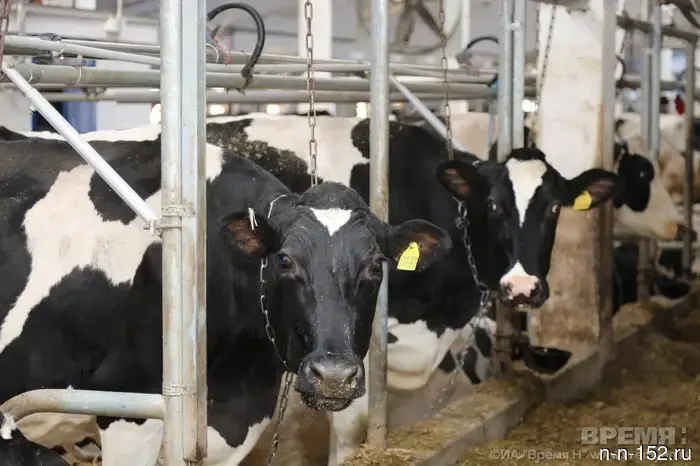 210 head of livestock were rescued from a burning farm in the Nizhny Novgorod region.
A large fire occurred on a farm in the village of Govrilovka in the Koverninsky district of the Nizhny Novgorod region. 06.06.2026. Time N. Nizhny Novgorod region. Nizhny Novgorod.
The master plan for the development of Sarov was signed at the SPIEF-2026.
The priority is infrastructure and the social sphere linked with the economy. The master plan for the development of Sarov was signed at the St. Petersburg International Economic Forum 2026. 06.06.2026. Komsomolskaya Pravda. Nizhny Novgorod Region. Nizhny Novgorod.
210 head of livestock were rescued from a burning farm in the Nizhny Novgorod region.
A large fire occurred on a farm in the village of Govrilovka in the Koverninsky district of the Nizhny Novgorod region. 06.06.2026. Time N. Nizhny Novgorod region. Nizhny Novgorod.
The master plan for the development of Sarov was signed at the SPIEF-2026.
The priority is infrastructure and the social sphere linked with the economy. The master plan for the development of Sarov was signed at the St. Petersburg International Economic Forum 2026. 06.06.2026. Komsomolskaya Pravda. Nizhny Novgorod Region. Nizhny Novgorod.
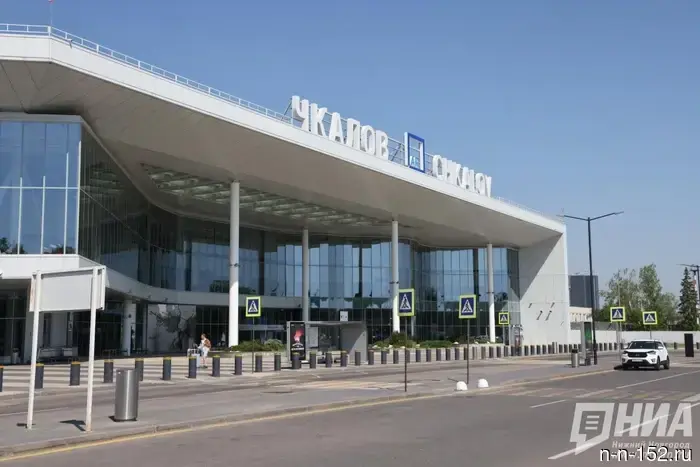 Nizhny Novgorod airport is operating with restrictions: three flights have been canceled.
News of Nizhny Novgorod
Nizhny Novgorod airport is operating with restrictions: three flights have been canceled.
News of Nizhny Novgorod
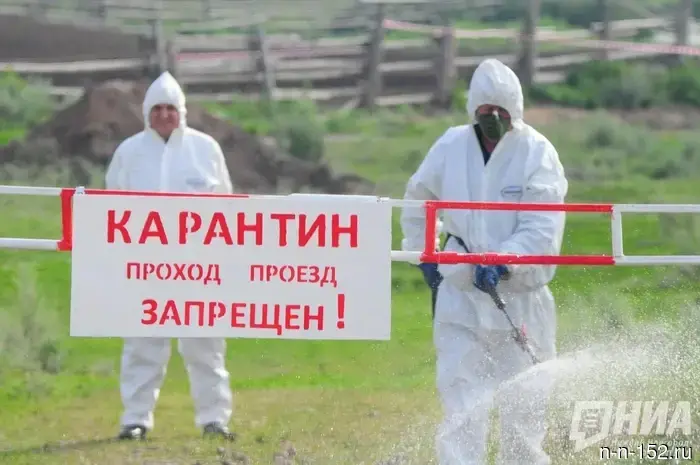 A rabies quarantine has been introduced in a village in the Nizhny Novgorod region.
News of Nizhny Novgorod
A rabies quarantine has been introduced in a village in the Nizhny Novgorod region.
News of Nizhny Novgorod
 Six ninth-graders from Nizhny Novgorod were removed from the OGE for using cheat sheets.
News of Nizhny Novgorod
Six ninth-graders from Nizhny Novgorod were removed from the OGE for using cheat sheets.
News of Nizhny Novgorod
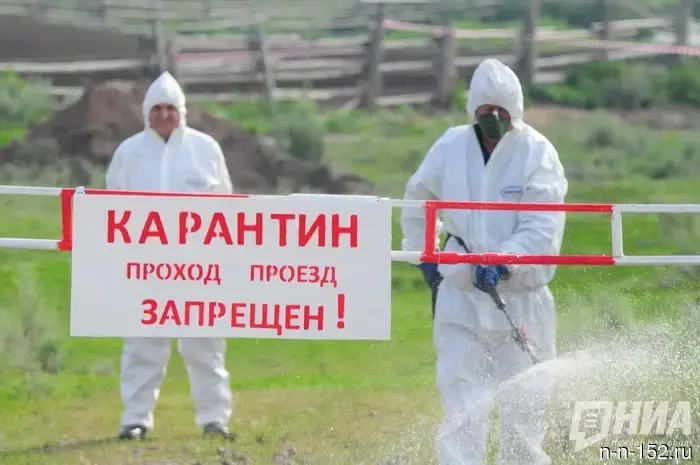 A rabies quarantine has been introduced in the village of Nizhny Novgorod region.
News of Nizhny Novgorod
A rabies quarantine has been introduced in the village of Nizhny Novgorod region.
News of Nizhny Novgorod
Oleg Anderson: "It cannot be said that there is a rear in Donbass."
News of Nizhny Novgorod