
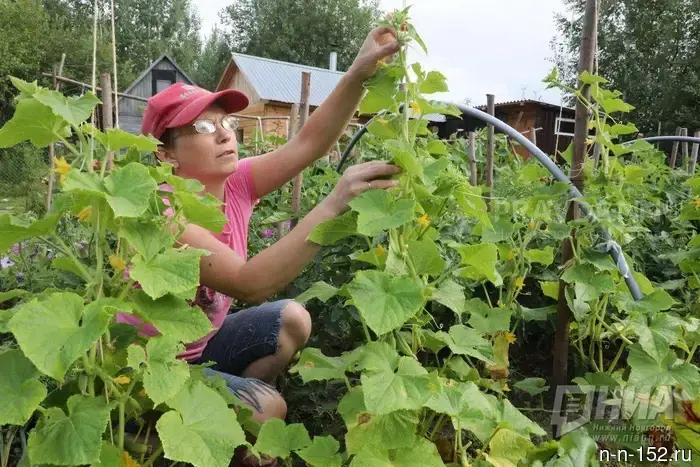
The religious scholar Sapelkin explained why on June 5, Levon the Cucumber was venerated in Rus'.
June 5, 2026 15:43 Society On Friday, June 5, the Orthodox Church honors the memory of Saint Leontius of Rostov, one of the first enlighteners of Ancient Rus. This day in the folk calendar is known as Levon the Cucumber and Levon the Hemp. Saint Leontius, the baptizer of an entire city, remains a figure surrounded by legends and mysteries.
Life and deeds of Leontius of Rostov
Leontius was born in Constantinople but became a Russian saint. His life is connected with Ancient Rus, where he dedicated himself to serving God. After taking monastic vows at the Kiev-Pechersk Lavra, Leontius became one of the first disciples of the venerable Anthony and Theodosius. Later, he was appointed bishop of Rostov, where he faced pagan beliefs and hostility from the local population.
Despite the difficulties, Leontius managed to create the first Christian community in Rostov. His kindness and patience helped him gain the trust of the local residents, allowing Christianity to take root in these lands. However, his activities did not go unnoticed by the pagan priests, and in 1071 (according to other sources, in 1073), Leontius was killed. His relics were transferred to the cathedral of Rostov a hundred years later, which became the basis for honoring his memory on June 5.
Origin of the holiday's name
As writer and publicist, historian and religious scholar Nikolai Sapelkin told 360.ru, the names "Levon the Cucumber" and "Levon the Hemp" are related to agricultural work that took place at this time. It was customary for people to orient themselves around church holidays, as calendars did not exist then. The name Leontius was difficult to pronounce, so it was simplified to "Levon." The holiday was called Cucumber Day because, in the central regions of Russia, people were engaged in weeding cucumbers at this time. In southern regions, such as Voronezh and Kursk provinces, the holiday was associated with sowing cucumbers, while in northern regions, including Kostroma and Tver provinces, it was linked to sowing hemp.
Traditions on Levon the Cucumber
On the holiday of Levon the Cucumber, peasants tried to plant the last batch of cucumbers, believing that this harvest would be especially good for pickling. Before planting, they sprinkled the beds with eggshells to strengthen the soil and improve germination.
Housewives avoided letting outsiders into their gardens, fearing the evil eye. Quarrels and arguments over the beds were also considered a bad omen. To avoid conflicts, women tried to come to the garden early and work in silence.
Before sowing hemp, they placed an egg left over from Easter on the beds, symbolizing fertility. After lunch, women tidied up the house and prepared dishes from fresh vegetables and baked goods. It was also customary to fish on this day, believing that a calm and modest approach to fishing would bring a good catch.
What not to do on Levon the Cucumber
According to popular beliefs, it is not recommended to:
- Quarrel and conflict.
- Repair old things.
- Go into someone else's garden.
- Move or transport property.
- Lend money, as this may lead to a loss of happiness.
- Wash one's hair, so as not to wash away good luck.
- Share plans with unfamiliar people, otherwise what is intended may not come true.
- Refuse to give alms.
Folk omens
On this day, people paid attention to nature and tried to predict the weather. Here are some omens:
- If thick dew falls in the morning, it foretells rain.
- The appearance of horseflies around cucumbers is a sign of a rich harvest.
- Abundant flowering of hawthorn indicates a cold and prolonged winter.
- If clover leaves are drooping towards the ground, it may mean rain is approaching.
The NIA "Nizhny Novgorod" has channels on Telegram and MAX. Subscribe to stay updated on major events, exclusive materials, and timely information. Copyright © 1999—2025 NIA "Nizhny Novgorod". When reprinting, a hyperlink to NIA "Nizhny Novgorod" is mandatory. This resource may contain materials 18+.
Другие Новости Нижнего (Н-Н-152)
 Cheburashka will not appear on the coat of arms of Nizhny Novgorod.
News of Nizhny Novgorod
Cheburashka will not appear on the coat of arms of Nizhny Novgorod.
News of Nizhny Novgorod
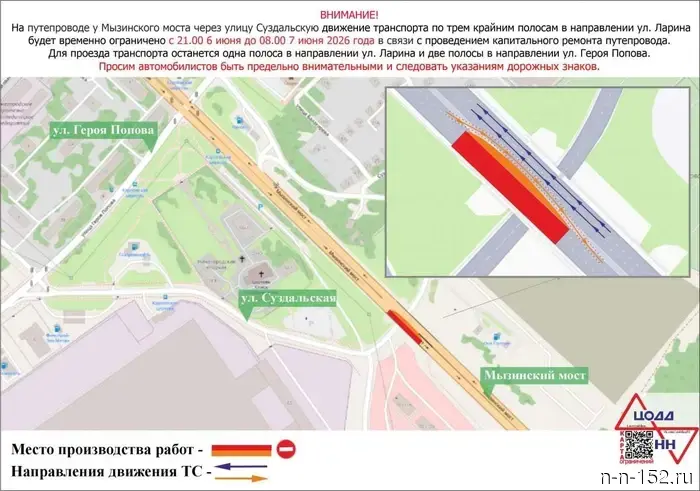 Traffic will be restricted on the Myzinskii overpass on the night of June 7.
News of Nizhny Novgorod
Traffic will be restricted on the Myzinskii overpass on the night of June 7.
News of Nizhny Novgorod
 Cheburashka will not appear on the coat of arms of Nizhny Novgorod.
News of Nizhny Novgorod
Cheburashka will not appear on the coat of arms of Nizhny Novgorod.
News of Nizhny Novgorod
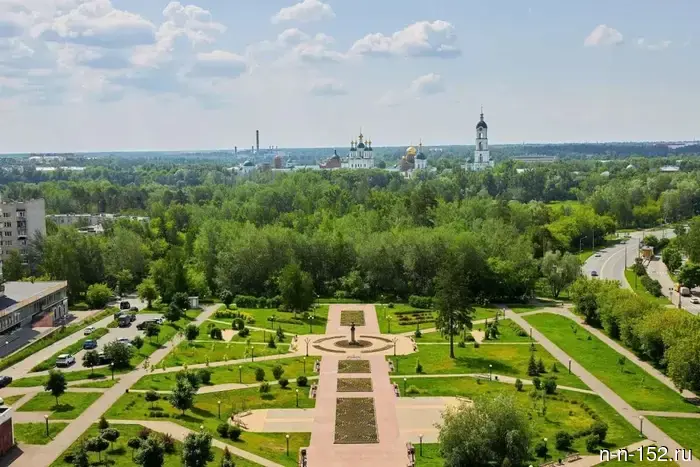 Sarov will have its own master development plan.
News of Nizhny Novgorod
Sarov will have its own master development plan.
News of Nizhny Novgorod
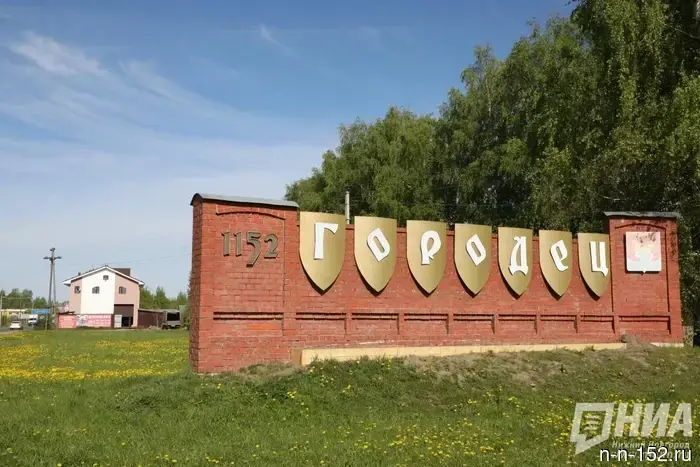 Everything for tourists: mobile internet has been accelerated in the historic district of Gorodets.
News of Nizhny Novgorod
Everything for tourists: mobile internet has been accelerated in the historic district of Gorodets.
News of Nizhny Novgorod
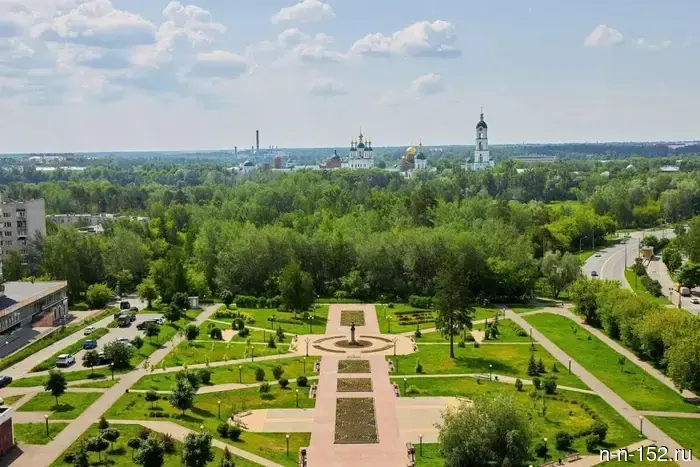 Sarov will have its own master development plan.
News of Nizhny Novgorod
Sarov will have its own master development plan.
News of Nizhny Novgorod
The religious scholar Sapelkin explained why on June 5, Levon the Cucumber was venerated in Rus'.
News of Nizhny Novgorod