

Review of quotas: how the target admission is changing in Nizhny Novgorod universities in 2026
Photo: freepik.com
In 2026, the rules for admission to universities are changing. The innovations also affect targeted training — places are now allocated only for specific customers. We analyze which professions are in demand among employers and where the unclaimed places have gone.
New rules
The first significant innovation is the reduction in the number of paid places. According to the new rules, admissions will also be made based on targeted quotas. In 2025, about 120,000 places were allocated for targeted students in Russian universities. This year, the number is significantly lower — 83,000 places.
The changes did not happen by chance — from this year, a new principle for forming the targeted quota is in effect. The number of places directly depends on the applications from customers of targeted training — companies and agencies willing to sign contracts with applicants. That is, a targeted place will be secured for a specific customer. The future student will need to sign a contract with them before the start of the academic year. We spoke with representatives of Nizhny Novgorod universities about how the admission process for targeted training will change.
Lobachevsky NNGU
This year, the largest university in Nizhny Novgorod has allocated 185 targeted places. This is 187% less than the previous year — when the targeted quota was 531 places. A reduction is noted in most areas of training, notes Pavel Agrba, head of the career guidance and admissions department. “It is important to note that the number of detailed targeted quotas — quotas in the interests of specific customers — has increased this year. Last year, only 154 places had a specific customer before the submission of proposals began,” said Pavel Agrba. In some areas of training, there is an increase in the number of targeted places. This concerns jurisprudence and public administration. Most often, the customers of targeted places at NNGU are large companies and corporations, such as Rosatom, the 70th Anniversary of Victory Plant, and the Federal Tax Service.
PIMU
A reduction in the number of targeted places is also observed among medical professionals. Thus, PIMU has allocated 308 targeted places for the current admission campaign. Compared to last year, this represents a decrease of 17.5%. In 2025, 362 places were allocated for targeted students. The most noticeable reduction is observed in the specialties of “Pediatrics” from 113 to 68 places and “Medical Affairs” from 193 to 177 places. Conversely, there is an increase in two areas of training: “Medical Prevention” and “Clinical Psychology.” The largest customer of targeted places is the regional Ministry of Health. Nizhny Novgorod students are also in demand in the ministries of health of other regions, FMBA, Rospotrebnadzor, and departmental institutions, such as Russian Railways. Photo: freepik.com
Minin University
Elvira Samerkhanova, Vice-Rector for Science and Organization of the Admission Campaign at NGPU, notes that in 2026, the university has allocated 222 places within the targeted quota. Exact data on changes in quotas compared to last year were not provided by the university, but they noted that a decrease is indeed observed. “The reduction in the number of targeted places has mostly affected areas of training such as ‘Information Systems and Technologies,’ ‘Applied Informatics,’ and ‘Philosophy,’” said Elvira Samerkhanova. Key customers for targeted training include kindergartens, schools, colleges, and universities.
Dobrolubov NGLU
This year, the linguistic university has allocated 53 quotas for targeted training. 51 of them are for bachelor’s degree programs. “Overall, this is less than in previous years,” the university's press service clarified. At the same time, reductions in targeted places are observed in all areas of training, except for “Pedagogical Education” — here the number of quotas has tripled. “Our main customers for targeted training are, first of all, schools, universities, technical schools, and colleges. In addition, requests for targeted training at NGLU come from various Nizhny Novgorod and Russian companies and agencies engaged in international activities,” the NGLU press service reported.
NNGASU
In 2026, 20 targeted places were allocated for bachelor’s and specialist programs at NNGASU. All these places were formed for specific customers. “We have switched to a model of direct orders from business and government. This will allow each targeted student to know their employer from the first year,” the press service of the Nizhny Novgorod State Architectural and Civil Engineering University reported. “Among the key partners are Atomenergoproekt, Gazprom Transgaz Nizhny Novgorod, and the Institute for the Development of the Nizhny Novgorod Agglomeration,” the university noted.
HSE
This year, the Nizhny Novgorod campus of HSE allocated three places within the competition for targeted training. However, the number of places based on last year’s results was not disclosed by the university. “From 2026, a new principle for forming quotas is in effect — the number of places within the targeted admission directly depends on the number of applications from customers of targeted training — companies and agencies willing to sign contracts with applicants. Therefore, a direct comparison with the indicators of 2025 would be incorrect,” the university's press service noted. The most active customer for targeted training at HSE is the Federal Tax Service. Photo: freepik.com
Alekseev NGTU
The only Nizhny Novgorod university where the number of targeted places increased in 2026 is NGTU. This year, 251 places were allocated for bachelor’s programs and 24 places for master’s programs. Fewer quotas were allocated in the following areas — “Informatics and Computer Engineering,” “Information Systems and Technologies,” and “Chemical Technology.” More quotas were allocated in the profiles of “Mechanical Engineering,” “Design and Technological Support of Mechanical Engineering Production,” and “Shipbuilding.”
The main customers for targeted training at NGTU are the Nizhny Novgorod Plant of the 70th Anniversary of Victory, the Nizhny Novgorod Research Institute of Radio Engineering, the United Aircraft Corporation, and the Research Institute Burevestnik.
Less than half
One of the key problems of the previously existing format of targeted recruitment was the low fill rate of quotas. Thus, at NNGU last year, only 25% of the total number was filled. At NGLU — 30%, at NGTU — 53%. Meanwhile, in specialized universities, the indicators were quite high. At the Privolzhsky Medical University, the indicator for the 2025 admission campaign reached 83%. At Minin University — 77%. The Nizhny Novgorod campus of HSE utilized the targeted quota at 100%. The same indicator is observed in some areas at NNGASU, for example, in “Architecture.”
The turnover of places
Changes in the rules for targeted admission will also affect budget students from the general competition. Previously unclaimed places — and with low fill rates, there were quite a few — were immediately transferred to the budget competition. Now the procedure will be different. “All unclaimed places will first be transferred to a separate quota. Then they will go to the general competition,” Pavel Agrba explained. Before the start of admissions, targeted places for which no proposals have been submitted will be transferred. After the completion of priority admissions — places for which no agreements for enrollment have been submitted.
Другие Новости Нижнего (Н-Н-152)
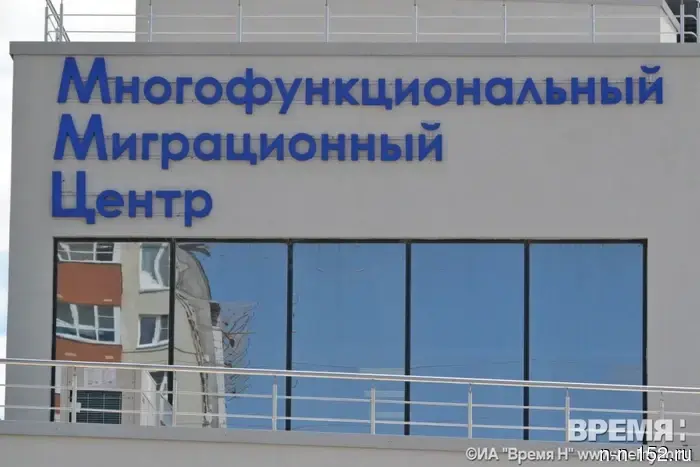 The procedure for providing migration services will change in Nizhny Novgorod.
The changes come into effect on June 1.
Applications from residents of the Lenin, Sormovo, and Prioksky districts of Nizhny Novgorod regarding the implementation of migration registration for foreigners and stateless persons will be accepted until May 31, 2026. Time N. Nizhny Novgorod region. Nizhny Novgorod.
The procedure for providing migration services will change in Nizhny Novgorod.
The changes come into effect on June 1.
Applications from residents of the Lenin, Sormovo, and Prioksky districts of Nizhny Novgorod regarding the implementation of migration registration for foreigners and stateless persons will be accepted until May 31, 2026. Time N. Nizhny Novgorod region. Nizhny Novgorod.
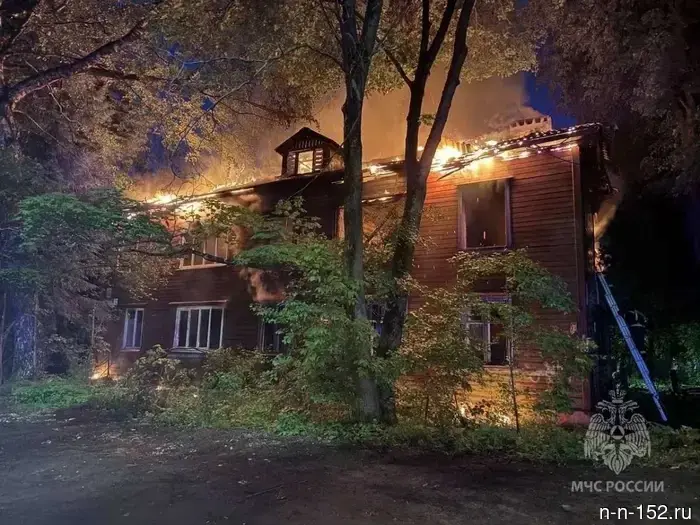 A fire destroyed an abandoned two-story house in Nizhny Novgorod.
News of Nizhny Novgorod
A fire destroyed an abandoned two-story house in Nizhny Novgorod.
News of Nizhny Novgorod
 Warming up to +22 degrees and rain are expected for Nizhny Novgorod residents in the first week of summer.
News of Nizhny Novgorod
Warming up to +22 degrees and rain are expected for Nizhny Novgorod residents in the first week of summer.
News of Nizhny Novgorod
 Unknown individuals set fire to the graves of veterans in Nizhny Novgorod.
News of Nizhny Novgorod
Unknown individuals set fire to the graves of veterans in Nizhny Novgorod.
News of Nizhny Novgorod
 Unknown individuals set fire to the graves of veterans in Nizhny Novgorod.
Photo: "Your Conscience" / VK
At the Novo-Sormovsky cemetery in Nizhny Novgorod, unknown individuals desecrated the graves of veterans. 31.05.2026. NIA Nizhny Novgorod. Nizhny Novgorod Region. Nizhny Novgorod.
Unknown individuals set fire to the graves of veterans in Nizhny Novgorod.
Photo: "Your Conscience" / VK
At the Novo-Sormovsky cemetery in Nizhny Novgorod, unknown individuals desecrated the graves of veterans. 31.05.2026. NIA Nizhny Novgorod. Nizhny Novgorod Region. Nizhny Novgorod.
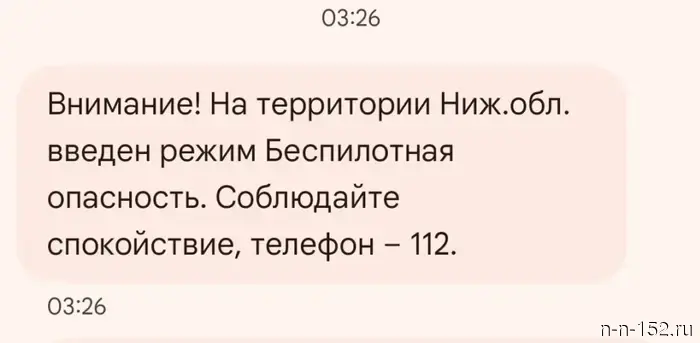 A danger mode for UAVs was introduced in the Nizhny Novgorod region on the night of May 31.
In the Nizhny Novgorod region, a danger regime for UAVs is in effect. SMS notifications about the introduction of the corresponding regime were received by subscribers on the night of May 31. 31.05.2026. Online publication We Live in Nizhny. Nizhny Novgorod region. Nizhny Novgorod.
A danger mode for UAVs was introduced in the Nizhny Novgorod region on the night of May 31.
In the Nizhny Novgorod region, a danger regime for UAVs is in effect. SMS notifications about the introduction of the corresponding regime were received by subscribers on the night of May 31. 31.05.2026. Online publication We Live in Nizhny. Nizhny Novgorod region. Nizhny Novgorod.
Review of quotas: how the target admission is changing in Nizhny Novgorod universities in 2026
Photo: freepik.com In 2026, the admission rules for universities are changing. The innovations also affect targeted training — places are now allocated only for specific customers. 31.05.2026. Online publication We Live in Nizhny. Nizhny Novgorod Region. Nizhny Novgorod.