
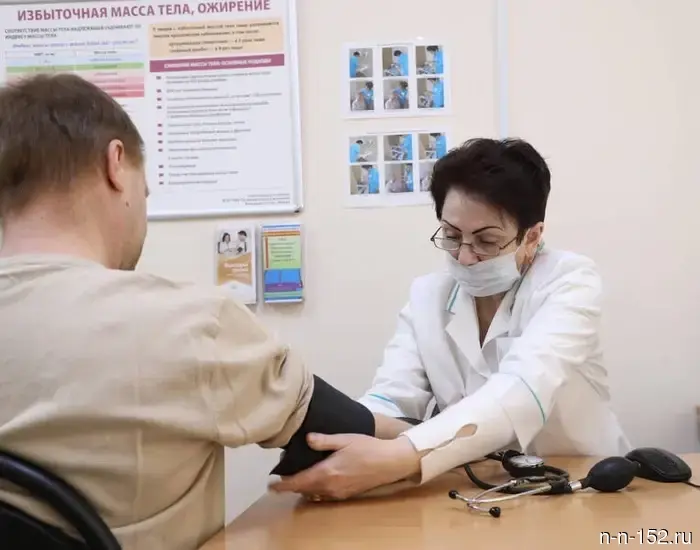
The "silent" threat presses from within. Why hypertension cannot be ignored.
High blood pressure seems to be a common problem. But in reality, arterial hypertension is one of the most widespread and dangerous diseases today. By May 17 – World Hypertension Day, Russia is marking a Week of Prevention for this disease. Chief physician of the Nizhny Novgorod Regional Center for Public Health and Medical Prevention, Natalia Savitskaya, spoke about what is important to know about this disease and why adherence to treatment is so crucial.
Target organs.
– Hypertension does not cause pain, does not manifest itself with bright symptoms in the early stages, but day by day, year by year, it destroys the body from within. Blood pressure (BP) is the force with which blood presses against the walls of the arteries. It is measured in millimeters of mercury (mm Hg) and recorded with two numbers: systolic (upper) pressure at the moment of heart contraction and diastolic (lower) at the moment of relaxation. A pressure below 120/80 mm Hg is considered normal. Arterial hypertension is diagnosed when average pressure readings consistently exceed 140/90 mm Hg. The main danger of this condition is that in order to "pump" blood through narrowed and less elastic vessels, the heart has to work with enormous strain. Imagine a pump that has to push water through a constantly narrowing hose. Sooner or later, such a pump will fail.
Constantly high blood pressure has a destructive effect on all target organs: the heart, brain, kidneys, and eyes. High blood pressure leads to the development of left ventricular hypertrophy – thickening of the heart muscle. The heart becomes larger and weaker, leading to heart failure, ischemic heart disease, and myocardial infarction. In hypertension, small vessels in the brain are damaged, which is the main cause of strokes (both ischemic and hemorrhagic) and vascular dementia. The kidneys suffer as well. This is because they are filter organs with a very dense network of small vessels. Hypertension damages them, leading to the development of chronic kidney failure. The vessels of the retina are damaged, which can lead to vision deterioration and even blindness.
The most insidious aspect of hypertension is that it acts unnoticed. A person may feel perfectly fine, lead an active lifestyle, but at the same time, their vessels are under enormous stress. That is why hypertension is called the "silent killer": it can manifest itself in the form of severe consequences such as a heart attack or stroke.
Typical mistakes.
– Why is adherence to treatment so important?
– Upon receiving a diagnosis of "arterial hypertension," many patients make the same mistake: they start taking the prescribed medications only until their blood pressure normalizes. As soon as the numbers on the sphygmomanometer become acceptable (for example, 130/80), there is a temptation to stop the medications. "I feel good! Why should I take pills?" – a person reasons and stops therapy. This is one of the most dangerous traps in treating hypertension. Arterial hypertension is a chronic disease. In the overwhelming majority of cases, it is associated with genetic predisposition and age-related changes in the vessels that cannot be "cured" with a course of pills. Medications do not eliminate the cause of the disease; they only control its manifestation – high blood pressure.
Adherence to therapy means complete, conscious, and continuous compliance with all medical recommendations. This includes regular intake of prescribed medications. Modern antihypertensive agents are designed for long-term, often lifelong use. They work on the principle of accumulation and maintaining a stable concentration in the blood. Missing even one or two doses can lead to a sharp spike in blood pressure. It is very important to adhere to the dosage. Self-cancellation of the medication or changing the dose ("today I'll take half, that's enough") negates the entire effect of the treatment.
Patients should also reconsider their lifestyle. Medications are the foundation, but without support from the patient themselves, they work less effectively. The doctor always prescribes therapy in conjunction with a diet (salt restriction), physical activity, and quitting bad habits.
– What are the dangerous consequences of refusing treatment?
– Refusing therapy or irregular intake of medications turns arterial hypertension from a controllable condition into an uncontrollable disaster. Blood pressure starts to "jump," which is even more harmful to the vessels than consistently high BP. This condition is called hypertensive crises, which can end in: acute heart failure with pulmonary edema, acute cerebrovascular accident (stroke), and the third threatening scenario – a dissecting aortic aneurysm – a life-threatening rupture of the body's main artery. Additionally, uncontrolled hypertension significantly reduces the effectiveness of other medications. For example, if a patient has a heart attack or needs surgery on the heart vessels (stenting), doctors will not be able to help effectively with high and unstable blood pressure. The risks of complications also increase manifold.
Daily ritual.
– How to make therapy a part of life?
– For many people, taking pills daily becomes a psychological burden. It reminds them of illness and aging. However, it is worth changing the perspective: pills are not a symbol of illness, but a tool for controlling it. They are your personal shield against stroke and heart attack. Here are some tips to increase adherence to treatment:
Integrate taking medication into your daily routine. Link it to existing habits: morning coffee, brushing teeth, or breakfast.
Use modern technology. Set an alarm on your phone or use special reminder apps for taking medications.
Have a supply of prescribed medications. Keep the necessary medications at work, carry them in your bag in case of emergencies.
Do not self-medicate. If a medication causes side effects or seems too expensive – do not cancel it on your own, but consult a doctor for adjusting the treatment plan.
Modern medicine has a vast arsenal of means for controlling blood pressure. There are dozens of groups of medications with different mechanisms of action. If one medication or combination does not work, the doctor can always find an alternative. The main thing is not to give up and not to stop searching for a solution together with a specialist.
Be sure to keep a self-monitoring diary. Regularly measure your blood pressure in the morning and evening and record the results in a diary or app. This will clearly show you and your doctor the effectiveness of the therapy.
Reference "NN".
High blood pressure (BP) is a pathological condition that can be a sign of various diseases. In nine out of ten cases, high blood pressure is a symptom of hypertensive disease (hypertension), but it can also indicate many other pathologies (endocrine diseases, kidney diseases, etc.). In medicine, the term "arterial hypertension" is used to denote high blood pressure.
Patient School.
How to suspect problems with blood pressure?
The main symptoms of high blood pressure are:
headache;
tinnitus;
palpitations;
weakness, sweating, nausea;
decreased visual acuity.
It should be remembered that high blood pressure does not always accompany all these signs – sometimes one or two of the listed symptoms are present, and asymptomatic progression of the disease is also possible. Therefore, people suffering from arterial hypertension need daily BP monitoring, even without pronounced symptoms or in their absence.
During a hypertensive crisis, symptoms intensify, and other complaints may arise – dizziness, coordination disturbances, "flies" before the eyes, chest pain, arrhythmia, shortness of breath, loss of consciousness. If blood pressure rises to high numbers, accompanied by pronounced symptoms, and does not stabilize on its own, the first thing to do is to call an ambulance. Such a condition can threaten serious and even life-threatening consequences.
What to do with high blood pressure at home?
– If high blood pressure is recorded for the first time, it may be the result of a stressful situation, some external factors (heat, stuffy room), or preceding physical exertion. In this case, one should calm down, if possible – lie down so that the head is above the legs, and open a window in the room. A napkin soaked in cool water can be placed on the neck and shoulders. Blood pressure should be monitored, and if it remains consistently high and does not stabilize, consult a doctor. A reason to seek qualified help is also a daily increase in blood pressure.
Prepared by Alexandra Makhlina. Photo by Alexander Volozhanin.
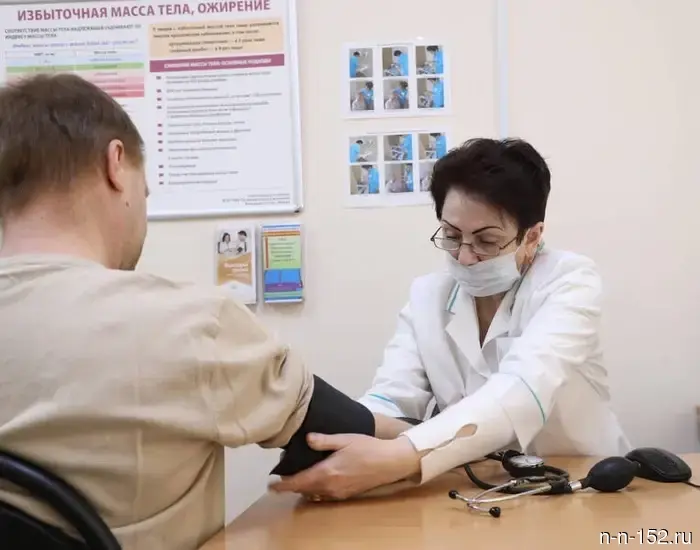
Другие Новости Нижнего (Н-Н-152)
 The recycling machines for collecting secondary raw materials in Nizhny Novgorod are no longer in operation.
News of Nizhny Novgorod
The recycling machines for collecting secondary raw materials in Nizhny Novgorod are no longer in operation.
News of Nizhny Novgorod
 Bastrikin requested a report on the case of the house with cracks in Pavlov.
News of Nizhny Novgorod
"Be careful, dacha! How to protect yourself from hidden dangers"
Mikhail Lebedev, leading expert at CMD of the Central Research Institute of Epidemiology of Rospotrebnadzor, reports. May 13, 2026. Pochinkovsky Municipal District. Nizhny Novgorod Region. Pochinki.
Bastrikin requested a report on the case of the house with cracks in Pavlov.
News of Nizhny Novgorod
"Be careful, dacha! How to protect yourself from hidden dangers"
Mikhail Lebedev, leading expert at CMD of the Central Research Institute of Epidemiology of Rospotrebnadzor, reports. May 13, 2026. Pochinkovsky Municipal District. Nizhny Novgorod Region. Pochinki.
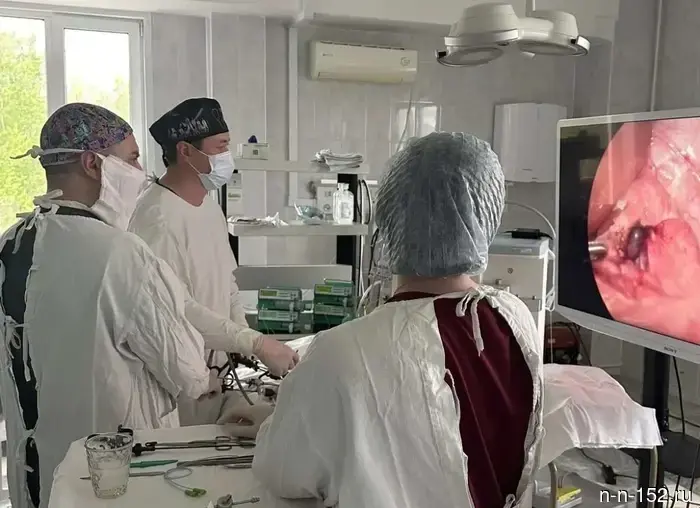 Doctors of the NOKDB honed their skills in neonatal surgery at a master class by a colleague from St. Petersburg.
News of Nizhny Novgorod
Doctors of the NOKDB honed their skills in neonatal surgery at a master class by a colleague from St. Petersburg.
News of Nizhny Novgorod
 Nizhny Novgorod region launched the first popular science route in Russia.
News of Nizhny Novgorod
Nizhny Novgorod region launched the first popular science route in Russia.
News of Nizhny Novgorod
 Zezekalo headed the "Public Self-Government of Nizhny Novgorod."
Nikita Zezekalo became the head of the Autonomous Non-Profit Organization "Public Self-Government of Nizhny Novgorod" on May 12, 2026. 13.05.2026. IA Nizhny Now. Nizhny Novgorod Region. Nizhny Novgorod.
Zezekalo headed the "Public Self-Government of Nizhny Novgorod."
Nikita Zezekalo became the head of the Autonomous Non-Profit Organization "Public Self-Government of Nizhny Novgorod" on May 12, 2026. 13.05.2026. IA Nizhny Now. Nizhny Novgorod Region. Nizhny Novgorod.
The "silent" threat presses from within. Why hypertension cannot be ignored.
Increased blood pressure seems to be a common problem. But in reality, arterial hypertension is one of the most widespread and dangerous diseases today. 13.05.2026. Nizhny Novgorod News. Nizhny Novgorod Region. Nizhny Novgorod.