
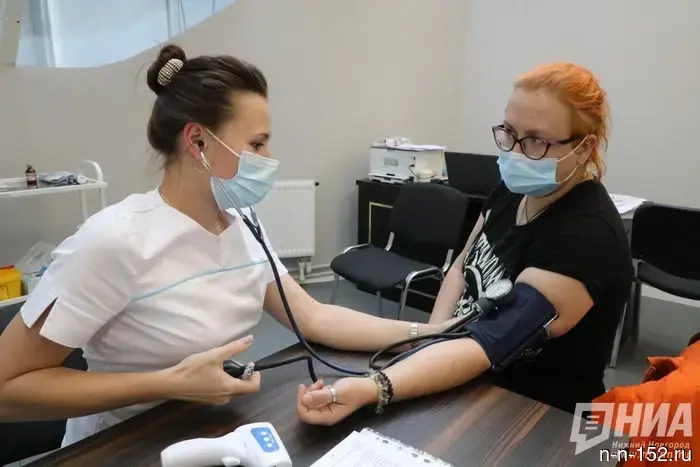
Doctor Savitskaya warned about the dangers of discontinuing medications for hypertension.
Arterial hypertension is one of the most common and simultaneously one of the most dangerous chronic diseases. It is not accompanied by pain and can remain asymptomatic for a long time; however, it gradually and imperceptibly destroys the body. The chief physician of the Nizhny Novgorod Regional Center for Public Health and Medical Prevention, Natalia Savitskaya, explained why it is important to monitor blood pressure and strictly follow the doctor's prescriptions.
What happens with hypertension
Blood pressure is the force with which blood impacts the walls of blood vessels. The measurement is expressed in millimeters of mercury and consists of two values: the upper value during heart contraction and the lower value during its relaxation phase. Normal values are considered to be below 120/80 mm Hg.
Hypertension is diagnosed when average readings consistently exceed 140/90 mm Hg. In this case, the heart has to work under increased load to push blood through narrowed and less elastic vessels. Constant overexertion over time leads to serious disorders.
High blood pressure affects so-called target organs. The heart responds with thickening of the left ventricle. Over time, this can lead to heart failure, ischemic disease, and myocardial infarction. The blood vessels in the brain become more vulnerable, increasing the risk of ischemic and hemorrhagic strokes, as well as vascular dementia. The kidneys, which have a dense network of small vessels, gradually lose their ability to filter blood effectively, leading to chronic kidney failure. The blood vessels in the retina of the eye are also affected, potentially resulting in vision deterioration and even blindness.
The particular danger of hypertension lies in its hidden course. A person may feel well, unaware that their vessels are already under enormous strain. Often, the first manifestations are a heart attack or stroke. This is why the disease is referred to as a "silent killer."
Why treatment should not be stopped
According to Natalia Savitskaya, one of the most common mistakes patients make is stopping medication after normalizing their blood pressure. "I feel good, so I don't need the pills anymore," is a common thought among patients who see readings close to normal on the sphygmomanometer.
However, hypertension is classified as a chronic disease. In most cases, it is associated with hereditary predisposition and age-related changes in blood vessels. It is impossible to completely eliminate the cause of the disease, and medications only help keep blood pressure under control. Adherence to therapy means consistently and consciously following all medical recommendations.
Modern medications are designed for long-term, often lifelong use. They maintain a stable concentration of the active substance in the blood. Missing even one or two doses can cause a sharp spike in blood pressure. It is equally important to strictly adhere to the prescribed dosage. Self-reducing the dose or discontinuing the medication nullifies the treatment's effect.
Medication therapy must be combined with lifestyle changes: limiting salt intake, ensuring adequate physical activity, and avoiding harmful habits.
What happens if therapy is refused
Irregular medication intake or complete refusal makes the disease uncontrollable. Blood pressure begins to fluctuate sharply, which is even more dangerous for blood vessels than consistently elevated readings. Such conditions can manifest as hypertensive crises. They are dangerous due to the development of acute heart failure with pulmonary edema, stroke, or a dissecting aortic aneurysm—a life-threatening rupture of the body's main artery.
Moreover, unstable blood pressure significantly reduces the effectiveness of other medical assistance. If a patient experiences a heart attack or requires stenting of the heart vessels, high and unstable readings will greatly increase the risk of complications.
How to make treatment a habit
For many people, daily medication intake becomes a psychological barrier. It serves as a reminder of illness and age. However, as the doctor notes, pills should be viewed not as a sign of illness but as a way to protect oneself from severe complications.
To enhance adherence to therapy, specialists recommend integrating medication intake into the daily routine—such as linking it to breakfast or tooth brushing. Reminders on the phone or special applications can be useful. It is also helpful to keep a supply of medications on hand for unforeseen situations.
Self-monitoring plays an important role: regularly measuring blood pressure in the morning and evening and recording the results in a diary helps assess the effectiveness of treatment. If a medication causes side effects or seems too expensive, it should not be discontinued independently. One should consult a doctor to adjust the therapy regimen.
Modern medicine offers a wide range of options for controlling blood pressure. If necessary, a specialist can find an alternative treatment option. The main thing is not to interrupt therapy and maintain constant contact with the doctor. The NIA "Nizhny Novgorod" has channels on Telegram and MAX. Subscribe to stay updated on major events, exclusive materials, and timely information. Copyright © 1999—2025 NIA "Nizhny Novgorod." When reprinting, a hyperlink to NIA "Nizhny Novgorod" is mandatory. This resource may contain materials 18+.
Другие Новости Нижнего (Н-Н-152)
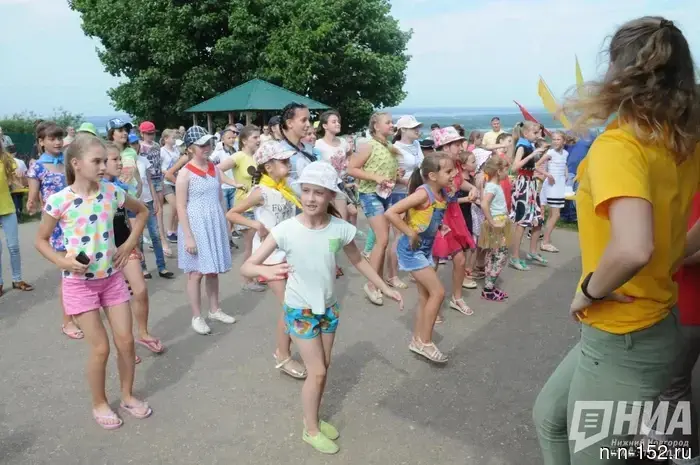 Nizhny Novgorod parents were reminded how to properly prepare their child for summer camp.
News of Nizhny Novgorod
A Nizhny Novgorod woman fictitiously registered migrants in her apartment.
Criminal cases have been initiated.
A violation of migration legislation has led a 52-year-old woman from Nizhny Novgorod to a criminal case, reports the press service of the regional Main Directorate of the Ministry of Internal Affairs of Russia. 11.05.2026. Time N. Nizhny Novgorod Region. Nizhny Novgorod.
Nizhny Novgorod parents were reminded how to properly prepare their child for summer camp.
News of Nizhny Novgorod
A Nizhny Novgorod woman fictitiously registered migrants in her apartment.
Criminal cases have been initiated.
A violation of migration legislation has led a 52-year-old woman from Nizhny Novgorod to a criminal case, reports the press service of the regional Main Directorate of the Ministry of Internal Affairs of Russia. 11.05.2026. Time N. Nizhny Novgorod Region. Nizhny Novgorod.
 The photo contest for the 60th anniversary of the "Golden Ring" has started.
Residents of the Nizhny Novgorod region can participate in a photo contest dedicated to the 60th anniversary of the tourist route "Golden Ring." 11.05.2026. NTA-Volga. Nizhny Novgorod region. Nizhny Novgorod.
A Nizhny Novgorod woman fictitiously registered migrants in her apartment.
Criminal cases have been initiated.
A violation of migration legislation has led a 52-year-old woman from Nizhny Novgorod to a criminal case, reports the press service of the regional Main Directorate of the Ministry of Internal Affairs of Russia. 11.05.2026. Time N. Nizhny Novgorod Region. Nizhny Novgorod.
The photo contest for the 60th anniversary of the "Golden Ring" has started.
Residents of the Nizhny Novgorod region can participate in a photo contest dedicated to the 60th anniversary of the tourist route "Golden Ring." 11.05.2026. NTA-Volga. Nizhny Novgorod region. Nizhny Novgorod.
A Nizhny Novgorod woman fictitiously registered migrants in her apartment.
Criminal cases have been initiated.
A violation of migration legislation has led a 52-year-old woman from Nizhny Novgorod to a criminal case, reports the press service of the regional Main Directorate of the Ministry of Internal Affairs of Russia. 11.05.2026. Time N. Nizhny Novgorod Region. Nizhny Novgorod.
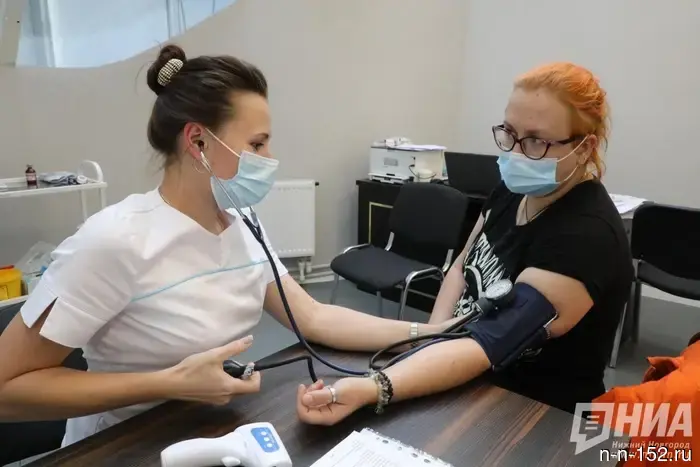 Doctor Savitskaya warned about the dangers of discontinuing medications for hypertension.
News of Nizhny Novgorod
Doctor Savitskaya warned about the dangers of discontinuing medications for hypertension.
News of Nizhny Novgorod
Doctor Savitskaya warned about the dangers of discontinuing medications for hypertension.
News of Nizhny Novgorod