
Between Captivity and Heroism: The Story of Nizhny Novgorod Scout Alexander Lazarev
NIA "Nizhny Novgorod" - Maria Orlova
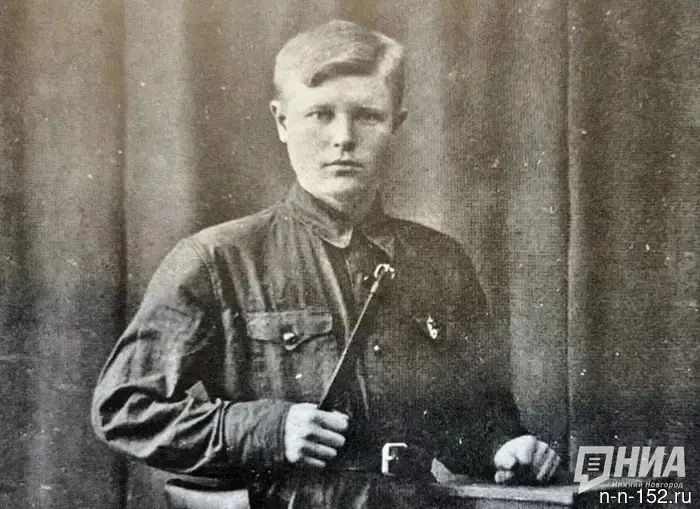
Nizhny Novgorod's Shatki is known to many far beyond the region. Here lies Tanya Savicheva, a Leningrad girl whose blockade diary became one of the most poignant relics of the war. She, like thousands of children, was evacuated from besieged Leningrad to the Gorky region. But there is another person whose fate connected Shatki with the Leningrad theme. He died in battles for the breakthrough of the blockade—one month after an operation that effectively disrupted the work of the German intelligence school. His name was Alexander Ivanovich Lazarev.
For many years, his name remained little known. Although as early as 1964, Yuri German wrote a story "Operation 'Happy New Year!'", where he told about the Nizhny Novgorod resident. In 1970, his son, director Alexei German, made the film "Check on the Roads" (18+). The film sat "on the shelf" for almost fifteen years and was released to the audience only in the mid-1980s. The name of the hero was preserved in the film—Alexander Lazarev. But his real story turned out to be more complicated and dramatic than the screen version.
Why was so little known about him? Perhaps because his military biography included captivity and service in General Vlasov's army, and the operation in which he participated was classified? The author of the book about Alexander Lazarev "It Was in Intelligence," editor of the newspaper "New Case" Vadim Andryukhin names another reason.
"In that war, there were so many heroes that the feats of many of them, especially ordinary soldiers, remained unknown. Lazarev was not a general or a member of the Central Committee; his biography is one of millions," noted the historian in a conversation with NIA "Nizhny Novgorod."
Yet his fate turned out to be somewhat unusual. Alexander Lazarev was born in 1923 in the village of Lapsha in the Primorsky District of Nizhny Novgorod Oblast. In 1938, the family moved to Shatki. Here he got married, and his son was born. In 1940, Lazarev worked as a fighter in the paramilitary guard at the "Krasnoe Sormovo" factory. To obtain a weapon, he added four years to his age. This would later complicate the establishment of his "biography." He went to the front as a volunteer.
His military fate threw him into accelerated tank school courses. After graduating, the former worker and young father took command of a tank company, ready to defend the Motherland at the front.
But war dictates its own rules. In the autumn of the terrible '41, while wounded, he was captured. After that—service in Vlasov's army—ROA. According to Vadim Andryukhin, the decision was dictated by the desire to break free from the camp and escape to his own at the first opportunity.
"And how would we have behaved in that situation? To be in captivity, where people survived literally... I believe that these people performed a feat—they found the strength to return to their own. Yes, with suspicions, with checks. But they returned," he says.
In September 1943, Alexander Lazarev, along with a group of comrades from captivity and service with the enemy, escaped. They arrived at the location of the 1st Leningrad Partisan Brigade as a combat unit: in the uniform of ROA soldiers, armed with a machine gun, mortar, and rifles. Lazarev was not just one of the escapees; he was the organizer and initiator of this transition.
The attitude towards former Vlasovites was complicated. They were thoroughly checked, as caution was a matter of survival.
"You can understand the partisans. If an agent penetrates the squad—it’s the end. The punishers will wipe everyone out. That’s why they were checked. Vigilance was a matter of life," explains Vadim Andryukhin.
Nevertheless, Lazarev was believed. The head of the operational group of the 1st Leningrad Brigade was an experienced Chekist—Lieutenant of State Security Georgy Ivanovich Pyatkin. In 1987, he published a book—a documentary story "The Crash of 'Zeppelin'," in which he recounted that after interrogations with Lazarev, he realized: he was "our man." He also spoke about the operation in which the Nizhny Novgorod resident became a participant.
In the village of Pechki in the Pechora district, there was a disguised intelligence school. It was organized by the Germans as part of Operation "Zeppelin," prepared by the political intelligence of the Third Reich. The school trained agents for infiltration into the Soviet rear. The partisans learned of its location, and Pyatkin, as stated in his report to the KGB office in Leningrad Oblast, decided to obtain a "language" from there.
To do this, it was decided to implant their own person. The choice fell on Alexander Lazarev. In November 1943, he was sent to the intelligence school. The partisan managed to gain the Germans' trust. His legend worked, and soon he became the commander of the guard platoon. Just two months later, on January 1, 1944, an operation took place, which was named "Happy New Year!"
"The Germans only realized after some time that a person and the archive had disappeared. The operation went quietly. And any special services operation is considered successful when it goes quietly and unnoticed. If there is shooting and noise—it means something went wrong," notes Vadim Andryukhin.
Of course, not everything went according to plan. Pyatkin wanted to capture the head of the school—SS Obersturmführer Igor Khorvat (Igor Podlesky) and his first deputy—Vladimir Guryanov. The first was summoned to Berlin on the eve of the New Year, but the partisans did not abandon the operation. A special sabotage group was formed in the squad for its implementation. The fighters were to play the role of SD officers arriving from Pskov. Therefore, they were thoroughly prepared: trained in German commands, regulations, and the Wehrmacht's orders, and issued real German documents... And on New Year's Eve, people in SS uniforms arrived at the building of the intelligence school in sleds. The guard commander Lazarev personally met and let the guests in. The "officers" easily entered the house where Guryanov was sleeping, seized all documentation, agent lists, and... took the deputy head of the school with them. After that, the group led by Alexander Lazarev quietly dissolved into the darkness of the winter night.
According to archival data, after interrogating Guryanov and analyzing the captured materials, it was possible to identify and detain dozens of agents. There is a version that it was the testimony of the deputy head of the school that helped the Chekists obtain information about a planned assassination attempt on Stalin and about the terrorist Tavrin (Shilo), who was undergoing training at the "Zeppelin-Nord" base near Pskov.
However, historian-researcher of the activities of Nizhny Novgorod special services Vadim Andryukhin questions this hypothesis in his book. He points out that the detained German agents in Pechki claimed that the most important and classified operations were developed independently by German special services, without involving Russian employees in the details. Moreover, Tavrin himself later testified during interrogations that in Pskov he maintained contact exclusively with the head of "Zeppelin-Nord" Otto Kraus. But let historians deal with this question. One thing is certain: after the operation, the school's activities were effectively paralyzed.
Guryanov was sentenced to the highest penalty and executed in June 1944. But Alexander Lazarev did not learn about this. He died on the night of January 30, 1944, in battles for the liberation of Leningrad. He was just over twenty years old.
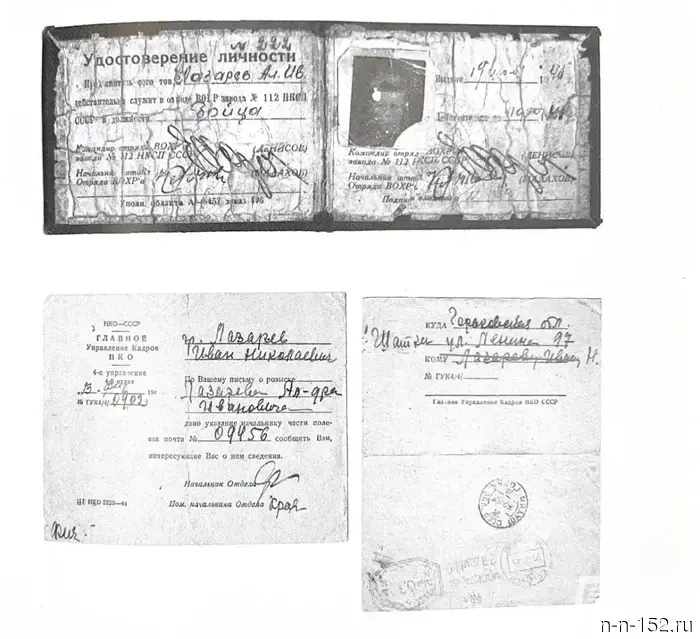
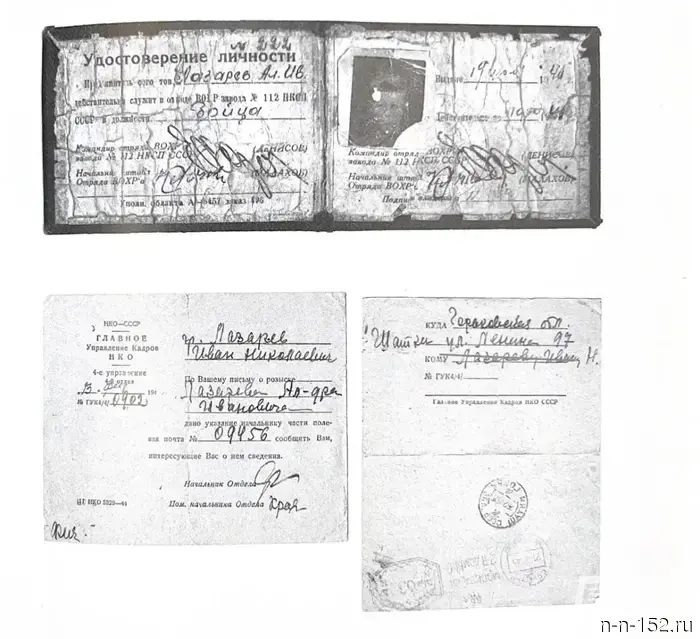
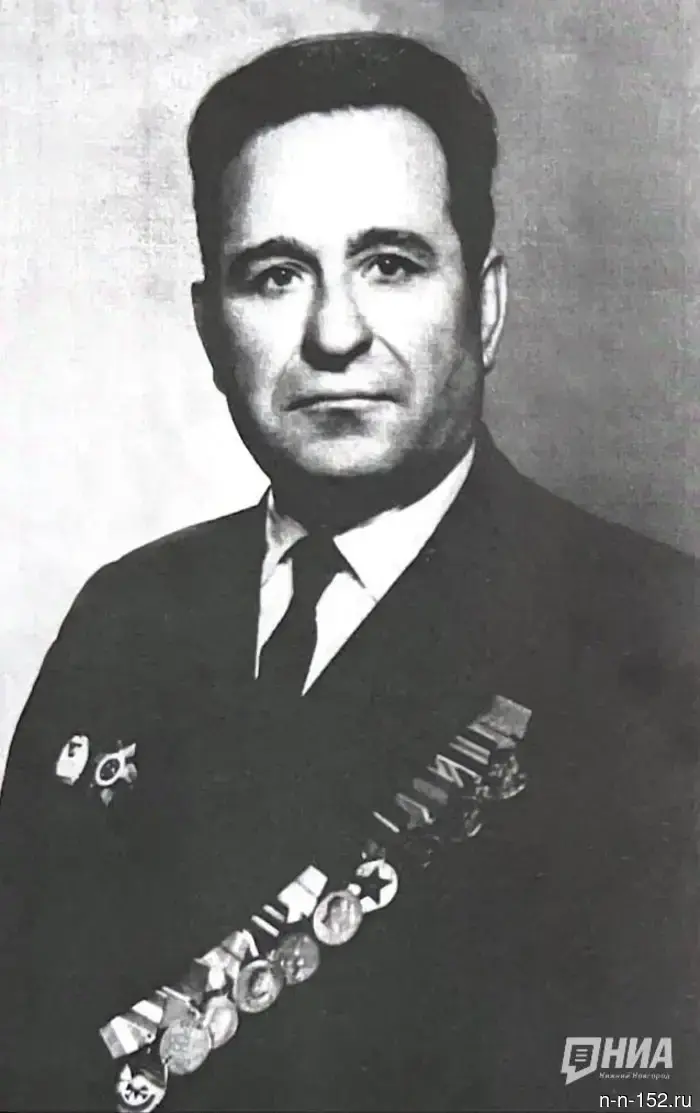
In 1965, Alexander Lazarev was posthumously awarded the Order of the Patriotic War. And this was made possible with the help of his former partisan commander Pyatkin. He was the one who petitioned for the scout's award. After the war, he found Lazarev's relatives and close ones, visited them, and corresponded.
The story received literary and cinematic life. But Lazarev's name remained in the shadows in his homeland for a long time. Journalists and local historians were engaged in the search for information. In the 90s, Nizhny Novgorod journalist Vyacheslav Fyodorov began this work. The problem was that the biographical information in the books of German and Pyatkin was contradictory. The former states that Lazarev was born in 1919 in Pavlov, while the latter claims he was born in 1923, a native of the village of Lapsha in the Shatki district (as written in the response to Pyatkin's inquiry during the war years—editor's note). Fyodorov's inquiries to the Pavlov military enlistment office always received negative responses. Shatki provided nothing either.
Vadim Andryukhin in his book "It Was in Intelligence" recounts that everything was decided by chance. When he began writing the book "In the Wake of the Werewolf" about the struggle of state security agencies in the Gorky region against
Другие Новости Нижнего (Н-Н-152)
 Three people were hospitalized in Zavolzhye due to an incident at the production facility.
News of Nizhny Novgorod
Three people were hospitalized in Zavolzhye due to an incident at the production facility.
News of Nizhny Novgorod
 The Nizhny Novgorod TV tower will be illuminated with festive lighting on Victory Day.
News of Nizhny Novgorod
The Nizhny Novgorod TV tower will be illuminated with festive lighting on Victory Day.
News of Nizhny Novgorod
 The Nizhny Novgorod TV tower will be illuminated with festive lighting on Victory Day.
News of Nizhny Novgorod
The Nizhny Novgorod TV tower will be illuminated with festive lighting on Victory Day.
News of Nizhny Novgorod
 Nizhny Novgorod veterans are invited to the Victory Parade on the podium with Putin.
News of Nizhny Novgorod
Nizhny Novgorod veterans are invited to the Victory Parade on the podium with Putin.
News of Nizhny Novgorod
Between Captivity and Heroism: The Story of Nizhny Novgorod Scout Alexander Lazarev
News of Nizhny Novgorod